The 2026 search for top Electropolished Embossed Tube manufacturers should begin with evidence, not impressive catalog language. A reliable supplier must demonstrate control over embossing depth, tube roundness, weld quality, and final surface cleanliness. These details matter when tubes enter pharmaceutical skids, food-processing lines, laboratory equipment, or demanding thermal systems.
George Di Bari, a recognized specialist in electrochemical finishing, emphasizes a practical point: “Electropolishing is a controlled electrochemical process, not merely a cleaning operation.” That distinction should guide every manufacturer comparison. The best producers connect mechanical forming with carefully monitored polishing current, electrolyte temperature, exposure time, and rinsing quality. They should also provide measurable roughness results, material certificates, inspection records, and traceable batch documentation.
Small details reveal manufacturing maturity. Look for smooth valleys inside embossed patterns, clean transitions near welded seams, and no dark residue in recessed areas. Ask whether samples are tested after forming, because polishing performance can change with stress and local geometry. Ask harder questions, too. Can the supplier hold consistent embossing depth across long tube runs? Can it protect the profile during handling and packaging?
Not every leading manufacturer will excel in every application. That is worth admitting. Some companies offer outstanding stainless-steel polishing but limited custom embossing. Others provide flexible tooling but weaker documentation. This guide evaluates the 2026 market through practical experience, technical evidence, and customer-facing reliability, helping buyers distinguish polished claims from genuinely dependable Electropolished Embossed Tube production.
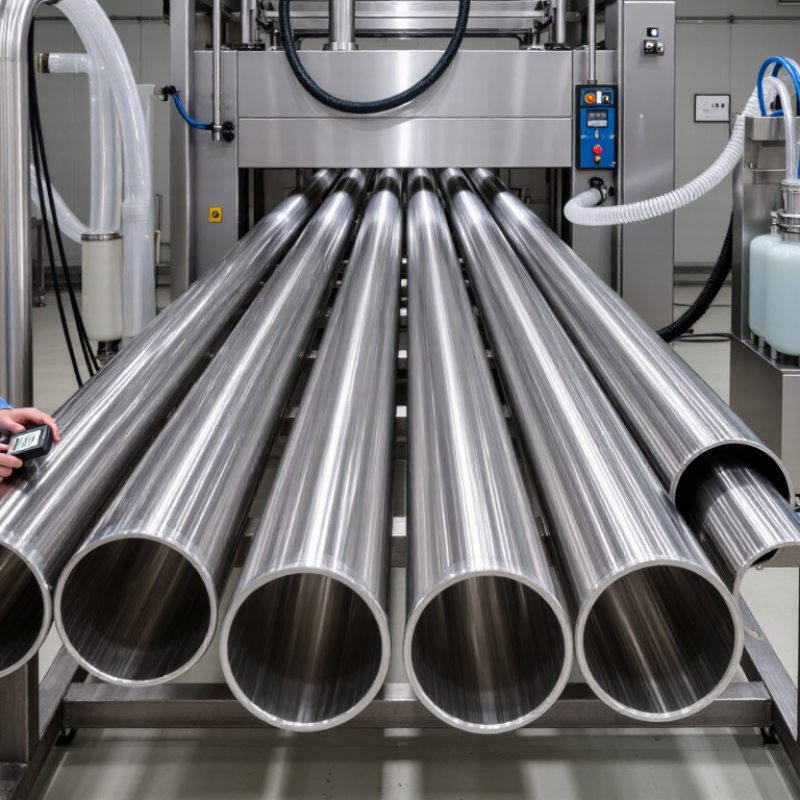
2026 Top Electropolished Embossed Tube Manufacturers?
Electropolished embossed tubes combine a shaped outer profile with an electrically refined surface. Embossing creates ribs, grooves, or raised patterns for improved grip, stiffness, or controlled contact. Electropolishing removes a thin metal layer and reduces microscopic peaks. A verified Ra value of 0.5 µm or lower supports cleaner, smoother flow paths.
Common alloys include 304 and 316L stainless steel, selected for strength and corrosion resistance. 316L often suits pharmaceutical, food-processing, and high-purity applications. However, alloy choice depends on chemicals, temperature, weld zones, and forming pressure. Typical profiles include round, oval, square, and custom patterned sections. Manufacturers should provide measured roughness data, dimensional reports, and passivation details. Visual shine alone proves very little.
Tips: Request samples from the actual production line. Check Ra readings at embossed valleys, not only flat areas. Ask whether measurements follow a recognized method and calibrated instrument. Inspect weld transitions closely. They may hold residue. Also compare wall thickness after forming, because uneven thinning can weaken a beautiful profile. No finish is perfect, and specifications sometimes hide practical weaknesses. A small trial order can reveal more than a polished brochure.
| Evaluation Dimension | Typical Technical Data | Common Requirement for Electropolished Embossed Tubes | Why It Matters | Recommended Verification Method |
|---|---|---|---|---|
| Product Definition | Metal tube with a formed or embossed external profile and an electropolished surface, usually produced from corrosion-resistant stainless steel. | The embossed geometry should be clearly defined by drawing, CAD file, or approved sample. | “Embossed tube” can describe different raised, grooved, knurled, or decorative profiles; the term alone does not specify the geometry. | Review the dimensional drawing, approved sample, and inspection report. |
| Primary Alloy | ASTM A240 Type 304/304L or Type 316/316L stainless steel are widely used austenitic grades. | 316L is commonly selected for higher chloride exposure, pharmaceutical service, and improved corrosion resistance compared with 304L. | Alloy selection affects corrosion resistance, weldability, cleanability, and service life. | Check the material test certificate and perform positive material identification when required. |
| Carbon Content | 304L and 316L have a maximum specified carbon content of 0.030% under common ASTM material specifications. | Low-carbon grades are preferred for welded assemblies that may be exposed to corrosive environments. | Lower carbon content helps reduce the risk of chromium-carbide precipitation after welding. | Verify the heat analysis on the mill test certificate. |
| Typical Tube Profile | Round, oval, square, rectangular, and custom formed profiles can be produced, subject to tooling and wall-thickness limits. | Profile tolerances should be stated for outside dimensions, corner radii, straightness, and embossed features. | Non-round profiles require tighter control of forming springback and dimensional variation. | Use calibrated gauges, coordinate measurement, or optical profile measurement. |
| Embossed Feature | Raised ribs, longitudinal grooves, circumferential patterns, dimples, or custom reliefs. | Define feature height or depth, pitch, width, location, repeatability, and allowable deformation. | Feature geometry affects appearance, cleanability, bending behavior, and fit with mating components. | Measure with optical inspection, profile gauges, or a coordinate measuring machine. |
| Electropolished Surface Roughness | Ra ≤ 0.5 µm is a common hygienic-service target; lower values may be specified for critical applications. | Specify whether the Ra limit applies to the internal bore, external surface, embossed area, or all measured locations. | Lower roughness generally improves cleanability and reduces sites where contaminants can accumulate. | Use a calibrated contact or suitable non-contact surface profilometer at defined sampling locations. |
| Surface Condition | Electropolishing removes a controlled amount of metal and produces a smoother, brighter, chromium-enriched passive surface. | Surface should be free from visible burrs, embedded iron, pitting, heat tint, peeling, and sharp unfinished edges. | Surface quality is essential for corrosion resistance, hygienic design, and visual consistency. | Perform visual inspection, borescope inspection for internal surfaces, and corrosion or passivation testing when specified. |
| Wall Thickness | Common tubing wall ranges vary by alloy, diameter, forming method, and application; approximately 0.5–3.0 mm is a practical engineered range for many formed tubes. | Nominal wall thickness and minimum local wall thickness should be stated separately when embossing or forming is significant. | Forming and electropolishing can change local thickness, especially near embossed features and weld zones. | Measure with ultrasonic thickness equipment, micrometers, or metallographic cross-sections. |
| Tube Outside Diameter | Small-diameter tubing may be supplied below 10 mm OD, while industrial and sanitary tubes are available in substantially larger diameters. | Specify OD, profile dimensions, dimensional tolerance, and whether dimensions are measured before or after electropolishing. | Accurate dimensions are necessary for ferrules, clamps, seals, fittings, and assembly interfaces. | Use calibrated micrometers, vernier instruments, ring gauges, or optical measurement. |
| Weld Quality | Longitudinally welded stainless tubing may be supplied with a controlled internal weld bead or a bead-conditioned bore. | Internal welds should be smooth, continuous, crack-free, and compatible with the specified Ra requirement. | Weld discontinuities can reduce corrosion resistance and create retention points in hygienic systems. | Use visual or borescope inspection, dye penetrant testing where appropriate, and specified nondestructive testing. |
| Cleanability | Cleanability is influenced by Ra, dead-leg design, profile geometry, drainage, weld quality, and chemical compatibility. | Embossed areas should not create inaccessible pockets for the intended cleaning process. | A low Ra value alone does not guarantee hygienic performance if the geometry is difficult to clean. | Review hygienic design drawings and validate cleaning procedures for the actual application. |
| Applicable Material Standards | Common references include ASTM A269 for general-purpose stainless steel tubing and ASTM A270 for sanitary tubing. | The purchase specification should identify the exact standard, grade, heat treatment, surface finish, and dimensional requirements. | Standards define baseline material and manufacturing requirements but may not fully define a custom embossed profile. | Compare the supplier’s inspection documents with the purchase order and applicable standard. |
| Bioprocessing Reference | ASME BPE may be referenced for hygienic design, surface finish terminology, materials, and documentation in bioprocessing systems. | Use the applicable edition and clearly identify which clauses apply to a custom embossed tube. | Bioprocessing requirements can exceed general tubing requirements for traceability, surface finish, and documentation. | Review the compliance statement, material traceability, surface-finish records, and weld documentation. |
| Passivation | Electropolishing itself can improve the passive surface, but additional passivation may be specified depending on the process and application. | Define the required chemical treatment, rinse quality, drying method, and acceptance criteria. | Controlled post-processing helps remove free iron and supports consistent corrosion performance. | Use documented process controls and, when required, free-iron or copper-sulfate testing. |
| Dimensional Tolerance | Tolerances depend on tube size, alloy, forming route, tooling, and the referenced product standard. | Custom embossed features should have dedicated tolerances rather than relying only on general tube tolerances. | Clear tolerances prevent disputes over fit, alignment, sealing, and cosmetic consistency. | Approve a first article and issue a dimensional inspection report for production lots. |
| Traceability | Typical records include heat number, alloy grade, tube lot, process route, inspection results, and certificate of conformity. | Full material and process traceability is recommended for pharmaceutical, food, semiconductor, and critical industrial applications. | Traceability supports audits, root-cause investigations, and controlled replacement of components. | Audit certificates, lot markings, inspection records, and retention periods. |
| Manufacturer Selection Criteria | Evaluate electropolishing capability, profile-forming experience, internal-bore finishing, inspection equipment, and documentation control. | Prefer suppliers able to provide samples, Ra mapping, material certificates, dimensional reports, and repeatable process controls. | The best supplier is determined by verified capability and application fit, not by the surface finish claim alone. | Conduct technical review, sample approval, capability audit, and first-article inspection before volume production. |
Technical values are typical engineering references. Final acceptance criteria should be defined in the project drawing, purchase specification, applicable material standard, and validated cleaning or service requirements.
They combine raised or recessed patterns with an electrically refined metal surface. Embossing improves grip, stiffness, or controlled contact. Electropolishing removes microscopic peaks. Shine proves little.
Common choices include 304 and 316L stainless steel. The correct alloy depends on chemicals, temperature, welding, and forming pressure. 316L often suits hygienic applications.
Typical profiles include round, oval, square, and custom patterned sections. Embossing depth and wall thickness can change during forming. A beautiful profile may still be weak.
Request a measured Ra value of 0.5 micrometres or lower. Check readings at embossed valleys, not only flat sections. Measure the valleys.
Ask for calibrated instrument records and a recognized measurement method. Inspect weld transitions closely because they may retain residue. Visual brightness is not enough.
Match monthly capacity with demand, tube diameter, material grade, and embossing depth. A facility producing 20,000 metres monthly may struggle with 100,000 metres.
Include approval, tooling, testing, production, packing, transport, and inspection time. Standard production may take three to six weeks. Custom rollers can add delays. Factory time alone is incomplete.
No. Certifications indicate process discipline, but they cannot guarantee stable output. Review traceability, inspection reports, cleaning procedures, and measured sample results.
Yes, when practical. A small trial can expose uneven thinning, weak embossing control, or unstable roughness. It adds time, perhaps unnecessarily, but reduces uncertainty.
This guide to the 2026 Top Electropolished Embossed Tube Manufacturers explains how an Electropolished Embossed Tube is produced from corrosion-resistant alloys such as stainless steel, with customized profiles, controlled embossing patterns, and surface roughness values of Ra ≤0.5 µm. It outlines how electropolishing may remove approximately 10–50 µm of material while improving cleanliness, corrosion resistance, and surface consistency. Key quality references include ASTM A270 and ASME BPE, supported by dimensional inspection, traceability, and hygienic manufacturing controls.
The article also presents a practical framework for comparing manufacturers according to production capacity, certifications, estimated lead times, OD tolerance, embossing depth, and achievable surface Ra. It explains how to match tube designs with dairy processing, pharmaceutical systems, and heat-transfer equipment, where cleanability, flow performance, mechanical reliability, and thermal efficiency are essential. Readers can use these criteria to evaluate suppliers objectively and select tubing that meets both technical specifications and application demands.