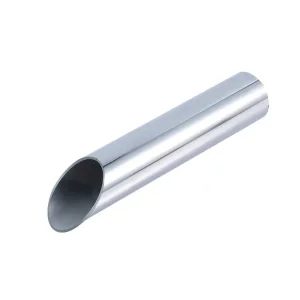
Explore our core manufacturing program of custom stainless steel profile tubing designed for architectural, automotive, medical, and sanitary applications.
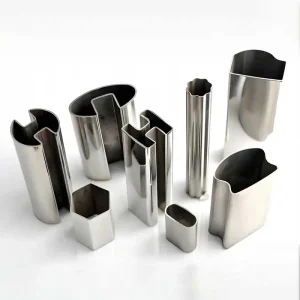
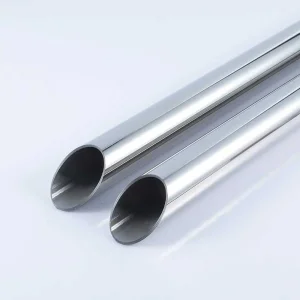
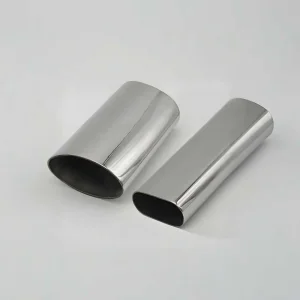
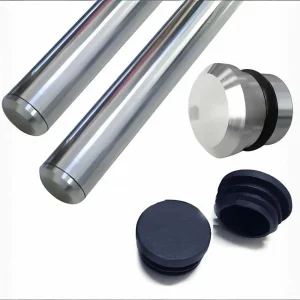
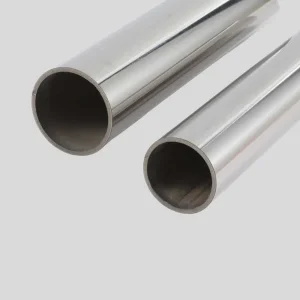
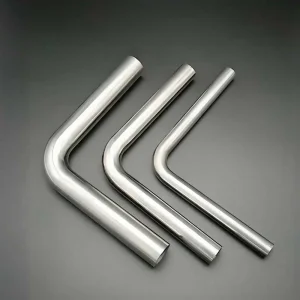
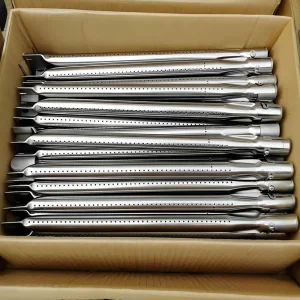
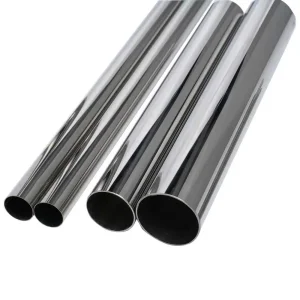
In modern industrial design, architectural engineering, and advanced manufacturing, standard circular and square steel profiles are increasingly failing to satisfy complex aesthetic, mechanical, and aerodynamic requirements. Oval and special-shaped stainless steel tubing represents a crucial technological shift from conventional tubular extrusions toward geometrically optimized, high-performance structural components.
Globally, the market demand for special-shaped profiles—including flat oval, elliptical, tunnel-shaped, D-shaped, triangular, trapezoidal, and custom multi-radius cross-sections—has experienced exponential growth across key economic hubs in North America, Western Europe, and the Asia-Pacific region. This surge is driven by three major structural factors:
Flat oval and teardrop profiles significantly decrease windage resistance (drag coefficient $C_d$) in automotive chassis, exterior architectural facade louvers, and aerospace structures compared to standard round pipes.
In medical rehab equipment, high-end commercial fitness machinery, and luxury interior design, oval shapes provide superior human grip dynamics and space utilization within tight architectural envelopes.
By redistributing cross-sectional material along critical stress axes ($I_x$ vs $I_y$), special-shaped tubes deliver higher moment of inertia and bending stiffness while reducing gross tonnage.
From an engineering standpoint, transitioning from a standard cylindrical section to an oval or non-standard polygon profile alters the mechanical stress distribution across the tube wall. When an oval tube experiences bending moment, the major axis resists deflection more efficiently than a round tube of equivalent perimeter.
To assist mechanical design engineers and procurement teams in specifying the correct geometric profile, the table below outlines the primary cross-sectional configurations and their mechanical behavior under structural load:
| Profile Geometry | Primary Stress Axis | Bending Resistance ($I_x/I_y$) | Typical Wall Thickness (mm) | Core Target Industries |
|---|---|---|---|---|
| Flat Oval (Standard) | Major Axis ($X-X$) | High (2.4x vs Round) | 0.6 mm - 3.0 mm | Furniture, Wardrobe Systems, Towel Rails |
| Elliptical / Teardrop | Longitudinal Axis | Very High (3.1x vs Round) | 0.8 mm - 2.5 mm | Architectural Louvers, Automotive Trim |
| D-Shaped Profile | Flat Base Face | Medium-High | 1.0 mm - 3.5 mm | Industrial Enclosures, Machine Guards |
| Triangular / Trapezoidal | Torsional Corner Axes | High Torsional Rigidity | 1.2 mm - 4.0 mm | Automotive Seats, Space Frames |
| Slotted Channel Tube | Continuous Channel Seam | Custom Structural Load | 1.2 mm - 2.5 mm | Glass Balustrade Systems, Partition Walls |
Our factory processes premium grade austenitic stainless steel coils (ASTM A554 201, 304, 304L, 316, 316L) through high-frequency plasma argon-shielded welding and cold roll-forming stages. This process ensures the weld seam retains metallurgical integrity matching the base metal, eliminating post-bend seam cracking even during tight 90-degree mandrel bending.
Navigating global procurement requires balancing mill pricing, metallurgical consistency, tooling lead times, and logistical predictability. Operating out of Foshan, Guangdong—the world’s leading hub for stainless steel processing—our manufacturing infrastructure offers distinct commercial and technical advantages over Western and regional competitors.
Developing custom roll-forming dies traditionally incurs thousands of dollars in NRE costs and 4-6 weeks of delay. Our plant maintains over 500 existing roll-forming dies for flat oval, elliptical, and D-shape tubes, enabling zero-tooling setup for most standard special profiles.
We source prime stainless coil directly from tier-one steelmakers like TISCO, POSCO, and Baosteel. Slitting, continuous roll-forming, inner-bore nitrogen shielding, bright annealing, and multi-pass polishing occur under a single 12,000 m² facility.
Every mill line features non-destructive eddy-current weld flaw detection and continuous laser outer-dimension monitoring. This guarantees wall-thickness uniformity within ±8% and outside dimension tolerances down to ±0.05 mm.
Oval and special-shaped stainless steel tubing is utilized across diverse regional and industry sectors, matching technical properties to exact environmental requirements:
In modern commercial construction across North America and Europe, slotted oval and round-to-oval handrail systems provide structural support for heavy glass panels. Grade 316L with 600# mirror polish prevents sea-air pitting along coastal promenades.
Luxury residential and commercial interiors require high aesthetic visual impact. Flat oval 201 and 304 tubing treated with PVD titanium coatings (Rose Gold, Champagne, Matte Black) offers scratch resistance superior to electroplated iron.
Hospitals, cleanrooms, and accessible bathroom facilities rely on ergonomic D-shaped grab bars and sanitary-grade 304 precision tubing. Passivated surfaces with internal roughness (Ra ≤ 0.4 µm) prevent microbial retention and chemical corrosion during daily washdowns.
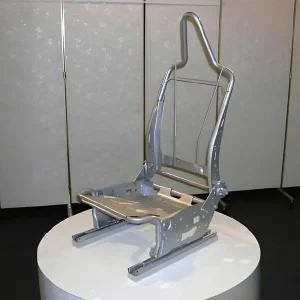
Tier-1 automotive manufacturers use high-tensile oval structural tubes for seat frames, headrest supports, and custom exhaust manifolds, reducing assembly mass without compromising crash test structural requirements.
As international supply chains evolve toward sustainability, carbon traceability, and strict precision, procurement managers are changing how they specify special-shaped tubular products:
1. Shift from Post-Fabrication Plating to PVD & Substrate Finishing: Traditional chrome electroplating presents severe environmental compliance risks and flaking issues. Procurement buyers are increasingly shifting toward factory-applied PVD (Physical Vapor Deposition) physical coatings on 304 stainless substrates, ensuring 500+ hours of neutral salt spray performance (ASTM B117).
2. Demand for Assembly-Ready Component Processing: Buyers no longer prefer standard 6-meter random mill lengths. Modern supply agreements emphasize secondary fabrication—such as CNC cut-to-length, 3D laser slotting, end-flaring, necking, and pre-bent assemblies—delivered ready for immediate robotic production line integration.
3. Carbon Footprint & Recycled Content Documentation: European and North American buyers are implementing stricter ESG mandates. Our mills supply verified heat-traceable Mill Test Certificates (MTC according to EN 10204 3.1), logging chemical ladle analysis, tensile yield, elongation values, and scrap metal ratio documentation.
Expert technical insights directly from our quality assurance and metallurgical engineering team.
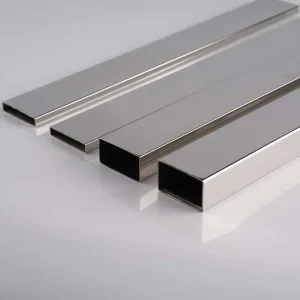
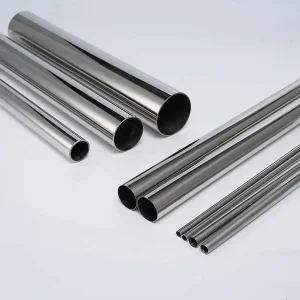
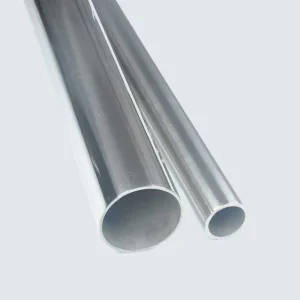
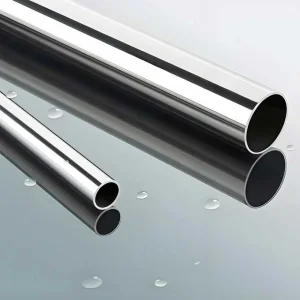
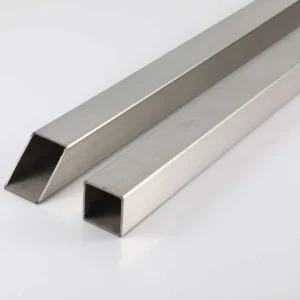
Explore our full line of round, square, rectangular, and application-specific stainless steel welded tubing.
Send us your technical drawings, cross-sectional CAD files, or custom geometry specs. Our engineering team provides profile mould matches and detailed quotation packages within 24 hours.