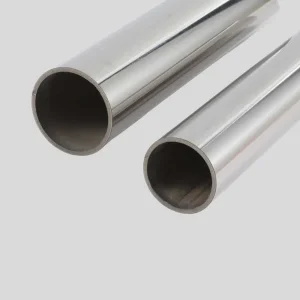
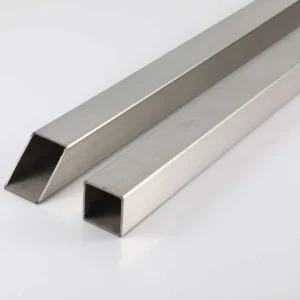
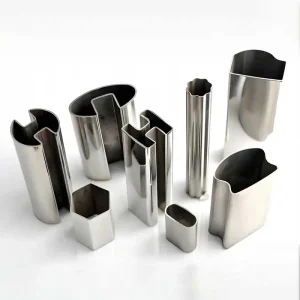
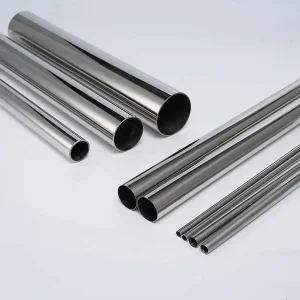
Explore our high-precision ASTM A554 certified square and rectangular profiles engineered for extreme structural loads, sanitary environments, and decorative architectural installations.
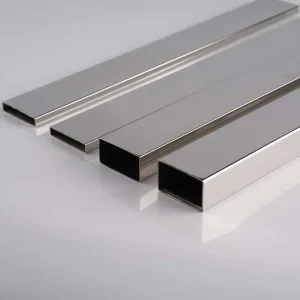
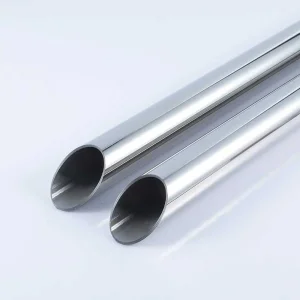
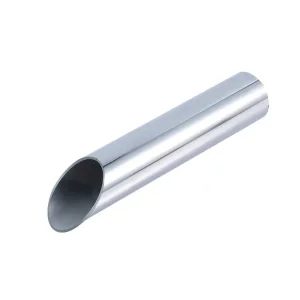
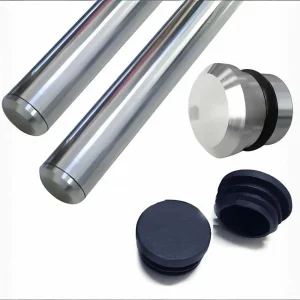
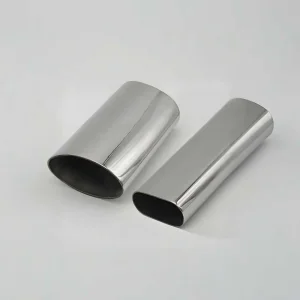
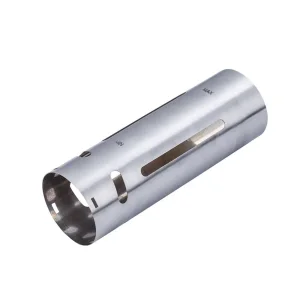
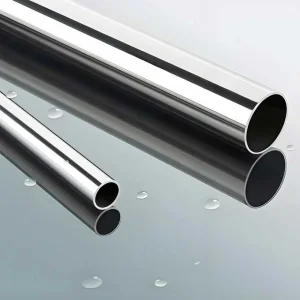
Analyzing the paradigm shift toward stainless square and rectangular tubing across global infrastructure, automated manufacturing, and architectural projects.
Modern structural engineering increasingly favors square and rectangular hollow sections (HSS) over traditional I-beams and open channels. The closed geometric profile delivers superior torsional resistance, a balanced moment of inertia across multiple axes, and a significant reduction in drag coefficients when exposed to high-velocity environmental loads. In seismic-resistant construction and high-load industrial frames, square and rectangular stainless steel tubes optimize strength-to-weight ratios by up to 28% compared to carbon structural profiles.
Global procurement teams are moving rapidly away from painted or hot-dip galvanized carbon steel due to rising field maintenance and premature structural degradation. Stainless steel square and rectangular tubing—utilizing austenitic grades such as 304, 304L, 316, and 316L—forms a self-healing passive chromium oxide ($Cr_2O_3$) film. This guarantees decades of service in corrosive marine, chemical processing, and sanitary washdown environments without the risk of flaking paint or heavy metal contamination.
With stringent global carbon accounting standards (such as Scope 3 emissions reporting), stainless steel tubing stands out as a 100% recyclable structural material. Advanced high-frequency TIG and laser-welded stainless tubes manufactured in green-energy-powered Chinese facilities reduce embodied carbon metrics. The long operational lifecycle eliminates the environmental impacts associated with frequent structural repainting, chemical recoating, and premature replacement.
Technical Insight: According to metallurgical life-cycle assessments, switching from structural carbon steel to 316L stainless steel rectangular tubing in coastal industrial environments yields a 64% reduction in total cost of ownership (TCO) over a 25-year operational window, primarily driven by zero maintenance downtime and preserved structural integrity.
Quantifiable quality metrics, high-volume production output, and global distribution scale delivered by top-tier Foshan tube factories.
How the integration of Foshan's stainless steel industrial cluster and automated smart factories provides unmatched cost-efficiency, quality, and delivery speed for global buyers.
Located in Foshan, Guangdong—the world’s densest manufacturing hub for stainless steel—leading factories maintain direct strategic partnerships with tier-one primary mills including TISCO, POSCO, Tsingshan, and Baosteel. Cold-rolled stainless steel strip is slit in-house under strict tension control, ensuring zero edge burrs, consistent gauge thickness, and optimal grain direction prior to roll forming. This direct sourcing eliminates middleman markups and guarantees fully traceable Mill Test Certificates (MTC) compliant with EN 10204 3.1 for every heat.
Modern Chinese tube manufacturing facilities leverage automated multi-stage roll forming paired with inline orbital plasma arc welding and fiber laser seam fusion. During the welding process, internal argon/nitrogen gas shielding protects the weld root from atmospheric oxidation. This process eliminates internal seam blistering and black oxide scale, yielding a smooth inner bead suitable for high-sanitary applications, hydroforming, and tight-radius mechanical bending without structural seam split risks.
Industry 4.0 production lines incorporate continuous non-destructive testing (NDT) right on the mill floor. Automated eddy-current flaw detectors scan 100% of the welded seam at production speeds up to 60 meters per minute. Simultaneously, laser micrometers monitor outside dimensions, diagonal squareness, corner radius symmetry, and axial twist in real time. Any section exceeding pre-programmed tolerances ($\pm 0.05\text{ mm}$) is automatically flagged and rejected before secondary polishing and packaging.
Global OEMs cut vendor lead times by utilizing China's integrated secondary processing capabilities under a single roof. Rather than purchasing standard 6-meter mill lengths and re-shipping to third-party machine shops, modern factories provide direct CNC laser cutting, complex 3D rotary tube bending, end necking, flaring, punching, laser slotting, and PVD vacuum titanium coating. This integrated supply chain reduces transit damage risks, lowers overall freight volume, and accelerates final assembly times for overseas buyers.
Selecting the precise stainless steel alloy and dimensional standard for optimal structural, chemical, and economic performance.
| Material Grade | Standard Spec | Yield Strength ($R_{p0.2}$) | Tensile Strength ($R_m$) | Corrosion Resistance | Recommended Applications |
|---|---|---|---|---|---|
| 201 (High-Cu) | ASTM A554 / GB/T 12770 | $\ge 275 \text{ MPa}$ | $\ge 520 \text{ MPa}$ | Moderate (Indoor / Dry) | Indoor furniture legs, decorative handrails, display racks, home appliances. |
| 304 / 304L | ASTM A554 / EN 10296-2 | $\ge 205 \text{ MPa}$ | $\ge 515 \text{ MPa}$ | High (General Environment) | Commercial kitchen equipment, architectural structures, food machinery frames. |
| 316 / 316L | ASTM A554 / JIS G3446 | $\ge 220 \text{ MPa}$ | $\ge 520 \text{ MPa}$ | Ultra-High (Marine & Chemical) | Coastal balustrades, offshore platforms, medical equipment, spa & bathroom hardware. |
| 430 (Ferritic) | ASTM A554 / EN 10296-3 | $\ge 250 \text{ MPa}$ | $\ge 450 \text{ MPa}$ | Moderate-High (Thermal/Auto) | Automotive trim, gas burner tubes, thermal exhaust supports, magnetic framework. |
For square and rectangular tubing, the outer corner radius ($R$) relative to wall thickness ($t$) dictates both aesthetic appearance and weld seam integrity during bending. Standard ASTM A554 ornamental tubing typically specifies an outer radius between $1.5t$ and $2.5t$. For structural glass-railing channels or architectural framing requiring sharp 90-degree outer corners, precision sharp-corner tooling reduces the radius down to $1.0t$, eliminating gaps when seating mounting brackets or rubber gaskets.
Surface finishing directly influences both cleanability and localized pitting resistance. Standard options range from coarse 180-grit satin up to 600-grit mirror polish ($Ra \le 0.1 \mu m$). Through Physical Vapor Deposition (PVD) vacuum technology, stainless square tubes can be coated with a titanium ceramic film (0.3 to 0.5 microns thick) in shades like Rose Gold, Black Titanium, Champagne, and Brass. This PVD layer exhibits extreme hardness ($>2000 \text{ HV}$), superior UV resistance, and zero color degradation over extended commercial use.
How specialized engineering profiles resolve unique mechanical and environmental challenges across leading global industries.
In high-end commercial architecture, rectangular stainless steel hollow sections ($100 \times 50\text{ mm}$ up to $200 \times 100\text{ mm}$) serve as load-bearing structural mullions for structural glass curtain walls and overhead entrance canopies. 316-grade brushed rectangular tubes withstand heavy wind loads while providing sleek visual profiles. Custom internal slotting enables seamless integration of concealed wiring, structural glass clamps, and drainage channels.
Hospitals, pharmaceutical processing units, and cleanroom facilities require rigid structural framework that tolerates continuous aggressive chemical washdowns. Stainless steel square tubing ($30 \times 30\text{ mm}$ and $40 \times 40\text{ mm}$) fabricated with smooth-ground weld seams prevents bacterial harborage. Medical safety grab bars and hospital bed frames utilize precision 304/316L square tubes with electropolished surfaces to maintain ultra-hygienic conditions.
The global transition to Electric Vehicles (EV) and automated warehouse logistics has accelerated demand for high-yield square and rectangular structural tubing. Custom rectangular stainless tubes form the protective perimeter structural cage for EV battery packs, offering collision force absorption alongside chemical corrosion resistance against road salts. In automated distribution centers, low-TIR stainless square tubing forms stable support beds for high-speed conveyor systems.
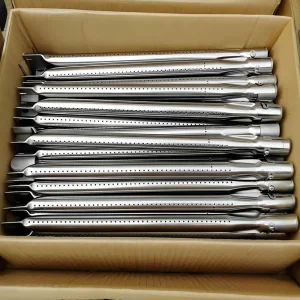
Gas grill burner tubes and commercial kitchen ranges operate under severe thermal cycling and direct exposure to combustion gases, food acids, and fats. Custom-formed rectangular stainless steel tubing made from heat-resistant 430 or 304 grades features micro-punched gas ports and internal flow dividers. This guarantees uniform flame distribution, prevents thermal warpage, and extends appliance service life beyond standard industry warranties.
In-depth responses from factory quality assurance managers and metallurgical engineers covering specifications, testing, and purchasing terms.
Explore our complete specialized product portfolio designed for high-stress mechanical frameworks, OEM components, and decorative hardware applications.