
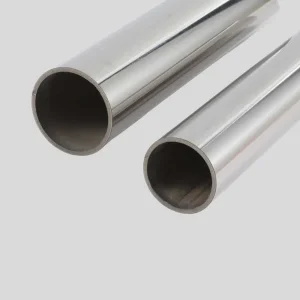
Engineered structural tubing manufactured to exact OD, wall thickness, and surface finishes for heavy industrial, automotive, cleanroom, and architectural applications.
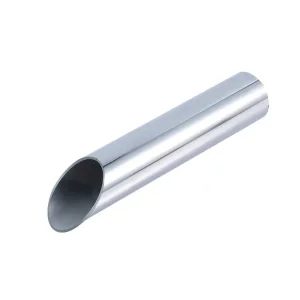
How next-generation structural tubing, advanced metallurgy, and zero-defect mill operations are redefining global manufacturing standards.
In contemporary industrial engineering, the role of mechanical structure manufacturers has undergone a paradigm shift. Once treated as basic commodity framework materials, mechanical structural tubing—specifically precision-welded stainless steel and high-alloy tubular profiles—now represents the backbone of high-efficiency automated systems, lean manufacturing racks, hygienic conveyor lines, automotive chassis architectures, and critical medical equipment support modules.
As global OEMs push toward higher line speeds, increased payload-to-weight ratios, and stringent hygienic compliance, structural integrity cannot be compromised. The adoption of advanced standards such as ASTM A554 (Standard Specification for Welded Stainless Steel Mechanical Tubing), ASTM A249, and EN 10217-7 has established clear technical baselines. Modern structural components must withstand static tensile loads, dynamic cyclical fatigue, torsional strain, and aggressive corrosive environments without suffering weld seam failure or dimensional distortion.
Global procurement teams in automotive and aerospace logistics are replacing heavy solid bar stock with high-yield structural tubing. Cold-rolled, work-hardened stainless grades yield equal bending moments with up to 40% mass reduction.
Transition from traditional painted carbon steel or plastic-sheathed pipes to solid 304/316L stainless steel lean tubing. Eliminates coating delamination, rust particles, and bacterial harborage in food and pharma plants.
High-speed material handling requires Total Indicator Runout (TIR) ≤ 0.8 mm/m. Precision-drawn welded tubing minimizes high-frequency vibration in conveyor roller assemblies, extending bearing lifespan exponentially.
Global enterprise procurement demands verifiable manufacturing metrics, full heat traceabilities, and stable supply chain capabilities. VertexFlow operates as a direct mill entity in Foshan, China.
When engineering teams specify mechanical tubing, total cost of ownership (TCO) extends far beyond initial price per meter. Unscheduled plant downtime caused by weld seam split during 90° mandrel bending or surface oxidation in high-humidity zones can compromise entire production pipelines. Leading B2B buyers scrutinize manufacturers based on five strict parameters:
Tailored structural tubing configurations engineered to solve complex operational challenges across major industrial sectors.
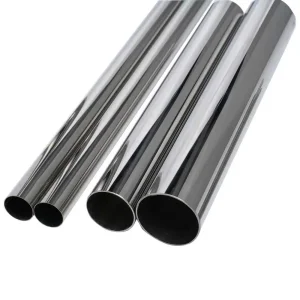
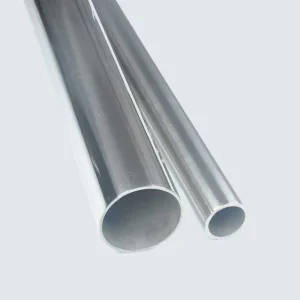
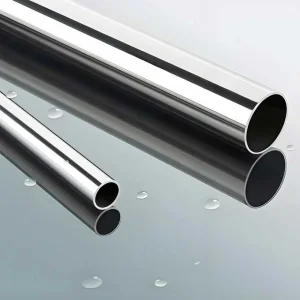
Conveyor roller shells require minimal wall variation and zero ovality distortion. Our low-TIR precision 304/316L round tubing minimizes drive torque vibration, reduces acoustics in parcel sorting facilities, and completely eliminates rust transfer to unit loads.
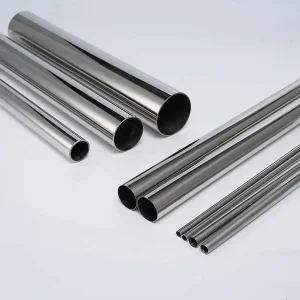
Standard 28mm stainless lean tubing provides a modern alternative to coated steel pipes. Designed for cleanrooms and ESD-sensitive electronics assembly, our tubing withstands rigorous chemical washdowns without peeling or rusting.
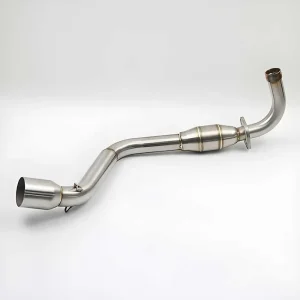
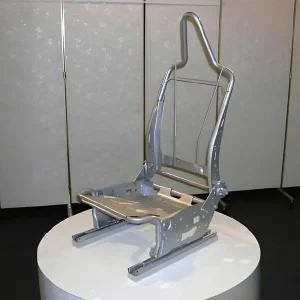
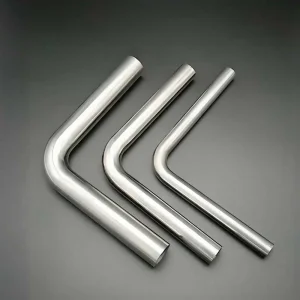
High-yield 409L ferritic and 304 austenitic structural tubes built for exhaust systems, crash members, and seat frames. Superior hydroforming characteristics ensure smooth wall thinning rates during extreme complex bending.
Biocompatible ASTM A554 stainless steel tubing engineered for hospital bed frames, grab bars, and IV stands. Satin 320# and sanitary electro-polished finishes ensure seamless disinfection compliance and antimicrobial performance.
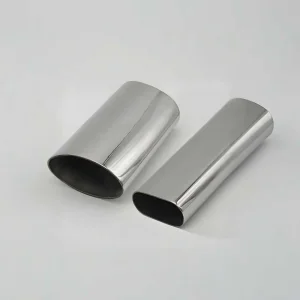
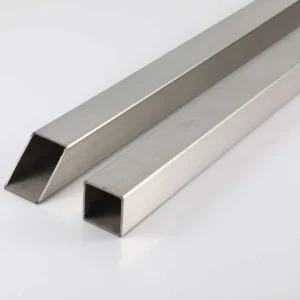
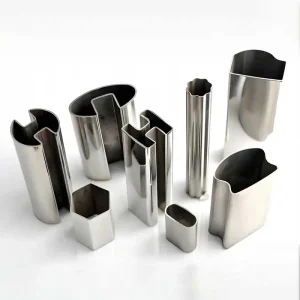
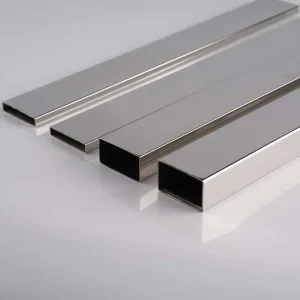
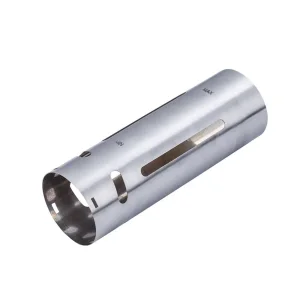
Square, rectangular, oval, and slotted special-shaped tubing designed to ASTM A554 standards. Sharp corner radius capability (squareness ±0.5°) permits flush structural glass seating and rigid structural facade mountings.
Selecting the optimal stainless steel alloy to balance mechanical strength, chemical resistance, post-forming ductility, and total project budget.
| Alloy Grade | Standard Ref. | Yield Strength (MPa) | Tensile Strength (MPa) | Corrosion Resistance | Primary Industrial Applications |
|---|---|---|---|---|---|
| 201 (High-Cu) | ASTM A554 | ≥ 275 | ≥ 520 | Moderate (Indoor) | Indoor furniture, decorative structures, retail display fixtures |
| 304 / 304L | ASTM A554 / A249 | ≥ 205 | ≥ 515 | High (General Industrial) | Conveyor rollers, lean racks, architectural balustrades, commercial machinery |
| 316 / 316L | ASTM A554 / A269 | ≥ 220 | ≥ 520 | Exceptional (Chloride/Marine) | Marine fittings, coastal structural glass railings, chemical equipment racks |
| 409L | ASTM A268 | ≥ 175 | ≥ 380 | Moderate (High Heat) | Automotive mufflers, exhaust system structural supports, thermal manifolds |
VertexFlow operates 43 continuous roll-forming lines integrated with real-time laser micrometer monitoring. Every production heat is logged to maintain strict dimensional compliance across batch orders:
Ensuring frictionless global delivery with compliant documentation, custom packaging, and comprehensive localized engineering support.
Every tube lot undergoes 100% eddy-current testing, flattening tests to 90° without seam cracking, flare expansion checks, and pneumatic underwater leak tests prior to surface polishing.
To eliminate scratches and transit moisture, tubes are individually PE sleeved, wrapped in heavy-duty woven polypropylene bags, and packed into fumigated wooden crates or steel-framed bundles.
Full compliance with ISO 9001:2015 management systems, REACH regulation (EC 1907/2006), RoHS heavy-metal restrictions, and CE declarations for structural components.
Explore our complete range of specialized profiles, decorative finishes, and secondary CNC fabrication services.
How VertexFlow is integrating Industry 4.0 automation, green hydrogen annealing, and advanced laser profiling for the next decade of structural engineering.
Deploying high-speed infrared thermography and ultrasonic phased-array sensors on all 43 mill lines to detect sub-surface weld micro-voids at mill speeds up to 60 meters per minute.
Transitioning bright annealing atmosphere furnaces from conventional cracked ammonia gas to 100% green hydrogen power, reducing embodied carbon dioxide emissions by over 65% per ton.
Expanding internal 5-axis fiber laser cutting, automated mandrel bending, and robotic end-flaring cells to deliver fully assembled, drop-in components straight to client assembly lines.
In-depth technical answers compiled by our metallurgical engineers and export quality control teams.