Explore our certified stainless steel structural and sanitary tubing components engineered for hospital furniture, grab bars, automotive assemblies, and high-spec industrial systems.
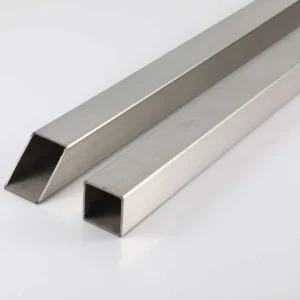
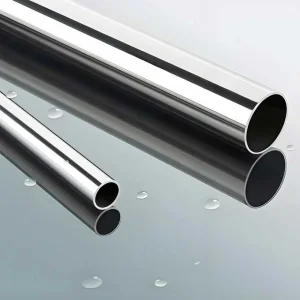
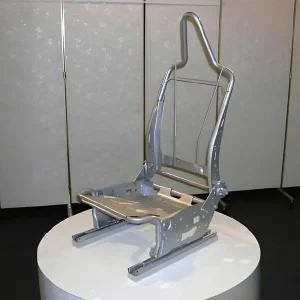
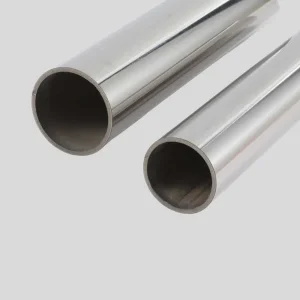
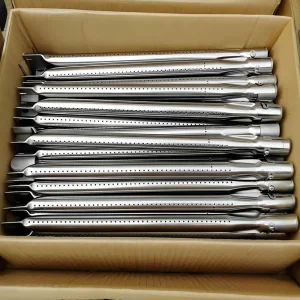
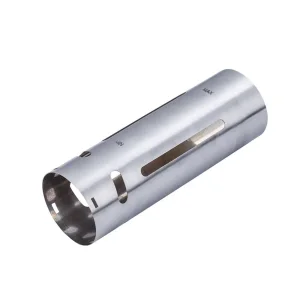
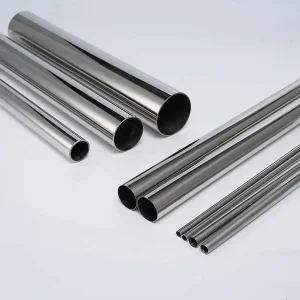
From modern surgical theaters to automated biopharmaceutical cleanrooms, precision welded stainless steel tubing represents the structural and mechanical backbone of zero-tolerance healthcare environments.
Modern hospital beds, motorized surgical tables, and ceiling pendant arms require structural tubular profiles that maintain sub-millimeter tolerances under dynamic load. Stainless steel tubing engineered to ASTM A554 standards ensures high yield strength, preventing micro-flexing during critical intraoperative positioning.
In diagnostic analyzer fluid loops and bioprocessing modules, internal surface roughness (Ra) directly dictates biofilm formation and bacterial colonization. Utilizing electropolished and inner-shielded TIG/plasma welded 316L tubing guarantees ultra-smooth bore geometry (Ra ≤ 0.4 µm), eliminating corrosion pits and stagnation pockets.
Medical grab bars, anti-microbial mobility frames, and cleanroom cart chassis demand structural integrity coupled with aggressive chemical resistance to withstand daily sterilization cycles using isopropyl alcohol, hydrogen peroxide vapor, and quaternary ammonium disinfectants.
Technical Value Insight: According to global healthcare equipment procurement specifications, up to 42% of mechanical failures in motorized hospital beds stem from low-grade welded seams that fail under micro-fatigue during continuous height adjustments. VertexFlow’s plasma-welded tubing eliminates seam cracking through controlled grain-refinement cooling.
Understanding the fundamental chemistry and mechanical behavior of stainless steel alloys is critical for medical OEM buyers, quality control auditors, and structural engineers.
Choosing the correct alloy balances economic feasibility with chemical resilience in healthcare facilities:
Medical equipment fabricators face high scrap rates when welded tubes exhibit seam offset or thickness variances:
As healthcare technology transitions toward robotic surgery, IoT-connected smart beds, and decentralized modular clinics, raw component requirements are evolving rapidly.
Widespread adoption of high-durability Physical Vapor Deposition (PVD) anti-microbial coatings. Transitioning from traditional hexavalent chrome plating to eco-friendly PVD Titanium Nitrogen (TiN) and Rose Gold decorative/anti-fingerprint finishes on medical hardware.
Integration of embedded fiber-optic strain sensors inside structural tubing for robotic surgical arms and intensive care beds. Real-time stress monitoring alerts hospital maintenance networks prior to mechanical fatigue limits being exceeded.
Seamless merging of continuous roll-formed micro-tubing with 3D-printed end fittings. This hybrid manufacturing approach reduces component counts in surgical endoscopes and automated liquid handlers by up to 60%.
Combining dense raw material ecosystems, automated continuous mills, and direct export documentation to provide global medical OEMs with unprecedented cost efficiency and lead-time guarantees.
Operating 43 high-speed roll-forming TIG/Plasma welding mills under a single 12,000 m² facility in Shishan Town, Foshan. Our monthly capacity exceeds 900 metric tons, ensuring rapid scalablity for large-scale hospital construction tenders.
Every mill is equipped with infrared weld monitoring and Eddy Current Testing (ECT) sensors that scan 100% of the seam length in real time, automatically flagging and marking micro-porosity defects down to 0.01 mm.
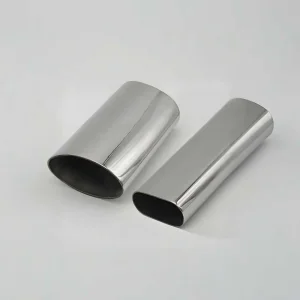
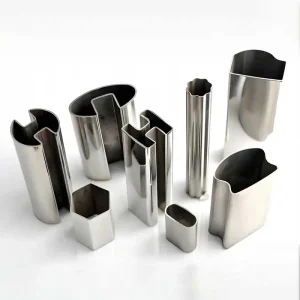
Eliminate initial NRE tooling costs and long sample lead times. Our extensive tooling library covers flat oval profiles, D-shapes, sharp-corner squares, and double-slotted channels tailored for immediate production.
Enterprise medical equipment buyers operate under rigorous vendor qualification standard operating procedures. Here is how VertexFlow systematically de-risks the global supply chain.
Procuring raw tubing without downstream processing capability creates compounded logistics costs and scrap hand-offs. VertexFlow provides end-to-end component manufacturing:
Every shipment is backed by a fully traceable quality dossier satisfying ISO 13485 and FDA 21 CFR Part 820 audit requirements:
Bridging international procurement hurdles with flexible commercial terms, multi-lingual engineering teams, and protective packaging formats designed for ocean and air transport.
Preventing transit scratching and airborne contamination. Tubes are individual PE sleeved, bundled into heavy-duty corrugated plastic sheets, or packed in fumigated wooden crates or steel shipping frames.
Accommodating both prototype trial runs and high-volume commercial production. Low initial MOQs (500 kg per standard size) with Vendor-Managed Inventory (VMI) arrangements for strategic OEM partners.
Direct access to second-generation tube fabrication engineers, not third-party trading sales reps. Immediate CAD drawing review, bend radius feasibility checks, and material grade matching.
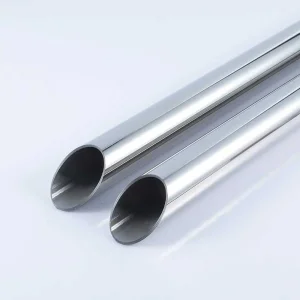
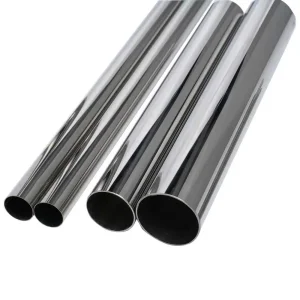
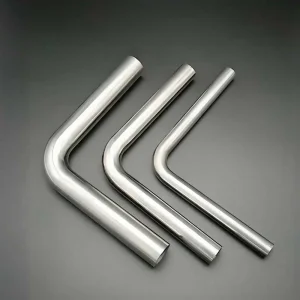
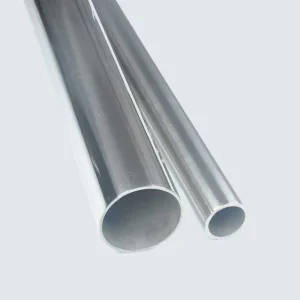
Explore our specialized range of sanitary, decorative, oval, and structural stainless steel tubing configurations engineered for international buyers.
Detailed technical answers compiled by our metallurgical quality assurance team regarding standards, bending behavior, surface treatments, and certification compliance.
For structural hospital furniture, bed side-rails, IV poles, and transfer carts, ASTM A554 Grade 304 is the industry standard due to its high yield strength, excellent polishability (600# mirror or 320# satin), and cost effectiveness. However, for bio-fluid handling, endoscopic sheath tubes, or diagnostic analyzer liquid lines, ASTM A269 / A270 Grade 316L is mandatory. The addition of 2-3% Molybdenum in 316L provides superior resistance to pitting corrosion from aggressive biological reagents and sterilization agents.
Tube cracking during tight-radius bending usually results from work-hardened strip steel, improper weld seam positioning, or uneven grain structure across the heat-affected zone (HAZ). We eliminate this by utilizing 100% prime fully-annealed raw coils from POSCO, TISCO, and Baosteel with controlled elongation values (>40%). During rolling, our continuous plasma welding system applies inner nitrogen gas shielding and automated planishing, producing a ductline weld bead that bends smoothly without splitting when positioned on the neutral bending axis.
Surface "tea-staining" occurs when atmospheric chloride ions break down the passive Chromium Oxide (Cr₂O₃) protective film on 304 stainless steel. In coastal regions or high-humidity indoor aquatic therapy centers, microscopic salt deposits concentrate in surface micro-scratches (Ra > 0.8 µm) or unpassivated weld seams. To guarantee 100% rust-free performance, we recommend specifying 316L marine-grade tubing coupled with an ASTM A967 chemical nitric/citric passivation treatment, which passes over 500 hours of continuous Neutral Salt Spray (NSS) testing.
Our standard precision sanitary tube mill holds internal bore surface roughness to Ra ≤ 0.4 µm (16 µin) via mechanical hone-polishing and internal bright annealing. Upon customer specification for high-purity medical gas or pharmaceutical liquid handling, we apply secondary electropolishing (EP) to achieve ultra-smooth bore finishes of Ra ≤ 0.2 µm (8 µin), drastically reducing microscopic surface area and preventing protein adhesion or biofilm formation.
Every commercial production batch shipped from VertexFlow includes a full compliance audit pack: EN 10204 3.1 Mill Test Certificates detailing heat-lot chemical ladle analyses, mechanical tensile/yield/elongation data, flattening and flaring destructive test reports, dimensional laser inspection logs, and Eddy Current non-destructive test certificates. RoHS, REACH, and California Prop 65 material safety declarations are also provided on request.
Our baseline MOQ is 500 kg per size and surface finish for standard round, square, and rectangular profiles. For custom special-shaped profiles requiring new roll-forming die development, MOQ is 1,000 kg. Because we house over 500 existing profile tooling moulds, most custom shapes require no tooling fees. Standard production lead time is 15 calendar days from sample sign-off and order confirmation.