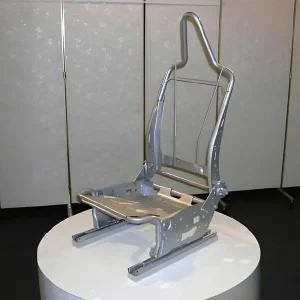
High-grade structural and ornamental stainless steel tubing engineered for modern furniture frame assembly, space organization hardware, and architectural decor.
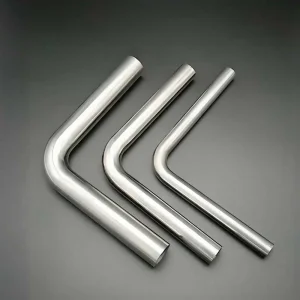
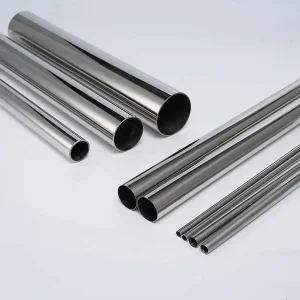
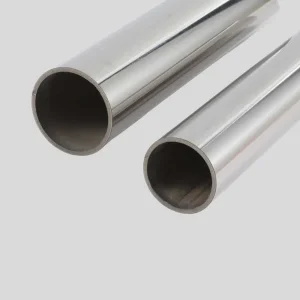
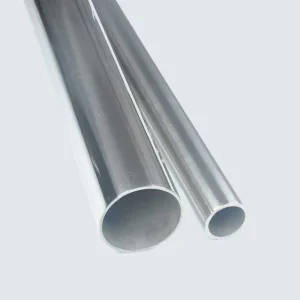
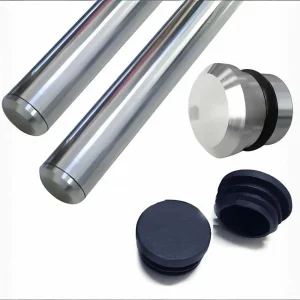
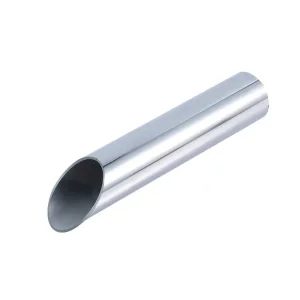
The global commercial decor and residential furniture industry is undergoing a structural transition. Rising consumer demand for longevity, hygienic maintenance, and architectural aesthetics has accelerated the replacement of traditional chrome-plated carbon steel with advanced austenitic stainless steel (AISI 201, 304, and 316L). Modern furniture original equipment manufacturers (OEMs) and original design manufacturers (ODMs) face stringent technical requirements: tighter dimensional tolerances (±0.05 mm), flawless high-gloss mirror or micro-brushed finishes, non-toxic PVD (Physical Vapor Deposition) titanium coatings, and structural integrity during complex CNC rotary draw bending.
Foshan, China stands as the global epicenter of stainless steel tube mill engineering and surface finishing innovation. By consolidating cold-rolled strip slitting, plasma welding, inner-bore nitrogen shielding, bright annealing, multi-stage automatic polishing, and secondary CNC fabrication into unified localized industrial clusters, Chinese manufacturers offer unprecedented supply chain resilience, cost efficiency, and technical responsiveness.
Direct partnerships with primary steel mills (such as TISCO, Posco, and Baosteel) guarantee prime-grade raw coil chemistry. In-house slitting and roll-forming eliminate third-party markup and control material hardness (HRB < 80) tailored specifically for zero-crack cold mandrel bending.
Elimination of inner weld beads through automatic internal weld roll-planishing combined with 99.999% pure argon/nitrogen internal atmosphere purging prevents seam oxidation ("black line") and guarantees maximum structural yield during flaring and necking operations.
Transition from traditional electroplating to environmentally sustainable Physical Vapor Deposition (PVD). Titanium nitride ceramic coatings yield metallic color tones—Rose Gold, Champagne Gold, Black Titanium, Brushed Brass—with surface hardness exceeding 2000 HV.
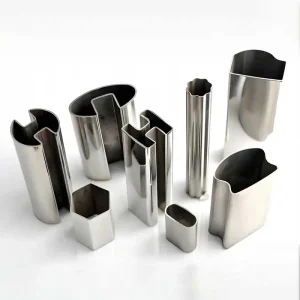
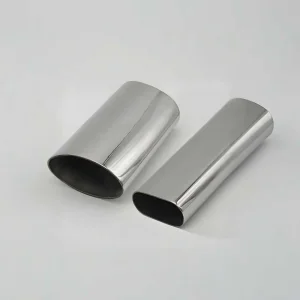
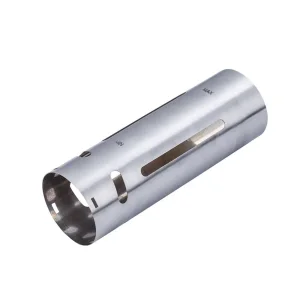
Custom geometric cross-sections—such as flat oval tubing, triangular channels, D-shaped ergonomic extrusions, and single/double slotted tubes—can be produced immediately without charging buyers initial tooling amortisation costs.
Stainless steel tubing serves as the load-bearing spine and visual highlights across diverse commercial and residential applications.
High-traffic retail display racks, boutique shelving systems, hotel lobby screens, and architectural balustrades require 600# mirror polished or PVD-coated 304/316L tubing. The corrosion resistance prevents degradation from heavy human contact and commercial chemical cleaners.
Heavy-duty wardrobe clothes rails, modular closet organizers, and kitchen drying racks benefit from high yield-strength oval and round tubing. Unlike plated iron, solid stainless steel eliminates peeling chrome flakes and rust stains under humid laundry conditions.
Hospital beds, IV poles, medical trolley carts, and sanitized cleanroom furniture demand non-porous 304 and 316L stainless steel tubing. High surface smoothness (Ra ≤ 0.4 μm) inhibits bacterial adhesion and tolerates harsh daily disinfectant washdowns.
Patio furniture frames, poolside loungers, and marine deck hardware face extreme UV exposure, high humidity, and atmospheric chloride attacks. Utilizing molybdenum-alloyed 316L tubing with continuous passivated weld seams prevents salt-fog pitting and tea-staining.
Modern cleanroom electronics packaging lines use solid stainless steel lean tubes instead of plastic-coated iron pipes. Solid stainless provides long-term ESD (Electrostatic Discharge) safety, eliminates delamination debris, and supports heavy dynamic loading.
Precision welded structural tubing forms seat frames, grab rails, and bus interior handrails where weight optimization, structural rigidity, and passenger impact safety standards are tightly mandated by automotive regulatory bodies.
Selecting the appropriate alloy grade and dimensional standard is crucial to balancing procurement cost with structural durability.
| Alloy Grade | Chemical Composition Key Elements | Corrosion Resistance Level | Bending / Formability | Recommended Furniture Applications |
|---|---|---|---|---|
| AISI 201 (High-Cu) | 16-18% Cr, 1-1.5% Ni, 5.5-7.5% Mn, 1.5-2.0% Cu | Moderate (Indoor dry environments) | Excellent (Cu addition lowers hardness) | Indoor sofa frames, dining chair legs, commercial clothes hangers. |
| AISI 304 (EN 1.4301) | 18-20% Cr, 8-10.5% Ni, ≤ 2.0% Mn | High (Standard residential & commercial) | Superior ductility and drawability | Bathroom towel racks, kitchen storage systems, office furniture frames. |
| AISI 316L (EN 1.4404) | 16-18% Cr, 10-14% Ni, 2-3% Mo, Low Carbon | Exceptional (Chloride & salt fog resistant) | High toughness, requires stable tooling | Outdoor patio furniture, marine yacht decor, spa & pool handrails. |
| ASTM A554 Standard | Welded Ornamental Tubing Specification | Controlled by base alloy grade selection | Controlled wall tolerance (±8%) | Architectural railings, decorative profiles, display fixtures. |
Tubes are finished using automated multi-head belt grinders and sisal polishing wheels. Available surface finishes include:
Every production batch undergoes strict quality control gates prior to export release:
Procurement teams handling large-scale international furniture manufacturing programs must manage metallurgical, logistical, and commercial risks.
Full heat-lot traceability ensures every tube bundle links directly to its parent steel coil chemical ladle analysis, yield strength, tensile rating, and elongation percentage.
To prevent ocean-transit scratching and moisture oxidation, tubes are individually PE-sleeved, bundled in woven plastic wrapping, and secured inside reinforced wooden crates or steel-framed skids.
With 43 continuous tube mills operational, standard order turnaround times are held to 15 days, allowing furniture brands to implement lean inventory controls and rapid seasonal product cycles.
Emerging technological innovations and environmental directives are reshaping how designers and factories utilize metal tubing.
Global environmental policies (such as EU REACH and RoHS) are phasing out traditional hexavalent chromium electroplating due to toxic sludge generation. Dry PVD vacuum evaporation technology is rapidly replacing chemical baths, offering 100% recyclable metal components with zero hazardous waste emissions.
Modern high-speed 3D fiber laser tube cutters allow factories to execute interlocking tab-and-slot joints, precision miter cuts, and multi-hole punching directly on raw mill tubes. This enables "flat-pack" knock-down furniture designs that drastically reduce export shipping volume.
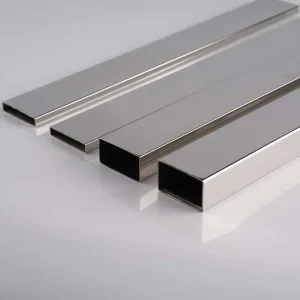
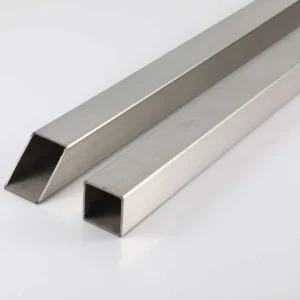
Interior trends are moving away from traditional round tubing toward architecturally expressive profiles—flat oval, capsule, triangular, and radius-corner rectangular profiles. These offer high moment of inertia along structural load axes while maintaining slim visual silhouettes.
Advanced formulation of low-carbon, high-copper 201 and 304 alloys allows furniture designers to achieve extreme 1D tight-radius bends without tube flattening or seam rupture, opening up organic, continuous-loop chair and table frame geometries.
Expert insights compiled by our quality assurance engineering team to resolve common specification challenges.
Tube cracking during rotary draw bending typically stems from three factors: excessive material hardness (high work-hardening in non-annealed strip), incorrect weld seam placement, or a wall thickness that is too thin relative to the Centerline Radius (CLR). To prevent cracking, we specify deep-drawing quality steel strip with elongation > 45%, position the weld seam at the neutral bending axis (90° to the bend plane), and maintain wall thickness ratios within safe mandrel limits.
Grade 201 substitutes manganese and nitrogen for a portion of nickel, lowering material cost while maintaining high strength. High-copper 201 offers excellent formability for indoor dry furniture frames (chairs, tables, display racks). Grade 304 contains 8-10% nickel and 18% chromium, offering superior corrosion resistance necessary for kitchen environments, bathroom hardware, humid climates, or furniture exported under strict long-term anti-rust warranties.
PVD (Physical Vapor Deposition) is a plasma-based vacuum process that deposits a thin ceramic layer (0.3 to 0.5 μm) directly onto the stainless steel substrate. Unlike electroplating, PVD will not chip, peel, or flake off. It provides superior scratch resistance (hardness up to 2000 HV), offers a wider range of high-end metallic colors (Rose Gold, Champagne, Black Titanium), and produces zero toxic chemical effluent.
Our standard automated mills hold outside diameter tolerances of ±0.10 mm. For precision applications such as telescoping furniture legs, conveyor roller shells, or tight-fitting connector sockets, we run secondary sizing passes to achieve tolerances of ±0.05 mm. Wall thickness tolerance is consistently maintained within ±8% across the entire coil batch.
Yes. Our facility maintains an extensive library of over 500 existing roll-forming die sets covering standard flat oval, elliptical, square, rectangular, triangular, and slotted profiles. If your project dimensions match our existing roll profiles, no tooling fees are incurred. For entirely unique custom extrusions, our in-house toolroom fabricates custom roller sets with low MOQ requirements.
Every shipment is accompanied by a comprehensive Quality Dossier containing: EN 10204 3.1 Mill Test Certificates (MTC) detailing chemical ladle analysis and mechanical test data, ASTM A554 dimensional compliance logs, Salt Spray Test reports (upon request), Certificate of Origin (CO), and Third-Party Inspection certificates (SGS/TÜV/BV) when mandated by the buyer.
Explore our extended range of precision-welded profiles engineered for high-load industrial frameworks, medical structures, and specialized mechanical hardware.