Providing definitive procurement frameworks and technical analysis for global OEM/ODM procurement managers, structural engineers, and industrial designers.
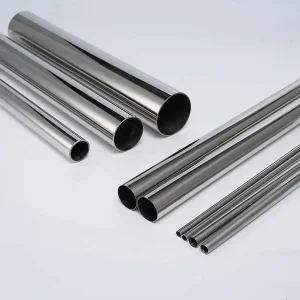
In modern industrial manufacturing, stainless steel tubing is no longer treated as a simple commodity. The structural, chemical, and aesthetic demands of distinct sectors—ranging from automotive exhaust systems operating under extreme thermal cycling to hygienic sanitary processing lines requiring sub-micron surface smoothness—demand deep domain-specific specialization. As leading by-industry manufacturers & suppliers, our production architecture is optimized to convert raw austenitic, ferritic, and duplex steel strip into application-specific tubular components that guarantee long-term operational integrity.
Understanding the microstructural requirements of each sector is central to establishing Information Gain for engineering teams. Selection failure often occurs when general-purpose tubing is applied in specialized environments. For example, standard decorative ASTM A554 tubing utilized in high-salinity marine hardware will rapidly succumb to localized chloride pitting (pitting corrosion), whereas specifying a 316L alloy enriched with 2–3% Molybdenum delivers high Pitting Resistance Equivalent Number (PREN ≥ 23) ratings necessary to withstand severe atmospheric degradation.
Analysis of technological shifts driving material adoption across architectural, medical, automotive, and industrial equipment manufacturing.
Global healthcare and pharmaceutical facilities are imposing stringent non-porous cleanliness standards. Medical grab bars, cleanroom furniture, and hospital beds require electropolished surfaces with inner-bore oxidation prevention to halt bacterial adhesion and resist aggressive hospital-grade disinfectants.
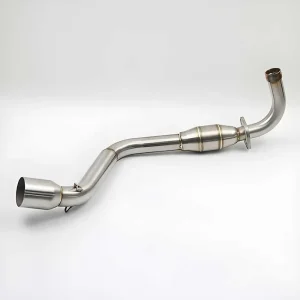
Electric Vehicle (EV) chassis frames, battery enclosure supports, and high-efficiency internal combustion engine (ICE) exhaust manifolds require extreme strength-to-weight ratios. The adoption of hydroformed 409L ferritic and 304 austenitic alloys ensures vibration fatigue resistance while cutting overall vehicle payload.
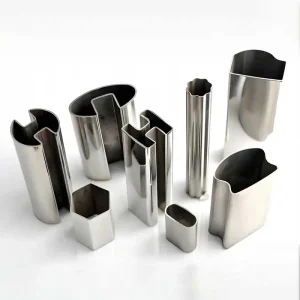
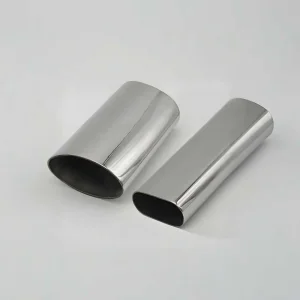
Luxury residential, commercial furniture, and public transit architecture are abandoning traditional electroplating in favor of environmentally clean Physical Vapor Deposition (PVD). Titanium-nitride PVD finishes over sharp-corner square and custom oval profiles deliver high scratch resistance and zero color fading.
How Tier-1 buyers and OEM procurement teams evaluate manufacturing capacity, total cost of ownership (TCO), and quality control governance.
Procurement directors sourcing industrial stainless steel tubing face complex risk factors: raw material price volatility, dimensional tolerance mismatch during automated CNC bending, weld-seam splitting under end-flaring operations, and international trade compliance hurdles. A successful OEM manufacturer supplier partnership relies on strict adherence to clear quality gates:
| Procurement Metric | Standard Market Specification | VertexFlow High-Precision Benchmark | Impact on Enterprise OEM Buyers |
|---|---|---|---|
| OD & Wall Thickness Tolerance | ± 0.15 mm to ± 0.20 mm | ± 0.05 mm (Precision Runs) | Eliminates jamming in robotic CNC laser cutters and automatic bending jigs. |
| Weld Seam Integrity | Standard TIG Weld, visual check | In-Line Plasma + Nitrogen Shielding | Zero inner oxidation; prevents cracking during 90° tight-radius mandrel bending. |
| Surface Roughness (Ra) | Ra 0.8 μm (180 Grit Polish) | Ra ≤ 0.4 μm (600# Mirror / Satin) | Provides optimal substrate adhesion for chrome plating and cleanroom washdowns. |
| Concentricity & Straightness | 2.0 mm / meter runout | ≤ 1.0 mm / meter runout | Crucial for low TIR conveyor rollers operating at high speed without dynamic imbalance. |
| Raw Material Origin | Unverified secondary scrap strip | 100% Prime Mill Coils (TISCO/POSCO) | Full Heat Traceability; guaranteed elongation percentage (≥ 40%) for forming. |
Customized chemical compositions, mechanical properties, and secondary fabrication capabilities tailored to major target industries.
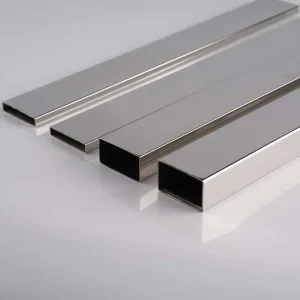
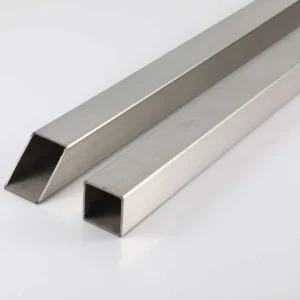
Architectural installations require strict structural load ratings and long-term surface retention against weathering. ASTM A554 square, rectangular, and round tubing engineered with sharp corner radii (±0.5° squareness) enables seamless glass railing cutouts and clean mitre welding in modern buildings.
Primary Alloys: AISI 304, 316, 316L
Hygienic equipment manufacturers demand smooth ID seam annealing and electro-platable OD surfaces. Medical grab bars and hospital bed railings feature high-ductility 304/316 tubes capable of expansion and flaring without structural necking or micro-cracking around load-bearing brackets.
Primary Alloys: AISI 304, 316L (Sanitary Grade)
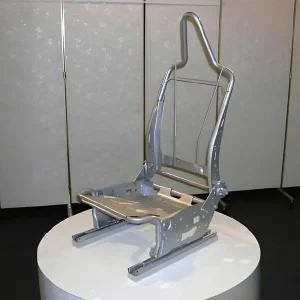
Automotive parts demand high resistance to cyclic thermal expansion and road salt corrosion. Ferritic 409L and austenitic 304 tubing are engineered for high-frequency vibration absorption, gas-tight exhaust routing, and high yield strength in bus seats and heavy equipment cabs.
Primary Alloys: AISI 409L, 304, 304L
Luxury furniture manufacturers and closet storage OEMs require elegant visual appeal alongside structural load support. We supply high-copper 201 for cost-effective bending operations, as well as 304 tubing with mirror polishing or PVD color coatings that eliminate the need for third-party finishing.
Primary Alloys: High-Copper 201, AISI 304
Modern lean manufacturing facilities are replacing plastic-coated pipe with solid stainless steel tubing. Eliminating coating delamination prevents bacterial accumulation and particle shedding in cleanrooms. Controlled Total Indicator Runout (TIR) ensures smooth rotation in dynamic conveyor rollers.
Primary Alloys: AISI 201, 304, 316
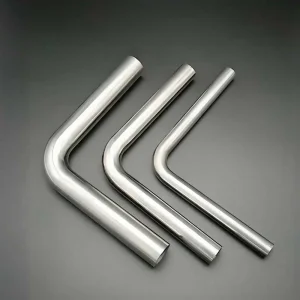
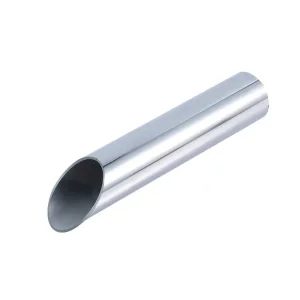
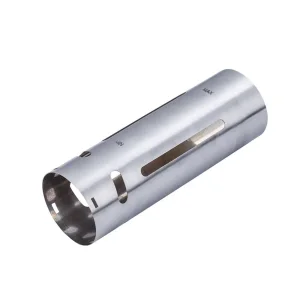
For fabricators seeking finished sub-assemblies rather than mill lengths, our facility offers integrated secondary processing. In-house multi-axis CNC laser cutting, rotary mandrel bending, punching, slotting, necking, and end flaring streamline the assembly line for tier-1 original equipment manufacturers.
Capabilities: CNC Cutting, Mandrel Bending, Laser Slotting
Rigorous regulatory verification, heat traceability, and international packaging standards protecting global supply chains.
Navigating global trade compliance requires more than standard manufacturing capacity. International buyers need verified certification packs, transparent metallurgical reporting, and localized support to streamline customs clearance and quality audits. As a certified Foshan-based manufacturing exporter, our operations conform strictly to recognized global engineering criteria:
Every shipment is issued with an EN 10204 3.1 Mill Test Certificate traceable to the specific raw coil melt batch. Our Quality Assurance protocol incorporates 100% In-Line Eddy Current Nondestructive Testing (NDT) to flag microscopic weld pinholes, alongside physical mechanical testing including:
To eliminate maritime transport damage and surface oxidation, tubes are individually PE-sleeved, bundled with thick anticorrosive woven wrapping, and secured inside heavy-duty steel-framed crate boxes. Our logistics team offers DDP/FOB/CIF terms with optimized Harmonized System (HS) Code classification (e.g., HS 7306.40 for welded round tubes, HS 7306.61 for square/rectangular profiles) to streamline tariff calculations across North America, Europe, Australia, and the Middle East.
How next-generation laser welding, artificial intelligence, and green steel initiatives are transforming stainless steel tube manufacturing.
Integrating high-speed optical vision sensors and continuous infrared thermography along continuous tube mills allows immediate detection of sub-millimeter surface scratches, dimensional drift, and weld seam cooling anomalies in real time.
Aligning with global net-zero targets, our material sourcing roadmap prioritizes electric arc furnace (EAF) stainless steel coils produced using renewable energy, drastically lowering Scope 3 embodied carbon footprint for international OEM clients.
Upgrading secondary processing lines with automated 12kW fiber laser tube cutters capable of 3D profile cutting, beveling, and complex interlocking hole patterns at speeds up to 5x faster than conventional mechanical tooling.
Expert insights compiled by our Chief Quality Officer and International Engineering Support Team.