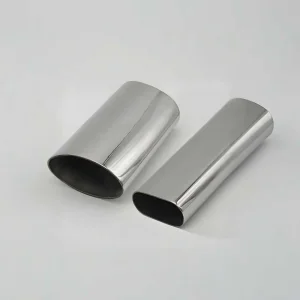
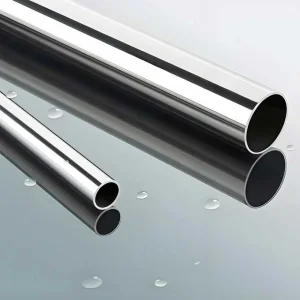
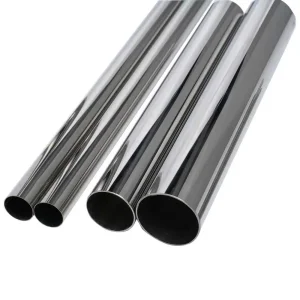
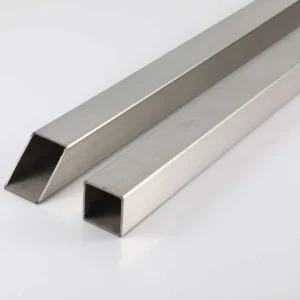
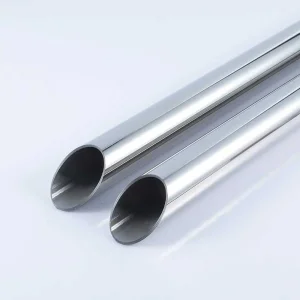
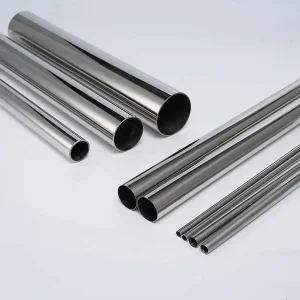
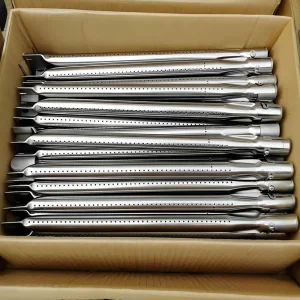
Precision-engineered tubing manufactured strictly to ASTM, EN, and JIS standards for structural, industrial, and sanitary OEM applications worldwide.
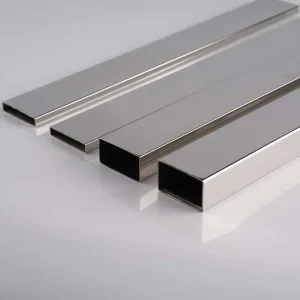
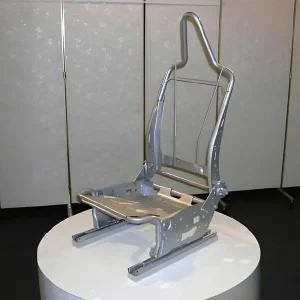
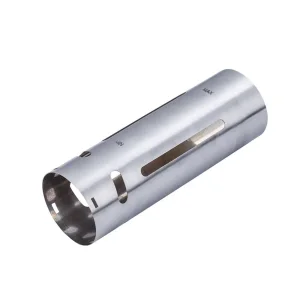
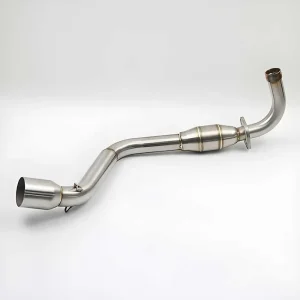
In modern industrial procurement, querying tubing suppliers strictly "By Standard" represents a pivotal user intent transformation. Corporate buyers, structural engineers, and Tier-1 automotive procurement heads no longer evaluate suppliers solely on price per metric ton. Instead, search intent centers on verified compliance with global standards, predictable grain structure, traceable chemical heat compositions, and exact dimensional tolerances.
When purchasing managers search for ASTM A554 square tubing suppliers or EN 10217-7 welded stainless tubes, their underlying goal is risk mitigation across high-volume manufacturing environments. VertexFlow Tubes addresses this demand through automated quality control, in-line nitrogen shielding, and precise mechanical testing logged for every heat lot.
Understanding the exact engineering boundary of each international standard is essential to prevent material mismatch, catastrophic mechanical failure, or premature localized corrosion (such as intergranular pitting or stress corrosion cracking).
| Standard Specification | Primary Industrial Purpose | Common Austenitic / Ferritic Grades | Key Tolerance & Dimensional Focus | Quality Verification Test Requirements |
|---|---|---|---|---|
| ASTM A554 | Ornamental, Structural, Architectural & Machine Components | 201, 304, 304L, 316, 316L, 409L | OD: ±0.10mm to ±0.05mm, Corner Radius: Sharp to 1.5t | Flattening, Flaring, Visual Surface Polish (180#-600#) |
| ASTM A249 / A269 | Boiler, Superheater, Heat-Exchanger & General Sanitary Lines | 304L, 316L, Duplex 2205 | Wall Thickness: ±8%, Hydrostatic or Non-Destructive Electric | 100% Eddy Current Test, Reverse Bend, Flange Test |
| EN 10217-7 | European Pressure Equipment & Structural Engineering | 1.4301 (304), 1.4404 (316L), 1.4541 | EN ISO 1127 Class D3/T3 Tolerances | Impact Test, Transverse Tensile, Weld Seam Decay Test |
| JIS G3446 | Japanese Architectural & Structural Stainless Steel Piping | SUS304, SUS316, SUS316L | Outer Diameter and Wall Thickness per JIS Specifications | Tensile Strength ≥ 520 MPa, Yield Proof Stress Verification |
Many global buyers mistakenly order ASTM A554 tubing for fluid pressure systems due to lower pricing. ASTM A554 is explicitly intended for ornamental and structural applications where mechanical strength, surface aesthetic, and dimensional uniformity are prioritized over pressure-containing seal integrity. For pressure vessels, heat exchangers, or sanitary fluid routing, specifying ASTM A249 / A269 or EN 10217-7 with Mill Test Certificates (MTC per EN 10204 3.1) is mandatory to satisfy global safety compliance.
The global market for stainless steel tubing is undergoing a structural realignment driven by advanced automation, strict ESG regulations, and localized supply chain resilience. Enterprise procurement officers across North America, Europe, Asia-Pacific, and the Middle East prioritize vendors capable of delivering high-volume consistency with minimal scrap rates during secondary CNC bending and hydroforming.
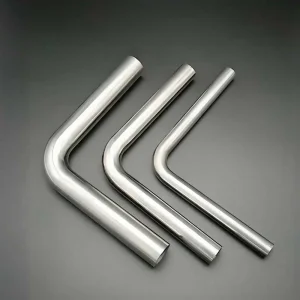
Automotive chassis, headrest stays, and seat frames demand welded tubing with exceptional ductility. Utilizing high-yield 304 and ferritic 409L alloys with controlled elongation (≥ 45%) allows seamless 90-degree mandrel bends without necking, wall thinning, or micro-cracking along the heat-affected zone (HAZ).
Hospitals, cleanrooms, and commercial bathroom manufacturers mandate Ra ≤ 0.4 µm internal and external surface roughness. Surface imperfections trap microbial colonies and compromise electroplating layer adhesion (such as PVD gunmetal or chrome over stainless substrates).
Parcel sorting facilities and automated warehouses require conveyor roller tubing with Total Indicator Runout (TIR) under 0.15mm and straightness controlled within 1mm/m. Low-TIR stainless tubing eliminates vibration, reduces motor load, and lowers ambient noise in automated distribution hubs.
Selecting the optimal stainless steel alloy based on international standard parameters is a balance between environmental corrosion aggressiveness and mechanical yield strength requirements. Below is an engineering evaluation of the primary alloys processed under standard specifications.
Grade 304 (18% Cr, 8% Ni) provides standard corrosion protection for indoor structural frames, retail displays, and home appliances. However, in coastal installations, outdoor architecture, or medical safety grab bars exposed to harsh sanitizers, chloride ions attack the passive chromium oxide film, causing unsightly brown tea-staining.
Grade 316L incorporates 2.0% to 3.0% Molybdenum (Mo), raising the Pitting Resistance Equivalent Number (PREN) from ~19 (in 304) to over 23 to 25. Combined with pickling and passivation, 316L welded tubing withstands over 500 hours of continuous neutral salt spray without localized oxide breakdown.
For cost-sensitive decorative furniture and retail display racks, modified Grade 201 incorporates elevated Manganese (Mn ~ 9.5%) and Copper (Cu ~ 1.0–1.5%). The inclusion of copper reduces work-hardening rates, rendering 201 tubing ideal for deep bending and roll-forming without premature fatigue cracking.
Conversely, Grade 409L is a titanium-stabilized ferritic alloy containing 10.5% to 11.75% Chromium. Engineered specifically for automotive exhaust gas systems, mufflers, and catalytic converter shells, 409L maintains high-temperature oxidation resistance up to 675°C while offering lower thermal expansion rates compared to 300-series austenitic alloys.
Producing industrial-grade stainless steel tubing to international standard tolerances requires strict process discipline across all 10 core production phases. At VertexFlow Tubes, every production line integrates automated quality gates to prevent weld porosity, wall variation, or surface scratching.
Steel strip sourced from TISCO, POSCO, and Baosteel undergoes precision slitting and continuous roll-forming. Welding parameters (current, speed, and gas shielding) are locked per mill schedule. Internal nitrogen purging shields the hot weld root, eliminating interior seam oxidation and black oxide residue.
Every meter of tube passes an automated Eddy-Current inspection unit in real-time. Any micro-pinhole, lack of seam penetration, or wall defect triggers an immediate signal and marks the section for rejection prior to sizing and cutting.
Automated 4-pass polishing heads produce 180#/240#/320# satin brushed textures or mirror-bright 600# surfaces. For architectural and high-end hardware, Physical Vapor Deposition (PVD) coats tubes with a 0.3–0.5 µm ceramic layer in Rose Gold, Black Titanium, and Brushed Brass.
Navigating global procurement requires strict adherence to international trade norms, material traceability standards, and environmental certifications. VertexFlow Tubes maintains full compliance documentation to streamline cross-border customs clearance for buyers across 40+ countries.
Every mill shipment includes full batch traceability from raw coil melt to final bundling. Material Test Reports (MTR) are formatted per EN 10204 3.1 standards, logging exact chemical ladle analysis (C, Si, Mn, P, S, Cr, Ni, Mo), tensile yield points, percentage elongation, and mechanical flattening / flaring test verification.
Products meet European REACH and RoHS 3 environmental directives, ensuring zero lead, mercury, hexavalent chromium, or polybrominated biphenyl contamination in appliances, medical furniture, or sanitary installations.
To prevent ocean freight transit damage, salt air staining, or scratch defects during container unloading, tubes are individually sleeved in protective plastic film or non-woven fabric sleeves.
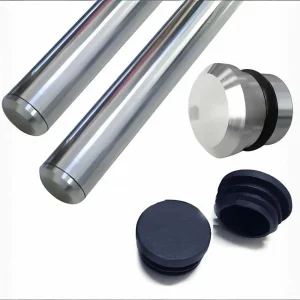
Bundles are reinforced with heavy-duty plastic end caps, wrapped in moisture-proof woven poly sheeting, and anchored within fumigated wooden crates or steel transport frames. Standard production lead times are maintained at 15 days, backed by a stock library of over 500 roll-forming dies for special shapes.
Direct answers from our metallurgical and quality control engineering team to help you specify the right tubing standard and grade.
Explore our full range of decorative, medical, marine, and mechanical stainless steel tubing engineered to exact OEM requirements.