Choosing the right Bathroom Grab Bar Tube supplier in 2026 requires more than comparing prices or polished catalogs. Buyers need evidence of material quality, production consistency, and practical bathroom performance. A tube may look flawless under showroom lighting, yet reveal weak welds, sharp edges, or poor corrosion resistance after months of cleaning.
Elena Morris, an independent bathroom safety consultant with experience in accessible fixture development, says, “A grab bar is trusted every day, so its tube must perform quietly under pressure.” That principle shapes this supplier review. The strongest manufacturers usually provide stainless steel or treated steel options, clear tube diameters, reliable wall thickness, and documented load testing. They also explain surface finishes, mounting compatibility, and inspection procedures without hiding behind vague claims.
Details matter.
A supplier’s factory experience can appear in small things. Consistent bends. Smooth weld transitions. Clean packaging. Accurate sample dimensions. Responsive technical support can matter just as much. Some suppliers offer attractive customization, but their quality-control records may remain unclear. That is a weakness worth noting, not ignoring.
This guide examines leading Bathroom Grab Bar Tube suppliers through product durability, manufacturing capability, customization, certifications, delivery reliability, and after-sales support. It does not treat one impressive sample as final proof. Real installations involve humidity, repeated loading, imperfect walls, and rushed contractors. The best supplier is not always the largest. It is the one that communicates limitations honestly and delivers dependable tubes repeatedly.
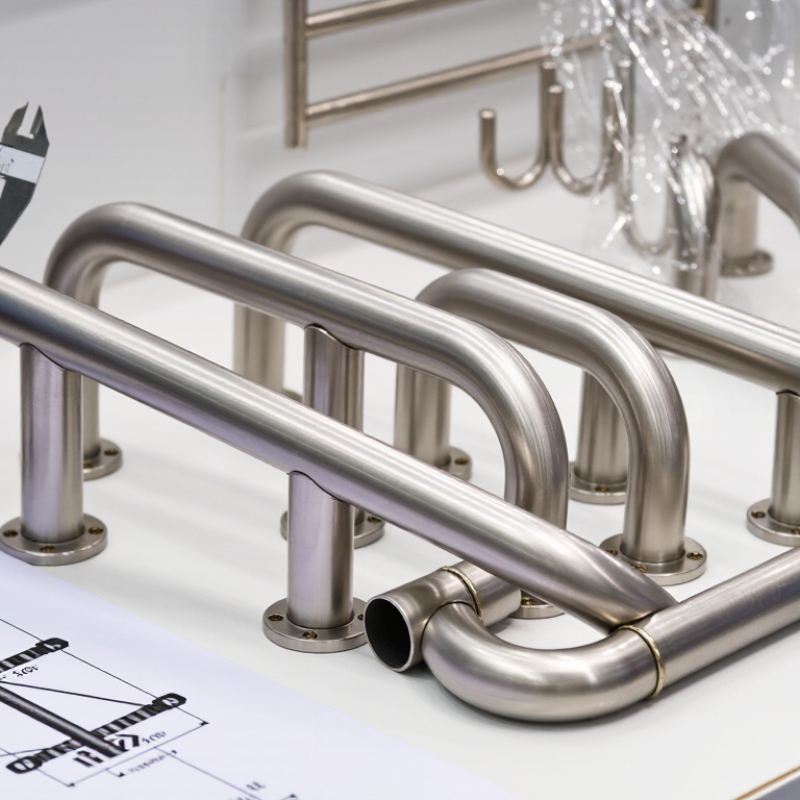
What Are Bathroom Grab Bar Tubes and Why Do They Matter?
Bathroom grab bar tubes are the tubular structural parts used inside wall-mounted support bars. They may be made from stainless steel, coated steel, or aluminum. Their diameter, wall thickness, weld quality, and surface finish affect safety. A polished tube may look reliable. Appearance is not proof.
The World Health Organization’s Falls Fact Sheet reports about 684,000 fatal falls worldwide each year. Adults over 60 experience the greatest risk. The U.S. Centers for Disease Control and Prevention also reports that more than one in four older adults falls annually. These figures explain why bathroom support hardware matters, especially near wet floors, toilets, and shower entrances. A properly engineered tube gives users a firmer hand position during standing, turning, or recovering balance.
Professional buyers should examine tested load capacity, corrosion resistance, tube tolerances, and joint construction. Accessibility guidance commonly uses a 250-pound force benchmark for grab-bar assemblies, but the tube alone does not guarantee compliance. Wall blocking and fasteners matter just as much. I have seen strong-looking bars installed into weak surfaces. That mistake is easy to miss. Supplier documentation should identify material grades, testing methods, and production controls. Reports from the National Institute on Aging also emphasize reducing bathroom hazards, yet product selection is only one part of that work. A better question is not “Which tube is cheapest?” It is “Will this tube, assembly, and installation remain dependable after years of moisture and repeated use?”
How to Evaluate Bathroom Grab Bar Tube Suppliers in 2026
2026 Top Bathroom Grab Bar Tube Suppliers?
How to Evaluate Bathroom Grab Bar Tube Suppliers in 2026
Supplier evaluation should begin with safety evidence, not catalogue photographs. The World Health Organization reports that falls cause about 684,000 fatal injuries worldwide each year. Older adults face the greatest risk. This makes tube strength, surface grip, and installation compatibility essential purchasing criteria.
Request precise material grades, tube wall thickness, diameter tolerances, and corrosion-test results. ISO 17966:2016 provides requirements and test methods for assistive products used in bathing and showering. A reliable supplier should also provide batch numbers, load-test records, and independent laboratory documentation. Check whether the stated load applies to the tube alone or the complete installed bar. That difference matters.
Look closely at manufacturing experience. Ask how weld seams are inspected, how coatings survive humid bathrooms, and how rejected tubes are controlled. The U.S. CDC reports that more than one in four adults aged 65 and older falls annually, so small quality gaps can have serious consequences. I would not trust impressive load figures without fixture testing on representative wall materials. Suppliers may also offer incomplete installation guidance. That is a warning.
A practical audit includes sample testing, dimensional checks, packaging review, and after-sales response time. Keep records. They reveal consistency better than promises. WHO data is broad, not product-specific, and that limitation deserves attention when comparing supplier claims.
2026 Bathroom Grab Bar Tube Supplier Evaluation Priorities
A practical procurement weighting model for comparing suppliers without relying on company or brand names. The percentages represent the relative importance of each evaluation dimension and total 100%.
Buyers should verify load-testing evidence, corrosion resistance, dimensional consistency, surface quality, compliance documentation, delivery capability, and production traceability before placing an order.
Key Materials, Designs, Standards, and Customization Options
2026 Top Bathroom Grab Bar Tube Suppliers: Key Materials, Designs, Standards, and Customization Options
Reliable suppliers treat grab bars as safety equipment, not decorative tubing. In project reviews, I check the tube alloy, wall thickness, weld quality, and mounting system. Stainless steel 304 suits many indoor bathrooms. Stainless steel 316 offers stronger corrosion resistance in coastal or high-humidity locations. Powder-coated steel can reduce cost, but damaged coatings may expose the base metal. That detail is often overlooked.
Design should follow the user and the room. Straight bars support controlled transfers near toilets and showers. Angled bars provide multiple hand positions. Fold-down models save space, but hinges need careful inspection. Knurled, peened, or textured surfaces improve wet-hand grip. Smooth chrome looks clean. It can become slippery. Nylon-covered tubes feel warmer and may suit users with sensitive hands.
Professional suppliers should provide test data, installation drawings, and traceable material information. Buyers should compare local accessibility rules, building codes, and recognized load-testing standards before ordering. A stated load rating means little if the wall cannot carry it. Custom options may include length, tube diameter, flange shape, finish, concealed fasteners, and mounting plates for concrete, tile, or reinforced framing. Ask for pull-test evidence on the intended substrate. I have seen attractive prototypes fail because the fixing points were too weak. That mistake deserves more attention.
Leading Supplier Categories and Their Market Strengths
In 2026, bathroom grab bar tube suppliers fall into several practical categories. Specialized stainless steel fabricators serve hospitals, hotels, and accessible housing projects. Their strength is precise tube forming, consistent wall thickness, and reliable welding. Many can provide brushed, polished, or powder-coated finishes. Small surface flaws still matter under bright bathroom lighting.
Metal service centers offer broader material choices, including stainless steel, aluminum, and coated steel. They often support shorter production runs and faster sampling. This flexibility helps contractors test different diameters, bends, and mounting plates before full production. However, some suppliers focus on raw tubing rather than finished grab bar components. Buyers must check cutting, drilling, and deburring capabilities.
Contract manufacturers provide a wider package. They may handle forming, laser cutting, welding, polishing, packaging, and inspection under one production plan. Their market strength is coordination, especially for custom lengths or multi-site projects. Look for documented tensile testing, weld inspection records, dimensional reports, and traceable material certificates. A supplier with clear communication can prevent costly installation errors.
Regional distributors and sourcing specialists add value through local inventory and technical support. They can shorten delivery times and help match tube specifications with mounting systems. Yet availability is not always consistency. A sample may look excellent, while later batches vary slightly in finish or bend accuracy. Requesting retained samples, inspection photos, and written tolerances creates a more dependable purchasing process.
How to Select the Right Supplier for Your Project
2026 Top Bathroom Grab Bar Tube Suppliers?
Selecting a bathroom grab bar tube supplier requires more than comparing prices. Start with material certificates, tube dimensions, wall thickness, and surface-finish records. These documents reveal how consistently the supplier controls production.
Ask for samples from current production, not only showroom pieces. Check welds, bends, coating adhesion, and visible scratches under bright light. Request load-test reports with clear methods, dates, and testing conditions. A reliable supplier should explain tolerances and trace each batch through documented records.
Communication matters.
During a project, ask how the supplier handles design changes, rejected parts, and delayed materials. An experienced supplier will identify risks before mass production begins. Factory visits, independent inspections, and small trial orders can confirm what paperwork cannot. Yet perfection is unrealistic; even a capable supplier may miss a detail. I once overlooked packaging strength, and several finished tubes arrived with rubbed surfaces. The metal was acceptable, but the shipment still created extra work. Discuss protective film, carton testing, lead times, and replacement procedures before signing an agreement. Also compare production capacity with your actual schedule, rather than trusting broad monthly figures. Choose the supplier that offers transparent evidence, responsive problem-solving, and stable quality—not simply the lowest quotation.
2026 Top Bathroom Grab Bar Tube Suppliers? - How to Select the Right Supplier for Your Project
| Supplier Type |
Best Project Fit |
Common Tube Materials |
Typical Diameter Range |
Typical Wall Thickness |
Typical MOQ |
Typical Lead Time |
Key Verification Points |
| Medical-Equipment OEM |
Hospitals, nursing homes, accessible housing and regulated projects |
304 or 316 stainless steel; powder-coated steel options |
25–38 mm outside diameter |
1.2–2.0 mm, subject to load design |
100–500 units |
6–12 weeks after drawing approval |
Load-test reports, material certificates, weld inspection and traceability records |
| Commercial Stainless-Steel Fabricator |
Hotels, apartments, public buildings and custom architectural work |
304 stainless steel; 316 stainless steel for coastal or high-chloride environments |
25–40 mm outside diameter |
1.0–2.0 mm |
50–300 units |
4–10 weeks |
Bend radius, surface finish, weld quality, mounting-plate dimensions and corrosion resistance |
| High-Volume Metal Manufacturer |
Large residential developments, retail programs and standardized product lines |
Carbon steel with powder coating; stainless steel on selected models |
25–32 mm outside diameter |
1.0–1.5 mm |
500–2,000 units |
8–16 weeks, including tooling where required |
Process capability, coating thickness, batch consistency, packaging and capacity planning |
| Custom Tube-Bending Specialist |
Projects requiring unusual angles, concealed fixing or made-to-measure rails |
304 stainless steel, 316 stainless steel or coated steel |
22–42 mm outside diameter |
1.2–2.0 mm |
10–100 units |
3–8 weeks |
CAD drawing control, dimensional inspection, bend deformation and prototype approval |
| Accessibility-Product Distributor |
Small installations, replacement parts and urgent local procurement |
Usually stainless steel or coated steel from established factories |
25–35 mm outside diameter |
Confirm by product specification |
1–20 units |
In-stock delivery to 4 weeks |
Installation instructions, stock availability, warranty terms and compliance documentation |
| Private-Label Contract Supplier |
Retail products, online sales and projects needing customized packaging |
304 stainless steel, carbon steel with protective coating or aluminum for non-structural trim |
25–38 mm outside diameter |
1.0–1.8 mm |
200–1,000 units |
6–14 weeks |
Packaging controls, barcode requirements, inspection plan, product liability coverage and change notification |
Selection checklist for 2026 projects:
Confirm the applicable building code and accessibility requirements, request independent or witnessed load-test evidence, verify the wall substrate and fixing system, review corrosion resistance for wet or coastal locations, and approve a production sample before placing a full order. The commonly referenced standards include ADA 2010 accessibility provisions, ISO 17966 requirements for personal-hygiene support products, and ASTM F446 testing guidance where applicable. Final compliance depends on the product design, installation method and project jurisdiction.
FAQS
They are tubular structural parts inside wall-mounted support bars. Common materials include stainless steel, coated steel, and aluminum. The tube supports the hand position.
Bathrooms often have wet floors near showers, toilets, and entrances. A dependable tube helps users stand, turn, or recover balance. Small details matter.
No. A shiny surface can hide weak welds, thin walls, or poor tolerances. Appearance is not proof.
Check tested load capacity, corrosion resistance, wall thickness, tube diameter, and joint construction. Also review material grades and inspection methods.
No. Wall blocking and fasteners matter equally. A strong-looking bar can fail when mounted into a weak surface. That mistake is easy to miss.
Some accessibility guidance uses a 250-pound force benchmark for complete grab-bar assemblies. The tube alone does not guarantee compliance.
Contract manufacturers can manage forming, cutting, welding, polishing, packaging, and inspection. They may support custom lengths and multi-site orders.
Request samples, written tolerances, retained samples, inspection photos, and material certificates. Compare later batches carefully. Consistency can slip.
They may offer local inventory, technical support, and shorter delivery times. Availability does not always mean consistent finish or bend accuracy.
Ask whether the tube, assembly, and installation will remain dependable after years of moisture and repeated use. The cheapest option may not stay reliable.
Conclusion
This guide explores how Bathroom Grab Bar Tube suppliers support safer, more accessible, and more durable bathroom environments in 2026. It explains the role of grab bar tubes in residential, healthcare, hospitality, and public facilities, focusing on stability, corrosion resistance, user comfort, and dependable load performance. The article also outlines practical criteria for evaluating suppliers, including manufacturing consistency, quality control, technical support, production capacity, delivery reliability, and customization services.
Readers will learn how materials such as stainless steel, aluminum, and coated metal influence performance, appearance, maintenance, and cost. The guide compares design options, surface finishes, tube dimensions, mounting solutions, and relevant safety and accessibility standards. It also reviews supplier categories, from specialized manufacturers to large-scale component producers, highlighting the strengths of each. Finally, it provides a structured approach for selecting the right supplier according to project requirements, budget, order volume, installation conditions, compliance expectations, and long-term service needs.