Selecting the Top China Electropolished Stainless Steel Pipe Supplier requires more than comparing prices. It demands evidence from the factory floor, inspection records, and finished surfaces.
Professor David Landolt, a recognized researcher in electrochemical surface treatment, described electropolishing as “an electrochemical process that produces a smoother, brighter, and cleaner metal surface.” This principle remains practical today. A reliable supplier should control current density, electrolyte temperature, polishing time, and post-treatment rinsing. Small variations can affect surface roughness, brightness, corrosion resistance, and cleanliness.
Look closely.
For example, inspect weld areas under consistent lighting. Poorly finished seams may show heat tint, dark edges, or uneven reflections. Request roughness data, material certificates, dimensional reports, and passivation details. Confirm whether the supplier uses 304, 316L, or another specified grade. The pipe’s application should determine the material, not marketing language.
An experienced Chinese manufacturer should also explain its process clearly. It should identify polishing limits, tolerances, packaging methods, and inspection equipment. Clean polyethylene protection, capped ends, and dry storage can prevent damage after processing. These details often reveal operational discipline.
Still, no supplier is perfect. Some websites present excellent photographs but provide limited traceability. That gap deserves attention. A careful buyer should review samples, audit communication quality, and test critical batches independently when necessary.
This guide examines how to compare Chinese suppliers through technical capability, quality consistency, documentation, production experience, and customer support. The strongest choice is not always the cheapest. It is the supplier that can repeatedly deliver a clean, uniform, and application-ready Electropolished Stainless Steel Pipe.
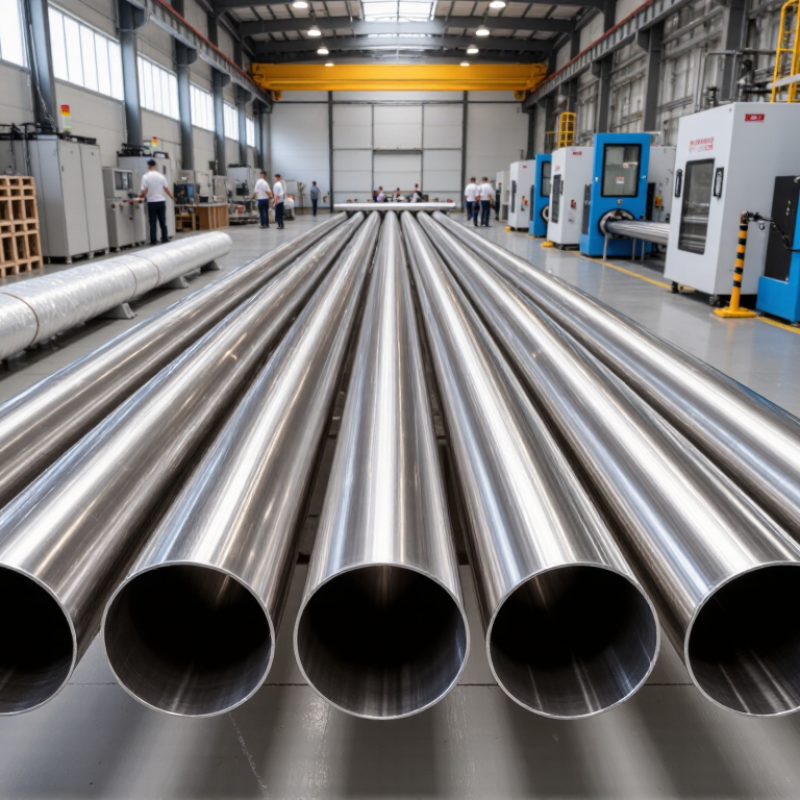
An electropolished stainless steel pipe is a metal tube finished through an electrochemical process. The pipe acts as an anode in a controlled electrolyte bath. Electric current dissolves a thin layer from its surface. Microscopic peaks disappear first, creating a smoother and more uniform finish. The result is clean, bright, and easier to inspect.
This finish can reduce surface roughness, remove embedded contaminants, and support the formation of a stable passive layer. It is useful in food processing, pharmaceutical equipment, laboratories, and other clean manufacturing areas. A smoother wall also gives residue fewer places to collect. Cleaner flow paths matter.
However, electropolishing is not a cure for poor fabrication. It cannot correct deep scratches, bad welding, incorrect dimensions, or unsuitable stainless steel. Surface appearance can also be misleading. A mirror-like pipe may still have weak welds or incomplete cleaning. That point deserves attention.
When evaluating a China-based supplier, request material certificates, weld inspection records, roughness data, and process details. Ask whether the supplier controls current density, solution temperature, and treatment time. These details affect the final surface. Experienced manufacturers also protect tube ends and inner walls during handling. Small scratches can appear after polishing. I have seen specifications look excellent on paper, yet practical inspection revealed uneven weld areas. Independent sampling and documented inspection remain sensible steps.
Top China Electropolished Stainless Steel Pipe Supplier?
Manufacturing begins with carefully selected stainless steel strip or tube, matched to the required grade and service conditions. The material is formed into a round profile, then welded with controlled heat input. Weld quality matters because uneven seams can remain visible after polishing. Skilled technicians inspect the weld and remove sharp internal edges before further treatment.
The pipe is cleaned, degreased, and mechanically prepared. It then enters an electropolishing bath containing a controlled acidic electrolyte. The pipe acts as the anode, while a suitable cathode completes the electrical circuit. Direct current dissolves microscopic high points from the surface. Temperature, voltage, current density, and treatment time must remain stable. Small changes can affect brightness, roughness, and dimensional accuracy.
After polishing, operators rinse the pipe through several stages to remove chemical residue. Some applications require passivation to strengthen the protective oxide layer. Inspectors check surface roughness, wall thickness, straightness, weld condition, and internal cleanliness. Borescope inspection can reveal marks that external checks miss. The process is controlled, not perfect. A minor scratch may require rework, and excessive polishing can reduce critical dimensions. Reliable production depends on records, calibrated instruments, trained operators, and honest inspection reports.
Top China Electropolished Stainless Steel Pipe Supplier?
Electropolishing removes a thin metal layer from the pipe surface. It smooths microscopic peaks inside the bore. Many hygienic applications target surface roughness below Ra 0.5 micrometres. Actual results depend on alloy, current density, temperature, and inspection method. ASME BPE and ASTM A967 provide useful benchmarks for surface finish and passivation control. A certificate is helpful. It is not proof of every batch.
The NACE IMPACT study estimated global corrosion costs at about 3.4% of global GDP. Electropolished stainless steel can reduce contamination traps and improve cleanability when fabrication is controlled. Its chromium-rich surface also supports stable passive-film formation. In practice, the weld zone matters greatly. Poorly purged welds may show discoloration, oxide scale, or local roughness. Electropolishing cannot reliably hide weak welding practice.
Look closely at the bore. Request Ra readings from several locations, not one polished sample. Confirm dimensional tolerances, ovality, chemical composition, and pressure-test records. ASTM B912 recognizes electropolishing for austenitic stainless steel products, while ASTM A967 covers chemical passivation testing. Packaging also affects performance. Clean caps and sealed plastic bags help protect the finished surface during transport. Still, no finish is automatically perfect. A low Ra number alone may mislead. Experienced buyers compare traceability, inspection equipment, weld quality, and repeatability before selecting a supplier.
Top China Electropolished Stainless Steel Pipe Supplier?
How to Evaluate a Top China Supplier
Evaluating a China electropolished stainless steel pipe supplier requires more than comparing prices. Start with traceable experience. Ask how long the factory has processed 304L, 316L, and other grades used in hygienic systems. Request project photos, sample inspection records, and references from similar applications. A supplier should explain tube forming, welding, annealing, electropolishing, cleaning, and packaging in a clear sequence. Vague answers deserve caution. Good signs matter.
Technical evidence should support every claim. Review mill certificates, surface roughness reports, dimensional inspection data, and cleanliness records. Confirm the required Ra value, tolerance, length, wall thickness, and acceptance standard before ordering. Ask whether measurements are taken after polishing, not before it. That detail can change results. Samples should show a bright, even surface without pits, discoloration, weld shadows, or trapped particles. However, polished appearance alone proves little. Laboratory results and repeatable inspection methods are stronger evidence.
Reliability appears in daily communication. Check whether the supplier reads drawings accurately, flags unrealistic tolerances, and reports nonconforming pieces honestly. A capable quality team should provide batch numbers, inspection dates, packing photographs, and shipping documents. Visit the facility if possible, or arrange a third-party audit. Remote reviews can miss small habits, such as uncovered tubes near grinding dust. I have seen good samples followed by inconsistent production. That risk deserves a written corrective-action process, not optimistic promises.
| Evaluation Dimension | Recommended Benchmark | What to Verify | Suggested Weight | Priority | Score Guide |
|---|---|---|---|---|---|
| Material Grade and Traceability | Common grades should include 304/304L and 316/316L stainless steel, with heat numbers traceable to material certificates. | Review chemical composition, mechanical properties, heat number, country of origin, and certificate consistency. | 15% | High | 5 = Full traceability and independent verification available; 3 = Partial records; 1 = No reliable documentation. |
| Dimensional Accuracy | Outside diameter, wall thickness, length, ovality, and straightness should meet the agreed product standard and purchase specification. | Request inspection records, calibrated measuring equipment details, and sample dimensional reports. | 12% | High | 5 = Consistently meets specified tolerances; 3 = Minor deviations; 1 = Uncontrolled variation. |
| Electropolishing Quality | The process should provide a clean, smooth, chromium-enriched surface with uniform appearance and no visible pits, burns, stains, or embedded contamination. | Check surface photographs, roughness reports, cleaning procedure, post-treatment handling, and sample inspection results. | 15% | High | 5 = Uniform finish with documented process control; 3 = Acceptable appearance with limited records; 1 = Inconsistent finish. |
| Surface Roughness | For hygienic or high-purity applications, the required Ra value must be clearly stated in the contract; a commonly requested target is Ra ≤ 0.8 µm, subject to application requirements. | Confirm the measurement method, sampling location, instrument calibration, and whether the value is maximum or average roughness. | 10% | High | 5 = Meets the specified Ra consistently; 3 = Limited sampling; 1 = No measurable evidence. |
| Applicable Standards | Products may be specified against standards such as ASTM A269, ASTM A270, ASTM A249, EN 10312, or another agreed specification, depending on use. | Match the quoted standard to the application, dimensions, grade, testing requirements, and acceptance criteria. | 10% | High | 5 = Standard and edition are clearly identified; 3 = General reference only; 1 = No applicable standard. |
| Welding and Heat Treatment | Welded tubing should have controlled welding parameters, suitable weld inspection, and heat treatment or solution annealing when required by the specification. | Review weld inspection records, annealing information, weld bead condition, and testing requirements for the selected grade and size. | 10% | High | 5 = Complete process and inspection records; 3 = Basic records; 1 = No documented control. |
| Cleaning, Passivation, and Packaging | Finished pipes should be free from oil, metal residue, and processing contamination, then protected against scratches, moisture, and dirt during transport. | Verify cleaning chemistry, rinsing method, drying process, end protection, individual wrapping, and export packing. | 8% | High | 5 = Controlled cleaning and robust packaging; 3 = Standard protection; 1 = High contamination or damage risk. |
| Testing and Inspection Capability | Inspection may include visual examination, dimensional checks, hydrostatic or pneumatic testing, eddy-current testing, tensile testing, hardness testing, and roughness measurement as applicable. | Ask for a quality-control plan, inspection frequency, test equipment list, calibration records, and sample reports. | 10% | High | 5 = Internal and third-party inspection options; 3 = Basic internal inspection; 1 = Minimal testing. |
| Production Capacity and Lead Time | The supplier should demonstrate capacity appropriate to the order size, with a clear production schedule and realistic delivery window. | Confirm monthly capacity, current production load, standard lead time, raw-material availability, and contingency planning. | 7% | Medium | 5 = Capacity and schedule supported by records; 3 = General estimate; 1 = Unclear capacity. |
| Quality Management System | A documented quality system should control incoming materials, production, nonconforming products, corrective actions, and final release. | Request a valid quality-management certificate, audit summary, process documents, and corrective-action examples. | 6% | Medium | 5 = Auditable and consistently implemented system; 3 = Basic procedures; 1 = Informal control only. |
| Customization and Technical Support | The supplier should be able to support required dimensions, end finishing, surface finish, tolerances, inspection plans, and documentation. | Evaluate drawing review, sample development, engineering response time, and ability to manage specification changes. | 4% | Medium | 5 = Strong technical support and samples; 3 = Limited customization; 1 = Sales-only communication. |
| Commercial Reliability | Quotation terms should clearly state material grade, dimensions, finish, standards, tolerances, quantity, packaging, delivery terms, and payment conditions. | Compare quotation completeness, response speed, contract clarity, change-control process, and warranty or claim handling. | 3% | Low | 5 = Transparent and consistent terms; 3 = Some omissions; 1 = Ambiguous commercial information. |
Applications, Standards, and Quality Certifications
Electropolished stainless steel pipe serves pharmaceutical, biotechnology, food, dairy, and semiconductor facilities. Its smoother inner surface reduces product retention and simplifies cleaning. Grand View Research valued the global stainless steel market at about USD 130 billion in 2023. Demand continues to grow across hygienic processing and advanced manufacturing. Those figures matter, but they do not prove one supplier’s workmanship.
For sanitary service, request ASTM A270 or ISO 2037 compliance. ASME BPE is more suitable for critical bioprocess systems. Specify the steel grade, tube dimensions, weld method, and surface finish before ordering. A typical hygienic finish may require an Ra value near 0.4 micrometres. Measure it after electropolishing. Not before. ASTM A967 can support chemical passivation requirements, but electropolishing records should remain separate and traceable.
Certification should connect with physical evidence. ISO 9001 supports controlled production, while ISO 14001 addresses environmental management. The ISO Survey 2023 reported more than 1.2 million valid ISO 9001 certificates worldwide. Impressive, perhaps, but certification alone cannot verify every pipe. Ask for heat numbers, EN 10204 3.1 material certificates, PMI results, weld inspection records, and roughness reports. Confirm cleaning, packaging, and end protection with photographs. I would also request a sample inspection before mass production. That extra step can expose small problems early. Some specifications remain unclear, and that is where costly assumptions begin.
Applications, standards, and quality certifications for common stainless steel grades
How to read the chart: The values represent typical nominal alloying levels in mass percent for commonly specified stainless steel grades. Actual chemical limits depend on the selected product standard and material certificate.
Application guidance: 304 is widely used for general sanitary and process piping, 316L offers improved resistance in chloride-containing environments, 904L is selected for highly corrosive chemical service, and duplex 2205 combines high strength with good chloride resistance.
Relevant requirements: Common references include ASTM A269 for seamless and welded austenitic tubing, ASTM A270 for sanitary tubing, ASME BPE for bioprocessing equipment, EN 10217/EN 10216 for welded or seamless steel tubes, and ISO 9001-based quality management. Product certificates should verify chemical composition, dimensions, surface finish, pressure testing, and traceability.
It is a stainless steel tube treated through an electrochemical process. A thin surface layer dissolves in a controlled bath. The inner wall becomes smoother and brighter.
It removes microscopic peaks and some embedded contaminants. A smoother bore gives residue fewer places to collect. Cleaner flow paths matter.
They suit food processing, pharmaceutical equipment, laboratories, and clean manufacturing areas. They work best where cleaning and inspection are important. Not everywhere.
Selected stainless steel is formed, welded, cleaned, and mechanically prepared. The pipe becomes the anode in an electrolyte bath. Electric current removes high points from the surface. Operators then rinse and inspect it.
Current density, voltage, temperature, and treatment time strongly affect results. Unstable settings can change brightness, roughness, and dimensions. Small changes matter.
No. It cannot correct deep scratches, weak welds, wrong dimensions, or unsuitable material. A shiny surface may still hide uneven weld areas. That deserves attention.
Request material certificates, weld inspection records, roughness readings, and dimensional data. Also check wall thickness, straightness, ovality, and internal cleanliness. A borescope can reveal hidden marks. One sample is not enough.
Many hygienic systems target surface roughness below Ra 0.5 micrometres. Actual results depend on alloy, processing conditions, and inspection methods. A low number alone can mislead.
Clean end caps and sealed plastic bags help protect the polished surface. Careless handling can create fresh scratches after treatment. Packaging is part of quality. Sometimes, it is overlooked.
An Electropolished Stainless Steel Pipe is a stainless steel tube whose surface has been refined through an electrochemical polishing process. During manufacturing, the pipe is cleaned, connected to an electrical circuit, and treated in a controlled electrolyte solution to remove microscopic surface imperfections. This produces a smoother, brighter, and more corrosion-resistant finish than ordinary mechanical polishing. The process can also improve cleanliness, reduce particle retention, and support consistent internal and external surface quality.
When evaluating a top China supplier, buyers should consider material traceability, production capability, dimensional control, surface roughness, inspection procedures, and responsive technical support. Reliable suppliers should be able to provide clear documentation, stable quality, flexible customization, and secure packaging for transportation. Electropolished stainless steel pipes are widely used in pharmaceutical, food processing, semiconductor, laboratory, chemical, and other hygienic or precision applications. Appropriate standards, pressure requirements, welding quality, and certifications should be reviewed according to the intended use, ensuring that the selected pipe performs safely and consistently in its operating environment.