Choosing a Black Pvd Stainless Steel Tube requires more than comparing photographs or selecting the lowest quote. The right decision depends on surface quality, stainless steel grade, dimensions, coating consistency, and service conditions. A tube used beside a humid pool needs different protection from one installed inside a dry retail display. Small details matter. Fingerprints, weld discoloration, and uneven reflections can become obvious under strong lighting.
From practical sourcing experience, 304 stainless steel suits many indoor applications, while 316 stainless steel offers stronger resistance in coastal or chemically exposed environments. However, material grade alone does not guarantee performance. Ask for mill certificates, coating specifications, dimensional tolerances, and test information. A dependable manufacturer should explain the PVD process, coating thickness, adhesion testing, and cleaning requirements clearly. Samples are valuable because black tones can vary between batches.
Appearance also deserves careful judgment. A deep black finish may look premium, but excessive gloss can reveal scratches quickly. Brushed, satin, and polished surfaces behave differently when handled or cut. Confirm the tube’s outer diameter, wall thickness, length, end treatment, and welding quality before production begins. One overlooked measurement can disrupt an entire installation.
There is no universally perfect tube. Budget, durability, maintenance, and visual goals must be balanced honestly. Some suppliers describe every finish as “premium,” which is not enough evidence. Review technical documents, inspect samples, and test the product in its intended environment when possible. This guide explains the key questions, common mistakes, and practical checks that support a more reliable Black Pvd Stainless Steel Tube purchase.
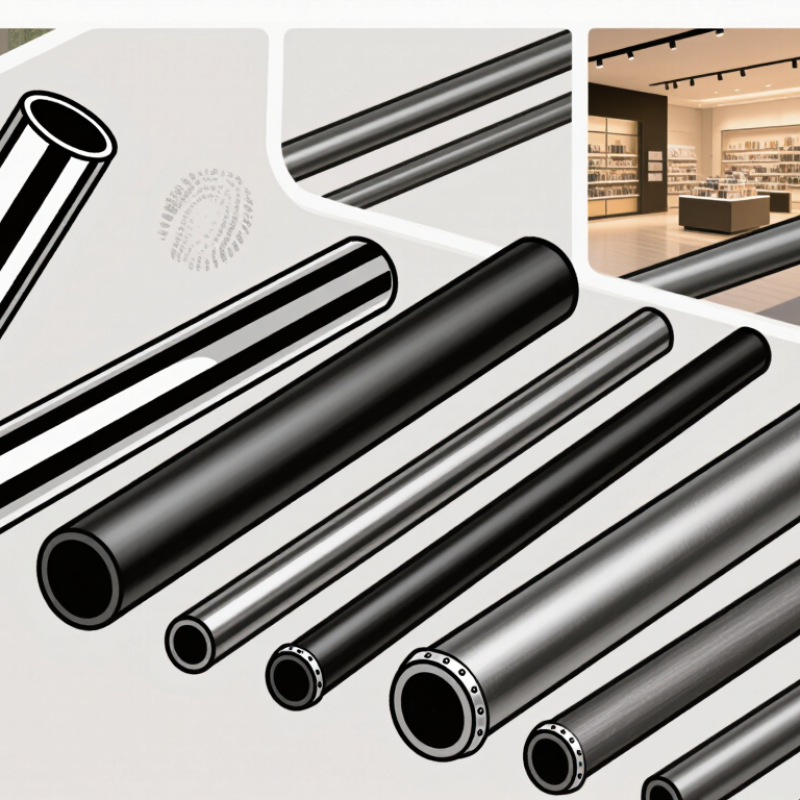
How to Choose Black PVD Stainless Steel Tube?
Before selecting a black PVD stainless steel tube, define its actual purpose. A bathroom handrail faces moisture, soap, and frequent touch. A display frame may mainly need a refined surface and stable dimensions. A tube used outdoors needs stronger resistance to rain, sunlight, pollution, and temperature changes. Write down the conditions.
Choose the stainless steel grade according to exposure. Grade 304 can suit many indoor applications, while grade 316 may perform better near salt or chlorides. The black PVD layer improves appearance and surface durability, but it does not repair weak base metal or poor welding. Cut edges, drilled holes, and weld zones need careful inspection. They can become the weak points. Ask for coating thickness, adhesion, abrasion, and corrosion test information. Also check whether the test method reflects your real environment. A salt-spray result alone cannot predict every outdoor installation.
Consider handling conditions too. If the tube will be touched daily, select a finish that hides fingerprints and minor marks. If it carries a load, confirm wall thickness, diameter, span, and connection design with a qualified engineer. A perfect-looking sample can mislead. Inspect several sections under natural light. Look for uneven color, pinholes, scratches, and cloudy areas. Measure the outside diameter and wall thickness, not only the visual finish. A small mismatch may cause installation problems. Allow for that risk.
Choosing the correct stainless steel grade is the foundation of a durable black PVD stainless steel tube. PVD creates the dark surface, but it does not repair a weak substrate. For dry indoor areas, grade 304 often provides reliable corrosion resistance and good weldability. It suits handrails, furniture frames, and decorative partitions.
Moisture changes the decision. Grade 316 contains molybdenum, which improves resistance to chlorides from coastal air, swimming pools, and cleaning chemicals. It usually costs more, but replacement costs can be higher. Grade 430 can work in dry interiors where corrosion exposure remains low. However, it offers less protection in humid environments. Some projects select grade 201 to reduce cost. That choice needs caution, especially around salt and frequent washing.
Check the actual environment, not only the appearance. A black tube may look perfect under showroom lights, then show staining near a seaside entrance. Ask for the material certificate, grade confirmation, wall thickness, and applicable ASTM or EN test details. Inspect welded areas carefully, because poor finishing can weaken corrosion performance beneath the coating. Request a sample and expose it to realistic humidity, cleaning agents, and handling. Salt-spray results alone may not predict every installation.
One detail is often missed. The tube’s interior may face condensation, even when its exterior stays dry. Select the grade accordingly. Mistakes happen when designers treat PVD as complete protection. It is only one layer of the system.
| Stainless Steel Grade | Typical Chemical Composition (% by mass) |
Corrosion Resistance | Formability and Weldability | Magnetic Behavior | Black PVD Suitability | Recommended Tube Applications | Selection Recommendation |
|---|---|---|---|---|---|---|---|
| 304 / 304L EN 1.4301 / 1.4307 |
Cr: 18.0–20.0 Ni: 8.0–10.5 Mo: not specified C: ≤0.08 for 304; ≤0.03 for 304L |
Good resistance to atmospheric corrosion, moisture, and many mild chemicals. Less resistant to chlorides than 316L. | Excellent forming and welding performance. The low-carbon 304L version is preferred for welded tube assemblies. | Generally non-magnetic when annealed; cold working may create slight magnetism. | Excellent. Provides a stable, widely used substrate for black PVD after thorough polishing, cleaning, and activation. | Architectural handrails, furniture frames, interior tubes, display structures, kitchen equipment, and general decorative applications. | Best general-purpose choice when the tube will be used indoors or in mildly corrosive environments. |
| 316L EN 1.4404 |
Cr: 16.0–18.0 Ni: 10.0–14.0 Mo: 2.0–3.0 C: ≤0.03 |
Very good resistance to chlorides, coastal humidity, and many industrial chemicals because of its molybdenum content. | Excellent formability and weldability. The low carbon content reduces the risk of sensitization after welding. | Generally non-magnetic when annealed; limited magnetism can appear after cold forming. | Excellent. The higher corrosion resistance helps protect the tube substrate if the PVD layer is scratched or locally damaged. | Outdoor handrails, marine-adjacent structures, sanitary equipment, laboratory furniture, premium interiors, and humid environments. | Preferred grade for coastal, humid, sanitary, or chemically demanding environments. |
| 201 Common Cr-Mn-Ni austenitic grade |
Cr: 16.0–18.0 Ni: 3.5–5.5 Mn: 5.5–7.5 C: typically ≤0.15 |
Moderate resistance in dry indoor environments. Generally less resistant than 304 and 316L, especially in chloride or acidic conditions. | Good forming and welding characteristics, but performance depends strongly on the exact product specification and processing condition. | Usually non-magnetic when annealed; cold forming can increase magnetic response. | Good for decorative indoor use when the surface is properly prepared and the service environment is controlled. | Indoor furniture, decorative partitions, retail fixtures, light-duty architectural tubing, and cost-sensitive interiors. | Consider only when cost is important and exposure to moisture, salts, and chemicals is limited. |
| 430 EN 1.4016 |
Cr: 16.0–18.0 Ni: typically ≤0.75 Mo: not normally specified C: typically ≤0.12 |
Good oxidation resistance and reasonable atmospheric corrosion resistance, but lower resistance to chlorides and forming-related corrosion than 304. | Moderate formability. Welding requires greater process control because ferritic grades can be more sensitive to weld-zone embrittlement. | Magnetic. | Good for decorative and heat-resistant applications. Surface preparation is essential because the grade is less forgiving of scratches and forming defects. | Appliance trim, automotive decorative tubing, indoor architectural details, kitchen components, and applications requiring magnetic response. | Select when magnetic behavior, lower nickel content, or moderate heat resistance is required for a mainly indoor application. |
| 2205 Duplex EN 1.4462 |
Cr: 22.0–23.0 Ni: 4.5–6.5 Mo: 3.0–3.5 N: 0.14–0.20 |
Excellent resistance to pitting, crevice corrosion, and stress-corrosion cracking compared with 304 and 316L. | Good but lower formability than austenitic grades. Welding requires qualified procedures to maintain the duplex microstructure. | Magnetic. | Technically suitable, but usually selected for demanding service rather than purely decorative reasons. PVD adhesion still depends on surface preparation and process control. | High-corrosion-risk structures, industrial equipment, coastal infrastructure, chemical processing, and heavy-duty outdoor tubing. | Choose when corrosion resistance and mechanical performance are more important than material cost or easy forming. |
When choosing a black PVD stainless steel tube, start with the base surface, not the color. A smooth 304 or 316 stainless steel substrate usually produces a cleaner finish. Mirror, satin, and hairline surfaces reflect light differently. Decide the texture before reviewing samples.
Inspect the tube under neutral lighting. Black PVD should appear even along the length, without cloudy patches, streaks, or visible pinholes. Check the weld seam carefully. Poor polishing can remain visible beneath the coating. Run a clean cloth over the surface. It should feel consistent, without sharp edges or rough spots. Small defects matter.
Ask for coating and inspection details. Adhesion testing, color comparison, and surface roughness records provide useful evidence. PVD is durable, but it is not impossible to scratch. Chloride-rich environments may also require a more suitable stainless steel grade and maintenance plan. I have seen attractive samples fail because the sample was perfect, while production tubes were not. Compare several pieces from the same batch. This step is easy to skip.
Do not judge black by one photograph. View the finish from different angles, then confirm cleaning requirements with the fabricator. A softer black may hide fingerprints better, while a deep glossy black can reveal every mark. That trade-off deserves honest consideration.
How to Choose Black PVD Stainless Steel Tube?
Verify the tube dimensions before discussing appearance. Measure the outside diameter, inside diameter, wall thickness, and required length. A small dimensional error can affect fittings, spacing, and load alignment. Request documented tolerances, not only nominal sizes. Check whether the tube is round, square, or rectangular. Confirm the stainless steel grade suits moisture, chemicals, and indoor or outdoor exposure. Site conditions matter more than showroom lighting.
Fabrication requirements should be reviewed before ordering. Mark every cut, bend, hole, slot, and threaded connection on a clear drawing. PVD coating is durable, but later grinding or drilling can expose the base metal. Whenever possible, complete fabrication before coating. Ask how cut edges, weld areas, and visible joints will be treated. Inspect one sample under direct light. The black tone may look different across batches, and this detail is easy to underestimate.
Installation planning prevents expensive adjustments. Confirm the tube length against actual site measurements, including expansion gaps and connection depth. Check the bending radius and the tools required for handling. Use clean protective pads during installation, because metal debris can scratch the surface. Keep fasteners compatible with the tube and the surrounding environment. I would also test one assembly before approving the full quantity. Drawings can be correct, yet the real wall may not be perfectly straight. That uncomfortable discovery deserves attention early.
Choosing a black PVD stainless steel tube starts with comparing suppliers, not color samples. World Stainless reported global crude stainless steel production of about 58.4 million tonnes in 2023. This scale does not guarantee consistent tube quality. Ask for the steel grade, heat number, wall thickness tolerance, and material test certificate. For general applications, ASTM A269 may apply; welded pressure-service tubes may require ASTM A249. Confirm the correct standard with an engineer.
PVD is a surface coating, not a replacement for suitable stainless steel. Request coating-thickness records, adhesion testing, surface roughness data, and salt-spray results under ISO 9227. Salt spray can compare samples, but it cannot predict every indoor or outdoor service life. Supplier audits matter. Check polishing lines, weld discoloration, protective film, packing, and rejected-piece procedures. A low quotation may hide thinner walls, unstable color, or weak inspection. I have seen attractive samples fail at welded edges. Samples can mislead.
Tips: Compare three written quotations using the same tube grade, dimensions, finish, packaging, and test documents. Calculate total cost, including tooling, minimum order quantities, freight, inspection, installation, replacement, and warranty handling. World Stainless data also shows how large the stainless market is, but raw-material prices still fluctuate. Ask how long the quotation remains valid. It is easy to overvalue a perfect black finish. Long-term consistency usually matters more.
Comparison of supplier types using quality compliance, coating performance, lead time, and estimated total cost.
A specialist tube supplier typically offers stronger quality control and better PVD consistency, while a general distributor may provide shorter lead times. Total cost includes material, PVD finishing, inspection, packaging, and estimated logistics. Before ordering, verify the stainless steel grade, dimensional tolerances, PVD coating adhesion, salt-spray performance, and inspection documentation against applicable standards such as ASTM A269, EN 10217-7, ASTM B117, and ISO 9227.
Define its location, purpose, contact level, moisture exposure, and expected load. A bathroom rail faces soap and daily touching. Outdoor tubes face rain, sunlight, pollution, and temperature changes. Write down the conditions.
Grade 304 often suits many indoor applications. Grade 316 may perform better near salt or chlorides. The coating cannot compensate for unsuitable base metal. That detail is easy to miss.
No. Later drilling, grinding, or welding can expose the base metal. Inspect cut edges, holes, weld zones, and visible joints carefully. These areas may become weak points.
Request coating thickness, adhesion, abrasion, and corrosion test data. Check whether the test environment matches your installation. Salt-spray results alone cannot predict every outdoor condition.
Confirm the outside diameter, inside diameter, wall thickness, length, and cross-sectional shape. Check whether the tube is round, square, or rectangular. Request documented tolerances, not only nominal sizes.
Mark every cut, bend, hole, slot, and threaded connection on a clear drawing. Complete fabrication before coating whenever possible. Later drilling may reveal bright metal beneath the black surface.
Inspect several sections under natural or direct light. Look for uneven color, pinholes, scratches, cloudy areas, and fingerprints. Measure the tube too. A beautiful sample can mislead.
Compare actual site measurements with the planned tube length. Include expansion gaps and connection depth. Use clean protective pads during handling. Metal debris scratches surprisingly easily.
Yes, a trial assembly can reveal wall irregularities, fitting problems, or alignment errors. Check bending radius, tools, fasteners, and connection depth first. Drawings may be correct. The real wall may not be straight.
Choosing the right Black Pvd Stainless Steel Tube begins with clearly defining its intended purpose and performance requirements. Consider whether the tube will be used for architectural decoration, furniture, interior features, commercial equipment, or another application. Evaluate exposure to moisture, chemicals, heat, wear, and cleaning conditions, then select a suitable stainless steel grade based on corrosion resistance, strength, and service environment. The black PVD finish should also be assessed for color consistency, gloss level, scratch resistance, and overall surface quality.
Before purchasing, confirm the tube’s outside diameter, wall thickness, length, tolerance, and cross-sectional shape. Review fabrication needs such as cutting, bending, welding, drilling, polishing, and protective packaging, while ensuring the finished tube can be installed efficiently. Finally, compare suppliers by examining material traceability, inspection procedures, quality standards, production capabilities, lead times, and after-sales support. A proper evaluation of purchase price, processing costs, transportation, maintenance, and expected service life will help identify the most reliable and cost-effective solution.