VertexFlow Tubes stainless steel tube manufacturer logo VertexFlow TubesPrecision SS Tubing

How to Source Automotive Seat Frame Tubes in 2026?

Time:2026-09-22 Author:Aria
0%

Sourcing an Automotive Seat Frame Tube in 2026 will require more than comparing unit prices. Buyers must examine material strength, tube geometry, weld consistency, corrosion resistance, and production capacity. A seat frame may look simple. It is not.

Dr. Thomas Schmall, Volkswagen Group’s technology board member, has emphasized that “resilient supply chains require transparency, flexibility, and strong partnerships.” This principle fits seat frame sourcing closely. A supplier should provide traceable steel certificates, dimensional inspection records, weld samples, and realistic capacity evidence. Factory visits still matter. A clean sample room cannot replace production-floor observation.

The strongest sourcing process begins with the vehicle program’s real requirements. Define load cases, wall thickness, tolerances, surface treatment, joining methods, and annual volumes before requesting quotations. Then compare suppliers using a balanced scorecard. Price matters, but unstable quality can create expensive line stoppages and delayed launches.

Regional sourcing may reduce transport risk, yet it can narrow the supplier pool. Overseas suppliers may offer stronger forming expertise, but communication gaps can slow engineering changes. Neither option is automatically better. That is where careful verification becomes essential.

Some buyers still approve suppliers from attractive samples alone. That is a weak habit. Production reality is different.

This guide explains how to identify capable manufacturers, validate technical claims, assess tooling readiness, and negotiate dependable supply terms for 2026. It also examines overlooked risks, including springback, weld distortion, packaging damage, and late design revisions. Small details often decide whether an Automotive Seat Frame Tube program succeeds or quietly becomes expensive.
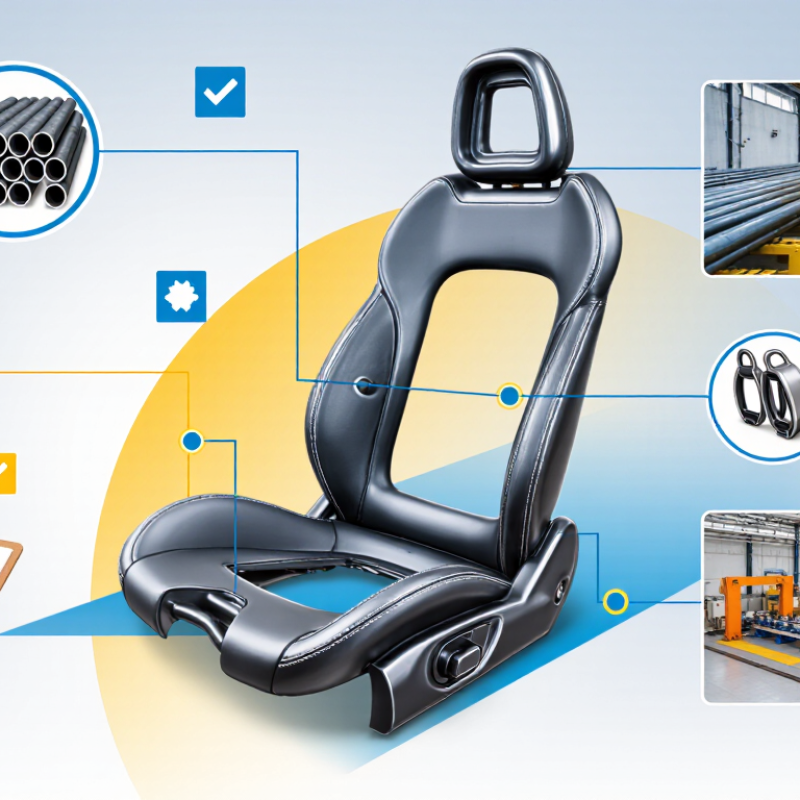
How to Source Automotive Seat Frame Tubes in 2026?

Define the Specifications for Automotive Seat Frame Tubes

Defining automotive seat frame tube specifications starts with the load path, not a supplier’s catalog. Engineers should record tube function, mounting points, occupant loads, and expected fatigue cycles. A clear drawing should state outside diameter, wall thickness, straight length, bend radius, and dimensional tolerances. Small errors matter. A two-millimeter change can affect fixture fit and seat geometry.

Material selection needs more than one strength value. Specify steel grade, yield strength, tensile strength, elongation, weldability, and corrosion condition. For formed tubes, include ovality limits and minimum wall thickness after bending. Ask for heat numbers, inspection records, and sample test results. Traceability builds confidence. Surface requirements should cover scale, oil residue, coating compatibility, and weld-zone cleanliness.

From sourcing experience, unclear fatigue requirements create expensive rework. Define static loads, durability cycles, weld locations, and acceptance criteria before requesting quotations. Include a control plan for tube cutting, forming, piercing, welding, and surface treatment. Prototype parts should be measured on a coordinate system and tested under representative seat loads. A first draft is rarely perfect. Review it with manufacturing and testing teams; one overlooked bend can change springback, noise, or weld access. Reliable specifications are precise, testable, and honest about unknowns.

Identify Suitable Materials, Grades, and Tube Dimensions

How to Source Automotive Seat Frame Tubes in 2026?

Selecting the right tube begins with load paths, not price. Seat frames need strength, controlled deformation, weldability, and consistent dimensional accuracy. Mild steel suits simple brackets and low-stress sections. HSLA steel offers higher strength with reduced wall thickness. Microalloyed grades can improve stiffness, but forming may become less forgiving. For safety-critical structures, confirm the specified yield strength, tensile strength, elongation, and impact requirements before requesting quotations.

Tube dimensions must match the drawing and forming process. Typical checks include outside diameter, wall thickness, length, straightness, ovality, and end squareness. A 25 mm tube with a 1.5 mm wall behaves differently from a 25 mm tube with a 2.0 mm wall. Small changes can affect bending, welding, and seat movement. Specify realistic tolerances. Overly tight tolerances may increase cost without improving performance.

Ask suppliers for heat numbers, material certificates, and production inspection records. Review tensile tests, weld penetration, surface defects, and corrosion protection results. Sample tubes should pass bending and fatigue evaluations under the intended load cycle. Do not rely only on a certificate. It is useful evidence, not proof of every shipment. In practice, early prototypes sometimes reveal unexpected springback or weld distortion. That feedback should revise the design or process, rather than being ignored. Supplier capability, repeatability, and traceability matter as much as the quoted grade.

How to Source Automotive Seat Frame Tubes in 2026? - Identify Suitable Materials, Grades, and Tube Dimensions
Seat-Frame Application Recommended Material Family Typical Grade Options Typical Mechanical Properties Common Tube Dimensions Typical Wall Thickness Manufacturing and Forming Considerations Procurement Checks
Seat side frames and structural rails Cold-rolled high-strength low-alloy steel HCT590X HCT600X HSLA 550 Minimum yield strength typically about 550–600 MPa; tensile strength commonly about 590–700 MPa. Suitable for weight reduction while retaining good weldability. Round tube: 20–32 mm outside diameter
Rectangular tube: 20 × 15 to 35 × 20 mm
1.2–2.0 mm Suitable for roll forming, tube bending, piercing, and resistance welding. Forming radius and springback should be validated with the selected grade. Confirm yield and tensile values, elongation, bend performance, dimensional tolerances, weldability, surface condition, and batch traceability.
Seat back frame tubes Advanced high-strength dual-phase steel DP600 DP780 DP600 generally provides approximately 350–500 MPa yield strength and at least about 600 MPa tensile strength. DP780 generally provides approximately 450–600 MPa yield strength and at least about 780 MPa tensile strength. Round tube: 16–28 mm outside diameter
Rectangular tube: 18 × 12 to 30 × 18 mm
1.0–1.8 mm High work-hardening supports crash performance, but higher springback and edge sensitivity require controlled tooling, cut quality, and bend-radius studies. Request tensile-test data in the rolling and transverse directions, hole-expansion or edge-forming data where applicable, and confirmation of welding parameters.
Seat cushion cross members and support bars Microalloyed HSLA steel tube S500MC S550MC HSLA 500 Typical minimum yield strength is approximately 500–550 MPa, with tensile strength commonly around 550–700 MPa depending on the specification and product form. Round tube: 19–32 mm outside diameter
Square tube: 20–30 mm
1.2–2.2 mm Good choice for roll-formed or welded tubular members. Avoid excessive cold-work concentration near pierced holes and tight bends. Check specified minimum yield strength, flatness, straightness, tube ovality, weld seam quality, and suitability for automated resistance welding.
Head-restraint posts and smaller support tubes Low-carbon or HSLA cold-drawn steel tube DC04 DC06 HCT490X Low-carbon grades are typically selected for superior formability. HCT490X provides higher strength, commonly with minimum tensile strength near 490 MPa, depending on the applicable standard. Round tube: 10–16 mm outside diameter
Oval tube: 10–18 mm major dimension
0.8–1.5 mm Deep drawing, swaging, flaring, and small-radius bending may be required. Low-carbon grades are preferable for severe forming operations. Verify surface finish, internal diameter, concentricity, hardness, end-forming capability, and resistance to buckling during adjustment or impact loading.
Seat recliner and hinge connecting tubes Medium-strength cold-rolled or normalized carbon steel C22E C35E S355 Strength depends strongly on chemical composition and heat treatment. Typical tensile strength is approximately 400–650 MPa for commonly used conditions. Round tube: 16–30 mm outside diameter
Wall-to-diameter ratio commonly about 0.05–0.10
1.5–3.0 mm Machinability, bearing-seat accuracy, weld compatibility, and local dent resistance are important. Heat treatment may affect dimensional stability. Define chemical limits, heat-treatment condition, hardness range, concentricity, runout, weld-zone requirements, and corrosion-protection method.
Tubular members requiring enhanced crash strength Press-hardenable boron steel 22MnB5 Boron steel 1,500 MPa class After hot forming and quenching, tensile strength can reach approximately 1,400–1,600 MPa, with high hardness. The exact result depends on the thermal cycle and quenching process. Round tube: 18–30 mm outside diameter
Rectangular tube: 20 × 15 to 35 × 20 mm
1.0–1.8 mm Requires controlled heating, forming, and quenching. Post-forming drilling, trimming, and joining need dedicated tooling and process controls. Confirm hot-forming route, final hardness, metallographic structure, dimensional change after quenching, weldability, and coating compatibility.
Corrosion-sensitive seat structures Electro-galvanized or galvanized high-strength steel tube HX340LAD+Z HCT590X+Z S350GD+Z Strength is grade-dependent. Zinc coating improves corrosion resistance but may influence welding current, electrode wear, and coating damage at cut edges. Round tube: 16–32 mm outside diameter
Rectangular tube: 20 × 15 to 35 × 25 mm
1.0–2.0 mm Suitable where corrosion protection is required before final assembly. Welding and post-weld sealing must be validated to prevent coating-related defects. Specify coating designation and mass, cut-edge protection, salt-spray or cyclic-corrosion requirements, weld-current window, and coating repair procedure.
Lightweight corrosion-resistant seat components Aluminum alloy tube 6061-T6 6063-T5 6061-T6 commonly provides yield strength around 240 MPa and tensile strength around 260 MPa or higher. 6063-T5 is generally more formable but lower in strength. Round tube: 20–35 mm outside diameter
Rectangular tube: 20 × 15 to 40 × 25 mm
1.5–3.0 mm Lower density can reduce mass, but joining, fatigue, galvanic corrosion, and local buckling require careful design. Avoid assuming direct steel-to-aluminum substitution. Confirm temper, fatigue performance, weld or joining method, dimensional stability, surface treatment, galvanic isolation, and applicable crash requirements.
General-purpose non-crash-critical brackets and tubes Cold-rolled mild steel DC01 SPCC S235 Typical yield strength is approximately 140–235 MPa, with tensile strength commonly about 270–410 MPa, depending on the specification and supply condition. Round tube: 15–30 mm outside diameter
Square tube: 15–25 mm
1.2–2.5 mm Excellent formability and low material cost. Use only where structural calculations and regulatory or internal crash requirements permit the lower strength level. Confirm that the component is not part of the primary load path; check corrosion protection, weldability, dimensional tolerance, and minimum elongation.
Dimension ranges are typical sourcing starting points rather than universal design requirements. Final material grade, tube size, wall thickness, tolerances, joining process, corrosion protection, and crash performance must be validated against the applicable vehicle program, regulatory requirements, and component-level testing.

Evaluate Tube Manufacturers and Automotive Supply Capabilities

How to Source Automotive Seat Frame Tubes in 2026?

Evaluate tube manufacturers by capability, not catalogue breadth. OICA recorded 93.5 million motor vehicles produced worldwide in 2023. That scale increases pressure on seat-frame suppliers. Ask for evidence of stable forming, welding, and dimensional control. Review tube grades, outside diameter tolerance, wall thickness, bend radius, and surface protection. A capable manufacturer should provide process flow charts, control plans, inspection records, and material traceability.

World Steel Association reported approximately 1.89 billion tonnes of crude steel production in 2023. This figure shows supply depth, but not automotive readiness. The real test is repeatability. Request samples from several production lots. Measure springback after bending. Check weld penetration through sectioned samples. Confirm fatigue-test methods and corrosion results against your project requirements. I often focus too heavily on unit cost during early sourcing. That is a weakness worth correcting. A cheap tube can become expensive after fixture changes, rework, or line stoppages. Also examine annual capacity, backup equipment, tooling ownership, and escalation procedures. Supplier location matters when transport delays affect just-in-time deliveries.

Tips: Build a scorecard before requesting quotations. Weight quality systems, launch experience, engineering response, capacity, and total landed cost. Ask suppliers to simulate a volume increase of 20 percent. Their answer may reveal more than a sales presentation. Verify certificates directly, and audit one live production shift when possible. References include OICA, 2023 Production Statistics, and World Steel Association, World Steel in Figures 2024.

Verify Quality, Compliance, and Prototype Performance

How to Source Automotive Seat Frame Tubes in 2026?

Sourcing seat frame tubes requires more than comparing prices. Start with suppliers that can provide material certificates, heat numbers, and stable process records. I have found that traceability becomes critical when a prototype shows unexpected cracking or deformation. Ask for steel grade, wall thickness, tensile strength, and forming limits before approving samples.

Quality verification should combine documents with physical checks. Measure tube diameter, ovality, cut length, and bend angles using calibrated equipment. Inspect weld penetration and check for sharp edges around punched holes. A supplier may claim compliance with ISO 9001 or IATF 16949, but certificates alone do not prove production capability. Request sample inspection reports and independent test results where appropriate. Confirm compliance with applicable vehicle safety and chemical requirements in your target markets.

Tips: Send a complete drawing, tolerance table, and expected annual volume. Test prototype tubes in the actual seat structure, not separately. Record fixture alignment, welding distortion, fatigue behavior, and corrosion exposure. Small deviations matter.

Prototype performance often exposes weaknesses hidden by polished paperwork. A tube may pass dimensional inspection but fail after repeated loading. That result is useful, though inconvenient. Review the design, tooling, and material together. Do not blame the supplier too quickly. In some projects, unclear drawings caused avoidable rework. Reliable sourcing depends on honest communication, repeatable testing, and evidence that survives production pressure.

Compare Costs, Lead Times, and Long-Term Sourcing Terms

Sourcing automotive seat frame tubes in 2026 requires more than comparing unit prices. Request quotes against identical specifications, including steel grade, outside diameter, wall thickness, bend radius, weld points, and inspection requirements. A cheaper tube may carry higher tooling, scrap, packaging, or freight costs. Calculate the landed cost per approved part, not just the supplier’s quoted price. A low quote can win the spreadsheet and lose the program.

Lead time should be measured from purchase order to usable inventory. Confirm raw material availability, tooling preparation, forming capacity, welding schedules, and transport time. For many projects, production may take four to eight weeks after tooling approval, but capacity changes can extend this window. Ask for a realistic pilot schedule. It is better than an optimistic promise. Include sample approval dates and recovery plans in the quotation review.

Long-term terms deserve equal attention. Discuss forecast ranges, minimum order quantities, safety stock, payment terms, and reserved capacity. A practical agreement can include quarterly price reviews linked to documented steel movements, while protecting both sides from sudden changes. Define rejection handling, traceability records, dimensional reports, and corrective-action timing. I have seen sourcing teams focus heavily on price and overlook service failures. That mistake becomes expensive when a small tube defect stops seat-frame assembly. Dual sourcing may reduce risk, although it can increase validation work and initial cost.

How to Source Automotive Seat Frame Tubes in 2026?

Compare indicative unit costs, lead times, and long-term sourcing terms for standardized automotive seat frame tubes.

Regional sourcing generally provides the shortest lead time and greater engineering responsiveness, while offshore sourcing can reduce piece price at the expense of longer logistics and replenishment cycles. A dual-source agreement typically balances cost, supply continuity, and a 24-month commercial commitment.

Indicative 2026 benchmark ranges for high-volume steel seat-frame tube programs. Costs are shown in USD per tube and exclude tooling, freight, taxes, and customer-specific validation.

FAQS

What should an automotive seat frame tube specification define?

It should state tube function, mounting points, occupant loads, and expected fatigue cycles. Include outside diameter, wall thickness, bend radius, straight length, and tolerances. A two-millimeter change can disturb fixture fit and seat geometry.

Which material details belong in the specification?

Identify steel grade, yield strength, tensile strength, elongation, weldability, and corrosion condition. For formed tubes, add ovality limits and minimum wall thickness after bending. Strength alone is not enough.

What records improve material traceability?

Request heat numbers, inspection records, and sample test results. Surface requirements should address scale, oil residue, coating compatibility, and weld-zone cleanliness. Missing records create avoidable doubt.

How should fatigue and testing requirements be handled?

Define static loads, durability cycles, weld locations, and acceptance criteria before requesting quotations. Measure prototype parts on a coordinate system. Test them under representative seat loads. Some assumptions may still be weak.

What should an accurate cost comparison include?

Compare quotes using identical specifications, including steel grade, diameter, wall thickness, bend radius, weld points, and inspections. Calculate landed cost per approved part. Include tooling, scrap, packaging, and freight. The cheapest quote may not be cheapest.

How should lead time be measured?

Measure from purchase order to usable inventory. Confirm raw material, tooling, forming, welding, and transport timing. Production may take four to eight weeks after tooling approval. Capacity can change that estimate.

Which long-term sourcing terms deserve attention?

Discuss forecast ranges, minimum order quantities, safety stock, payment terms, and reserved capacity. Define rejection handling, traceability records, dimensional reports, and corrective-action timing. Ask for sample approval dates and recovery plans. Promises need evidence.

Does dual sourcing always reduce risk?

It can reduce supply risk, but it increases validation work and initial cost. Review whether both sources can meet the same specifications. A second source is not automatically ready.

Conclusion

Sourcing an Automotive Seat Frame Tube in 2026 requires a structured process that balances engineering performance, safety, cost, and supply reliability. Begin by defining the tube’s required dimensions, wall thickness, strength, weight, forming method, weldability, surface treatment, and application-specific tolerances. Then select suitable materials and grades based on load requirements, corrosion resistance, fatigue performance, manufacturing compatibility, and regional compliance needs.

Next, assess potential manufacturers by reviewing their production capacity, tooling capabilities, process controls, automotive supply experience, and ability to support stable volume production. Quality verification should include material certification, dimensional inspection, weld testing, traceability, prototype validation, and performance testing under realistic conditions. Finally, compare total costs rather than unit prices alone, considering tooling, logistics, inspection, minimum order quantities, payment terms, and expected lead times. A well-structured sourcing agreement should also address capacity planning, change control, quality responsibilities, delivery performance, and long-term supply continuity.


Aria

Aria

Aria is a dedicated marketing professional with a deep passion for innovative strategies and a keen understanding of our company's product offerings. With a wealth of experience in the industry, Aria excels at crafting engaging content that highlights the unique features and benefits of our......