A brushed surface catches light differently from a mirror polish, while embossed patterns add texture and visual depth. In a Brushed Finish Embossed Pipe, those details matter, but appearance alone cannot show whether the tube is consistent, well formed, or suitable for its intended setting. Buyers need to look beyond catalog photographs.
Quality-management expert W. Edwards Deming is often associated with a useful principle: “Quality must be built into the process, not added through final inspection.” This is a paraphrase, not a verified verbatim quotation. Applied to pipe manufacturing, it points to practical checks: surface uniformity, embossing definition, dimensional tolerance, weld quality, and finish protection during handling. Small marks matter. So does consistency between samples and production batches.
This guide introduces ten manufacturers operating across global markets and outlines what buyers may want to compare. Company capabilities, product specifications, and export experience can vary by grade, diameter, and order volume, so readers should confirm details directly with each supplier. A polished finish can still conceal uneven workmanship. And a strong catalog is not proof of dependable production. The comparison is a starting point, not a substitute for reviewing samples, technical documents, and actual project requirements.
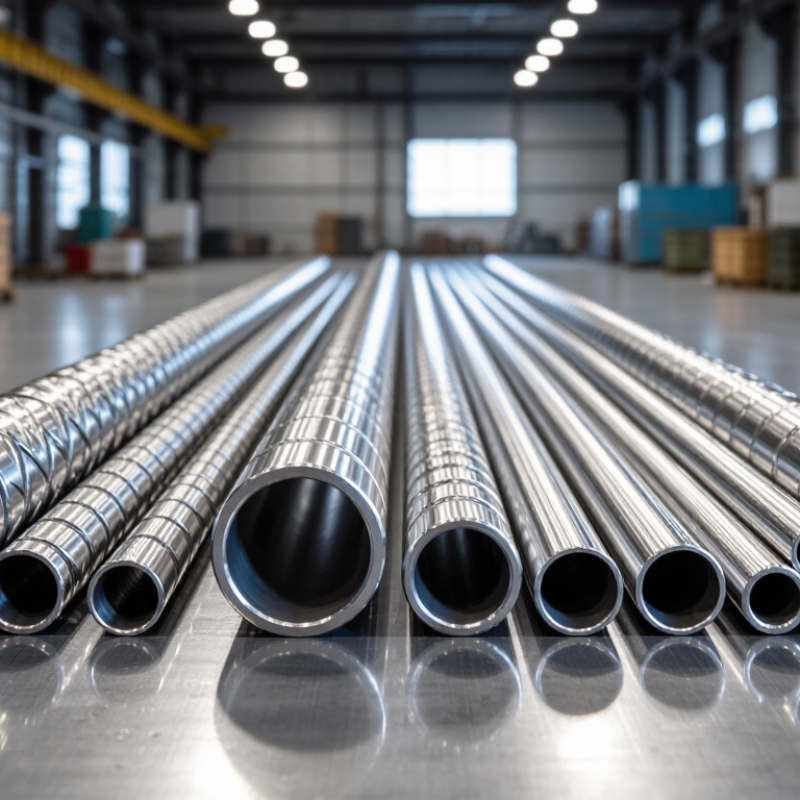
Brushed-finish embossed pipes combine a directional satin texture with a raised or recessed pattern. The brushed surface is made with abrasive belts or pads, leaving fine, mostly parallel grain lines that soften glare and help disguise minor handling marks. Embossing adds texture through patterned rollers or dies. Patterns may be shallow ribs, dots, or geometric forms, depending on the intended appearance and functional needs. Not just ornament. The added texture can improve grip on some surfaces, but it does not automatically make a pipe stronger or safer. Material grade, wall thickness, and service conditions still matter.
Production usually begins with stainless steel strip or sheet selected for the required dimensions and environment. Depending on the design, the metal is embossed before tube forming, or patterned after it has been shaped. The strip is then rolled into a cylinder and its edges are joined, commonly by welding. After forming, the pipe may be cut to length, deburred, cleaned, and inspected. Checks can include diameter, wall thickness, weld quality, and consistency of the finish. The trade-off is easy to overlook: embossing can make surface cleaning less straightforward if grooves collect residue. A clear specification should therefore state the pattern depth, brushing direction, and acceptable finish variation. These details can vary between production lines. They deserve confirmation before fabrication.
| No. | Manufacturing topic | Common practice | What buyers should check |
|---|---|---|---|
| 1 | Product definition | A brushed-finish embossed pipe is a tube with a directional, satin-like surface texture and a raised or recessed decorative pattern. | Confirm whether the requirement is for decorative tubing, mechanical tubing, or pressure-service pipe; these are not interchangeable product categories. |
| 2 | Typical base materials | Stainless steel grades such as 304/304L and 316/316L are commonly used for decorative and architectural tubing. The appropriate grade depends on the environment and application. | Specify the grade, applicable material standard, and corrosion conditions. Grade selection should be based on the intended service, not appearance alone. |
| 3 | Starting stock | Welded tube is commonly formed from stainless steel strip: the strip is shaped into a tube and its longitudinal seam is welded. Seamless tube is made by a different process. | State welded or seamless construction where relevant, and identify the required product standard and inspection level. |
| 4 | Tube forming and welding | For welded products, forming rolls progressively shape strip edges before a longitudinal weld is made. The weld and tube may then undergo finishing and sizing operations. | Ask how the seam is finished and what weld inspection is included; requirements vary by product standard and end use. |
| 5 | Brushed surface | Abrasive belts, brushes, or other finishing media create fine, directional lines on the surface. The visible appearance depends on abrasive choice, pressure, and finishing direction. | Define the requested appearance with a finish description or approved sample. “Brushed” alone does not specify a unique roughness or visual standard. |
| 6 | Embossed pattern | Patterns can be formed by passing material through patterned rolls or by another forming method suited to the tube and design. Pattern geometry and production sequence affect the result. | Specify pattern, coverage, orientation, and acceptable variation. Embossing depth and tolerances should be agreed with the supplier. |
| 7 | Process sequence | Brushing and embossing may be carried out at different points in production. The sequence depends on the product design, equipment, and required surface appearance. | Confirm that the finished sample shows both the intended directional brush lines and the required embossed profile. |
| 8 | Cleaning and passivation | Cleaning removes processing residues. Passivation may be specified for stainless steel to support a clean, corrosion-resistant surface; it does not replace appropriate grade selection or surface care. | State whether cleaning or passivation is required and name the applicable procedure or acceptance criteria. |
| 9 | Dimensions and tolerances | Tube orders typically define outside diameter or width, wall thickness, length, and dimensional tolerances. Embossing can affect local measurements and fit. | Document the measurement method and tolerance requirements, including any critical dimensions across patterned areas. |
| 10 | Inspection and documentation | Inspection may include visual finish checks, dimensional measurement, and weld examination as required by the product specification and application. | Agree on inspection scope, traceability, material documentation, packaging, and sample approval before production. |
This table summarizes general manufacturing practices and supplier-evaluation criteria; it is not a verified ranking of manufacturers. Applicable standards and requirements depend on the product and its intended use.
It has fine, directional grain lines and a raised or recessed pattern. Small marks matter.
Abrasive belts or pads create the brushed grain. Patterned rollers or dies form the embossed details.
Not automatically. Material grade, wall thickness, and service conditions still matter.
State the pattern depth, brushing direction, alloy, wall thickness, tolerances, and acceptable finish variation. Be specific.
Yes. Grooves may collect residue, so cleaning can take more care than on a smooth surface.
Check the pattern around bends and joints. View the pipe under even light from several angles.
It can. Brushing before or after embossing may create a different texture, so confirm the sequence.
Not necessarily. Written finish standards can reduce variation, but small differences may remain. Worth checking.
Ask how they are secured. A loose metal strap can scratch the surface before delivery.
This article explains how a Brushed Finish Embossed Pipe combines a textured, patterned surface with a brushed appearance, and outlines the general processes used to form and finish these pipes. It reviews common material choices, surface-treatment options, and quality considerations such as dimensional consistency, finish uniformity, durability, and suitability for the intended environment. The discussion also presents practical criteria for comparing manufacturers, including production capabilities, quality-control procedures, customization options, technical support, and delivery reliability.
A worldwide overview of ten manufacturers is framed around these evaluation factors rather than brand promotion. The article also considers how applications and regional market trends can influence material requirements and product selection. By connecting manufacturing methods with performance expectations and market needs, it offers readers a useful foundation for assessing suppliers and choosing a pipe that meets the demands of architectural, industrial, and other suitable projects.