Choosing the right Champagne Gold Stainless Steel Tube supplier requires more than comparing surface color and quoted price. The International Stainless Steel Forum reports that global stainless steel production remains substantial, supporting demand across construction, furniture, hospitality, and transportation. These sectors increasingly require decorative finishes that also resist corrosion, fingerprints, and daily abrasion.
Market research from Grand View Research identifies construction and architectural applications as important stainless steel demand drivers. However, champagne gold tubing is usually grouped within broader colored or decorative stainless steel categories. Exact market volumes are therefore difficult to verify. This is an important limitation. Suppliers should provide practical evidence, not vague claims.
Look for manufacturers with documented experience in ASTM A554 or equivalent tube production, precise dimensional control, and stable PVD coating processes. A reliable supplier should explain the base grade, commonly 304 or 316, wall thickness, polishing level, coating method, and salt-spray or abrasion test results. Request samples under natural and warm lighting. Gold shades can vary noticeably between batches.
Details matter. A brushed tube may show directional grain, while a mirror finish reflects nearby fixtures like glass. Ask for batch color records and inspection reports. Independent certification can strengthen confidence, but it does not replace factory audits or sample testing. Some supplier websites overstate durability. Be cautious.
This guide compares leading suppliers through material quality, finishing consistency, production capability, customization, export experience, and after-sales support. The best choice is not always the cheapest. It is the supplier that can repeatedly deliver the same warm metallic tone, clean welds, accurate dimensions, and reliable documentation.
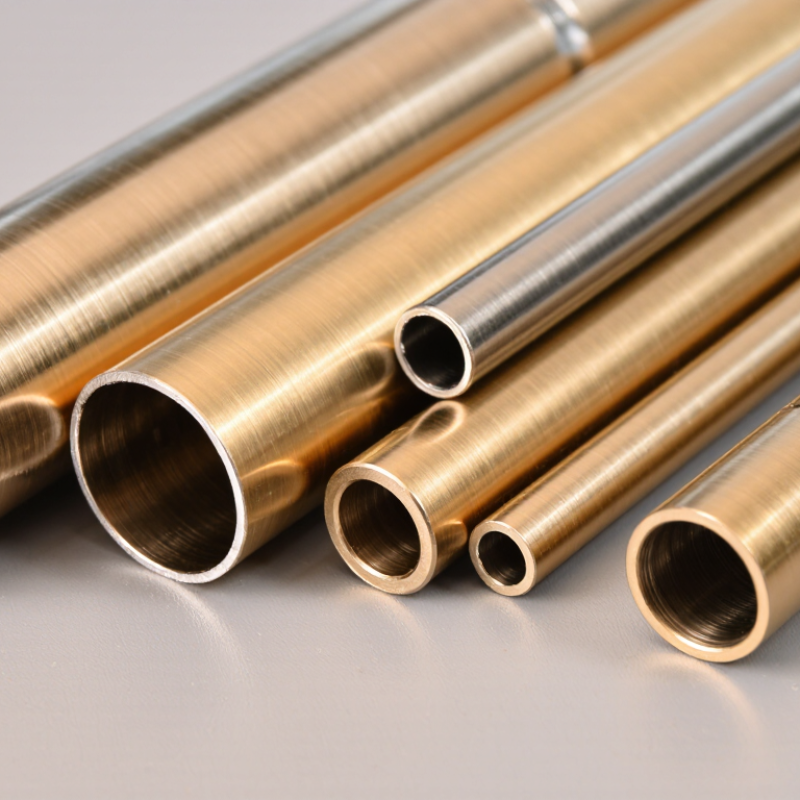
Champagne gold stainless steel tubing is stainless steel with a warm, pale-gold surface finish. It is not solid gold. The tube usually starts with a stainless steel grade such as 304 or 316, then receives a decorative coating, often through physical vapor deposition. This process creates a thin, even layer over the metal. The result resembles champagne, brushed brass, or soft gold, depending on the finish and lighting.
Its appearance depends on more than color. Surface preparation, polishing, tube thickness, weld quality, and coating adhesion all matter. A smooth tube reflects light sharply, while a brushed tube looks quieter and hides minor marks. In my experience, color matching is not only a visual task. I once underestimated how strongly showroom lighting changed the finish. That was a mistake. Samples should be checked under daylight and indoor lighting before production.
Tips: Ask suppliers for material certificates, coating specifications, and salt-spray or adhesion test results. Confirm whether the tube is welded or seamless. Check the outer diameter, wall thickness, tolerance, and cut length. Inspect welded areas carefully, because poor polishing may remain visible beneath the gold finish. Also, test the sample with your intended cleaners. Some harsh chemicals can dull decorative coatings. A dependable supplier should explain these limits clearly, not promise an unrealistic “permanent” color.
| Evaluation Dimension | Typical Specification or Requirement | Why It Matters | Recommended Supplier Evidence |
|---|---|---|---|
| Product Definition | Stainless steel tubing with a champagne-gold decorative surface, commonly produced by PVD coating or electrocoloring. | The gold appearance is a surface finish; it does not change the base metal into gold or brass. | A written description identifying the substrate, finishing process, and coating color reference. |
| Common Stainless Grades | Grade 304 is widely used for interior and general architectural applications; grade 316 or 316L is preferred where chloride or marine exposure is expected. | Grade selection affects corrosion resistance, fabrication performance, and service life. | Mill test certificate stating the grade and applicable chemical and mechanical requirements. |
| Manufacturing Standard | ASTM A554 is commonly referenced for welded stainless steel mechanical tubing; other project-specific standards may apply. | A recognized standard defines dimensional tolerances, surface quality, and testing expectations. | Standard number, inspection plan, dimensional reports, and material certificates. |
| Tube Shapes | Round, square, rectangular, oval, and custom formed sections are available depending on production capability. | The cross-section determines structural behavior, connection method, and visual design. | Dimensioned drawings, profile samples, and confirmation of production tooling. |
| Typical Outside Diameter | Decorative tubing is frequently specified from approximately 6 mm to 100 mm outside diameter, subject to the supplier’s mill and tooling range. | Outside diameter must match fittings, supports, bends, and installation clearances. | A dimensional capability chart and sample inspection report. |
| Wall Thickness | Common decorative ranges are approximately 0.6 mm to 3.0 mm, with the final value determined by loading, span, forming, and design requirements. | Wall thickness influences strength, weight, weldability, and resistance to denting. | Tolerance data, cross-sectional measurements, and engineering recommendations for the intended use. |
| Base Surface Finish | Common substrates include polished finishes such as No. 8 mirror, bright annealed surfaces, or satin finishes such as No. 4. | The underlying finish affects reflectivity, color uniformity, scratch visibility, and final appearance. | Surface-finish samples and a stated roughness or polishing requirement where applicable. |
| Champagne-Gold Process | PVD is commonly selected for a hard decorative coating; electrocolored stainless steel is another option for architectural finishes. | The process affects color consistency, abrasion resistance, chemical resistance, and repairability. | Process details, coating thickness range, adhesion results, and care instructions. |
| Color Consistency | Color should be approved against a physical sample or agreed color reference before mass production. | Champagne gold can vary with substrate polishing, viewing angle, lighting, and production batch. | Signed sample approval, batch-control procedure, and lighting conditions for visual inspection. |
| Surface Quality | The finished tube should be free from visible dents, deep scratches, peeling, blistering, weld discoloration, and unacceptable shade variation. | Decorative tubing is often installed in highly visible areas where minor defects can affect project acceptance. | Pre-shipment inspection photos, agreed defect limits, and a documented acceptance standard. |
| Corrosion Considerations | 304 stainless steel suits many indoor environments; 316/316L provides improved resistance in chloride-containing environments but is not corrosion-proof. | Salt, moisture, cleaning chemicals, and stagnant deposits can damage both the substrate and decorative finish. | Environmental suitability statement and recommended cleaning and maintenance method. |
| Available Lengths | Standard stock lengths are commonly supplied around 6 m, while cut-to-length pieces may be available for project orders. | Length options affect cutting waste, freight efficiency, joints, and installation time. | Stock-length list, cutting tolerance, maximum transport length, and packaging method. |
| Fabrication Compatibility | Confirm whether tubes can be cut, drilled, bent, welded, threaded, or mechanically joined before or after finishing. | Post-finish fabrication can expose the substrate, mark the coating, or create color differences. | Fabrication sequence recommendation, repair method, and sample processing results. |
| Quality Documentation | Documentation may include material certificates, dimensional inspection, surface inspection, coating or finish test records, and packing records. | Traceability helps verify that delivered tubing matches the approved specification. | A sample quality dossier supplied before order placement or shipment. |
| Packaging and Protection | Individual sleeves, protective film, separators, moisture protection, and reinforced bundles are commonly used for decorative tubing. | Proper packaging reduces scratches, dents, rubbing marks, and contamination during handling and transport. | Packaging photographs, bundle dimensions, and responsibility for transit damage. |
| Best-Fit Applications | Interior handrails, furniture frames, retail displays, elevator trim, partitions, decorative screens, and architectural details. | These applications benefit from stainless steel durability combined with a warm metallic appearance. | Relevant project samples, load guidance where structural use is intended, and installation recommendations. |
Selection note: The most suitable supplier is the one that can consistently meet the required stainless steel grade, dimensions, champagne-gold finish, inspection criteria, packaging requirements, and application environment—not simply the one offering the lowest price.
It is stainless steel with a warm, pale-gold decorative surface. Not solid gold. The base is often 304 or 316 stainless steel. A thin coating creates the champagne-colored appearance.
Manufacturers often use physical vapor deposition, or PVD. The process places a thin, even layer over prepared stainless steel. Polishing and surface cleaning affect the final result.
They appear in handrails, furniture legs, display frames, room dividers, and lighting structures. Hospitality projects use them for counters, partitions, elevators, and bathroom fittings. Retail interiors use them for shelving and window displays.
No. Daylight may show a softer tone, while indoor lighting can make it look darker or more yellow. Color can fool you. Check samples under both lighting conditions before production.
Check the material certificate, outer diameter, wall thickness, tolerance, and cut length. Inspect welds closely. Poor polishing may remain visible beneath the gold coating.
Yes. Welded tubing joins formed stainless steel with a visible seam that needs careful finishing. Seamless tubing has no welded joint, but its cost and availability may differ. Confirm the construction before ordering.
Use cleaners approved for decorative coatings and test them on a small sample. Harsh chemicals may dull the finish. Wipe gently with a soft cloth. Do not assume the color is permanent.
No. Stainless steel can support long service life, but the decorative coating does not prove sustainability. Ask about recycled content, coating details, maintenance limits, and expected durability. I once focused too much on appearance. That was a mistake.
Champagne Gold Stainless Steel Tube is a decorative and functional tubing product that combines the corrosion resistance and strength of stainless steel with a warm champagne-gold surface finish. It is commonly selected for architectural details, interior decoration, furniture, retail displays, elevators, hospitality projects, and other applications where appearance and durability are equally important. Buyers should understand the differences between surface finishes, base materials, wall thicknesses, outer diameters, and fabrication methods before making a decision.
When evaluating suppliers, focus on material grade, dimensional accuracy, coating or plating consistency, scratch resistance, weld quality, packaging, and inspection procedures. It is also important to compare pricing based on specifications, order volume, finishing requirements, tooling, lead time, and shipping terms rather than relying only on the lowest quotation. Reliable suppliers should provide clear product documentation, samples when needed, customization support, quality records, and responsive communication. Before selecting a supplier, confirm production capacity, minimum order quantities, payment conditions, delivery schedules, after-sales service, and the supplier’s ability to maintain consistent quality across repeated orders.