Global buyers need more than a polished catalog when sourcing an Electric Wine Opener Tube. They need dependable construction, stable supply, and clear communication. This guide introduces leading suppliers serving international markets. It examines product materials, tube dimensions, closure options, packaging, and customization capabilities. These details affect protection during shipping and presentation on retail shelves.
A reliable supplier should explain its production process, inspection standards, and sampling policy. Buyers can request photos of tube seams, inner linings, surface finishes, and logo printing. Small details matter. A loose cap or uneven coating can damage the product’s perceived value. Suppliers with documented quality procedures usually provide stronger purchasing confidence. However, supplier claims can sound polished without proving performance. That is where independent samples and written specifications become useful.
The discussion also considers communication speed, minimum order quantities, lead times, and export experience. These factors help importers compare costs beyond the initial quotation. Experienced sourcing teams should confirm whether dimensions suit the intended opener model. They should also review carton protection and labeling requirements before mass production. Not every attractive supplier is the right long-term partner. Some may offer excellent customization but limited capacity during peak seasons. Others may provide stable output but less flexible design support.
This overview aims to support practical, evidence-based supplier evaluation. It does not replace physical testing or commercial due diligence. Careful comparison remains essential.
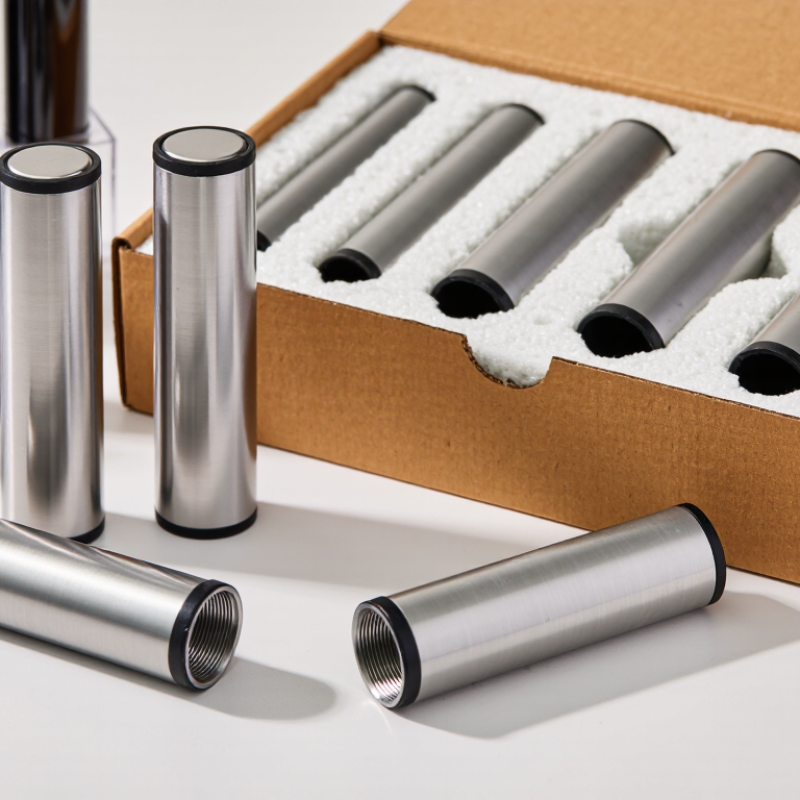
An electric wine opener tube is usually the cylindrical housing around the screw, motor, and bottle neck. In some catalogs, “tube” may also describe a protective shipping sleeve. Buyers should confirm the definition before requesting quotations. A useful tube needs accurate inner dimensions, stable walls, and a comfortable grip. Transparent plastic can show alignment clearly. It can also reveal scratches quickly.
In practical product evaluation, the tube should guide the opener without rubbing against the bottle. A loose fit may cause wobbling, while a tight fit can delay operation. Food-contact exposure is limited, but cleanable, odor-resistant materials remain sensible. Check heat resistance near the motor and inspect the screw opening after repeated cycles. Small details matter. A noisy motor can indicate poor alignment, weak gearing, or inconsistent assembly.
These tubes support several applications. Hotels and restaurants use them during frequent table service. Retail displays use transparent housings to demonstrate the opening process. Home users often prefer lightweight tubes with rechargeable units and simple controls. For global purchasing, suppliers should provide drawings, material specifications, sample measurements, and batch inspection records. Packaging also deserves attention, especially where long-distance transport may cause cracks. I have found that appearance can distract from durability. A polished surface does not prove reliable performance. Some designs still need better grip texture, clearer cleaning guidance, or stronger protection around the charging port.
Global buyers should compare electric wine opener suppliers beyond price and catalog images. Product performance matters most during repeated use. Check opening speed, motor torque, grip comfort, and noise levels. A reliable opener should remove a cork smoothly without damaging its structure. Ask for test data from continuous opening trials. Real samples reveal weaknesses quickly.
Battery quality deserves close attention. Confirm charging time, operating cycles, connector type, and battery protection features. Suppliers should provide clear material details for the housing, spiral, foil cutter, and internal gears. Food-contact components need appropriate documentation for the target market. Certifications should be verifiable, not simply printed on a product sheet. That distinction matters.
Production capacity also affects purchasing risk. Compare minimum order quantities, sampling costs, lead times, packaging options, and inspection procedures. Experienced suppliers can explain how they control motor alignment and final assembly. Their answers should be specific, with photos, records, or factory evidence when possible. After-sales support is equally important, especially for replacement parts and warranty claims. A low quotation may hide fragile gears or inconsistent batteries. I have found that attractive samples can still fail after several weeks of use. Supplier evaluation should therefore include repeat testing, not one successful demonstration.
Key Features to Compare When Selecting a Global Supplier
This 100-point procurement model prioritizes the factors that most directly affect international purchasing decisions: product quality, electrical compatibility, compliance, production reliability, logistics capability, warranty support, and pricing.
Global buyers should separate electric wine opener suppliers by capability, not catalog size. OEM factories build to fixed specifications, while ODM suppliers offer tested housings, motors, and charging layouts. Trading suppliers coordinate production through partner plants. Their prices may look attractive. However, traceability can become unclear.
The OIV reported 237 million hectoliters of global wine production in 2023, the lowest level since 1961. It also estimated consumption near 221 million hectoliters. This large installed market supports steady demand for compact opening tools, especially in hospitality and home-use channels. Suppliers serving these categories should show measurable production experience. Ask for monthly output, defect rates, and recent inspection records.
Manufacturing strength appears in small details. Reliable suppliers can mold ABS or PC shells, align stainless-steel worm gears, and test motor torque under repeated loads. Battery-focused factories should document cell sourcing, charging protection, and transport testing. Relevant evaluations may include IEC 62133 and UN 38.3 requirements, depending on the destination market. Quality teams should also inspect USB-C ports, foil-cutting blades, switch life, noise, and carton compression. Functional testing matters more than polished samples. I have seen attractive prototypes fail after a few dozen opening cycles. That weakness deserves honest review. A capable supplier will accept pilot orders, provide inspection data, and adjust tooling before mass production.
| Supplier Category | Primary Product Scope | Tube and Housing Materials | Manufacturing Capabilities | Electrical and Mechanical Capabilities | Quality and Compliance Support | Customization Options | Best Suited For |
|---|---|---|---|---|---|---|---|
| Specialized Wine-Opener Manufacturers | Complete electric wine openers, protective tubes, charging accessories, and retail-ready sets. | ABS PP PC Stainless steel | Plastic injection molding, CNC or stamped metal parts, ultrasonic welding, assembly, functional testing, and retail packaging. | DC motor integration, worm-gear drive systems, rechargeable battery compartments, charging interfaces, LED indicators, and over-current protection design. | Can commonly support documentation for applicable electrical, battery, EMC, and restricted-substance requirements. Buyer should confirm target-market requirements before production. | Tube dimensions, surface finish, button layout, indicator color, insert design, packaging structure, and user instructions. | Importers and retailers seeking a complete, coordinated product program. |
| Consumer-Electronics OEM/ODM Factories | Battery-powered kitchen and lifestyle devices with custom housings and electronic assemblies. | ABS PC/ABS Aluminum Silicone | Industrial design, rapid prototyping, tooling coordination, injection molding, printed circuit board assembly, firmware integration, and final assembly. | Rechargeable lithium-ion or nickel-metal hydride battery integration, USB charging circuits, motor control, protection circuits, and battery-life testing. | Often able to provide design files, electrical test records, material declarations, and production inspection records when included in the purchasing agreement. | Electronic architecture, housing geometry, controls, charging solution, cosmetic treatment, packaging, and software or firmware behavior. | Buyers requiring product differentiation or a private-label development program. |
| Plastic Tube and Protective Packaging Suppliers | Rigid tubes, transparent display tubes, protective sleeves, end caps, inserts, and presentation packaging for electric openers. | PET PVC PP Paperboard | Tube extrusion, injection molding, thermoforming, die cutting, printing, heat sealing, end-cap production, and protective insert fabrication. | Usually non-electrical; can engineer internal clearances, cushioning, ventilation, cable storage, and access features around the opener and charger. | Material specifications, dimensional inspection, print-color approval, packaging drop-test coordination, and packaging recyclability information may be available. | Tube diameter, wall thickness, length, transparency, cap style, foam or molded-pulp insert, printing, labels, and tamper-evident features. | Brands, distributors, and assemblers that already have the opener and need a dedicated tube or presentation pack. |
| Small Appliance Contract Manufacturers | Compact kitchen appliances and bar accessories, including electric corkscrew assemblies and coordinated accessory kits. | Flame-retardant plastics Stainless steel Zinc alloy Rubber | Metal stamping, die casting, plastic molding, motor assembly, sub-assembly production, final assembly, burn-in testing, and carton packing. | Motor torque testing, cycle testing, battery charging checks, switch-life testing, noise evaluation, and mechanical alignment control. | Can typically organize factory quality plans, incoming-material inspection, in-process checks, final inspection, and sampling based on an agreed specification. | Product dimensions, grip shape, decorative metal parts, operating controls, accessories, tube packaging, and shipment configuration. | High-volume buyers that need integrated sourcing for components, assembly, and packaging. |
| Metal Component and Finishing Suppliers | Spiral corkscrews, shafts, collars, decorative sleeves, charging bases, and structural metal components. | 304 stainless steel 430 stainless steel Aluminum Zinc alloy | Wire forming, CNC turning, stamping, die casting, polishing, brushing, plating, passivation, and dimensional inspection. | Focuses on mechanical fit, shaft straightness, thread or spiral geometry, corrosion resistance, and compatibility with the motor-drive assembly. | Material certificates, coating specifications, salt-spray testing where applicable, dimensional reports, and visual inspection standards. | Metal grade, surface finish, hardness, geometry, tolerances, color, plating, and corrosion-resistance requirements. | Assemblers that source the tube, motor unit, and metal operating mechanism separately. |
| Battery and Charging Subassembly Suppliers | Rechargeable battery packs, protection boards, charging cables, charging docks, and replacement power modules. | ABS battery cases PVC wire insulation Copper conductors Nickel strips | Cell matching, battery-pack welding, wire harness assembly, charging-board assembly, labeling, electrical testing, and pack traceability. | Common configurations include single-cell rechargeable packs, low-voltage DC charging, protection against over-charge, over-discharge, short circuit, and excessive current. | Battery test data, transport documentation, safety data, cell traceability, and charging-performance records should be requested for each battery configuration. | Battery capacity, connector type, cable length, charging base shape, indicator behavior, protection-board specification, and pack dimensions. | Buyers replacing an existing power module or developing a rechargeable opener platform. |
| Export-Oriented Assembly and Packaging Suppliers | Finished product assembly, inspection, kitting, multilingual packaging, and shipment preparation for overseas markets. | Mixed materials Recycled paperboard Molded pulp Plastic components | Final assembly, accessory matching, barcode application, carton packing, palletization, container loading, and production documentation. | Can perform basic power-on checks, charging checks, operating-cycle checks, and accessory verification when suitable test fixtures are provided. | Supports buyer-defined inspection standards, carton marks, labeling, packing lists, country-specific manuals, and shipment documentation. | Pack quantity, carton dimensions, labeling language, barcode format, instruction manuals, inserts, and export carton configuration. | Distributors and global buyers that prioritize shipment readiness and coordinated order fulfillment. |
Global buyers should evaluate electric wine opener tube suppliers beyond appearance. The OIV’s State of the World Vine and Wine Sector 2024 estimated global wine consumption at about 214 million hectolitres in 2023. This volume supports steady demand for protective, retail-ready packaging. Suppliers should provide measurable quality controls, including tube compression tests, drop testing, moisture resistance, and accurate inner dimensions. ISO 9001-based production systems can improve traceability, but a certificate alone is not enough. Ask for recent inspection records and production samples.
Customization should include tube diameter, height, wall thickness, paper texture, printing accuracy, and protective inserts. A well-fitted insert should prevent movement during transport without making the product difficult to remove. Recycled paperboard may support sustainability goals, while coatings can improve resistance to fingerprints and humidity. However, glossy surfaces often show scuffs. That detail is easy to miss. Suppliers should confirm material composition and destination-market requirements, including relevant packaging and chemical compliance documentation. The European Chemicals Agency’s REACH framework remains a key reference for material-related obligations in Europe.
Export support also separates capable suppliers from basic converters. Reliable partners can prepare commercial invoices, packing lists, carton specifications, product photographs, and pre-shipment inspection documents. They should explain lead times clearly and support sample approval before mass production. Packaging dimensions must match pallet and container plans. Small errors become expensive quickly. Buyers should also confirm Incoterms, spare packaging, multilingual instructions, and after-sales communication. I would request a trial order first; supplier performance can change under real production pressure.
Global buyers should compare landed cost, not only the quoted unit price. Request separate figures for the opener, cylindrical tube, printing, batteries, tooling, inspection, and freight. The International Trade Centre’s Trade Map shows that small electrical appliance categories cover many products, so broad customs data cannot prove a supplier’s exact market position. Ask for recent export records and product-specific test reports.
Order terms reveal practical reliability. Compare minimum order quantities, sample fees, lead times, replacement rates, and payment milestones. A pilot order of 100 to 500 units can expose loose charging ports, weak tube inserts, or unclear manuals. Keep the same specification for every quotation. Otherwise, the cheapest offer may simply omit testing.
UNCTAD’s Review of Maritime Transport 2024 reported continued disruption and rerouting in global shipping, making delivery promises less certain. Build safety time into seasonal orders. Check whether the supplier maintains documented inspections under ISO 9001 practices, but do not treat certification alone as proof. Factory video calls help, although staged demonstrations remain possible. I have seen buyers trust polished samples too quickly. That mistake deserves more attention. A dependable supplier should accept independent inspection, provide batch records, and explain corrective actions when defects appear. Ask for evidence, not confidence.
It usually means the cylindrical housing around the screw, motor, and bottle neck. Some catalogs use “tube” for a protective shipping sleeve. Confirm the definition before requesting quotations.
Check inner diameter, wall stability, screw opening, and grip size. A loose fit can wobble. A tight fit may slow operation.
It can show bottle alignment during operation. Scratches and internal movement also become easier to inspect. Appearance alone proves little.
Choose cleanable, odor-resistant materials where contact exposure is possible. Check heat resistance near the motor. Material documents should match the target market.
Request repeated opening trials, not one successful demonstration. Observe noise, torque, operating speed, and cork condition. Test samples for several weeks when possible.
Ask about charging time, operating cycles, connector type, and battery protection. Confirm whether the unit uses rechargeable power. Charging ports need strong protection.
Request drawings, material specifications, sample measurements, and batch inspection records. Compare minimum order quantities, lead times, packaging, and sampling costs.
Long-distance transport may crack the tube or damage the charging port. Inspect cartons, internal padding, and sample condition after delivery. Packaging is easy to underestimate.
Excessive noise can suggest poor alignment, weak gearing, or inconsistent assembly. Inspect the spiral opening after repeated cycles. I may still overvalue polished surfaces.
Ask about replacement parts, warranty claims, and handling procedures. Specific answers matter more than attractive catalog images. A low price can hide fragile gears.
Electric Wine Opener Tube products are essential components in modern electric wine-opening devices, supporting smooth bottle access, reliable operation, and convenient user handling. When selecting a global supplier, buyers should compare material quality, tube dimensions, durability, surface finishing, compatibility, production consistency, and testing procedures. Suppliers may include specialized component manufacturers, precision metal processors, and integrated assembly factories, each offering different manufacturing capabilities and production scales.
Global buyers should also review quality certifications, customization services, packaging solutions, and export experience. A dependable supplier should provide clear technical documentation, stable lead times, responsive communication, and flexible order quantities. Price evaluation should include tooling, samples, shipping, packaging, and long-term production costs rather than focusing only on the initial quotation. By assessing product quality, customization capacity, order management, and reliability together, buyers can select an Electric Wine Opener Tube supplier that supports consistent performance and efficient international procurement.