Direct supply of high-grade stainless steel round, square, and specialized profiles tailored for Tokyo’s medical, commercial infrastructure, and high-tech equipment manufacturing sectors.
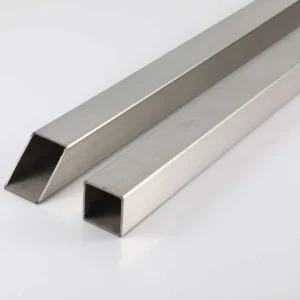
Sanitary 304/316L precision welded tubing engineered for Tokyo hospital beds, sterile medical carts, and surgical equipment frames with anti-bacterial mirror polishes.
View Specifications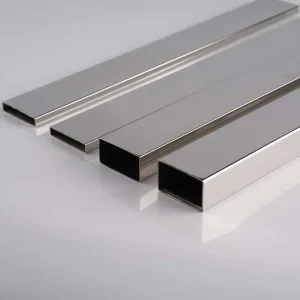
Tight-tolerance structural hollow sections with sharp 90-degree corners, engineered for Tokyo commercial architectural frameworks and heavy workstation chassis.
View Specifications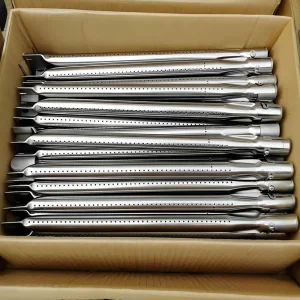
Heat-resistant micro-perforated 304 burner tubes engineered for high-end culinary, commercial kitchen, and heating applications across Tokyo hospitality venues.
View Specifications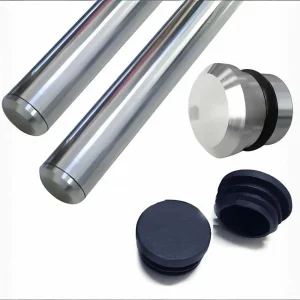
High-ductility, fatigue-resistant stainless tubes designed for precision electric tool housing, motor sleeves, and premium consumer appliances manufactured in Japan.
View SpecificationsThe Greater Tokyo Metropolitan Area—encompassing the core 23 wards along with the Keihin Industrial Zone (spanning Tokyo, Yokohama, and Kawasaki)—represents one of the world's most concentrated clusters of high-precision manufacturing, advanced robotics, commercial architecture, and specialized medical technology. Sourcing industrial components within this market requires strict adherence to JIS (Japanese Industrial Standards), unwavering dimensional accuracy, and flawless surface aesthetics. As Japanese enterprises face intensifying global competition, decarbonization mandates, and fluctuating supply lines, the operational paradigm has shifted from localized traditional sourcing toward agile, dual-sourcing supply networks backed by Industry 4.0 smart factories.
This industry whitepaper explores the structural synergy between Tokyo’s high-demand commercial and industrial sectors and China’s premier stainless steel tubing manufacturing infrastructure. By connecting Foshan’s world-class automated roll-forming and plasma welding technologies with Tokyo’s demanding quality frameworks, global buyers and local Japanese original equipment manufacturers (OEMs) achieve an unmatched balance: zero-defect precision, micro-tolerance capability (±0.05 mm), and significant total-cost-of-ownership (TCO) optimization.
Procurement directors in Tokyo no longer buy commodity stainless tubing based on weight alone. Today's structural decisions hinge on Pitting Resistance Equivalent Number (PREN) metrics, weld-seam integrity under cyclic 90° CNC mandrell bending, zero inner-bore oxidation for cleanroom applications, and guaranteed 15-day expedited mill lead times.
Verified operational parameters driving global supply chain reliability for Japanese and multinational partners.
Understanding the micro-climates, engineering codes, and spatial constraints governing Tokyo's commercial and industrial landscape.
Architectural installations along Tokyo Bay—including waterfront developments in Odaiba, Toyosu, and Shinagawa—are constantly exposed to aggressive airborne chloride ions. Standard commercial austenitic alloys (such as low-nickel 201 or un-passivated 304) frequently succumb to atmospheric "tea-staining" and rapid localized pitting. To meet Tokyo urban aesthetics, manufacturers must provide molybdenum-alloyed 316L stainless steel tubing subject to full inline weld passivation and electro-polishing, exceeding 500 hours of neutral salt spray testing under JIS Z 2371 standards.
Japan’s rigorous building standards mandate extraordinary ductility and structural yield strength to withstand seismic activity. Tokyo high-rise balustrades, public transit grab rails (such as those installed across Tokyo Metro and JR East networks), and cleanroom industrial racks demand tubing with precise wall thickness uniformity (controlled within ±8%) and guaranteed tensile strength. Tight squareness tolerances (±0.5°) on square and rectangular hollow sections ensure seam-free alignment during high-speed robotic laser welding on site.
Ota Ward (Ota-ku) in Tokyo is world-renowned for its dense network of small-to-medium precision machining shops. These specialized workshops demand raw structural tubing that behaves predictably under CNC machining, rotary swaging, and mandrel bending. Material hardness inconsistencies or uncontrolled internal weld seams lead to tool breakage and scrap rate spikes. Sourcing tubing produced with continuous inner nitrogen shielding ensures a clean bore free of heavy black scale oxides, guaranteeing tool life longevity and smooth secondary processing for Ota-ku machine builders.
How state-of-the-art manufacturing technology delivers superior metallurgical control, operational flexibility, and economic resilience to Japanese procurement leaders.
VertexFlow operates 43 high-speed production mills incorporating fully automated plasma arc welding combined with online infrared weld seam monitoring. Unlike traditional high-frequency resistance welding, plasma-TIG fusion ensures 100% penetration without micro-porosity. Continuous laser micrometers log outer diameter, ovality, and wall thickness every 10 milliseconds, automatically rejecting out-of-spec sections long before shipment.
Structural reliability begins at the steel mill. VertexFlow exclusively processes prime hot and cold-rolled stainless steel strip sourced directly from global metallurgical leaders including TISCO, POSCO, and Baosteel. Every production lot is paired with a certified Mill Test Report (MTR) covering EN 10204 3.1 chemical composition, yield strength, elongation percentage, and flattening/flaring mechanical test validation.
| Quality Parameter | Standard Commercial Grade (ASTM A554) | Japanese Industrial Standard (JIS G3446) | VertexFlow Precision Target (Tokyo Market) |
|---|---|---|---|
| Outer Diameter (OD) Tolerance | ±0.15 mm to ±0.30 mm | ±0.10 mm | ±0.05 mm (Precision Series) |
| Wall Thickness (WT) Tolerance | ±10% to ±12.5% | ±10% | ±5% to ±8% Max |
| Surface Roughness (Polished Ra) | Ra ≤ 0.6 µm (320 Grit) | Ra ≤ 0.4 µm | Ra ≤ 0.2 µm (600# Mirror / PVD Ready) |
| Inner Weld Seam Condition | Flash intact / Heavy Oxidation | Planished on request | In-line Planished + 99.999% N2 Shielded |
| Salt Spray Resistance (316L) | 240 Hours Neutral Fog | 400 Hours Neutral Fog | 500+ Hours (Passivated & Pickled) |
Four key sectors where VertexFlow precision tubing directly enhances performance, longevity, and structural elegance.
Hospital expansion projects in Chuo-ku, Shinjuku, and Minato-ku require medical furniture built to stringent hygiene standards. VertexFlow's antibacterial-polished 304 and 316L tubing is deployed in motorized hospital bed frames, intravenous pole assemblies, and barrier-free safety grab bars. Smooth, non-porous surface polishes (Ra ≤ 0.2 µm) resist aggressive chemical disinfectants, preventing bacterial harborage in clinical environments.
Modern architectural icons in Tokyo's central business districts demand distinctive decorative structural profiles. Using advanced roll-forming machinery, VertexFlow produces flat oval, capsule, and D-profile stainless steel tubing with PVD (Physical Vapor Deposition) titanium coatings in Champagne Gold, Black Titanium, and Brushed Rose Gold. These specialized profiles form structural balustrades, glass facade supports, and luxury retail fixtures.
With Japan reinvesting heavily in semiconductor fabrication facilities across the Kanto region, cleanroom logistics hubs require zero-particle-shedding material handling racks. Solid stainless steel lean tubes replace traditional ABS/plastic-coated iron pipes. They eliminate plastic delamination, shed static charges, withstand continuous cleanroom washdowns, and support extreme static load ratings without flexing.
Automated fulfillment centers in Tokyo's Bay Area process millions of packages daily. Low Total Indicator Runout (TIR) stainless steel round tubing ensures ultra-quiet roller conveyor operation, preventing belt misalignment and minimizing motor strain. Precision OD tolerance (±0.05 mm) enables seamless press-fit bearing insertion during automated roller assembly.
Explore our extended series of precision round, oval, special-shaped, and CNC-fabricated stainless steel tubing engineered for immediate global dispatch.
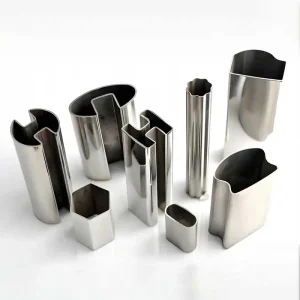
Flat oval, elliptical, and customized aerodynamic profiles manufactured with zero tooling costs using our existing 500+ roll-forming die sets.
View Specifications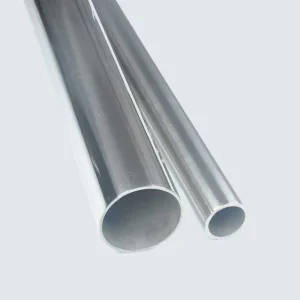
High-gloss mirror and uniform satin finished round tubing (OD 6mm to 219mm) engineered for Japanese structural balustrades and architectural handrails.
View Specifications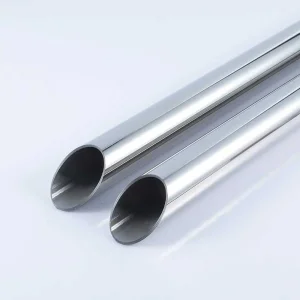
Ultra-smooth inner bore tubing designed for sanitary food processing, beverage dispensing, and electroplating substrate applications in Tokyo.
View Specifications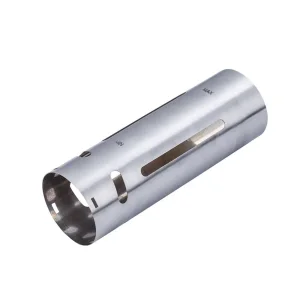
Complete secondary fabrication including 5-axis CNC tube laser cutting, precision mandrel bending, end flaring, punching, and deburring.
View Specifications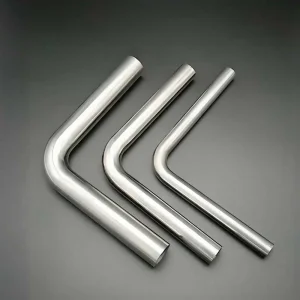
High-copper 201 and premium 304 decorative tubing engineered for luxury Japanese interior furniture legs, dining frames, and retail displays.
View Specifications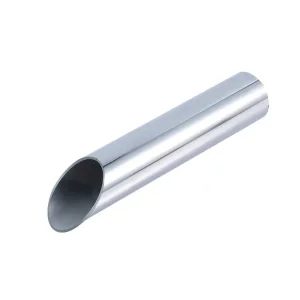
Heavy-duty, ESD-safe structural stainless tubing engineered for automotive assembly line flow racks and cleanroom workstations in Japan.
View Specifications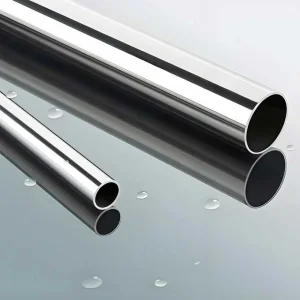
Anti-slip textured and knurled safety grab bar tubing compliant with Japanese accessibility and public healthcare safety guidelines.
View Specifications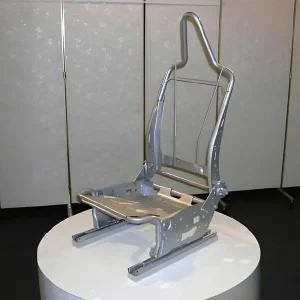
High-yield, lightweight structural tubing designed for automotive seating frames, motorcycle chassis components, and EV battery support frames.
View SpecificationsClear, definitive engineering answers addressing metallurgy, compliance standards, shipping logistics, and custom fabrication.
We manufacture welded stainless steel tubing fully aligned with ASTM A554 (ornamental/structural) and ASTM A249/A269 practice, which closely correspond to JIS G3446 (stainless steel pipes for general building structure) and JIS G3459 (stainless steel pipes for piping). For Japanese buyers, we provide mill test certificates validating equivalent chemical compositions (SUS304, SUS316L, SUS201) and conduct mechanical tests—including tensile strength, yield point, elongation percentage, and flattening checks—in strict compliance with JIS testing methodologies.
Standard manufacturing lead time at our Foshan plant is 15 days upon sample approval. Direct ocean freight from Nansha/Shekou ports to Tokyo Port or Yokohama Port typically takes 4 to 6 transit days. Including export clearance and customs inspection, Japanese procurement teams receive production-ready container shipments within 22 to 25 calendar days from purchase order confirmation.
Tokyo Bay environments feature elevated ambient sodium chloride levels. Grade 304 stainless steel contains 18% chromium and 8% nickel, which provides excellent atmospheric resistance inland but remains vulnerable to localized chloride pitting. Grade 316L adds 2.0% to 3.0% molybdenum, elevating the alloy's Pitting Resistance Equivalent Number (PREN) from ~19 to over 25. This prevents aesthetic "tea-staining" and extends structural service life beyond 20 years without pitting breakdown.
Yes. Beyond mill-length 6-meter tubes, our dedicated CNC secondary processing workshop provides precision cut-to-length (tolerances within ±0.3 mm), 3D laser notch cutouts, mandrel tube bending, end flaring, necking, and press punching. Delivering finished, deburred assemblies directly to your factory eliminates localized scrap costs and speeds up final assembly lines in Japan.
When welded without inert shielding, the high temperatures of plasma welding cause internal oxygen reaction, forming dark chromium-oxide scale inside the bore. This oxide layer degrades ductility, causing seam splitting or micro-cracking when the tube undergoes tight-radius CNC mandrel bending. By purging 99.999% pure nitrogen inside the tube during forming, VertexFlow prevents oxidation, maintaining uniform metallurgical elongation and clean 90° bends.
For standard round, square, and rectangular stainless steel tubes in 304 and 201 grades, our minimum order quantity is 500 kg per size. For custom profiles matching your CAD drawing (or titanium PVD color runs such as Black Titanium or Champagne Gold), our standard MOQ is 1,000 kg. Because we house over 500 existing roll-forming dies, most non-standard shapes require zero initial tooling investments.