Engineered to meet stringent ISO 13485 and FDA 21 CFR 820 standards for critical care and clinical infrastructure
The Pacific Northwest—centered around the Greater Seattle metropolitan area including Bellevue, Redmond, Bothell, and Woodinville—has evolved into one of the world's premier clusters for medical device innovation, biomedical research, and advanced healthcare delivery systems. Driven by world-class clinical institutions such as UW Medicine, Fred Hutchinson Cancer Center, and Swedish Health Services, alongside pioneering medical robotics and patient-monitoring corporations, Seattle's demand for high-integrity Original Design Manufacturing (ODM) medical equipment components has expanded exponentially.
Modern medical devices deployed across Seattle's ambulatory surgical centers, intensive care units (ICUs), and bio-pharmaceutical cleanrooms demand uncompromising metallurgical standards. OEM design engineers in Puget Sound require structural stainless tubing and fabricated assemblies that withstand aggressive chemical sterilization protocols (including vaporized hydrogen peroxide and concentrated peracetic acid), exhibit total structural stability under dynamic load cycles, and maintain ultra-smooth surface topologies (Ra ≤ 0.2 µm to 0.4 µm) to prevent biofilm adhesion and micro-bacterial colonization.
Key Metallurgical Takeaway for Seattle Procurement Teams: Precision welded stainless steel tubing produced to ASTM A554, ASTM A269, and ASTM A270 standards provides the backbone for next-generation clinical hardware—delivering superior yield strength-to-weight ratios compared to cast aluminum, while eliminating the risk of surface delamination inherent in chrome-plated steel.
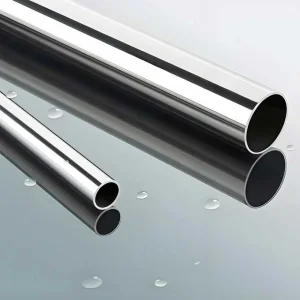
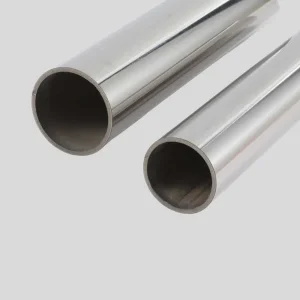
Continuous plasma-welded 316L and 304L stainless steel tubing subjected to inner-bore nitrogen shielding, preventing internal oxide scale formation and guaranteeing zero pinhole porosity across critical fluid and structural conduits.
In-line laser micrometer tracking guarantees Total Indicator Runout (TIR) controls under 0.05 mm/m for automated medical conveyor rollers, diagnostic scanner gantry tubes, and precision linear actuator sleeves.
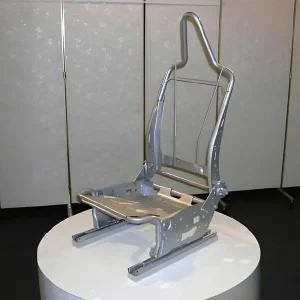
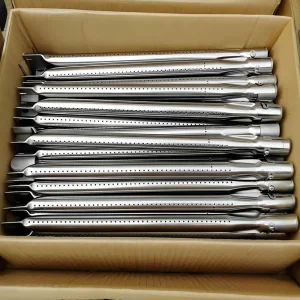
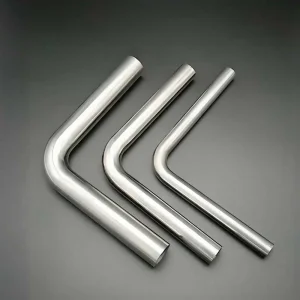
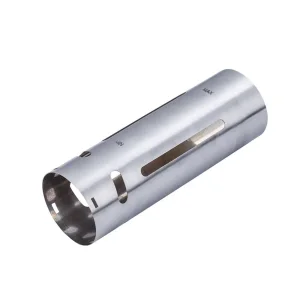
Full ODM capability spanning tight-radius mandrel bending, automated laser slotting, robotic TIG end-flange welding, necking, and custom punch-tooling executed directly from CAD/STEP models.
Quantifiable precision and capacity backing strategic supply agreements for North American medical buyers
Selecting the optimal stainless steel chemistry is vital for medical device compliance, mechanical life, and total cost of ownership (TCO). While standard commercial grade 201 copper-modified alloys suffice for basic indoor display structures, clinical medical environments require strict adherence to 304, 304L, 316, and 316L chemical compositions. Below is our comparative engineering benchmark for medical equipment hardware design.
| Stainless Grade | Chemical Profile (Cr / Ni / Mo) | Pitting Resistance (PREN) | Primary Medical Application | Sterilization Compatibility |
|---|---|---|---|---|
| AISI 304 / EN 1.4301 | 18.0-20.0% Cr / 8.0-10.5% Ni | ~19.0 | Hospital Bed Frames, Patient IV Poles, Mobile Carts | Standard Alcohol, Quaternary Ammonium, Mild Detergents |
| AISI 304L / EN 1.4307 | 17.5-19.5% Cr / 8.0-10.5% Ni (Max 0.03% C) | ~19.5 | Heavy CNC Welded Assemblies, Diagnostic Gantry Mounts | Prevents Intergranular Corrosion Post-Welding |
| AISI 316L / EN 1.4404 | 16.0-18.0% Cr / 10.0-14.0% Ni / 2.0-3.0% Mo | ~24.5 | Surgical Instrument Trays, OR Grab Bars, Bio-Pharma Piping | Autoclave, Vaporized Hydrogen Peroxide (VHP), Peracetic Acid |
| 316L Electropolished (EP) | Passivated Surface Film (Cr:Fe > 2.0) | >26.0 (Enhanced) | Surgical Robotics Arm Housings, Implant Handling Frameworks | Maximum Sterility; Surface Ra ≤ 0.15 µm prevents bacterial grip |
Our Foshan manufacturing center operates 43 continuous cold-roll forming and plasma-welded tubing mills capable of handling high-purity strips sourced directly from Tier-1 steelmakers (TISCO, POSCO, Baosteel). Every single production lot undergoes chemical spectrographic analysis, mechanical elongation testing, and 100% online eddy-current flaw detection before releasing Mill Test Certificates (MTC EN 10204 3.1).
In today's dynamic global healthcare supply chain, medical OEM brands in Greater Seattle face dual pressures: maintaining rigorous quality compliance under US FDA regulatory scrutiny while optimizing component landed cost. By partnering with our Guangdong-based contract manufacturing hub, Seattle enterprises capture a distinct competitive edge through structural cost reductions of 30% to 45% compared to domestic US contract machine shops, without compromising material integrity.
Foshan represents the world's highest density stainless steel fabrication cluster. This allows instantaneous sourcing of specialized alloy strips, custom tooling die-making within 48 hours, and zero-delay access to specialized physical vapor deposition (PVD) surface treatment lines.
Leveraging direct maritime routes from Shenzhen (Yantian/Chiwan) and Guangzhou (Nansha) to the Port of Seattle enables reliable 16-to-18-day port-to-port ocean transit. Urgent prototype and NPI (New Product Introduction) runs ship via express air cargo into Seattle-Tacoma International Airport (Sea-Tac) within 72 hours.
To prevent surface micro-scratching or transit oxidation during transpacific voyages, all tubes are individual plastic sleeved, capped, wrapped in moisture-barrier VCI foil, and enclosed in heavy-duty fumigated wooden crates or steel-framed skids.
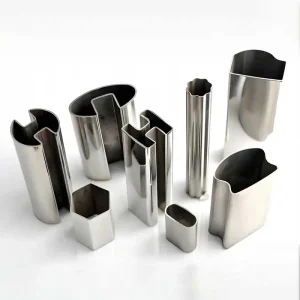
Explore our complete range of specialized structural profiles, sanitary tubing, and custom CNC machined components
Location: Robotics Technology Hubs (Redmond & Bothell)
Engineering Challenge: Eliminating rotational backlash and deflection in multi-axis motorized surgical camera mounts.
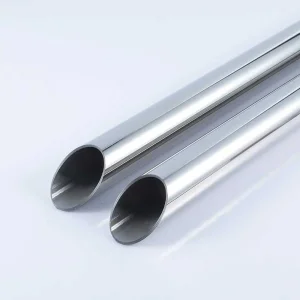
ODM Solution: Custom 316L seamless-look precision welded round tubing with wall thickness controlled to ±0.04 mm, 600# mirror electro-polishing, and laser-notched keyways for direct servo motor integration.
Location: Regional Trauma Centers (Downtown Seattle)
Engineering Challenge: High static load requirements combined with lightweight maneuverability for overhead patient transfer gantries.
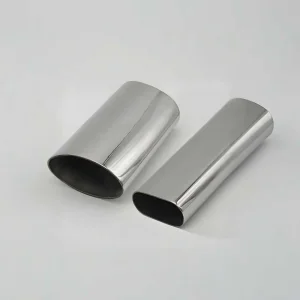
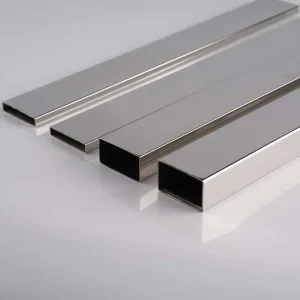
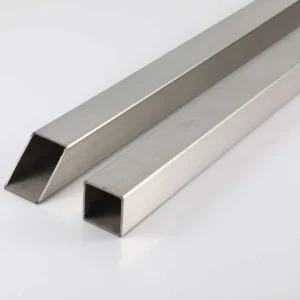
ODM Solution: Oval and D-shaped high-yield ASTM A554 304 structural tubing providing 35% higher torsional rigidity over traditional round pipe while allowing seamless concealment of internal electrical cabling.
Location: Bio-Pharma R&D Campuses (South Lake Union)
Engineering Challenge: Micro-vibration suppression during high-throughput liquid sample vial transportation.
ODM Solution: Ultra-low TIR (Total Indicator Runout ≤ 0.03 mm) precision 304 stainless steel roller tube shells, dynamically balanced at 3,000 RPM with smooth orbital TIG end-cap integration.
Detailed technical answers provided by our senior metallurgical staff regarding material compliance, quality control, and international delivery