Direct from our Foshan manufacturing hub. Explore precision-extruded, laser-welded, and custom-fabricated stainless steel tubing variants engineered for extreme temperature, pressure, and structural loads.
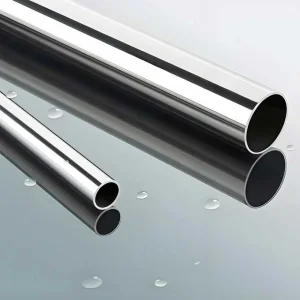
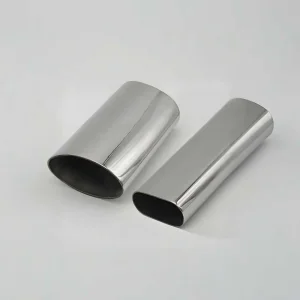
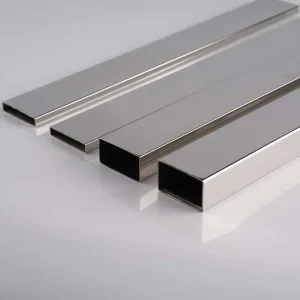
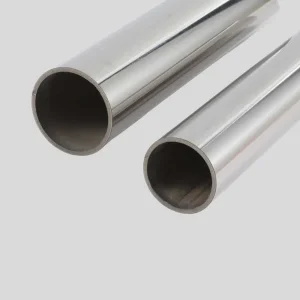
Understanding the microstructural mechanics, alloy chemistry, and continuous hydroforming techniques that govern performance in high-flexure, thermal expansion, and aggressive media environments.
In modern process engineering and commercial fluid dynamics, the 1 inch flexible stainless steel pipe (DN25 nominal inner diameter) represents a crucial convergence of mechanical adaptability and structural resilience. Unlike rigid piping systems bound by fixed elbows and thermal stress limits, flexible corrugated metal hoses mitigate angular displacement, absorb high-frequency mechanical vibration, and accommodate thermal expansion loops without structural degradation.
The flexibility of a 1-inch stainless steel core pipe relies entirely on its convolution geometry. Top-tier Chinese manufacturers utilize two distinct pitch profiles:
The lifespan of a 1-inch flexible pipe in corrosive, marine, or chemical environments depends on its chemical matrix. Lead manufacturers in Foshan process prime cold-rolled stainless steel coils sourced from tier-one steelmakers (TISCO, POSCO, Baosteel) adhering to strict ASME/ASTM standards:
| Alloy Grade | Chemical Matrix (Cr / Ni / Mo / C) | PREN Index | Primary Environmental Suitability |
|---|---|---|---|
| AISI 304 (UNS S30400) | 18.0-20.0% Cr | 8.0-10.5% Ni | 0.08% C max | ~19.0 | General HVAC, potable water, municipal steam, indoor gas distribution. |
| AISI 304L (UNS S30403) | 18.0-20.0% Cr | 8.0-12.0% Ni | 0.03% C max | ~19.0 | Welded assemblies requiring protection against intergranular carbide precipitation. |
| AISI 316L (UNS S31603) | 16.0-18.0% Cr | 10.0-14.0% Ni | 2.0-3.0% Mo | ~23.5-25.0 | Marine engine cooling, coastal salt-air installations, pharmaceutical cleanrooms, chloride exposure. |
| AISI 321 (UNS S32100) | 17.0-19.0% Cr | 9.0-12.0% Ni | Titanium Stabilized | ~20.0 | Extreme thermal cycling up to 800°C, engine exhaust manifold dampening, high-temp boilers. |
The Pitting Resistance Equivalent Number (PREN = %Cr + 3.3*%Mo + 16*%N) serves as our quality control threshold. For marine and chemical application requests, our 316L 1" flexible hose cores maintain a PREN score exceeding 23.5, guaranteeing resistance against pitting corrosion and crevice attack under continuous exposure to aggressive chlorides.
Unbraided corrugated hose behaves like an open bellows under hydrostatic pressure—expanding axially and distorting convolutions if unconstrained. To convert a flexible core into a high-pressure conduit, Chinese manufacturers apply single or double layers of woven stainless steel wire braid (AISI 304 or 316L).
The braided sleeve is woven at a precisely calculated braid angle (typically 54° 44' neutral axis). This neutral angle balances radial hoop stress and longitudinal tension, preventing hose elongation while allowing maximum lateral dynamic flexibility. Single-braid 1-inch flexible pipe increases working pressure capacity by up to 400%, while double-braided configurations allow operating pressures exceeding 64 bar (928 PSI) with a safety factor of 4:1.
How state-of-the-art automated production, fully integrated raw coil slitting, continuous hydroforming, and localized supply chains make China—and Foshan in particular—the premier hub for flexible piping OEM contract manufacturing.
The global shift toward green building standards (LEED), hydrogen transportation, modular cleanroom construction, and LNG marine vessel retrofits has driven an unprecedented demand for 1-inch flexible stainless steel pipe assemblies. Engineering procurement managers seek suppliers capable of balancing stringent ISO certifications with scalable volume.
Foshan, Guangdong stands as the world's most concentrated stainless steel engineering cluster. By housing strip coil slitting, TIG/Plasma longitudinal seam welding, automated continuous hydroforming, bright annealing, wire braiding, and CNC end-fitting machining within a single industrial precinct, production lead times are reduced to 15 days.
Unlike regional traders who resell generic hose, top-tier Chinese manufacturers execute 100% online eddy current seam monitoring, multi-stage hydrogen-shielded annealing at 1050°C to relieve hydroforming stress, and 100% pneumatic underwater bubble / helium mass spec testing on every assembly.
A vital technological distinction in 1" flexible stainless steel pipe manufacturing lies in convolution forming. Legacy workshops employ mechanical disc expansion, which creates uneven wall thickness, micro-stretches the metal grain, and introduces internal stress risers along the convolution peaks.
Advanced Chinese manufacturers utilize continuous hydraulic forming (hydroforming). Water under controlled pressure (up to 200 bar) expands the continuous welded tube into precision external die cavities. Hydroforming yields uniform wall thickness across both peaks and valleys, preserves the parent metal's microcrystalline structure, and results in dynamic fatigue lives exceeding 50,000 motion cycles under ISO 10380 testing protocols.
Engineered tolerance data, pressure limits, bend radius calculations, and testing standards for procurement engineers and MEP designers.
| Parameter / Metric | DN25 Unbraided Corrugated Hose | DN25 Single Braid (AISI 304) | DN25 Double Braid (AISI 316L) |
|---|---|---|---|
| Nominal Inner Diameter (ID) | 25.4 mm (1.00 inch) | 25.4 mm (1.00 inch) | 25.4 mm (1.00 inch) |
| Outer Diameter over Braid (OD) | 32.0 mm ± 0.5 mm | 33.5 mm ± 0.5 mm | 35.2 mm ± 0.5 mm |
| Standard Hose Wall Thickness ($t$) | 0.25 mm – 0.35 mm | 0.25 mm – 0.35 mm | 0.30 mm – 0.40 mm |
| Max Working Pressure ($P_w$) at 20°C | 2.5 bar (36 PSI) | 40 bar (580 PSI) | 64 bar (928 PSI) |
| Nominal Burst Pressure ($P_b$) | 10 bar (145 PSI) | 160 bar (2,320 PSI) | 256 bar (3,712 PSI) |
| Min. Static Bend Radius ($R_s$) | 75 mm | 150 mm | 190 mm |
| Min. Dynamic Bend Radius ($R_d$) | 180 mm | 280 mm | 320 mm |
| Temperature Range (Continuous) | -270°C to +600°C | -200°C to +550°C | -270°C to +650°C |
| Helium Leak Tightness Rate | < 1×10⁻⁹ mbar·l/s | < 1×10⁻⁹ mbar·l/s | < 1×10⁻⁹ mbar·l/s |
To prevent premature fatigue failure in automated mechanical systems or thermal loops, piping engineers must compute the minimum allowable length ($L$) for a 90° or 180° offset flexure using the formula:
$$L = 4 \cdot R_d + 1.57 \cdot \Delta Y + 2 \cdot L_n$$
Where $R_d$ is the minimum dynamic bend radius (280 mm for 1" single braid), $\Delta Y$ is the lateral dynamic displacement amplitude, and $L_n$ represents the rigid end-fitting neck length. Enforcing this calculation guarantees that the hose convolutions operate within their elastic deformation zone, avoiding work-hardening and fatigue cracking across millions of continuous cycles.
How 1 inch flexible stainless steel pipe assemblies resolve complex thermal, seismic, and corrosive fluid delivery challenges across global industries.
In high-rise commercial infrastructure, main chilled water and heating hot water loops experience significant building settlement and seismic shear forces. Installing 1" flexible stainless steel expansion loops at structural expansion joints absorbs multi-axis movements while dampening pump-induced vibration before it reverberates through building structures.
Cleanroom processing plants require steam-in-place (SIP) and clean-in-place (CIP) sanitization cycles up to 140°C. 316L 1-inch flexible pipes fitted with sanitary Tri-Clamp end fittings deliver zero-dead-leg fluid transit. Smooth internal corrugations prevent biological biofilm buildup, while passivated surfaces withstand caustic washdowns.
Transporting liquid nitrogen (-196°C) or high-pressure gaseous hydrogen requires absolute gas tightness and zero low-temperature embrittlement. Austenitic AISI 316L flexible pipes retain high Charpy impact strength and ductility at cryogenic temperatures, preventing micro-fractures associated with carbon steel or inferior synthetic hoses.
Offshore vessels, tugboats, and marine engine skids operate under continuous heavy engine vibration and salt-spray exposure. Double-braided 316L 1-inch flexible hoses mitigate structural vibration between fuel manifolds and engine blocks, resisting external pitting corrosion and preventing fuel line rupture risks under Lloyd's Register marine safety standards.
Ensuring seamless drop-in replacement and international regulatory compliance for global engineering procurement buyers.
To support frictionless global trade, China's premier 1-inch flexible pipe manufacturers hold complete factory auditing certifications. Every batch produced is supported by Mill Test Certificates (MTC) according to EN 10204 3.1 standards, providing chemical trace analysis, tensile stress testing, and hydrostatic burst data.
Flexible hose assemblies are only as reliable as their welded end fittings. Top Chinese manufacturers employ automated orbital TIG welding to fuse the corrugated core, braid sleeve, and end fitting into a monolithic assembly. End fittings can be customized in carbon steel, AISI 304, or AISI 316L:
Male/Female fixed or swivel hex unions for rapid pipe fitting integration.
Raised Face (RF) or Slip-On flanges rated Class 150/300 or PN16/PN40.
ISO/BS 4825 mirror-polished fittings for pharmaceutical CIP/SIP lines.
Quick-connect hydraulic fittings for industrial machinery and tanker loading.
Pioneering advancements in smart flexible piping, low-carbon manufacturing processes, and hydrogen-ready metallurgical formulations.
Integration of micro fiber-optic sensor strands beneath the external stainless steel braid. These optical sensors measure real-time micro-strain deformation, localized thermal spikes, and pinhole leakage along 1" industrial pipe runs, feeding telemetry directly into factory SCADA platforms.
Eliminating hazardous acid pickling by transitioning to closed-loop neutral salt electropolishing systems. Water used in high-pressure hydroforming lines is 100% recycled through closed-circuit reverse osmosis filtering, cutting industrial water consumption by 85%.
Optimizing nickel and manganese concentrations in AISI 316L matrices to prevent atomic hydrogen permeation in green hydrogen fuel cell infrastructure operating under ultra-high pressures up to 700 bar.
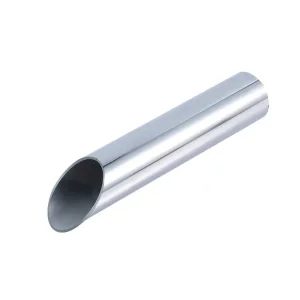
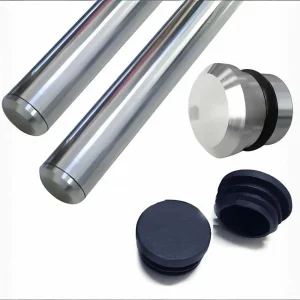
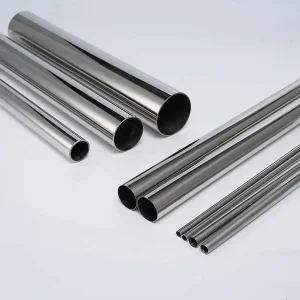
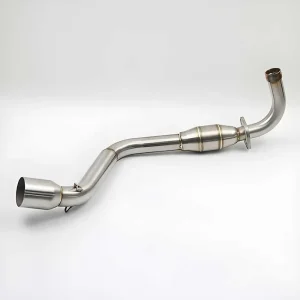
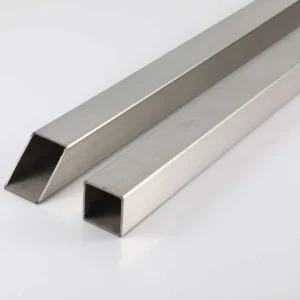
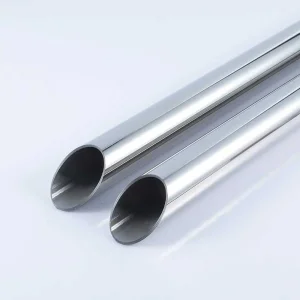
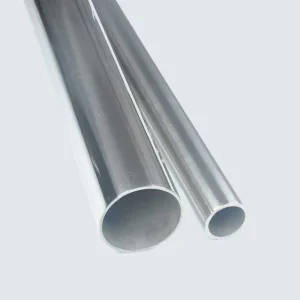
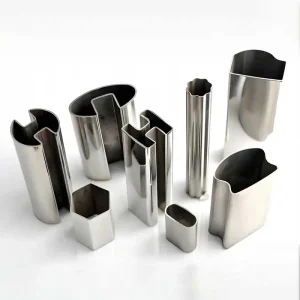
Explore specialized industrial tubing lines covering structural hollow sections, automotive exhaust components, medical equipment tubing, and decorative architectural profiles.
Expert metallurgical and operational answers addressing pressure ratings, installation bend rules, material selection, and OEM lead times.