Explore our foundational precision-engineered tubing series manufactured under ISO 9001 and IATF 16949 compliant protocols. Designed for extreme thermal cycles, corrosive condensates, and rigorous structural demands.
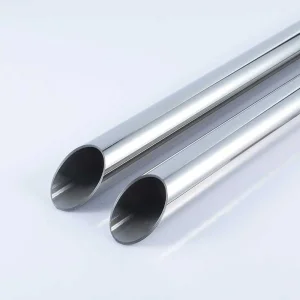
Ultra-low surface roughness (Ra ≤ 0.4 μm) suitable for high-purity fluid conduits and heat exchangers.
View Product Specs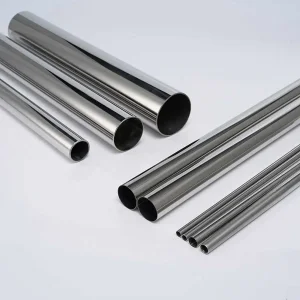
High-tensile architectural and structural tubing with tight seam integrity and consistent wall thickness.
View Product Specs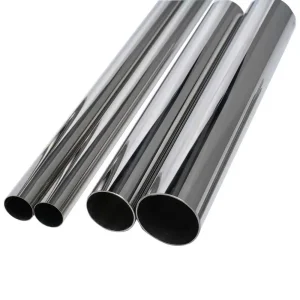
High-molybdenum alloy resisting extreme pitting, road salts, and aggressive exhaust acidic condensates.
View Product Specs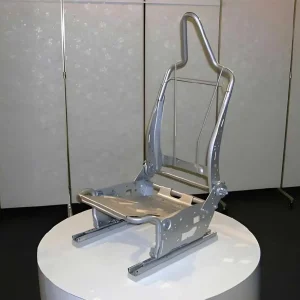
Formulated for deep hydroforming, tight-radius mandrel bending, and critical load-bearing automotive frames.
View Product Specs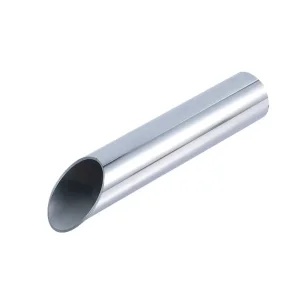
High-rigidity modular frame profiles engineered with strict straightness tolerances (≤ 1 mm/m).
View Product Specs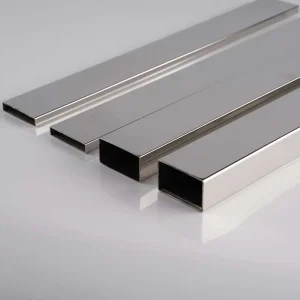
Accurate 90° corner profiles with tight corner radius control (±0.5°) for precision robotic fabrication.
View Product Specs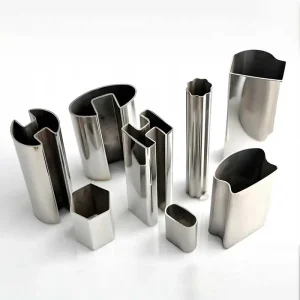
Streamlined flat-oval and D-shaped profiles ideal for vehicle underbody clearance and custom exhaust runs.
View Product Specs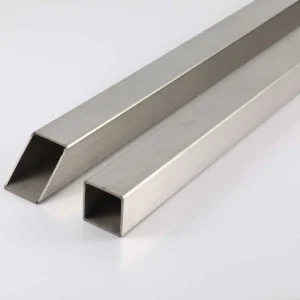
Ultra-clean bore surface processing without slag or oxidation, tested via helium spectrometer leak detection.
View Product SpecsStringent emissions standards (Euro 6e/Euro 7, EPA Tier 3/Tier 4, and China VI-b) combined with hybrid electric vehicle (PHEV/HEV) adoption are reshaping automotive exhaust engineering. The modern auto exhaust pipe is no longer a passive evacuation conduit; it is an optimized chemical reactor housing, acoustic chamber, and thermal envelope.
Downsized turbocharged engines and hybrid cycles repeatedly switch the internal combustion engine (ICE) on and off. Exhaust gas temperatures swing from 150°C to 980°C in seconds, inducing violent cyclic thermal stresses that cause low-cycle fatigue (LCF) cracking in poorly annealed weld seams.
Because PHEV engines operate at lower average cylinder temperatures, water vapor fails to evaporate immediately. Sulfuric, nitric, and formic acids collect at the bottom of the resonator and muffler can, initiating accelerated pitting. Stabilized ferritic grades like 439 and 441 are displacing standard carbon-coated steels.
Global acoustic regulations (ECE R51-03) enforce strict drive-by exterior noise caps while consumers expect a refined cabin sound signature. Modern tailpipes and mufflers employ internal perforation patterns, double-skin casing, and optimized gas expansion geometry to minimize backpressure and optimize fuel economy.
Selecting the optimal stainless steel alloy is a delicate economic and metallurgical trade-off between thermal expansion, oxidation ceiling, mechanical ductility during tight bending, and lifetime corrosion resistance against road salts.
| Steel Grade | Microstructure | Cr / Ni / Mo (%) | Max Service Temp | Ideal Exhaust Component Section | Key Engineering Trait |
|---|---|---|---|---|---|
| AISI 409L / 1.4512 | Ferritic | 11.0% Cr / 0.2% Ti | 650°C (Continuous) | Catalytic Converter Outer Canning, Center Pipes | Low thermal expansion; highly cost-efficient OEM volume choice. |
| AISI 439 / 1.4510 | Ferritic | 17.5% Cr / Dual Stabilized | 850°C | Exhaust Manifolds, Front Pipes, Resonator Shells | Resists intergranular oxidation; elevated wet condensate endurance. |
| AISI 441 / 1.4509 | Ferritic | 18.0% Cr / Ti + Nb | 950°C | Turbo Downpipes, Hot-End Manifold Collectors | High creep strength at 900°C+; minimal scaling under severe cycles. |
| AISI 304 / 1.4301 | Austenitic | 18.0% Cr / 8.0% Ni | 870°C | Cat-Back Exhaust Systems, Mufflers, Dual Tips | Superior ductility (A50 ≥ 40%); excellent mirror polish appeal. |
| AISI 304L (Low-C) | Austenitic | 18.5% Cr / 9.0% Ni / Low C | 800°C | Mandrel-Bent Performance Downpipes, Welded Flanges | Prevents chromium-carbide precipitation along HAZ (Heat-Affected Zone). |
| AISI 316L / 1.4404 | Austenitic | 17.0% Cr / 12% Ni / 2.5% Mo | 850°C | Marine Outboards, High-Performance De-Cat Downpipes | Highest resistance to pitting in chloride/coastal de-icing environments. |
In hot-end exhaust sections, un-stabilized ferritic grades suffer from grain growth at temperatures above 800°C, leading to embrittlement. In our Grade 441 tubes, precise titanium (Ti) and niobium (Nb) dual-stabilization traps carbon and nitrogen atoms into stable carbides/nitrides, eliminating chromium depletion around grain boundaries and preserving post-weld ductile yield during 1D radius mandrel bending.
A cracked exhaust weld or a 0.2 mm ovality variance can shut down an automated automotive assembly cell. We mitigate this through closed-loop quality control across all ten shopfloor phases in our Foshan manufacturing hub.
Master coils from prime domestic mills (TISCO, Baosteel, POSCO) are slit on automated CNC lines. We maintain burr heights ≤ 0.02 mm to prevent micro-notch flaws during cold roll forming.
Continuous plasma arc welding ensures 100% full-penetration seams with zero internal weld splatters. We employ inner inert gas (argon/nitrogen) back-shielding to prevent bore seam oxidation.
High-frequency induction reheats the weld zone to 1050°C, recrystallizing the martensitic weld microstructure. An integrated eddy-current sensor scans 100% of the tubing length at 60 m/min.
Our multi-axis CNC bending cells bend tubes up to 127 mm OD down to a 1.0D centerline bend radius without wall collapse, wrinkles, or exceeding 10% wall thinning.
For complex packaging within vehicle chassis tunnels, water pressures up to 3000 bar reshape round tubes into complex cross-sections and multi-branch header manifolds.
6-axis fiber laser cutting heads execute clean slotting, oxygen-sensor boss ports, slip-fit expansion slots, and burr-free end flares configured for robotic assembly lines.
Located in the Shishan Industrial Innovation Hub of Foshan, our plant operates at the center of the world's most concentrated stainless steel supply ecosystem. This geographic clustering delivers distinct speed, cost, and risk mitigation benefits.
Daily direct replenishment from Baosteel, TISCO, and POSCO China ensures zero production stoppages. We stock over 4,500 metric tons of prime slit strip across 409L, 439, 441, 304, and 316L grades, insulating international clients from global raw metal spikes.
Avoid tooling lead times of 8 to 12 weeks. With more than 500 existing forming roll sets covering standard metric diameters (38 mm, 45 mm, 51 mm, 63.5 mm, 76 mm, 89 mm, 102 mm) and oval shapes, we compress PPAP sampling down to 10 working days.
Situated within 90 minutes of Guangzhou Nansha Port and Shenzhen Yantian Port, our logistical network offers flexible FOB, CIF, or DDP delivery terms. Automated container stuffing docks ensure zero denting or transit moisture damage.
From high-volume passenger car OEM platforms to hand-crafted performance motorsport cat-back systems and heavy commercial diesels, we configure alloy chemistry, wall thickness, and finish to exact application tolerances.
High-volume runs of SS409L and SS439 center exhaust pipes and muffler inlet/outlet tubes. Manufactured to strict CPK ≥ 1.67 capability indices, ensuring seamless robotic loading on our clients' robotic canning lines.
T304 surgical-grade stainless exhaust systems with 600# mirror polished or brushed finishes. Mandrel bent without cross-sectional area loss, giving unrestricted high-RPM gas flow and deep acoustic resonance.
Heavy-duty exhaust piping (wall thickness 1.8 mm to 3.0 mm) engineered for Selective Catalytic Reduction (SCR) and Diesel Particulate Filter (DPF) units. Heavy-gauge SS441 and SS316L endure continuous soot regeneration cycles.
The transition toward decarbonized transport demands advanced thermal strategies and lighter materials. Our R&D lab is actively commercializing solutions for next-generation propulsion architectures.
For hybrid engines requiring rapid catalyst light-off, we manufacture coaxial downpipes with a 2.5 mm stagnant air gap. This preserves exhaust gas heat before it reaches the catalytic converter, cutting cold-start emissions by up to 35%.
Combustion of hydrogen fuel produces zero carbon but emits massive volumes of high-temperature pure water vapor. We are formulating passivated 316L and stabilized high-Cr ferritic alloys that resist rapid wet steam scaling and stress corrosion cracking.
To cut chassis curb weight and boost EV range on extended-range electric vehicles (EREVs), we replace traditional 1.5 mm thick exhaust tubing with high-yield strength SS441 and titanium-stabilized tubes cold-rolled down to 0.8 mm without sacrifice in burst strength.
Global Tier-1 procurement teams demand rigorous compliance and document trail verification. We run automated QA pipelines that validate raw chemistry through to final end-forming leak tests.
We provide full PPAP Level 3 documentation dossiers with every new program launch. This includes Design/Process FMEA, Control Plans, Process Capability Studies (Cpk ≥ 1.67 on critical OD dimensions), Gage R&R, and full International Material Data System (IMDS) chemical registration.
Every meter of automotive tubing undergoes non-destructive Eddy Current testing according to ASTM A450 / EN 10893-1. Bent and flared assemblies are verified against 3D digital CAD master models using portable FaroArm coordinate measurement machines (CMM).
Direct technical answers from our metallurgical and shopfloor QA teams addressing common engineering, procurement, and fabrication concerns.
VertexFlow also delivers turnkey tube components—including CNC end-flaring, multi-axis mandrel bending, perforated silencer cores, and decorative tailpipe assemblies ready for direct integration.
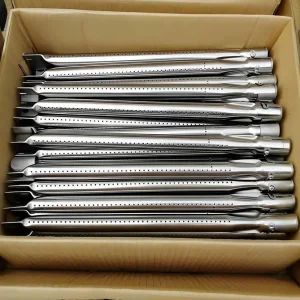
Laser-microperforated heat tubes with uniform gas distribution and elevated oxidation resistance up to 850°C.
View Product Specs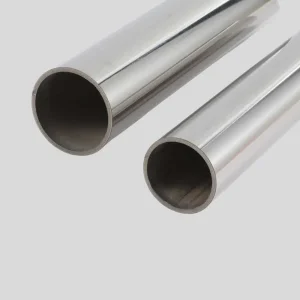
Precision calibrated circularity and straightness (≤ 0.8 mm/m) for dynamic high-speed rotational balancing.
View Product Specs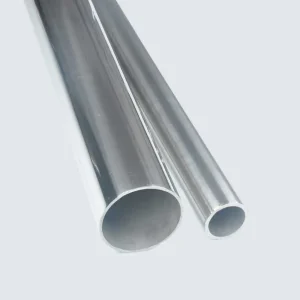
Standard metric and imperial OD sizes (0.5" to 5") with automated in-line inert gas purge during high-speed welding.
View Product Specs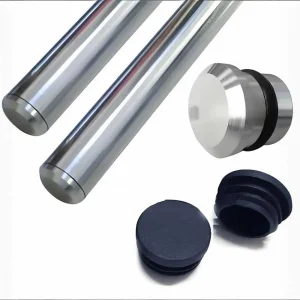
Engineered for vibration absorption, motor housings, and durable internal high-pressure fluid lines.
View Product Specs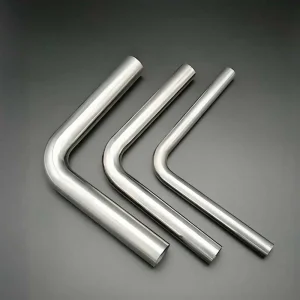
400# to 600# uniform mechanical mirror polish with PVD titanium finish options for high-end aesthetic exhaust tips.
View Product Specs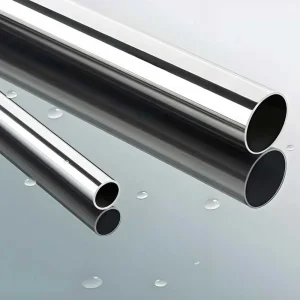
Wall thickness up to 3.0 mm; certified tensile strength ≥ 520 MPa for impact protection and chassis crossmembers.
View Product Specs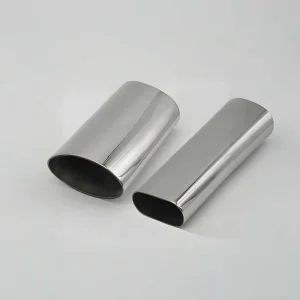
Formed from ductile 201/304 strip with controlled yield strength to maximize formability and acoustic dampening.
View Product Specs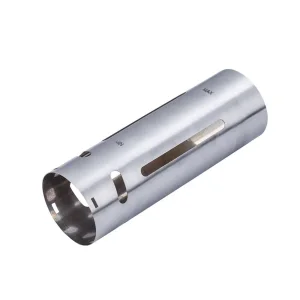
Mandrel bending, laser slotting, flange welding, and expansion end-forming delivered as complete assembly kits.
View Product Specs