Directly manufactured at our advanced mill facilities, meeting rigorous ASTM A554 and dimensional specifications for international OEM assembly lines.
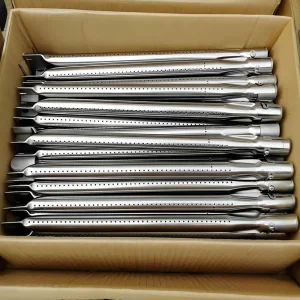
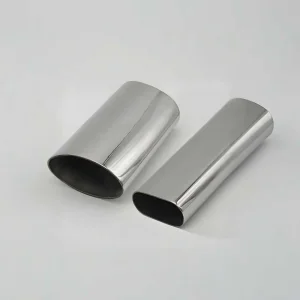
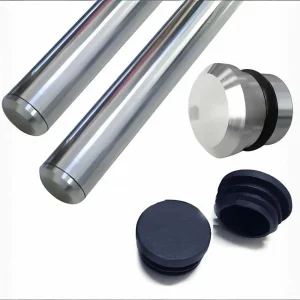
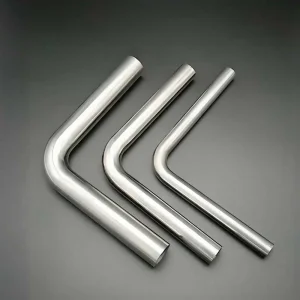
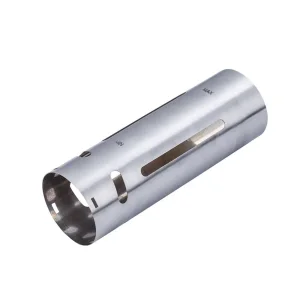
Gas burner tubes represent one of the most mechanically and thermally demanding applications for austenitic stainless steel tubing. In industrial, commercial, and high-end residential gas appliances, the burner tube must handle continuous thermal cycling, internal fuel-air pressure differential, aggressive combustion byproducts (such as sulfur dioxide, water vapor, and nitric acid condensate), and localized flame impingement up to 900°C.
Historically, gas appliance manufacturers relied heavily on cast iron, aluminized steel, or lower-grade ferritic stainless steels (such as 430). However, modern energy-efficiency regulations, stringent emissions mandates (Low-NOx targets), and consumer demands for decades-long longevity have shifted global supply chains decisively toward **Grade 304 (UNS S30400 / EN 1.4301)** austenitic stainless steel.
Unlike 400-series ferritic steels which undergo phase transformations and embrittlement over repeated thermal shocks, Grade 304 retains its ductile face-centered cubic (FCC) crystal structure across extreme temperature swings. Its high chromium content (18–20%) forms a self-healing passive Chromium Oxide (Cr₂O₃) layer that halts catastrophic oxidation under continuous open-flame exposure.
Choosing the right alloy grade for burner tube manufacturing directly impacts flame port stability, structural rigidity under high heat, and manufacturing yield during CNC bending or cross-drilling.
| Material / Grade | Chemical Composition | Max Service Temp (Air) | Corrosion Resistance | Weldability & Formability | Primary Industrial Use |
|---|---|---|---|---|---|
| AISI 304 (EN 1.4301) | 18% Cr, 8% Ni, ≤0.07% C | 870°C (Intermittent) / 925°C (Continuous) | High (Resists moisture, gas condensate, salt spray) | Excellent (Ideal for CNC expanding, bending, punching) | Premium OEM Gas Burners, Outdoor Grills, Boilers |
| AISI 304L (EN 1.4307) | 18% Cr, 8% Ni, ≤0.03% C | 870°C (Prevents Carbide Precipitation) | Superior in heat-affected weld zones (HAZ) | Superior (Prevents intergranular cracking) | Heavy-duty commercial kitchens, chemical burner manifolds |
| AISI 316L (EN 1.4404) | 16% Cr, 10% Ni, 2% Mo | 870°C | Extreme (Resists chloride-pitting & high sulfur) | Excellent | Marine gas equipment, coastal installations, refinery burners |
| Ferritic 430 (EN 1.4016) | 16% Cr, 0% Ni, ≤0.12% C | 750°C (Prone to scaling above 700°C) | Moderate (Susceptible to tea-staining & moisture rust) | Fair (Work hardens, lower ductility) | Budget indoor appliances, dry heat tubes |
The international market for 304 stainless steel burner tubing is driven by multi-industry shifts toward clean combustion energy, stricter thermal efficiency benchmarks, and robust global supply chain resilience.
In North America and Europe, outdoor gas appliances (such as high-end BBQ grills, patio heaters, and fire pits) face harsh environmental exposure year-round. Regulatory bodies (such as CSA Group in North America and CE marking in Europe) mandate rigorous salt-spray testing, backfire-flashback safety, and structural integrity. 304 stainless steel burner tubes ensure zero structural degradation even when exposed to marine salt-air, rain, and acidic combustion residues.
Commercial equipment manufacturers for restaurants, bakeries, and industrial food processing plants operate burner systems continuously for 12 to 18 hours daily. Burner tubes must maintain uniform internal air-gas Venturi mixing to prevent carbon buildup (soot) and flame instability. 304 stainless steel provides the precise inner wall smoothness (low Ra roughness) necessary to minimize turbulence and optimize heat transfer coefficient.
As a direct factory and tier-1 supplier, our manufacturing workflow incorporates advanced automation to transform raw 304 coils into application-specific burner tube geometries.
Straight pipe, H-burners, and U-burners require precise CNC laser-slotted flame ports or micro-drilled orifices to achieve flame distribution balance across the entire cooking grid.
Demands precision tube expansion, end-swaging, and bracket spot-welding to withstand high back-pressure and elevated ambient oven box temperatures without cracking.
Compact residential boilers and tankless water heaters utilize bent or coiled 304 burner tubes where spatial constraints require zero-wrinkling mandrel bending.
Navigating international procurement requires absolute assurance regarding material authenticity, engineering documentation, and local compliance certification.
Every batch of 304 stainless steel strip originates from tier-1 steel mills (such as TISCO, Baosteel, POSCO). Mill Test Certificates (MTC) detailing exact chemical composition (Spectrometer analyzed) and mechanical properties accompany each shipment.
Our manufacturing protocols comply with **NSF/ANSI Standard 51** for food equipment materials, ensuring non-toxic, lead-free, and heavy-metal-free production line lubricants and cleaning solvents.
100% of burner tubes undergo in-line **Eddy Current Testing (ECT)** to detect weld seam micro-fissures, followed by automated optical dimensional verification for length, slot placement, and diameter symmetry.
We provide local technical consultation, rapid tooling development (samples within 7-10 days), custom packaging (bundled, crated, or barcoded individual sleeve sleeves), and flexible logistics support including DDP, FOB, and CIF delivery to North America, Europe, Australia, and Asia-Pacific.
As the world transitions toward cleaner burning fuels, hydrogen blends, and lower carbon footprints, burner tube technology is evolving rapidly.
Mixing up to 20-30% Hydrogen with Natural Gas increases flame speed and combustion temperature. Grade 304 stainless steel's high nickel content provides superior resistance to potential hydrogen embrittlement compared to carbon or ferritic steels.
Transitioning from traditional drilled holes to ultrafast fiber laser micro-perforations. This creates micro-flame arrays that dramatically reduce NOx emissions while increasing thermal radiation efficiency.
Developing specialized internal passivation and smooth electropolished inner bores to eliminate fuel-gas residue buildup, ensuring constant flame port flow over decades of operation.
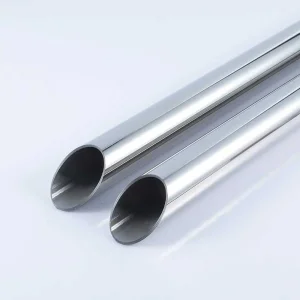
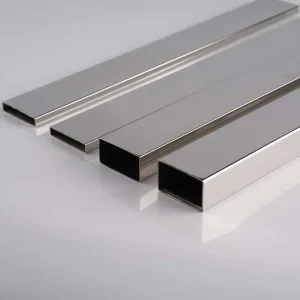
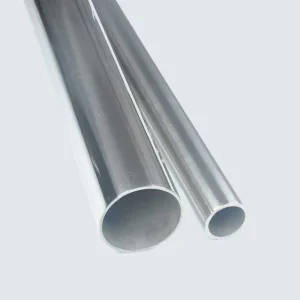
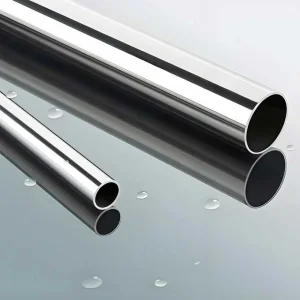
Explore our comprehensive range of industrial structural, sanitary, mechanical, and architectural stainless steel tubing lines.
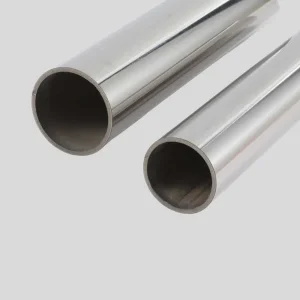
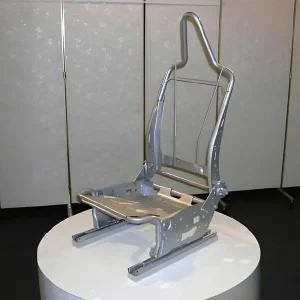
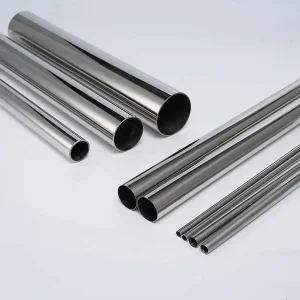
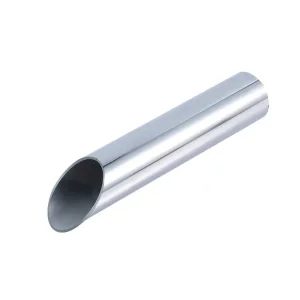
Whether you require mill-length raw tubes or fully fabricated CNC burner components, our engineering team provides direct mill pricing, technical DFM analysis, and guaranteed material compliance.