VertexFlow Tubes stainless steel tube manufacturer logo VertexFlow TubesPrecision SS Tubing
Industry Engineering Whitepaper

High-Quality Electropolished Stainless Steel Pipe Manufacturers & Factories

An Executive Technical Blueprint on Ultra-High Purity (UHP) Fluid Delivery Systems, Electrochemical Passivation Engineering, SEMI F19/ASME BPE Compliance, and Global Supply Chain Sourcing

Featured Offerings

Precision Stainless Steel Tubing Portfolio

Standard & Custom Precision Tubing Manufactured under Strict ISO 9001:2015 & ASTM Standards for Global Industrial Applications.
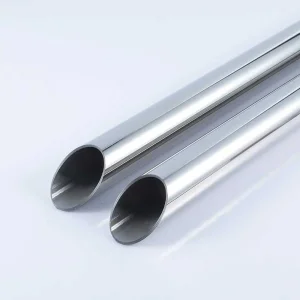
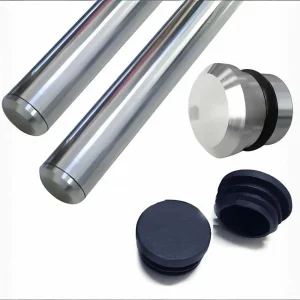
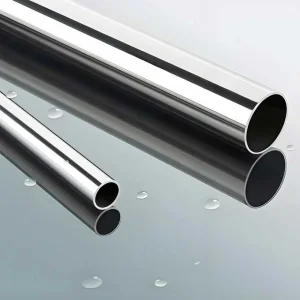
China Sanitary Grade Precision Stainless Steel Tubing Manufacturers
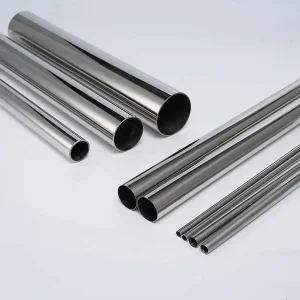
China Sanitary Grade Precision Stainless Steel Tubing
View Product Details
OEM Stainless Steel Tubing for Home Appliances & Electric Tools
OEM Stainless Steel Tubing for Home Appliances & Tools
View Product Details
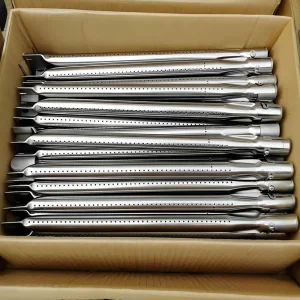
OEM Stainless Steel Gas Grill Burner Tubes
View Product Details
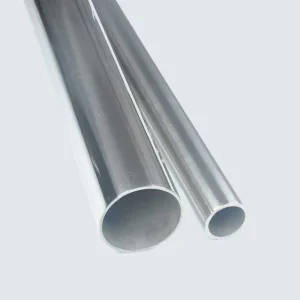
High-Quality Stainless Steel Handrail & Balustrade Tubing ASTM A554
Stainless Steel Handrail & Balustrade Tubing (ASTM A554)
View Product Details
China OEM Stainless Steel Tube Fabrication & CNC Machining
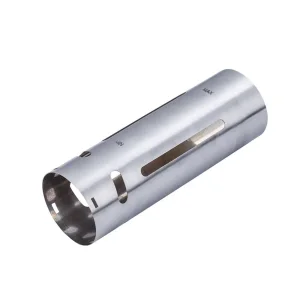
OEM Stainless Steel Tube Fabrication & CNC Machining
View Product Details
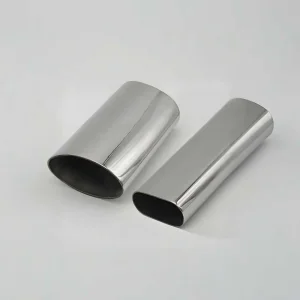
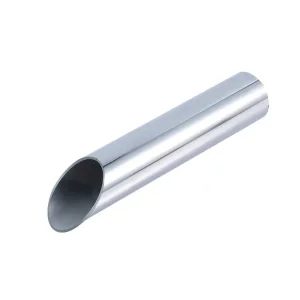
OEM ASTM A554 Stainless Steel Oval & Special Shaped Tubing
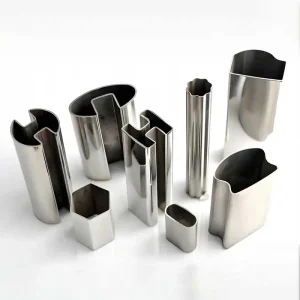
ASTM A554 Stainless Steel Oval & Special Shaped Tubing
View Product Details
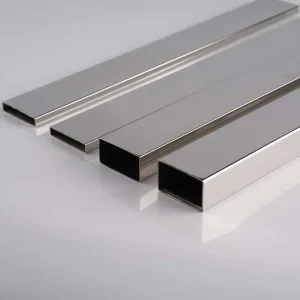
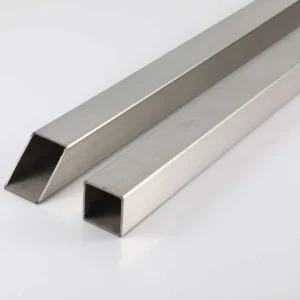
ODM ASTM A554 Stainless Steel Square & Rectangular Tubing
ASTM A554 Stainless Steel Square & Rectangular Tubing
View Product Details
High-Quality Medical Grade Stainless Steel Tubing for Hospital Furniture
Medical Grade Stainless Steel Tubing for Hospital Furniture
View Product Details

1. Global Procurement Landscape & Macro-Industrial Demand for EP Piping

In ultra-high purity (UHP) fluid handling, semiconductor fabrication, biopharmaceutical processing, and green hydrogen transportation, the performance of the internal pipe surface is no longer a secondary detail—it is the critical determinant of system integrity, product yield, and operational safety. High-Quality Electropolished (EP) Stainless Steel Pipes represent the pinnacle of surface finish engineering, reducing internal surface roughness to micro-inch levels (Ra ≤ 5 µin or 0.13 µm) while building an enriched chromium oxide passivation layer.

Information Gain Insight: Unlike standard Bright Annealed (BA) or Mechanically Polished (MP) tubing, electropolishing systematically removes surface microscopic peaks via controlled anodic dissolution. This process enhances the Chromium-to-Iron (Cr/Fe) ratio on the surface film to ≥ 1.5, drastically reducing trace outgassing, particle generation, and micro-cavity corrosion initiation sites.

Semiconductor Fabs

The global expansion of 3nm/2nm semiconductor foundries driven by AI chip demand has created unprecedented requirements for sub-ppb level gas delivery systems. EP pipes prevent silane, ammonia, and specialty corrosive gas contamination.

Biopharma & Hygiene

Compliance with ASME BPE standards mandates ultra-smooth, cleanable inner surfaces. EP piping mitigates biofilm adhesion, resists aggressive Clean-in-Place (CIP) and Steam-in-Place (SIP) cycles, and eliminates rouge contamination.

Clean Energy & H2

High-pressure hydrogen refueling stations (up to 70 MPa/100 MPa) demand 316/316L EP seamless tubing to mitigate hydrogen embrittlement, stress corrosion cracking, and particulate flaking in high-velocity flows.

Verified Benchmark Metrics

Electropolished Performance Metrics

Ra ≤ 5 µin
Internal Surface Roughness
≥ 1.5
Cr / Fe Atomic Ratio
1x10‾&sup9;
He Leak Tightness (atm cc/s)
Class 10
Cleanroom Packaging Std

2. Metallurgy & Surface Chemistry: Mechanical vs. Electropolished Tubing

Electropolishing is an electrochemical process that is essentially the reverse of electroplating. The stainless steel pipe acts as an anode submerged in a temperature-controlled bath of concentrated phosphoric and sulfuric acids. When a direct electrical current is applied, micro-projections on the internal pipe wall dissolve preferentially due to high current density concentration at peak points.

This process transforms the surface geometry while fundamentally modifying its chemical structure by dissolving iron atoms faster than chromium atoms, creating a dense, self-healing oxide barrier.

Performance Characteristic Commercial Mill Finish (AP) Mechanical Polish (MP / BA) Electropolished (EP High-Purity)
Internal Surface Roughness (Ra) Ra > 1.0 µm (40 µin) Ra 0.4 - 0.8 µm (15-30 µin) Ra ≤ 0.13 µm (5 µin)
Cr/Fe Atomic Surface Ratio ~ 0.5 to 0.7 ~ 0.8 to 1.0 ≥ 1.5 to 2.2 (Auger/XPS Verified)
Passive Layer Thickness 10 - 15 Ångströms 15 - 25 Ångströms 30 - 50 Ångströms
Micro-Stress & Distortion Moderate Thermal Stress High Surface Mechanical Work-Hardening Zero Mechanical Stress (Stress Relieved)
Corrosion Resistance (PREN) Base Alloy PREN Base Alloy (Abrasive Embedded) Enhanced PREN (+20-30% Pitting Resistance)
Outgassing & Moisture Desorption High outgassing rate Moderate trapped moisture Ultra-Low (Essential for UHP Vacuum/Gas)

3. Technical Roadmap: Manufacturing Quality Control & Testing Protocol

Manufacturing High-Quality Electropolished Stainless Steel Pipes requires vertical process control from raw melt stock selection to cleanroom double-bag packaging. A breakdown in any single phase invalidates the UHP rating.

Stage A: Raw Material & Cold Pilgering Engineering

We begin with double-melt vacuum induction melting and vacuum arc remelting (VIM+VAR) or high-grade 316L (UNS S31603 / EN 1.4404 / 1.4435) steel with controlled sulfur content (0.005% to 0.012% per SEMI F20). Controlled sulfur ensures weldability during automated orbital butt-welding in fab construction without risking hot cracking or excessive weld bead slump.

Stage B: Electrochemical Processing & Bath Management

Continuous internal cathodization uses pure cathode wires centered along the pipe length with precision spacers. Electrolyte flow velocity, temperature (±1°C control), current density (A/dm²), and specific gravity are maintained using closed-loop PLC systems to guarantee uniform electropolishing across 6-meter (20ft) mill lengths without localized burning or frosting.

Stage C: Ultra-Pure Water (UPW) Rinsing & Passivation

Immediately post-EP, pipes undergo a multi-stage cascade ultrasonic cleaning process using 18.2 MΩ·cm Ultra-Pure Water at elevated temperature. Heated nitric acid or citric acid passivation follows, ensuring total removal of residual sulfates and free iron particles.

Stage D: Cleanroom Inspection & Certification

Inside an ISO Class 5 (Class 100) cleanroom, finished pipes undergo 100% video borescope surface inspection, particle counting, aerosol helium mass spectrometer leak detection ($1 \times 10^{-9}\text{ atm}\cdot\text{cc/sec}$), and surface roughness profilometer checks before purge-filling with 99.9999% Ultra-High Purity Nitrogen gas and cap sealing.

4. Global Sourcing Compliance & Quality Audit Standards

For international EPC contractors, OEM procurement directors, and plant engineers, factory qualification relies on stringent documentation and verifiable international standards. Leading EP pipe manufacturers provide complete heat traceability via Mill Test Certificates (MTC) conforming to EN 10204 3.1 / 3.2.

SEMI F19 & SEMI F20

The definitive standards for semiconductor UHP gas distribution components. Governs elemental composition, surface roughness, Auger depth profile parameters, and oxide layer thickness.

ASME BPE (Bioprocess Equipment)

Mandatory standard for biopharmaceutical manufacturing equipment. Dictates surface finishes (SF4, SF5, SF6 EP grades), dimensional tolerances, and zero-dead-leg geometry compliance.

ASTM A269 / A270 / A632

General specifications for seamless and welded austenitic stainless steel tubing for general service, sanitary applications, and miniature UHP instrumentation systems.

5. Engineering FAQ: Electropolished Stainless Steel Piping

Q1: What is the main structural difference between Bright Annealed (BA) and Electropolished (EP) pipe?
Bright Annealing (BA) heat-treats stainless steel in a controlled hydrogen/nitrogen atmosphere to prevent oxidation, resulting in a smooth, shiny surface with an Ra between 15-30 µin. However, BA leaves the underlying surface micro-profile untouched. Electropolishing (EP) is an active electrochemical subtraction process that levels microscopic peaks, reduces Ra to ≤ 5 µin, removes embedded mechanical polishing compounds, and enriches the chromium oxide surface film layer (Cr/Fe ratio > 1.5).
Q2: Why is controlled sulfur content (0.005% - 0.012%) critical for 316L EP tubes?
Per SEMI F20 standards, controlled sulfur content balances orbital welding penetration with surface purity. If sulfur is too low (<0.003%), automated orbital welding arc fluid dynamics cause erratic weld pool motion and wide, shallow penetration. If sulfur is too high (>0.030%), sulfur segregates at grain boundaries during solidification, causing hot cracking and reduced localized corrosion resistance in EP environments.
Q3: How does electropolishing prevent rouging in biopharmaceutical water-for-injection (WFI) systems?
Rouging is the formation of iron oxide/hydroxide particulates on stainless steel surfaces exposed to high-temperature WFI or pure steam. Electropolishing removes delta-ferrite impurities and mechanical cold-work stress layers where rouge initiates. By increasing the passive chromium oxide layer thickness up to 50 Ångströms, EP piping delays the onset of Class 1, 2, and 3 rouging by up to 500% compared to mechanically polished piping.
Q4: What surface diagnostic tools verify true EP quality beyond a standard profilometer?
While contact profilometers measure Ra, advanced UHP quality verification utilizes: (1) XPS (X-ray Photoelectron Spectroscopy) and AES (Auger Electron Spectroscopy) to verify Cr/Fe ratio and oxide depth profile; (2) SEM (Scanning Electron Microscopy) to detect surface micro-pits or etching; and (3) EIS (Electrochemical Impedance Spectroscopy) to measure passivated film density and resistance.
Q5: What are the packaging requirements for EP piping destined for cleanroom installation?
High-quality EP pipes are purged with 99.9999% UHP Nitrogen gas, sealed at both ends with high-density nylon or polyethylene end caps, and enclosed in double-layer heat-sealed polyethylene bags inside an ISO Class 5 cleanroom environment. This double-bagging technique allows outer-bag removal in anti-rooms prior to bringing clean inner bags directly into semiconductor or pharma cleanroom field operations.
Industrial Solutions

Specialized & Structural Stainless Steel Products

Comprehensive Tubing Profiles Engineered for Marine, Automotive, Medical, and Heavy Industrial Infrastructure.
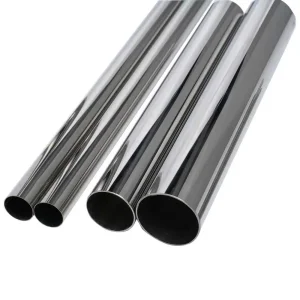
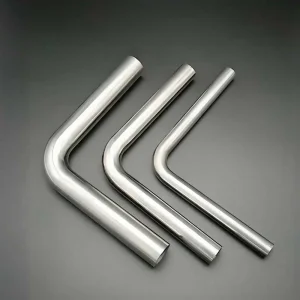
ODM Marine Grade 316L Stainless Steel Tubing
Marine Grade 316L Stainless Steel Tubing
View Product Details
China Decorative Stainless Steel Tubing for Furniture 201 304
Decorative Stainless Steel Tubing for Furniture (201 & 304)
View Product Details
High-Quality Stainless Steel Tubing for Home Storage & Organization
Stainless Steel Tubing for Home Storage & Organization
View Product Details
OEM Stainless Steel Tubing for Conveyor Rollers
View Product Details
High-Quality Stainless Steel Tubing for Medical Safety Grab Bars
Stainless Steel Tubing for Medical Safety Grab Bars
View Product Details
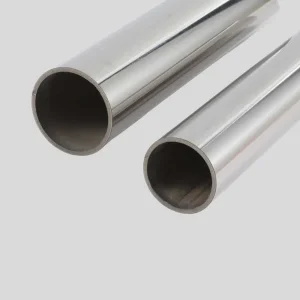
ASTM A554 Stainless Steel Round Tubing Ornamental & Structural
ASTM A554 Stainless Steel Round Tubing
View Product Details
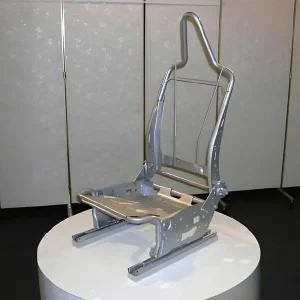
Wholesale Automotive Structural Tubing for Seats & Chassis
Automotive Structural Tubing for Seats & Chassis
View Product Details
OEM Stainless Steel Tubing for Industrial Racks & Workstations
Stainless Steel Tubing for Racks & Workstations
View Product Details