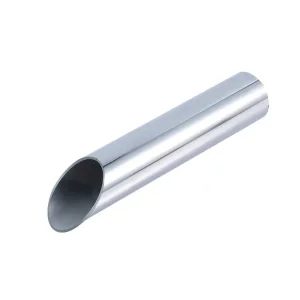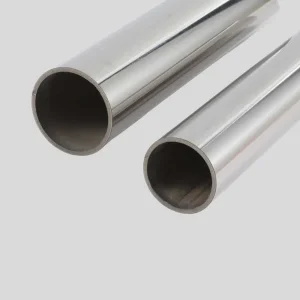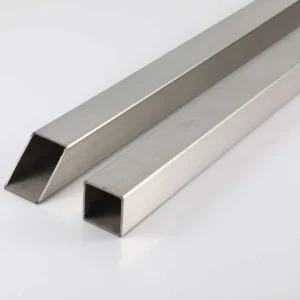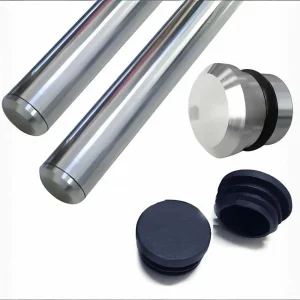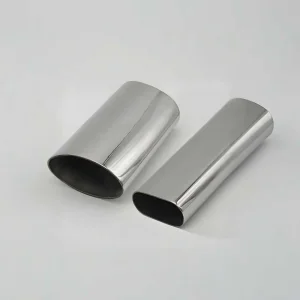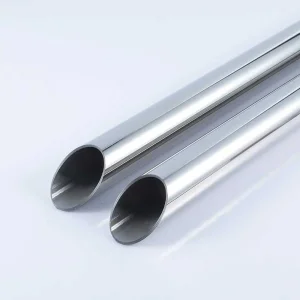
Austenitic Stainless Steel 304 (UNS S30400 / EN 1.4301) remains the definitive global standard for structural, architectural, and hygienic piping applications. Understanding its metallurgical properties is critical for global procurement leaders seeking maximum durability and structural integrity.
SS 304 derives its superior oxidation resistance from a tight chemical equilibrium: 18% Chromium (Cr) forms a self-healing passive Chromium Oxide (Cr₂O₃) layer, while 8% Nickel (Ni) stabilizes the ductile austenitic crystal structure down to cryogenic temperatures.
With a Pitting Resistance Equivalent Number (PREN) ranging between 18.0 and 20.0, SS 304 provides baseline defense against localized atmospheric chloride attack, making it suitable for urban architecture, food processing lines, and indoor hardware structures.
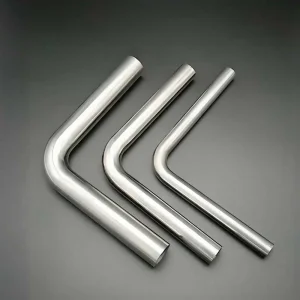
Boasting a minimum tensile strength of 515 MPa and yield strength of 205 MPa with elongation ≥40%, SS 304 offers exceptional ductility. This enables complex CNC tube bending, necking, expanding, and hydroforming without intergranular wall cracking.
Not all SS 304 tubes are manufactured equal. Choosing the correct industrial standard governs dimensional tolerances, weld seam integrity, and pressure limits.
| Standard Specification | Primary Industrial Purpose | OD Tolerance Range | Wall Thickness Control | Weld Seam Integrity Requirement |
|---|---|---|---|---|
| ASTM A554 | Ornamental, Architectural & Mechanical Tubing | ±0.05 mm to ±0.15 mm | ±8% Nominal Thickness | Inner bead controlled / Bead removed on request |
| ASTM A249 / A269 | Boiler, Superheater, Heat Exchanger & General Service | ±0.10 mm Precision | ±10% Strict Gauge | 100% Hydrostatic or Non-Destructive Eddy Current Tested |
| EN 10217-7 | European Pressure Vessel & Chemical Fluid Lines | Class D3/T3 Tolerance | Class T3 Wall Gauge | Full longitudinal automated arc/laser welding with MTC 3.1 |
| JIS G3446 | Japanese Structural Stainless Steel Pipes | ±0.10 mm Standard | ±10% Controlled Range | Visual 600# Mirror finish & mechanical flattening verified |
By leveraging Foshan’s world-class stainless steel ecosystem, integrated raw material sourcing, and scaled manufacturing, VertexFlow delivers unprecedented speed, pricing equity, and precision engineering to international buyers.
We source 100% prime steel strip exclusively from tier-one state mills including TISCO, POSCO, and Baosteel. This guarantees chemical purity, strict control over copper/carbon percentages, and absolute freedom from scrap metal contamination or recycled impurities.
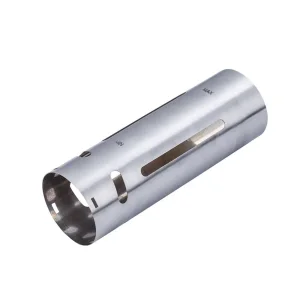
From internal coil slitting to automated plasma/laser welding, inner nitrogen shielding, continuous inline Eddy Current defect detection, 4-pass surface polishing, and full multi-axis CNC fabrication—every process occurs under one roof to minimize lead times.
For enterprise procurement directors in North America, Europe, and Australia, raw tube cost per meter is only a fraction of the total procurement equation. Hidden expenses in rejection rates, transit damage, and compliance audits dictate overall profitability.
Uncontrolled wall variance or brittle weld seams lead to high rejection rates during CNC mandrel bending. Our inline infrared seam inspection and tight wall tolerance (±0.05 mm) guarantee 99.8% bending yield on secondary production lines.
Atmospheric saltwater exposure during ocean transit often causes premature surface oxidation. Every SS 304 tube bundle is protected via individual plastic sleeving, anti-humidity desiccant wraps, and heavy-duty steel-framed wooden crate packaging.
Every shipment is backed by EN 10204 3.1 Mill Test Certificates. We document full heat number traceability, spectral chemical analysis, tensile testing, flattening/flaring results, and non-destructive eddy-current certification.
SS 304 stainless steel tubing serves as the structural and aesthetic backbone for critical industries. VertexFlow customizes wall thickness, surface finishes, and profiles to meet exact sector challenges.
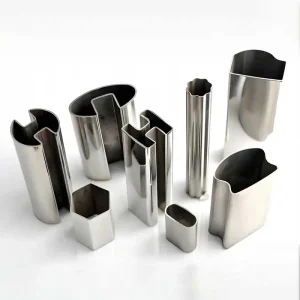
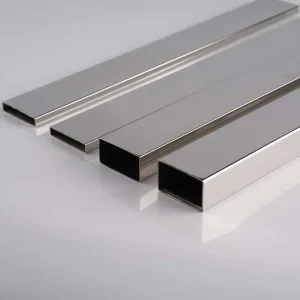
Structural stability meets visual luxury. ASTM A554 SS 304 round, square, and slotted channel tubes receive 600# mirror polish or satin 320# hairline treatments. Sharp corner radii (±0.5° squareness) allow clean mitre welding and flawless glass gasket seating in high-traffic commercial builds.
Hygienic safety compliance demands zero surface defects. Our precision sanitary grade SS 304 tubes feature smooth inner weld bead suppression and electro-polished surfaces (Ra ≤ 0.4 µm), preventing bacterial harboring on hospital grab bars, IV stands, and sterile cleanroom furniture.
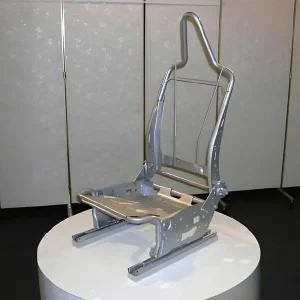
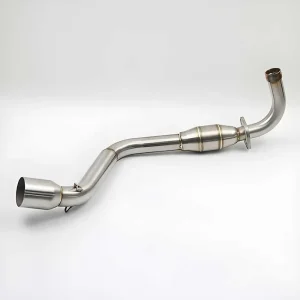
High thermal cycles and intense dynamic vibration require exceptional fatigue resistance. Specialized SS 304 and 409L structural tubing undergo continuous plasma fusion welding, providing leak-proof performance for automotive exhaust systems, seat frames, and structural chassis support.
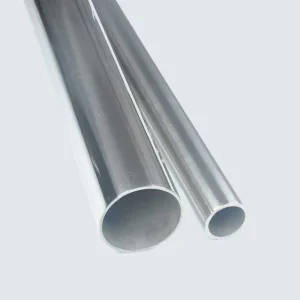
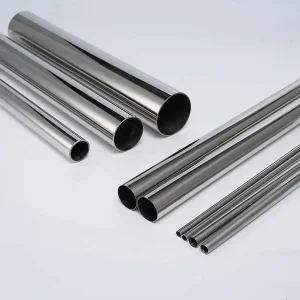
Delivering high concentricity and ultra-low Total Indicator Runout (TIR), our precision round SS 304 tubes eliminate dynamic vibration in automated conveyor roller systems. Solid stainless construction replaces peeling plastic-coated pipes, providing wash-down compliance for food processing lines.
Ensuring total peace of mind for engineering buyers through rigorous adherence to international metallurgical, environmental, and safety certifications.
Our Quality Management System governs every step—from raw coil chemical spectro-analysis to inline laser micrometer monitoring, mechanical destructive testing, final surface inspection, and container loading supervision.
All finished SS 304 pipes, specialized profiles, and decorative PVD titanium coatings strictly comply with European Union REACH and RoHS directives, guaranteeing zero hazardous heavy metal contamination for sanitary applications.
We support Flexible Incoterms including FOB, CIF, CFR, and full DDP (Delivered Duty Paid) to regional warehouses in the US, Europe, Middle East, and Australia, managing customs clearance, tariffs, and inland freight seamlessly.
As global industry transitions toward automation, environmental sustainability, and smart finishing, SS 304 pipe manufacturing is evolving rapidly.
Physical Vapor Deposition (PVD) technology replaces traditional eco-hazardous electroplating. Applying a 0.3–0.5 µm titanium carbide or nitride ceramic layer creates durable Rose Gold, Black Titanium, and Brass finishes that withstand extreme UV exposure and mechanical wear.
Transitioning to 100% pure hydrogen atmosphere bright annealing furnaces eliminates surface oxidation during stress relief. This preserves the passive Cr₂O₃ layer across weld zones without requiring harsh chemical pickling acids.
Integrating real-time AI optical cameras on high-speed tube rolling lines allows automated recognition of micro-pinholes, scratch defects, or dimensional drift down to ±0.01 mm before pipes enter the cutting phase.
Direct answers from our metallurgical quality assurance team to assist procurement specialists in choosing the ideal tubing parameters.