Explore our ODM/OEM precision manufactured stainless steel profiles engineered for demanding industrial, structural, sanitary, and high-temperature environments.
An in-depth whitepaper analysis of controlled carbon content, grain size optimization, and thermal stress response under elevated operating pressures exceeding 500°C.
In modern high-temperature process environments—ranging from catalytic cracking units in petroleum refineries to superheater tubes in ultra-supercritical (USC) thermal power plants—material failure under long-term thermal stress is a catastrophic risk. Grade 304H stainless steel (UNS S30409 / 1.4948) was explicitly developed as a high-carbon variant of the standard 18-8 chromium-nickel austenitic alloy to provide enhanced elevated-temperature tensile and creep strength.
As a leading ODM Stainless Steel 304h Pipe Supplier & Factory, our manufacturing operations focus heavily on controlling the critical metallurgical parameters defined under ASTM A312, ASTM A213, ASME SA312, and ASME SA213. Unlike 304L (low carbon for intergranular corrosion prevention post-welding), Grade 304H demands a strictly controlled carbon concentration between 0.04% and 0.10%. This elevated carbon band provides solid-solution strengthening and forms stable chromium carbides along grain boundaries during thermal exposure, hindering dislocation movement and preventing creep deformation.
Standard 304 permits carbon down to low thresholds, resulting in reduced creep-rupture strength at temperatures above 525°C (977°F). Grade 304H enforces a strict lower boundary of 0.04% C, providing the necessary lattice resistance against thermal distortion over 100,000+ operating hours.
Per ASME Boiler and Pressure Vessel Code (BPVC) requirements, 304H pipe must exhibit a grain size of ASTM No. 7 or coarser (typically ASTM 3 to 6). Coarser grain structures reduce grain boundary sliding at elevated temperatures, drastically boosting creep resistance under continuous high pressure.
Our factory implements full solution heat treatment followed by rapid water quenching. This ensures complete dissolution of chromium carbides prior to service, homogenizing the austenite matrix while maintaining the precise grain boundary configuration needed for elevated temperature endurance.
Information Gain Insight: Many buyers mistakenly specify standard 304 dual-certified as 304/304H without verifying grain size. True industrial-grade 304H piping requires mill test certificates explicitly proving an ASTM grain size of No. 7 or coarser, combined with high-temperature tensile verification per ASME Section VIII Division 1 rules.
Comprehensive comparative matrix establishing exact elemental chemistry, tensile yield thresholds, and elevated temperature allowable stresses.
| Grade Specification | Carbon (C) | Chromium (Cr) | Nickel (Ni) | Molybdenum (Mo) | ASTM Grain Size | Min. Tensile (MPa) | Min. Yield (MPa) |
|---|---|---|---|---|---|---|---|
| TP304H (UNS S30409) | 0.04 - 0.10% | 18.0 - 20.0% | 8.0 - 11.0% | — | ASTM No. 7 or Coarser | 515 MPa (75 ksi) | 205 MPa (30 ksi) |
| TP304 (UNS S30400) | 0.08% Max | 18.0 - 20.0% | 8.0 - 10.5% | — | Not Specified | 515 MPa (75 ksi) | 205 MPa (30 ksi) |
| TP304L (UNS S30403) | 0.03% Max | 18.0 - 20.0% | 8.0 - 12.0% | — | Not Specified | 485 MPa (70 ksi) | 170 MPa (25 ksi) |
| TP316H (UNS S31609) | 0.04 - 0.10% | 16.0 - 18.0% | 10.0 - 14.0% | 2.0 - 3.0% | ASTM No. 7 or Coarser | 515 MPa (75 ksi) | 205 MPa (30 ksi) |
From petrochemical refineries in the Middle East to power utility boilers in Europe and North America, 304H is the backbone of high-thermal systems.
Used extensively in furnace coil systems, steam methane reform tubes, and ethylene cracking lines operating between 550°C and 800°C. High carbon levels resist hydrocarbon carburization and long-term creep rupture under cyclic heating.
In coal-fired, gas-fired, and biomass power plants, 304H seamless and welded tubes serve as superheater headers and reheater banks. They withstand steam pressures exceeding 18 MPa while maintaining microstructural integrity.
Synthetic gas conversion loops generate intense exothermic heat combined with high gas pressure. 304H piping delivers reliable resistance against hydrogen embrittlement at elevated temperatures while preventing high-pressure creep.
Essential for secondary cooling circuits, heat exchange piping, and high-pressure steam bypass lines where material traceability, stringent NDT inspection, and zero defect tolerance are absolute prerequisites.
How our integrated manufacturing ecosystem in Foshan, China delivers unmatched lead times, pricing stability, and customized engineering options for international buyers.
Global procurement directors face a complex balancing act: securing high-grade stainless steel piping that complies with strict ASME/ASTM specifications while keeping project costs competitive and lead times short. Operating from Shishan Town, Nanhai District, Foshan City—the epicentre of China’s stainless steel manufacturing industry—our mill leverages an integrated industrial cluster that transforms raw billet into fully inspected, custom-fabricated piping under one roof.
Direct bulk purchasing agreements with Tier-1 steel mills (TISCO, Posco, Baosteel) ensure heat-traceable 304H coils with exact 0.04-0.10% carbon chemistry.
Over 43 automated mill lines allow continuous slitting and high-precision roll forming with tight outer diameter tolerance (±0.05 mm to ±0.10 mm).
Utilizing high-frequency TIG and Plasma welding under 99.999% pure argon/nitrogen internal gas shielding to prevent weld-seam oxidation and internal sugar scale.
Continuous inline bright annealing furnaces at 1080°C guarantee grain coarsening to ASTM No. 7 or coarser, restoring full ductility and corrosion resistance.
Cost Efficiency Dynamic: By consolidating slitting, forming, welding, heat treatment, NDT testing, and CNC end-beveling in a single Foshan facility, we reduce logistics overhead by 15-22% compared to fragmented suppliers in Europe or North America—delivering a direct landed-cost advantage to global EPC contractors.
Every meter of 304H pipe undergoes rigorous non-destructive and destructive testing to meet EN 10204 3.1 / 3.2 certification standards.
| Inspection Stage | Test Type | Standard & Acceptance Criteria | Quality Objective |
|---|---|---|---|
| Raw Material Receiving | PMI Spectrometry & Heat Chemical Analysis | ASTM E415 / ASTM A312 (C: 0.04-0.10%, Cr: 18-20%, Ni: 8-11%) | Prevents grade mixing and ensures elevated carbon compliance prior to slitting. |
| Weld Seam Verification | Online Eddy Current & Ultrasonic Testing (UT) | ASTM E426 / ASME SE426 (Zero pinholes or lack of fusion) | Identifies sub-surface flaws, micro-fissures, and weld porosity in real time. |
| Pressure Integrity | Hydrostatic Pressure Testing | ASTM A530 / ASME SA530 (Held at minimum 10 MPa for 10-15 seconds) | Validates burst strength and mechanical integrity under extreme hydraulic pressure. |
| Microstructural Audit | Metallographic Grain Size & Intergranular Corrosion | ASTM E112 (Grain size ≤ ASTM 7) / ASTM A262 Practice E | Guarantees creep resistance and verifies effective solution annealing. |
| Dimensional Calibration | Laser Gauge OD, Wall Thickness & Straightness | OD tolerance ±0.05mm, Wall thickness ±8%, Straightness 1mm/m | Ensures flawless fit-up during field welding and flange alignment. |
Macroeconomic drivers, decarbonization initiatives, and thermal process upgrades pushing demand across international energy markets.
The global market for high-temperature austenitic stainless steel pipes is undergoing structural shifts driven by three primary industrial trends:
1. Thermal Efficiency Upgrades in Power Infrastructure: As aging power stations across Europe and North America seek to extend operating life and improve thermodynamic efficiency, utility operators are replacing legacy 304/316 piping with upgraded 304H and 316H seamless and welded lines. Operating at higher steam temperatures reduces coal/gas consumption per megawatt-hour, lowering overall carbon intensity.
2. Hydrogen Co-Firing & Biofuel Refinery Conversions: Petrochemical operators converting traditional refineries into renewable diesel and SAF (Sustainable Aviation Fuel) facilities require piping that can withstand aggressive organic acids at elevated temperatures. Grade 304H offers an economical sweet spot between standard 304 and nickel-base alloys like Incoloy 800H.
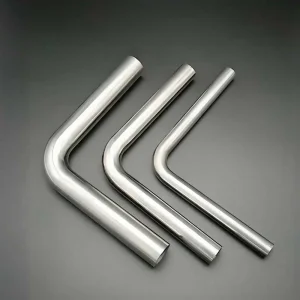
3. Vendor Consolidation & Demand for ODM Fabrication: Global buyers are increasingly seeking suppliers who can provide more than raw mill lengths. Demand for pre-fabricated spools, CNC mandrel bends, end-prepped bevels (ANSI B16.25), and custom heat-treated assemblies directly from China factories has surged by over 35% year-over-year.
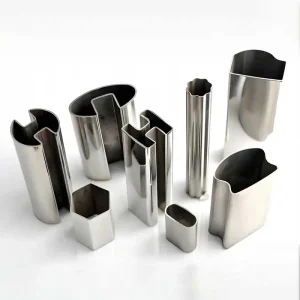
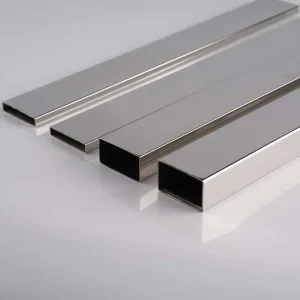
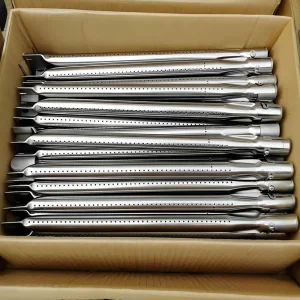
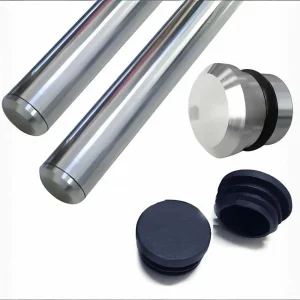
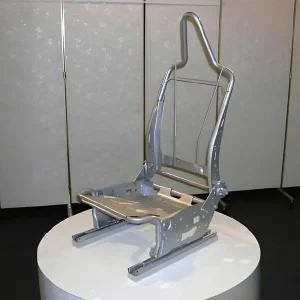
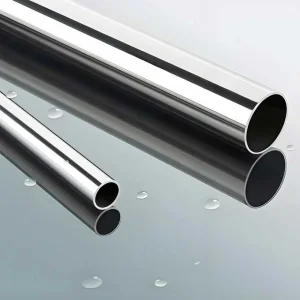
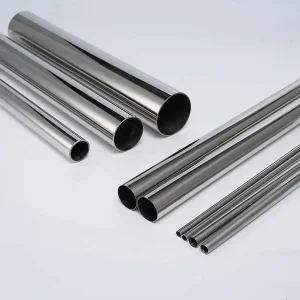
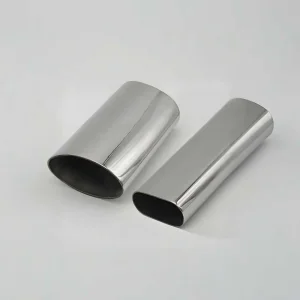
Explore our complete range of customized square, rectangular, decorative, and functional stainless steel tubing manufactured under strict quality standards.
Authoritative technical answers compiled by our metallurgical engineers and quality assurance directors.