Direct OEM/ODM Supply from Foshan Manufacturing Base with Full Traceability & Tolerance Control
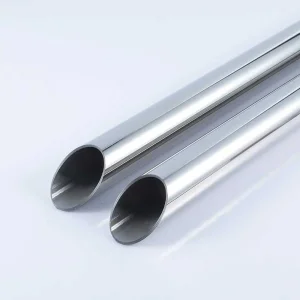
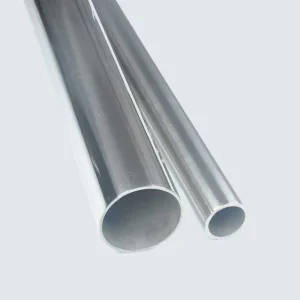
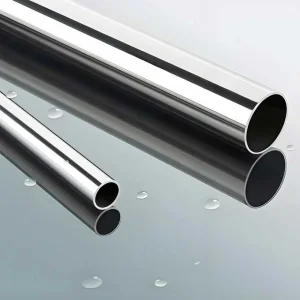
In the global furniture engineering and architectural interior design sectors, the sourcing of wholesale dining table stainless steel (SS) legs has evolved from basic component purchasing into a strategic supply chain discipline. Modern architectural dining environments—ranging from luxury residential villas and corporate executive boardrooms to high-traffic commercial hospitality venues—demand table base support structures that reconcile high load-bearing capacity, permanent corrosion resistance, and pristine aesthetic geometry.
Unlike conventional carbon steel legs that rely on surface organic paint coats susceptible to chipping, oxidation, and delamination, precision-engineered stainless steel table legs utilize inherent chromium-passivated metallurgy. This ensures structural integrity and surface pristine beauty across decades of service life. Sourcing decision-makers must evaluate structural wall thickness, weld-seam integrity, alloy grade composition (AISI 201 vs 304 vs 316L), and advanced PVD (Physical Vapor Deposition) surface coatings to satisfy stringent global commercial specifications.
Heavy tabletops made of sintered stone, solid oak, quartz, or cast glass can weigh between 150 kg and 400 kg. High-grade stainless steel legs engineered with structural tube profiles eliminate flex, micro-wobble, and long-term creep strain under static loads.
Commercial dining spaces are subjected to daily chemical sanitation, spilled acidic liquids, and varying ambient humidity. Passivated 304 and 316L stainless steel alloys establish a self-healing chromium oxide film ($\text{Cr}_2\text{O}_3$) that prevents pitting and surface tarnishing.
From 8K mirror polishing to directional satin brush and vacuum PVD titanium coating (Rose Gold, Champagne Gold, Black Titanium), stainless steel table bases serve as structural centerpiece elements in modern luxury interiors.
Information Gain Insight: According to global furniture procurement research, over 68% of commercial project warranty claims regarding metal table bases stem from weld-joint cracking during transport or localized rusting beneath inferior electroplated coatings. Specifying continuous TIG/Laser welded 304/316L stainless steel with PVD metal coating eliminates 99% of these field failure modes.
The global dominance of China’s stainless steel table leg fabrication sector—centered predominantly in the Foshan industrial corridor in Guangdong—is anchored in complete vertical supply chain integration, automated multi-axis precision machining, and massive economies of scale.
Rather than relying on outsourced sub-assemblies, leading Chinese B2B manufacturers maintain raw material slitting lines, precision tube rolling mills, 5-axis CNC laser cutting centers, robotic TIG/MIG welding cells, multi-pass automated polishing lines, and in-house PVD vacuum deposition chambers within unified industrial zones. This vertical concentration generates unprecedented lead-time advantages and cost efficiencies for international furniture brands, wholesalers, and project contractors.
Direct procurement of prime stainless steel coils from tier-1 steel mills (TISCO, POSCO, Baosteel) ensures consistent grain structure, certified chemical analysis, and raw material cost savings passed to wholesale buyers.
With thousands of existing roll-forming dies, laser cutting profiles, and modular clamping fixtures, OEM custom sample lead times are reduced from months to as few as 5 to 7 working days.
Robotic arms perform complex geometric joint welds with continuous gas purging, ensuring 100% seam penetration, micro-smooth transitions, and zero thermal distortion across large production runs.
Proximity to major South China ports (Nansha, Yantian, Shekou) paired with engineered Knock-Down (KD) flat-packing enables maximum CBM container fill rates and reduced ocean freight costs.
Selecting the optimal stainless steel alloy and surface finish is critical to balancing product longevity against budget allocation. Below is an engineering benchmark table comparing primary stainless steel grades used in dining table leg fabrication under ASTM A554 (Structural & Decorative Welded Stainless Steel Tubing) standards.
| Alloy Grade | Chemical Composition Key Elements | Tensile Strength (MPa) | Corrosion Rating (Salt Spray Hours) | Primary Application Environment |
|---|---|---|---|---|
| AISI 201 (High Cu) | 16-18% Cr, 3.5-5.5% Ni, 5.5-7.5% Mn, 1% Cu | $\ge 520$ | 96 - 168 Hours (Neutral Salt Spray) | Indoor residential dining, cost-sensitive commercial projects, dry climate furniture. |
| AISI 304 / 304L | 18-20% Cr, 8-10.5% Ni, $\le 0.08\%$ C | $\ge 515$ | 240 - 480 Hours (Neutral Salt Spray) | Premium residential, commercial restaurant dining, high-humidity indoor hospitality. |
| AISI 316 / 316L | 16-18% Cr, 10-14% Ni, 2-3% Mo | $\ge 485$ | 500+ Hours (Neutral Salt Spray) | Luxury coastal outdoor dining, yacht interiors, beachfront resort open-air dining. |
Surface treatment dictates both visual luxury and long-term wear resistance. Leading suppliers deploy advanced surface technologies including:
Wholesale stainless steel dining table bases must be tailormade to the mechanical and environmental stresses of specific installation environments.
Challenge: Restaurants, hotel dining halls, and food courts require table bases capable of enduring heavy daily use, frequent rearranging, liquid contact, and continuous cleaning agents.
Engineering Solution: Heavy-gauge 304 stainless steel pedestal bases with weighted cast iron inner sub-plates, fitted with adjustable non-marking polyurethane leveling glides to prevent floor scratching and wobble on uneven tile floors.
Challenge: Large-span conference and dining tables (lengths exceeding 3.5 meters) demand substantial structural support without intruding on legroom ergonomics.
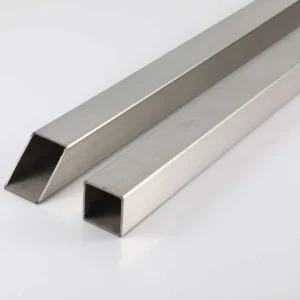
Engineering Solution: Modular V-shaped, Spider-style, or Geometric Trestle stainless steel leg systems crafted from heavy rectangular hollow section (RHS) tubing (e.g., $100 \times 50 \times 2.5\,\text{mm}$), featuring hidden internal tie-rod tensioning.
Challenge: Sintered stone and natural marble slabs are exceptionally rigid but brittle under uneven torsional stress.
Engineering Solution: High-precision CNC-laser cut stainless steel sub-frame assemblies with flat laser-verified top mounting plates and sound-dampening EPDM rubber buffer pads, ensuring uniform weight distribution.
Challenge: Marine air containing elevated sodium chloride concentrations causes rapid pitting on standard metals.
Engineering Solution: Fully passivated AISI 316L stainless steel legs welded with matching ER316L filler wire, treated with electro-polishing to remove free iron contaminants and maximize oxide layer thickness.
Professional procurement agencies, furniture OEMs, and global importers must establish quantifiable quality control (QC) metrics when auditing wholesale stainless steel table leg suppliers.
Every incoming shipment of stainless steel coil or raw profile tube undergoes handheld X-ray Fluorescence (XRF) testing to verify chemical composition (Nickel, Chromium, Molybdenum percentage) against mill certificates prior to laser cutting.
Joint welds are inspected via dye penetrant testing (NDT) to ensure zero porosity, cold laps, or incomplete fusion. Weld seams on visible surfaces are planished, ground, and polished until completely invisible.
Table bases are placed on granite precision surface plates. Laser dial indicators verify overall top flange flatness within $\le 0.5\,\text{mm}$ across a 2-meter span, preventing tabletop bowing or stress fractures during final assembly.
As the international commercial furniture market evolves toward sustainability, modularity, and smart ergonomics, table leg manufacturing is integrating several key innovations:
Rising global container shipping costs have driven demand for precision engineered KD stainless steel legs equipped with concealed expansion-cam connectors and high-tensile internal metric fasteners. This reduces packaged shipping volume by up to 65% while permitting rapid assembly without visible exterior bolts.
Merging commercial office ergonomics with executive residential dining, leading factories now integrate quiet dual-actuator linear motor columns within sleek brushed stainless steel leg housings, enabling smooth height adjustment from 680mm to 1180mm.
Global architectural standards (LEED v4, BREEAM) favor 100% recyclable stainless steel produced in closed-loop electric arc furnace (EAF) facilities. Advanced PVD dry coatings replace traditional toxic hexavalent chromium plating lines, aligning with REACH and RoHS standards.
Engineered Metal Components Built to ASTM, JIS, and EN International Standards