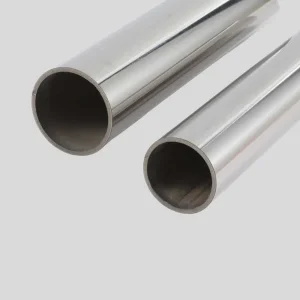
Precision Welded ASTM A554, A249 & A269 Stainless Steel Tubing Engineered for Canadian Heavy Industry, Architectural Fabricators, and OEM Supply Chains.
High-yield precision welded tubes tailored to meet Canadian National Building Code (NBC), CSA B51, and extreme climate operating specs.
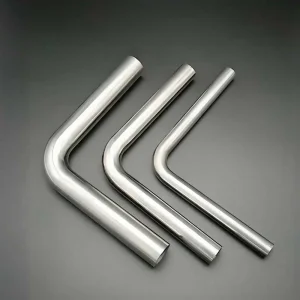
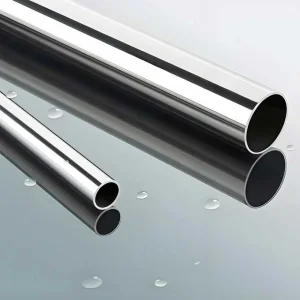
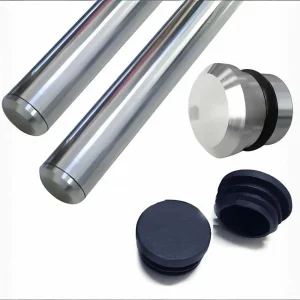
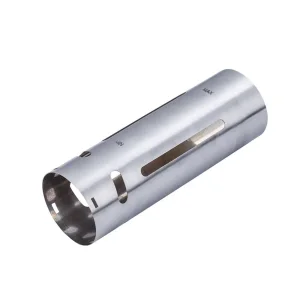
Canada’s industrial sector represents a unique synthesis of high-precision manufacturing, vast natural resource processing, and stringent architectural standards designed to withstand one of the most severe climate regimes globally. From the automotive manufacturing corridors of Southern Ontario to the biopharmaceutical cleanrooms of Quebec, and from the heavy energy hubs of Alberta to the coastal marine infrastructure of British Columbia, stainless steel tubing serves as a foundational structural and fluid-handling element.
Concentrated in Windsor, Hamilton, Kitchener-Waterloo, and Toronto, Ontario’s OEM eco-system demands high-yield strength structural stainless tubing (ASTM A554 304/304L) for vehicle frame assemblies, robotic workstation lean piping, and automated material handling rollers. Tolerances must hold ±0.05 mm to prevent jamming in automated CNC welding lines.
Greater Montreal and Quebec City host extensive food, dairy, and biopharmaceutical processing operations. These sanitary environments demand internal surface roughness (Ra) ≤ 0.4 µm, defect-free plasma welds, and complete absence of weld oxidation to eliminate bacterial harbourage points under Canadian Food Inspection Agency (CFIA) oversight.
Alberta and BC demand corrosion-resistant structural and fluid tubing capable of handling harsh de-icing salts (calcium chloride and magnesium chloride) in coastal ports and sub-zero impact conditions down to -40°C. Marine-grade 316L with 2-3% Molybdenum is critical to prevent chloride-induced pitting and tea-staining.
In low-temperature Canadian environments, conventional ferritic steels undergo a ductile-to-brittle transition. VertexFlow’s controlled-austenitic 304 and 316L alloys retain complete toughness at sub-zero temperatures, ensuring structural integrity in exterior architectural balustrades, heavy mining conveyor rollers, and outdoor utility racks exposed to Canadian winters.
Supplying Canadian industrial buyers requires more than shipping standard length tubes. It requires mill-level metallurgical engineering, strict dimensional control, and secondary processing capabilities that integrate seamlessly into local manufacturing workflows.
| Industry Sector | Material Grade | Standard & Specification | Key Mechanical / Surface Parameter | Primary Canadian Application |
|---|---|---|---|---|
| Sanitary & Medical | AISI 304 / 316L | ASTM A269 / ASTM A249 | Inner Ra ≤ 0.4 µm, Eddy-Current 100% Tested | Hospital grab bars, dairy processing lines, pharmaceutical skids |
| Architectural & Hardware | AISI 304 / 316L | ASTM A554 (Ornamental) | 600# Mirror, PVD Titanium Coating (0.3-0.5µm) | Building entrances, glass balustrades, hotel door hardware |
| Bulk Handling & Logistics | AISI 201 / 304 | ASTM A554 Mechanical | TIR ≤ 0.3 mm/m, Straightness 1 mm/m | Warehouse automated conveyor rollers, parcel sorting shells |
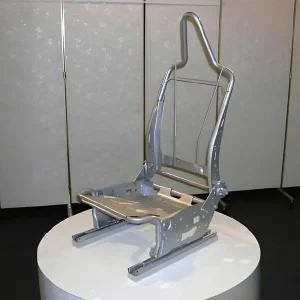
| Automotive & Heavy Equipment | AISI 304L / 316L | EN 10217-7 / Custom OEM | Controlled yield elongation (>45%), CNC Bend Ready | EV bus handrails, truck seat frames, agricultural equipment legs |
To satisfy Canadian engineering procurement, every batch of tubing produced at VertexFlow undergoes rigorous physical and chemical auditing. We align our manufacturing practices directly with Canadian regulatory demands.
Every shipment is accompanied by fully traceable MTCs reporting direct spectrographic chemical analysis (C, Cr, Ni, Mo, Mn, P, S), tensile strength, yield strength, percentage elongation, and hardness. Chemical compositions strictly match ASTM and CSA alloy boundaries.
Unlike basic TIG welded tubing that leaves a heavy oxidized bead on the internal wall, VertexFlow mills utilize automated plasma arc welding coupled with continuous internal inert nitrogen gas shielding. This prevents seam sugar-coating and ensures maximum corrosion resistance along the thermal weld zone.
For outdoor commercial installations across Vancouver, Halifax, and Montreal, coastal salt aerosol accelerates oxidation. Our passivated 316L tubing routinely clears 500+ hours in neutral salt spray testing without red rust or micro-pitting, matching the standard required for Canadian public infrastructure projects.
Explore how specialized stainless steel tube engineering directly solves manufacturing, assembly, and longevity bottlenecks for Canadian industrial clients.
The Challenge: A major Ontario office furniture OEM experienced a 12% scrap rate during tight 90° mandrel bending of 25.4 mm x 1.2 mm 201 tubes due to unpredictable strip hardness and weak weld seams.
The VertexFlow Solution: We supplied customized high-copper 201 strip with controlled annealing to hold hardness below HRB 80 and elongation above 48%. Weld seam positioning was indexed during slitting. Scrap dropped to < 0.3%.
The Challenge: A Quebec bathware manufacturer suffered chrome-plating peel and uneven satin wire brushing on imported brass and low-tier stainless tubes.
The VertexFlow Solution: We provided 304 sanitary substrate tubing polished in four automated passes to Ra ≤ 0.4 µm with planished weld seams. Chrome and PVD titanium coating adhesion reached Class 5B in cross-hatch testing.
The Challenge: High-speed automated distribution centers in Alberta experienced premature bearing wear and high acoustic noise from out-of-round roller shells.
The VertexFlow Solution: VertexFlow supplied precision-drawn ASTM A554 304 round tubing with Total Indicator Runout (TIR) ≤ 0.25 mm and straightness held to 0.8 mm/m, drastically extending roller assembly service life.
As Canadian manufacturers accelerate smart manufacturing, ESG (Environmental, Social, and Governance) compliance, and automated production, VertexFlow continues to advance its mill technologies to meet tomorrow’s industrial needs.
Integrating dual-axis laser micrometers on all 43 tube mills. Real-time feedback automatically adjusts forming rolls, eliminating batch OD drift and keeping dimensions strictly within ±0.05 mm across full 6000 mm mill lengths.
Replacing traditional electroplating with green PVD vacuum titanium sputtering. Available in Rose Gold, Champagne, Black Titanium, and Antique Brass, providing 3x higher scratch hardness without generating toxic liquid waste.
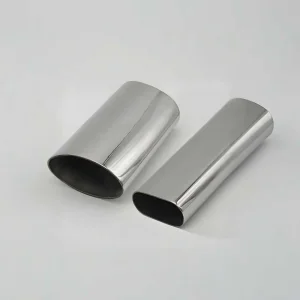
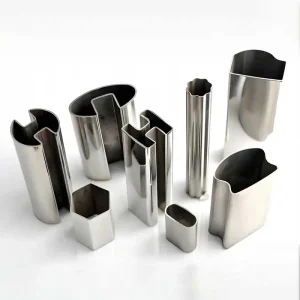
Expanding our library of specialized roll-forming tooling for flat oval, elliptical, triangular, and single-slot door frame profiles, giving Canadian architects and industrial designers zero-tooling-cost flexibility for custom projects.
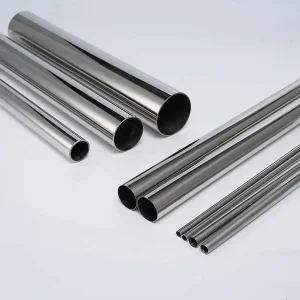
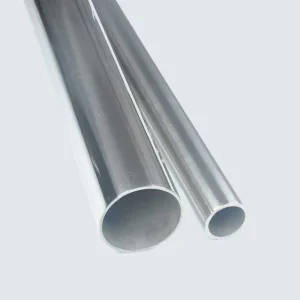
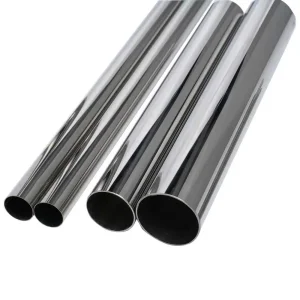
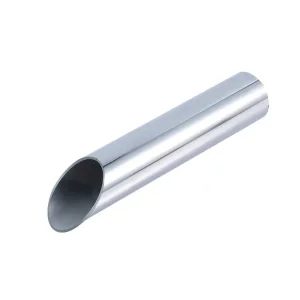
Explore our full range of ASTM A554 round, square, rectangular, oval, and fabricated tubing options engineered for global export.
Direct technical responses addressing material selection, shipping logistics, and structural compliance for the Canadian market.
Whether you require high-volume ASTM A554 structural tubing, sanitary substrate tubes, or custom CNC fabricated components for the Canadian market, our engineering team is ready to review your drawings.