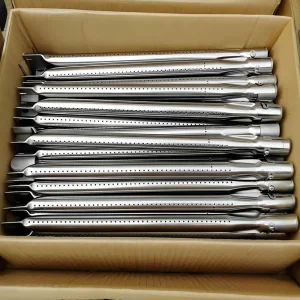
Engineered for extreme temperature resilience, fluid conveyance safety, and demanding structural applications across global industrial markets.
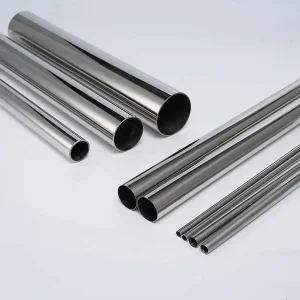
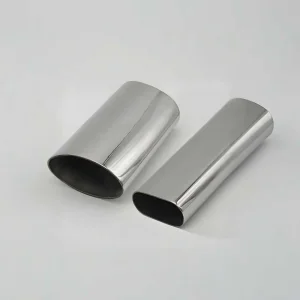
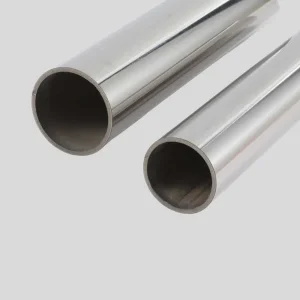
Analyzing the shift toward corrugated stainless steel tubing (CSST) in industrial fluid dynamics, high-vibration systems, and critical gas infrastructure.
In modern industrial engineering, fluid conveyance systems demand components that accommodate thermal expansion, high working pressures, dynamic vibration, and chemical aggressiveness. Among various flexible piping standards, the 1 Inch (DN25) Stainless Steel Flexible Pipe serves as an indispensable bridge between rigid piping networks and dynamic mechanical equipment.
China's manufacturing ecosystem for 1-inch flexible stainless steel pipes has undergone a technological evolution over the past decade. Moving beyond basic ornamental tubing, leading Foshan and Jiangsu mills utilize precision continuous roll-forming, automatic TIG/Plasma micro-welding, and hydroforming processes to achieve consistent wall thickness, high fatigue life, and superior burst pressure characteristics.
Selecting the optimal stainless steel alloy determines the flex pipe's lifecycle under operational stresses such as chloride-induced stress corrosion cracking (SCC), oxidation, and cyclic flexing. Below is an engineering evaluation of standard alloys used by premier Chinese manufacturers:
| Grade Standard | Chemical Composition (Key Elements) | Pitting Resistance (PREN) | Primary Application Environment | Fatigue & Flex Life |
|---|---|---|---|---|
| AISI 304 / SUS304 | 18% Cr, 8% Ni | ~19.0 | HVAC, Indoor Gas Lines, General Water Lines | Standard Cycle Life (10,000+ flex cycles) |
| AISI 316L / SUS316L | 16-18% Cr, 10-14% Ni, 2-3% Mo | ~25.0 | Marine, Coastal HVAC, Chemical Transfer, Food & Beverage | High Fatigue Resistance (50,000+ flex cycles) |
| AISI 321 / SUS321 | 17-19% Cr, 9-12% Ni, Ti Stabilized | ~20.5 | Engine Exhaust Bypasses, High-Temp Steam (>400°C) | Superior Thermal Shock Resistance |
| Duplex 2205 / UNS S31803 | 22% Cr, 5% Ni, 3% Mo, 0.18% N | ~35.0 | Offshore Oil & Gas, High-Pressure Chemical Loops | Extreme Mechanical Yield & Fatigue Strength |
How corrugation profiles and exterior wire braiding influence pressure ratings and bend radii in 1 Inch flexible hose assemblies.
Annular corrugations consist of independent, parallel rings perpendicular to the pipe axis. This geometry prevents torsional stress during dynamic movement and provides superior resistance to squirming under sustained pressure compared to helical profiles.
Unbraided CSST expands axially under pressure. Adding single or double layers of 304/316 stainless steel wire braid restrains elongation, transforming the flexible core into a high-pressure line capable of operating up to 100 bar (1450 PSI).
China's top factories employ hydraulic pressure forming (hydroforming) using purified water. This eliminates internal residual stress, avoids tool scratching on the inner wall, and maintains precise wall uniformities within ±0.02mm.
Engineers specifying 1 Inch stainless steel flexible hoses must account for both static installation radii and dynamic flexural movement. Over-bending leads to localized work hardening and premature fatigue failure along the corrugation roots.
How global infrastructure, municipal engineering, and manufacturing plants deploy 1 Inch flexible stainless steel piping systems.
In earthquake-prone regions (e.g., Japan, California, Chile), rigid gas connections are prone to shear failures during seismic movement. 1 Inch corrugated stainless steel flex lines act as expansion loops between main gas risers and commercial boilers or commercial kitchens, absorbing multi-axis displacement without rupturing.
In high-rise office towers and hospital cleanrooms, compressor vibration from chillers can propagate noise through rigid copper or carbon steel pipe. Installing 1 Inch braided flex hoses isolates high-frequency vibration, preventing acoustic transfer and joint stress on fan coil units (FCU).
For aggressive solvents, acids, and process fluids where rubber or EPDM hoses degrade rapidly, 316L 1-inch flex pipes with welded NPT or flanged end fittings offer non-permeable, chemical-resistant fluid transfer that eliminates vapor egress and environmental contamination.
Solar thermal installations experience severe thermal cycling (-20°C ambient winter to +220°C stagnation heat). UV-resistant, silicone-jacketed 1 Inch flexible stainless piping eliminates the thermal expansion cracking common in rigid copper lines while speeding up roof installation times by 60%.
How cluster economies in Foshan and Guangdong deliver superior cost-efficiency, rapid prototyping, and stringent quality control.
The competitive moat of Chinese stainless steel flexible pipe factories rests on full vertical integration. Leading manufacturers control the complete supply value chain:
To satisfy global procurement standards (CE, CSA, UL, ISO 10380), Chinese manufacturers enforce automated, multi-stage testing protocols on 100% of export-grade flexible piping batches:
| Quality Control Test | Testing Parameter / Method | Defect Elimination Goal |
|---|---|---|
| Eddy Current Testing (ECT) | In-line electromagnetic sensor scanning per ASTM E426 | Detects micro-fissures, weld pinholes, and wall thinning during roll forming. | Helium Mass Spectrometer Leak Detection | Vacuum chamber helium tracer leak detection (<1×10⁻⁹ mbar·l/s) | Ensures zero micro-porosity for dangerous gas or ultra-pure liquid applications. |
| Hydrostatic Pressure Testing | 1.5× Max Allowable Working Pressure (MAWP) for 60 seconds | Verifies structural integrity of corrugations and end-fitting weld joints. |
| Intergranular Corrosion Test | Oxalic acid etch test per ASTM A262 Practice E | Guarantees heat-affected zone (HAZ) along weld line is immune to sensitization. |
Next-generation advancements in smart flex piping, hydrogen infrastructure compatibility, and AI-driven quality monitoring.
Integration of fiber-optic distributed sensing (FOS) along the braid structure allows real-time measurement of mechanical strain, localized temperature spikes, and pressure drops, enabling predictive maintenance in critical chemical plants.
As green hydrogen replaces natural gas, flex pipes require optimized high-nickel austenitic alloys (e.g., 316L with electropolished ID) to eliminate micro-cavities that promote atomic hydrogen trapping and lattice embrittlement.
Implementation of machine-vision neural networks on high-speed welding lines monitors molten pool instability and seam geometry in real-time, automatically adjusting laser power parameters to maintain 100% weld integrity.
Expert guidance on specification, customization, compliance, and international logistics.
Explore our broader range of sanitary, marine, automotive, and structural tubing engineered to international standards.