Direct OEM/ODM Supply from Foshan Manufacturing Facility with Full Traceability
An in-depth metallurgical and operational analysis of China's primary tubular export dimension for structural, architectural, sanitary, and mechanical procurement.
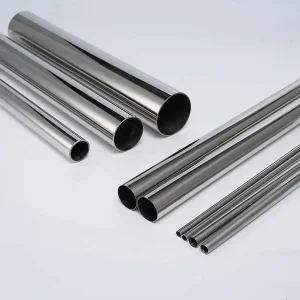
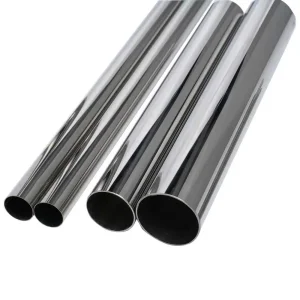
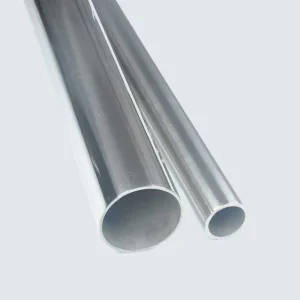
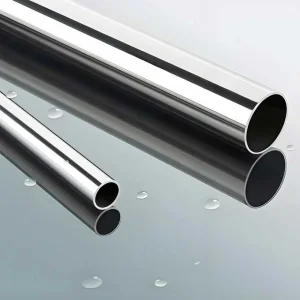
The nominal 2-inch outer diameter (50.8 mm) represents the most versatile cross-sectional geometry in global industrial design. Positioned precisely at the intersection of high moment of inertia and optimized linear weight, 2-inch stainless steel tubing provides exceptional torsional rigidity while maintaining seamless compatibility with standard imperial and metric modular fittings.
Foshan and Guangdong manufacturing ecosystems integrate raw steel slitting, high-frequency plasma/TIG welding, automated bright annealing, and multi-stage polishing within localized 20-kilometer radii. This supply chain concentration yields an unmatched capacity for rapid scaling, stringent wall-tolerance control (±0.05 mm), and reduced production lead times.
Modern international procurement demands rigorous compliance verification beyond standard commercial invoices. Leading Chinese mills operate fully accredited metallographic testing labs implementing EN 10204 3.1 Mill Test Certificates, PMI material verification, non-destructive eddy current testing, and automated optical ovality inspection on 100% of export production runs.
Specifying 2-inch stainless steel pipe requires balancing metallurgical grade selection (201, 304, 304L, 316, 316L, 409L) with strict dimensional tolerances and surface treatments. Sub-standard weld seams or unpassivated heat-affected zones (HAZ) drastically reduce corrosion fatigue resistance in marine, sanitary, and structural installations.
Operational data points validated across 43 automated continuous welding and processing mills.
Comprehensive standard cross-reference for chemical composition, mechanical thresholds, and surface finish availability.
| Steel Grade | International Standard | Chemical Composition Key Elements | Tensile Strength (MPa) | Yield Strength (MPa) | Primary Industrial Application | Surface Finishes Available |
|---|---|---|---|---|---|---|
| AISI 304 / SUS 304 | ASTM A554 / A249 / A312 | 18% Cr / 8% Ni | ≥ 515 | ≥ 205 | Architectural railings, food machinery, general industrial structures | 180# Satin 600# Mirror |
| AISI 316L / SUS 316L | ASTM A249 / A269 / A312 | 16-18% Cr / 10-14% Ni / 2-3% Mo | ≥ 485 | ≥ 170 | Marine environments, coastal grab bars, pharmaceutical & sanitary piping | Electro-polished 240# Satin |
| Ferritic 409L | ASTM A554 / EN 10296-2 | 10.5-11.7% Cr / Low C / Ti Stabilized | ≥ 380 | ≥ 175 | Automotive exhaust manifolds, mufflers, high-temperature gas tubing | Mill Finish / Pickled |
| High-Cu 201 J4/J1 | ASTM A554 Standard | 13-15% Cr / 1-1.5% Ni / High Mn | ≥ 520 | ≥ 245 | Cost-effective interior furniture, clothing racks, indoor decorative hardware | PVD Color Coated Bright Polish |
| Duplex 2205 (S31803) | ASTM A789 / A790 | 22% Cr / 5% Ni / 3% Mo / N | ≥ 655 | ≥ 450 | High-stress chemical processing, subsea tubing, severe chloride environments | Descaled / Pickled |
How specialized fabrication and metallurgical tailoring solve real-world operational challenges.
2-inch OD ASTM A554 round tubing serves as the universal structural standard for commercial handrail and balustrade systems. Precise wall thickness control (typically 1.5mm to 3.0mm) allows for seamless hydraulic mandreling and elbow joint press-fitting. When treated with 600-grit mirror polish or titanium PVD physical vapor deposition, it provides both weather resistance and aesthetic elegance in high-traffic public infrastructure.
For sanitary fluid transport, 2-inch stainless steel tubing manufactured under ASTM A270/A269 protocols undergoes inner bead removal (planishing) and bright annealing. The internal bore achieves Ra < 0.4 µm (or Ra < 0.2 µm with electro-polishing), preventing bacterial biofilm attachment and enabling full CIP (Clean-in-Place) sterilization cycles in dairy, brewing, and biopharmaceutical plants.
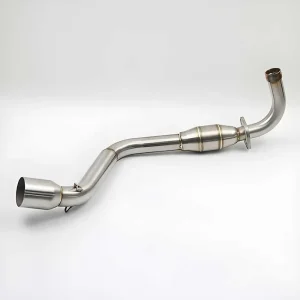
In high-efficiency combustion engine exhaust assemblies, 2-inch 409L and 304 thin-wall tubing withstands aggressive thermal cycling (up to 800°C) and corrosive condensate gases. Advanced CNC mandrel bending capability ensures minimal section flattening (ovality < 5%) at acute bend angles, optimizing backpressure dynamics and engine acoustic profiles.
Automated sorting centers rely on 2-inch stainless steel conveyor roller shells engineered for ultra-low Total Indicator Runout (TIR < 0.3mm). Utilizing tight-tolerance cold-drawn welded tubing reduces rotational vibration, lowers motor energy consumption, and eliminates shedding of paint particles common in carbon steel alternatives.
Medical safety grab bars and hospital bed frameworks utilize 304/316L 2-inch tubing with anti-microbial surface treatments or fine satin finishes (240-grit). Precision punching, flaring, and T-joint laser welding guarantee high tensile integrity capable of supporting static loads exceeding 250 kg per installation point.
Replacing traditional plastic-coated lean pipe, solid 2-inch stainless steel structural tubing prevents particulate shedding, ESD discharge hazards, and chemical delamination in high-tech semiconductor and pharmaceutical assembly cleanrooms.
How smart manufacturing, carbon neutrality goals, and advanced metallurgical controls are redefining China’s stainless steel pipe manufacturing sector.
The transition from manual sampling to 100% real-time inline inspection represents the largest quality leap in recent mill history. Advanced high-speed cameras integrated with deep-learning vision algorithms scan the weld seam immediately post-shaping to detect micro-pinholes, burn-through, and wall mismatch. Combined with Eddy Current Testing (ECT) per ASTM E426 standards, internal flaws are automatically flagged and segregated with zero human intervention.
Preventing internal bore oxidation during high-frequency welding is critical for longevity. State-of-the-art Foshan mills deploy 100% pure hydrogen bright annealing furnaces operating under positive pressure. By eliminating oxygen during the 1050°C thermal cycle, the original chromium-oxide passive film is preserved internally, eliminating the black weld line and avoiding internal mechanical pickling requirements.
With global Scope 3 emissions regulations (such as Europe’s CBAM framework) accelerating, leading Chinese manufacturers are adopting Electric Arc Furnace (EAF) stainless steel scrap remelting backed by solar micro-grids. Procurement officers can now request verified Carbon Footprint Declarations (CFD), tracing raw strip provenance back to TISCO, Baosteel, or POSCO mills with ultra-low embodied carbon metrics.
Ensuring seamless cross-border logistics, tariff optimization, and certified quality assurance for global B2B buyers.
Every shipment of 2-inch stainless steel pipe is accompanied by complete heat-traceable Mill Test Certificates. Chemical ladle analysis, tensile yield testing, elongation percentage, flattening tests, and hydrostatic test results are fully documented against your purchase order specifications.
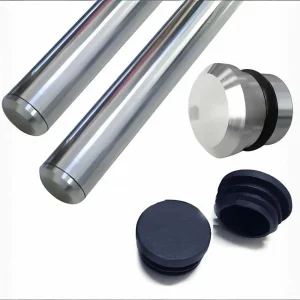
International sea freight exposes steel tubing to salt air, humidity, and handling impact. Standard packaging includes individual plastic poly-sleeves, end-cap plugs, heavy-duty waterproof woven gunny wrapping, and reinforced iron-frame wooden crates designed for forklift unloading without surface denting or scratch damage.
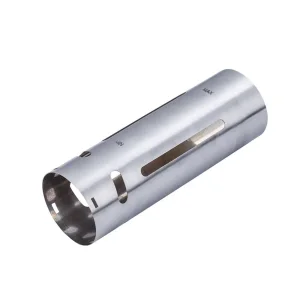
To optimize customer factory workflows, mills offer pre-shipment secondary fabrication: precision CNC length cutting (±0.5 mm), rotary laser slotting, end flaring, necking, beveling, mandrel bending, and pre-drilled bracket hole punching, reducing scrap rates and labor overhead at final assembly facilities.
Direct answers from our metallurgical quality assurance team regarding 2-inch stainless steel pipe manufacturing, standards, and logistics.
Fabricated to ASTM, DIN, EN, and JIS Dimensional Specifications