Direct OEM/ODM solutions engineered to international standards (ASTM, EN, JIS) with custom dimensional tolerance control.
Analyzing why nominal 2-inch outside diameter (50.8mm OD / NPS 2") tubing represents the most crucial dimension in modern architectural engineering, fluid dynamics, structural frameworks, and automotive manufacturing.
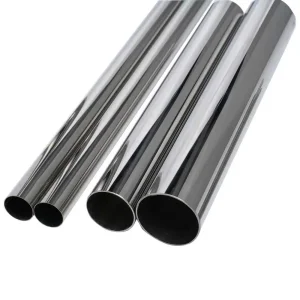
In the global industrial manufacturing matrix, the 2 inch stainless steel pipe (spanning nominal outside diameters of 50.8 mm for mechanical/decorative tubing to 60.3 mm for Schedule nominal pipe sizes) stands as a foundational engineering component. Its uniquely optimized section modulus delivers an unparalleled ratio of torsional strength, fluid throughput capacity, and aesthetic proportions. As global supply chains prioritize corrosion resistance, structural longevity, and sustainable life-cycle metrics, demand for high-grade 304, 304L, 316, and 316L 2-inch tubing has expanded exponentially across North America, Europe, the Middle East, and Southeast Asia.
Modern procurement directors and structural engineers face a complex global marketplace. Sourcing high-performance 2-inch stainless steel tubing requires navigating granular technical specifications: from strict wall thickness tolerances (Schedule 5S, 10S, 40S, 80S, or fractional millimeter gauges from 0.5 mm to 4.0 mm) to precise weld-seam integrity, surface roughness (Ra values), and mechanical ductility. China—specifically the specialized metallurgical manufacturing hub of Foshan, Guangdong—has evolved into the world's premier center for precision-welded and seamless stainless steel tube manufacturing, marrying cost efficiencies with smart Factory 4.0 quality assurance systems.
The 2-inch OD profile provides ideal bending moments and tensile rigidity, making it the top choice for architectural handrails, automotive chassis subframes, and heavy-duty industrial shelving units.
Utilizing high-chromium (18-20%) and nickel-molybdenum chemistries, 2-inch pipes withstand aggressive chloride exposure, acidic washdowns in food plants, and marine salt-spray atmospheres.
Stabilized alloys such as 409L and 304 withstand thermal cycling without intergranular oxidation, serving key roles in heat exchangers, exhaust systems, and gas burner tubing.
How Foshan's integrated stainless steel cluster delivers unmatched cost competitiveness, rapid scaling, and metallurgical precision to international buyers.
China’s dominant position in global stainless steel pipe manufacturing is not merely a product of raw production capacity—it stems from sophisticated, vertically integrated industrial clusters. Centered in Foshan, Guangdong, companies like VertexFlow Tubes leverage a seamless supply chain infrastructure that bridges raw material slitting, high-frequency plasma welding, inline bright annealing, surface mirror polishing, and secondary CNC fabrication within a hyper-localized radius.
By establishing direct partnerships with tier-one steel mills such as TISCO, POSCO, and Baosteel, Chinese manufacturers secure prime hot-rolled and cold-rolled stainless steel strip with verified chemical purities. This raw material advantage, combined with modern Factory 4.0 automation, minimizes scrap rates, eliminates third-party markups, and protects international buyers against raw material volatility and delivery delays.
Continuous plasma arc welding (PAW) accompanied by internal nitrogen gas purge prevents inner bore oxidation, ensuring the weld seam retains equal corrosion resistance and ductility to the parent metal.
Every meter of 2-inch pipe passes through dual-axis laser micrometers that monitor outside diameter, roundness, and Total Indicator Runout (TIR) continuously during the sizing process.
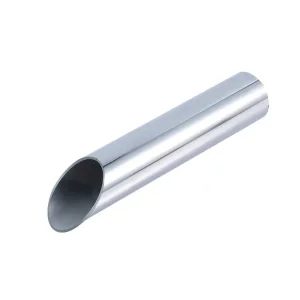
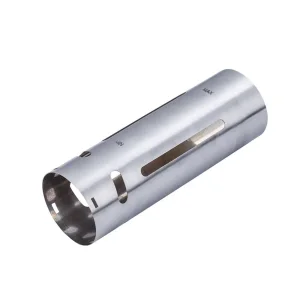
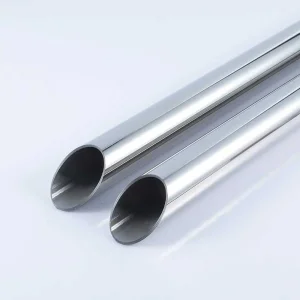
From mandrel bending and end flaring to laser slotting, punching, and necking—tubes leave the mill assembly-ready, reducing downstream handling costs for overseas buyers.
Information Gain Insight: Sourcing 2-inch stainless steel tubing from integrated Chinese mills reduces total cost of ownership (TCO) by an average of 18%–26% compared to regional stockists, while guaranteeing 100% heat traceability via EN 10204 3.1 Mill Test Certificates.
Comprehensive metallurgical parameters, dimensional tolerances, and testing protocols for international engineering compliance.
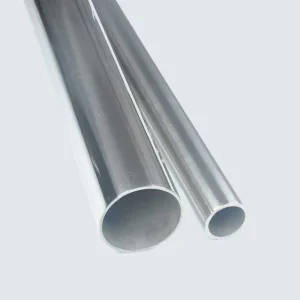
Selecting the correct 2-inch stainless steel pipe specification requires understanding the vital distinction between Mechanical/Decorative Tubing (OD 50.8 mm) defined under ASTM A554, and Nominal Pipe Size (NPS 2" / OD 60.3 mm) engineered for pressure piping under ASTM A312 or ASTM A269. The matrix below outlines standard structural and fluid specifications:
| Parameter | ASTM A554 (Decorative / Structural) | ASTM A312 / A269 (Industrial / Fluid) | EN 10217-7 / JIS G3446 Equivalents |
|---|---|---|---|
| Nominal Outside Diameter | 2.000 in (50.80 mm) | 2.375 in (60.33 mm) [NPS 2"] | 50.8 mm / 60.3 mm metric standards |
| Wall Thickness Range | 0.5 mm to 3.0 mm (0.020" to 0.118") | Sch 5S (1.65mm), Sch 10S (2.77mm), Sch 40S (3.91mm) | 0.8 mm to 4.0 mm precise wall options |
| Available Material Grades | AISI 201 (High-Cu), 304, 304L, 316, 316L, 409L | TP304, TP304L, TP316, TP316L, Duplex 2205 | 1.4301, 1.4307, 1.4404, 1.4435, 1.4512 |
| Dimensional Tolerances | OD: ±0.05 mm to ±0.10 mm WT: ±8% Straightness: 1.0 mm/m |
OD: ±0.40 mm WT: ±10% to ±12.5% Hydrostatic tested |
OD: Class D3/D4 WT: Class T3/T4 per EN ISO 1127 |
| Surface Finishes | 180# Satin, 240# Hairline, 400# Bright, 600# Mirror, PVD Colors | Mill Finish, Acid Pickled & Passivated, AP/BA (20 Ra µin / 0.5 µm) | Descaled, Satin, Mirror, Electropolished (Ra ≤ 0.4 µm) |
| Mechanical Testing Protocol | Tensile test, Flattening test, Flaring test, Weld decay test | 100% Eddy Current Test, Hydrostatic Pressure Test, Intergranular Corrosion Test | EN 10204 3.1 Certified, Non-Destructive Testing (NDT) |
The choice between 201, 304, and 316L grades fundamentally alters the lifecycle performance of 2-inch stainless steel tubing:
Analyzing how different global industrial sectors specify, order, and integrate 2-inch stainless steel pipes into their engineering ecosystems.
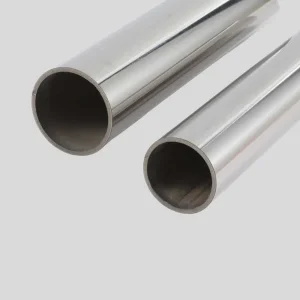
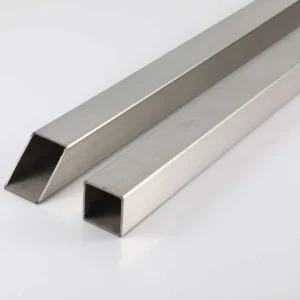
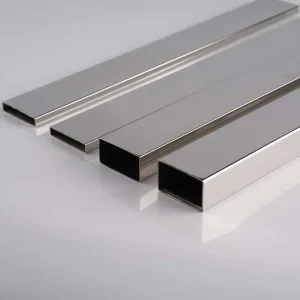
Architectural fabricators demand 2-inch (50.8mm) round and square 304/316L tubing with seamless 600# mirror or 320# satin finishes. Tightly controlled wall thickness (1.5mm to 2.0mm) ensures structural compliance with international building codes while enabling clean glass-mounting slot cutouts.
Sanitary OEMs require 2-inch tubing acting as base substrates for chrome, brushed nickel, or PVD titanium coating. Zero surface defects, internal weld seam leveling, and surface roughness of Ra ≤ 0.4 µm guarantee flawless electroplating adhesion without pinhole blistering.
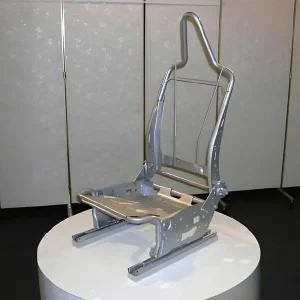
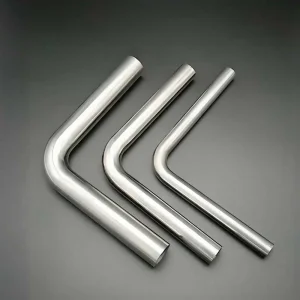
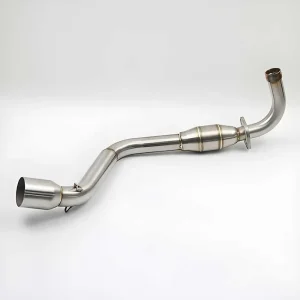
Tier-1 automotive suppliers source 2-inch 409L and 304 tubing for mandrel-bent exhaust tailpipes, muffler shells, and seat subframe assemblies. Demands focus on bendability up to 90° without ovality collapse or seam cracking.
Logistics automation OEMs utilize low Total Indicator Runout (TIR) 2-inch stainless tubing for food-grade conveyor rollers and lean cleanroom workstations. Solid stainless construction eliminates plastic delamination risks in washdown zones.
Medical safety equipment requires 2-inch high-copper 201 or 304 tubing that provides strong anti-bacterial cleanability, high tensile grip strength, and flawless orbital welds for bathroom safety rails and hospital bed frames.
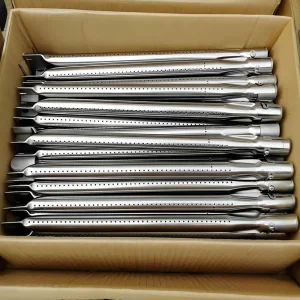
Appliance OEMs specify perforatable, high-temperature 304 or 439 2-inch tubing for gas grill burner assemblies. Consistent wall thickness allows uniform precision drilling or laser slotting for gas distribution orifices.
How technical collaboration between VertexFlow engineers and global buyers resolves critical fabrication issues.
The Challenge: A German luxury furniture designer experienced a 14% scrap rate during automated CNC 90° mandrel bending of 2-inch (50.8mm x 1.5mm) 304 mirror polished tubes. Cracking occurred consistently along the outer tension radius.
The Solution: VertexFlow's metallurgical team adjusted the raw coil annealing profile to achieve an optimal grain size (ASTM 7-8) with controlled elongation (>45%). Furthermore, we re-oriented the internal plasma weld seam to 90° relative to the bend plane. Scrap rates immediately dropped to <0.2%.
The Challenge: A waterfront hotel resort in Dubai reported rapid surface pitting and brown "tea-staining" on installed 2-inch 304 handrails within 6 months of installation.
The Solution: VertexFlow replaced the standard 304 specification with marine-grade 316L containing 2.2% Molybdenum. Additionally, an inline pickling and citric acid passivation treatment was integrated into our post-polishing process, eliminating free iron contaminants. Salt spray test performance jumped from 200 hours to 550+ hours without pitting.
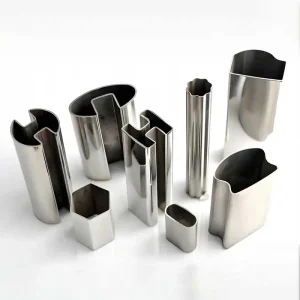
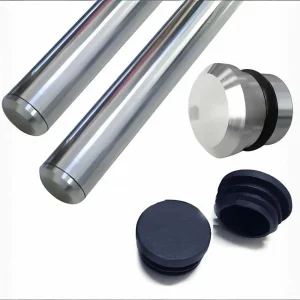
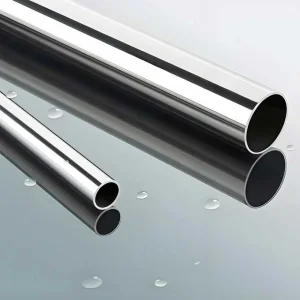
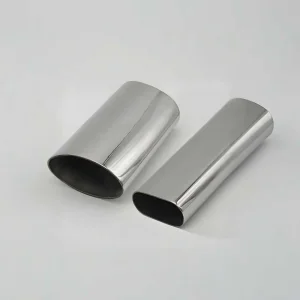
Specialized industrial, mechanical, and architectural profiles for custom global contract manufacturing.
Direct answers from our metallurgical quality assurance team to assist procurement specialists and design engineers.
The term "2 inch" can refer to two distinct manufacturing standards:
For coastal environments within 5 kilometers of ocean saltwater, Grade 316L is mandatory. Standard 304 stainless steel contains 18% Chromium and 8% Nickel, which succumbs to chloride-induced pitting corrosion and brown "tea-staining" in salty marine air. Grade 316L adds 2.0–3.0% Molybdenum, creating a passive surface oxide layer that resists aggressive chloride attack, passing 500+ hours in ASTM B117 neutral salt spray testing.
Weld seam cracking during CNC bending is usually caused by three factors: (1) Incomplete weld fusion or brittle intermetallic phases formed during unshielded welding; (2) Insufficient material elongation caused by work-hardened strip; or (3) Positioning the weld seam on the outer tension radius during bending. VertexFlow guarantees bending-grade 304/201 strip with >45% elongation, online eddy-current seam verification, and clear alignment marks so fabricators can orient the weld seam on the neutral bending axis.
Our standard production tolerance for outside diameter is ±0.10 mm. On precision runs—such as substrate tubing for electroplating or conveyor roller shells—we hold tight tolerances of **±0.05 mm on OD** and **±0.03 mm on roundness/ovality**. Wall thickness is controlled within ±8%, and straightness is held to ≤ 1.0 mm per meter using inline automatic laser measuring systems.
Our standard MOQ is **500 kg per size and surface finish** for standard round, square, and rectangular profiles in 201, 304, and 316L. For custom profiles or specialized PVD color coatings, the MOQ is 1,000 kg. Standard production lead time is 15 business days from sample artwork approval. With over 500 roll-forming mold sets in stock, standard custom profiles usually require zero tooling development lead time.
Yes. Every shipment is accompanied by a full **EN 10204 3.1 Mill Test Certificate** detailing heat number chemistry (spectrometer tested), tensile strength, yield strength, elongation percentage, flattening test results, and eddy current seam diagnostics. Third-party inspections via SGS, BV, or TÜV are welcomed prior to container loading.
Send us your engineering drawings, required specifications, or target target pricing. Our Foshan technical sales team responds with full metallurgy pricing and mold availability within 24 hours.