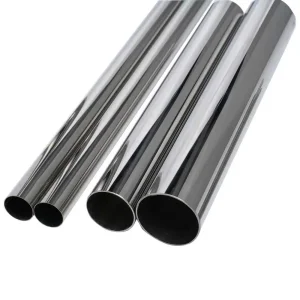
Direct factory supply engineered to ASTM, DIN, EN, and JIS standards with tight-tolerance extrusion and specialized surface finishes.
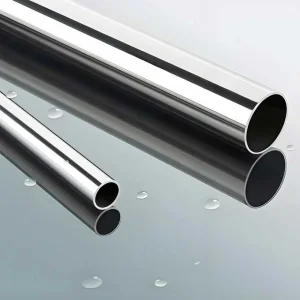
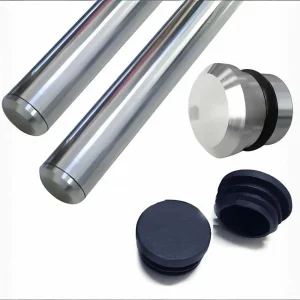
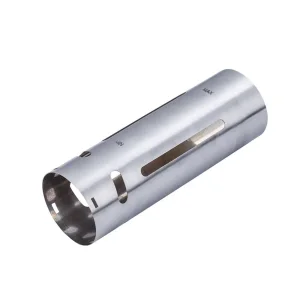
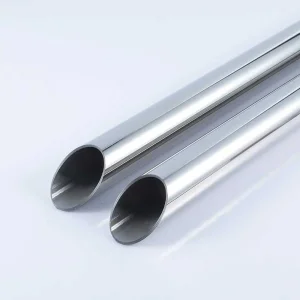
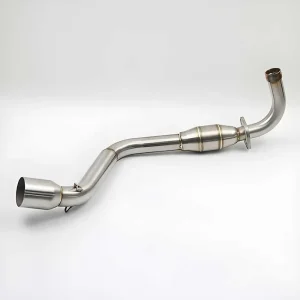
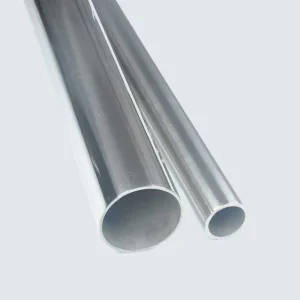
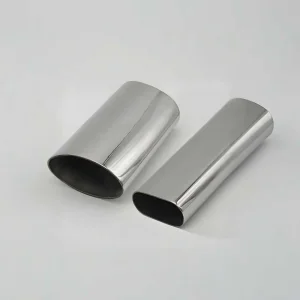
Understanding why 409L (UNS S40910 / EN 1.4512) serves as the cost-effective workhorse for high-temperature oxidation and moderate atmospheric corrosion resistance.
Grade 409L is a low-carbon, titanium-stabilized ferritic stainless steel engineered primarily for applications requiring elevated-temperature oxidation resistance, mechanical stability, and economic structural integrity without the excessive cost premium associated with nickel-bearing austenitic alloys like 304 or 316. By controlling carbon and nitrogen to ultra-low levels (C ≤ 0.03%), Chinese advanced steel mills prevent the formation of chromium carbides at grain boundaries during high-heat welding operations, effectively eliminating intergranular corrosion risks in the Heat-Affected Zone (HAZ).
The additions of Titanium (typically 6×[C+N] up to 0.75% max) act as a primary carbide/nitride stabilizer. During cooling, titanium preferentially bonds with carbon and nitrogen to form ultra-stable Ti(C,N) precipitates. This leaves the baseline matrix enriched with approximately 10.5% to 11.75% Chromium, preserving a continuous, self-healing passive passivation oxide film ($Cr_2O_3$) even after intense thermal cycling up to 675°C under continuous service and up to 750°C under intermittent thermal spikes.
Ferritic atomic lattice structure (BCC) provides a lower thermal expansion coefficient ($10.4 \times 10^{-6}/K$) compared to austenitic steels ($17.3 \times 10^{-6}/K$), preventing thermal fatigue buckling and scale spallation in exhaust systems.
Delivers high thermal conductivity ($25.0 \, W/m\cdot K$ at 100°C), facilitating rapid heat dissipation in heat exchanger tubes and catalytic converter housings, accelerating operating thermal light-off times.
Ti-stabilization ensures zero sensitization during high-frequency electric resistance welding (ERW) or automated TIG seam welding, keeping the welded tube ductile and crack-resistant during post-forming.
| Steel Grade | Chromium (Cr) % | Carbon (C) % | Titanium (Ti) % | Manganese (Mn) % | Yield Strength (MPa) | Tensile Strength (MPa) | Elongation (%) |
|---|---|---|---|---|---|---|---|
| ASTM 409L (S40910) | 10.50 – 11.75 | ≤ 0.030 | 6×(C+N) to 0.75 | ≤ 1.00 | ≥ 205 | ≥ 380 | ≥ 25 |
| EN 1.4512 | 10.50 – 11.50 | ≤ 0.025 | [1.0-(1.2+8×(C+N))] | ≤ 1.00 | ≥ 210 | 380 – 560 | ≥ 20 |
| JIS SUH409L | 10.50 – 11.75 | ≤ 0.030 | 8×C to 0.75 | ≤ 1.00 | ≥ 175 | ≥ 360 | ≥ 25 |
Macroeconomic factors driving the shift from coated carbon steel and 304 austenitic tubing toward 409L ferritic tubing in modern industrial projects.
In the global industrial sector, raw material price stability is a primary mandate for procurement directors. Traditional austenitic stainless steels (such as 304 and 316) contain 8% to 10% Nickel. Volatility in global LME nickel markets creates substantial price spikes for OEMs. In contrast, 409L Ferritic Stainless Steel Tubing contains zero nickel intentionally added, making its mill baseline price remarkably stable over long project supply lifecycles.
Furthermore, compared to aluminized carbon steel tubing—which is prone to sacrificial coating breakdown at cut edges, weld seams, and tight radii—409L provides solid, homogeneous corrosion protection through its entire wall thickness. Even if surface scratches occur during automated tube hydroforming or bending, the exposed chromium matrix instantaneously repassivates upon contact with atmospheric oxygen.
How specialized industries utilize China-manufactured 409L tubing to overcome thermal stress, corrosion, and structural weight challenges.
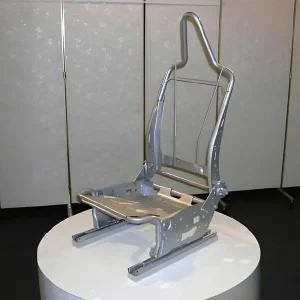
409L is the international standard for automotive exhaust manifolds, front pipes, catalytic converter shells, and muffler tubing. Because exhaust gases contain corrosive condensates (sulfuric and nitric acids) alongside extreme heat up to 650°C, 409L prevents internal pitting and flaking, ensuring vehicles comfortably meet 10-year / 150,000-mile emission hardware longevity mandates.
In heat recovery steam generators (HRSG), residential gas furnace heat exchangers, and boiler flue gas ducts, 409L tubing offers low thermal resistance and minimal expansion stress. Its immunity to chloride stress corrosion cracking (SCC)—a common flaw in 304 grade exposed to hot aqueous environments—makes it superior for cyclic thermal exchangers.
Agricultural machinery frames, spreader tubes, and grain handling systems operate in aggressive wet environments mixed with nitrogenous fertilizers. 409L tubular frames provide structural rigidity with high abrasion-corrosion resistance, preventing costly field failures without requiring heavy painted coatings.
Used extensively for bus shelter frames, solar tracking structures, and outdoor enclosure tubing. While 409L may develop a light cosmetic surface discoloration (staining) over time if unpainted, its structural cross-section remains fully intact, making it ideal for painted architectural frames where rust bleed-through cannot be tolerated.
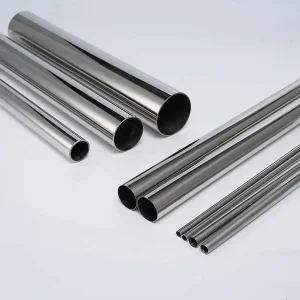
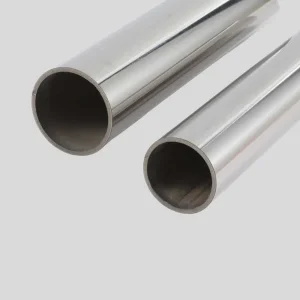
Cleanroom material handling, warehouse logistics rollers, and automated sorting conveyor tubing utilize precision cold-drawn 409L round tubes. The low Total Indicator Runout (TIR) guaranteed by Chinese factories ensures low vibration at high rotational speeds.
In energy sector installations, 409L tubing handles sulfur dioxide ($SO_2$) gas lines and ducting under mild wet acidic conditions where carbon steel corrodes instantly and high-alloy nickel tubes would be cost-prohibitive.
How Chinese state-of-the-art mills are pushing limits in laser welding, dual stabilization chemistry, and automated inline quality logging.
Traditional TIG welding introduces wide Heat-Affected Zones (HAZ) in ferritic stainless steel, which can lead to excessive grain growth and reduced impact toughness. Modern Chinese factories have transitioned to multi-kilowatt fiber laser seam welding lines operating under continuous high-purity argon shielding. Laser welding concentrates energy, narrowing the HAZ width by up to 60%, retaining fine-grained ferritic microstructures, and maximizing post-weld flared bend expansion rates.
Next-generation 409L variants incorporate dual stabilization utilizing precise balances of Titanium (Ti) and Niobium (Nb). While Ti stabilizes nitrogen at ultra-high liquidus temperatures, Nb stabilizes carbon at intermediate solid-state annealing temperatures. This dual-stabilized chemical design delivers superior deep-drawing capabilities, allowing tube fabricators to execute complex hydroforming without seam splitting.
To eliminate heavy mechanical descaling and pickling acid waste, premier Chinese factories utilize continuous inline bright annealing furnaces with pure hydrogen atmosphere ($H_2$) at temperatures reaching 1050°C. This stress-relieves the cold-worked tubing, restores peak ductility, and produces a silvery bright, mill-clean surface ready for immediate fabrication or coating.
Evaluating the structural cost, speed, and quality control advantages provided by China's concentrated stainless steel industrial hubs (Foshan, Jiangsu, Zhejiang).
China produces over 60% of the world's raw stainless steel. This massive upstream volume integrates directly with regional tube milling hubs, notably in Foshan (Guangdong) and Wuxi (Jiangsu). China’s 409L tubing manufacturing ecosystem provides global procurement buyers with three decisive competitive advantages:
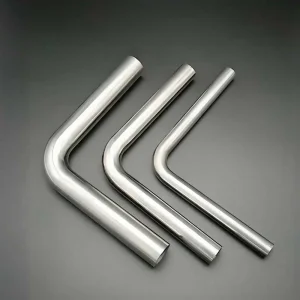
From continuous coil slitting, roll forming, high-speed welding, inline eddy current non-destructive testing (NDT), flying saw cut-off, end-deburring, to custom bending—all processes occur under a single plant floor. This reduces internal transport lag and lowers lead times to 15-20 days.
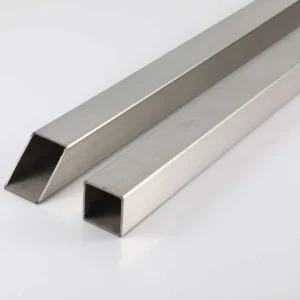
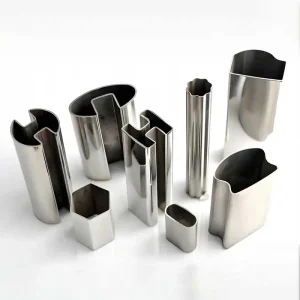
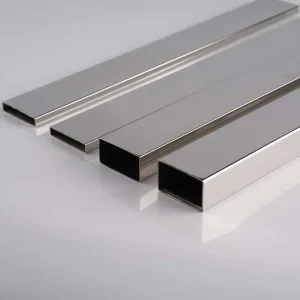
China 409L factories maintain thousands of pre-existing roller die sets covering standard round, square, rectangular, oval, elliptical, and custom D-shape profile dimensions. Overseas clients save tens of thousands of dollars in custom tooling costs for specialized architectural or exhaust profiles.
To supply international tier-1 automotive exhaust makers, Chinese factories operate under strict IATF 16949 and ISO 9001 quality frameworks. Every batch undergoes 100% inline eddy-current flaw detection, flare expansion testing (to 1.30× OD), and flattening test validation.
Full traceability and material test report (MTR) compliance aligned with international engineering standards.
| Standard Code | Region / Organization | Scope & Description | Compliance Test Protocols |
|---|---|---|---|
| ASTM A268 / A268M | United States (ASTM) | Standard Specification for Seamless and Welded Ferritic and Martensitic Stainless Steel Tubing for General Service. | Hydrostatic / NDT Eddy Current, Tension Test, Flaring, Flattening, Hardness Test. |
| EN 10296-2 | European Union (CEN) | Welded circular steel tubes for mechanical and general engineering purposes - Stainless steel. | Dimensional tolerance (OD & WT), Weld seam clearance, 3.1 Certification per EN 10204. |
| JIS G4305 / G3446 | Japan (JIS) | Cold-reduced stainless steel plate, sheet and strip / Stainless steel pipes for building structures. | Intergranular corrosion test, grain size inspection, surface defect inspection. |
| IATF 16949:2016 | Automotive Quality Management | Technical specification for automotive sector manufacturing and supply chain alignment. | PPAP Level 3 documentation, SPC tracking, 8D problem solving reports. |
Expert answers to common engineering, procurement, and fabrication questions regarding China-manufactured 409L tubing.
Full portfolio access to specialized welded profile geometries, marine grades, and precision fabricated components.