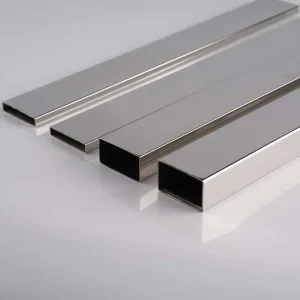
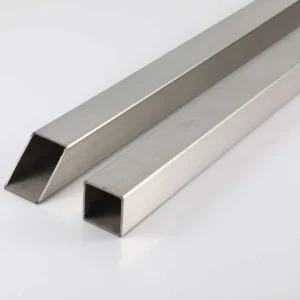
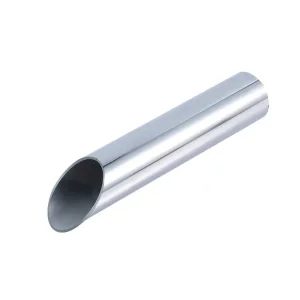
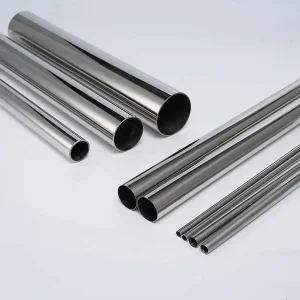
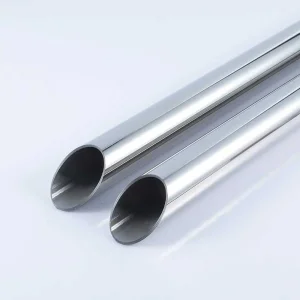
Explore our high-demand OEM & ODM stainless steel tube inventory manufactured to rigid international tolerances.
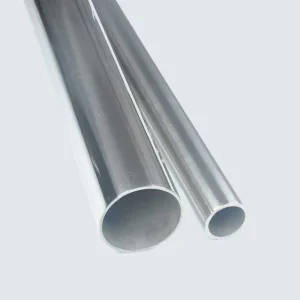
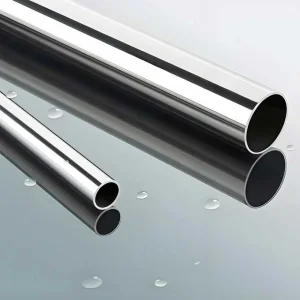
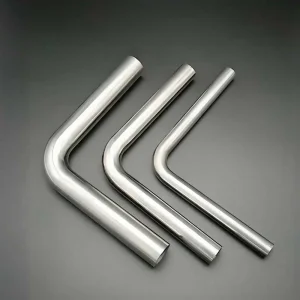
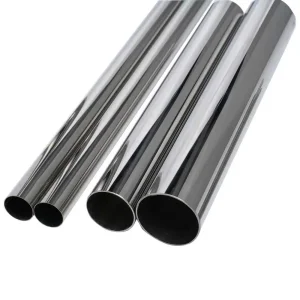
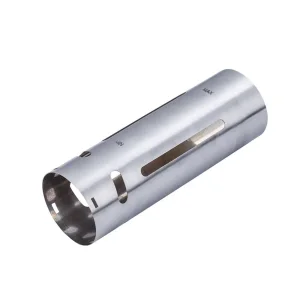
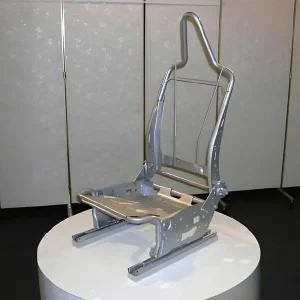
AISI 304 stainless steel stands as the foundational Workhorse Alloy across modern industrial, architectural, and sanitary engineering. Characterized by its classic 18/8 formulation—nominally 18% Chromium and 8% Nickel—this austenitic alloy maintains a face-centered cubic (FCC) crystal structure. This microscopic lattice is responsible for the material's non-magnetic characteristics in annealed states, exceptional cryogenic toughness, and unmatched cold-forming ductility.
When procurement officers and design engineers evaluate direct factory sourcing options from Chinese manufacturers, understanding the micro-alloying controls exercised at the mill level is paramount for securing long-term mechanical reliability and eliminating premature fatigue or stress-corrosion failures.
| Element | ASTM A249/A554 Standard Range (%) | Precision Mill Control (Foshan Baseline) | Metallurgical & Functional Impact |
|---|---|---|---|
| Chromium (Cr) | 17.50 – 19.50 | 18.10 – 18.30 | Forms self-healing passive Cr₂O₃ surface layer; defines primary oxidation resistance. |
| Nickel (Ni) | 8.00 – 10.50 | 8.05 – 8.15 | Stabilizes austenitic FCC phase; maximizes deep-drawing and radius bending capability. |
| Carbon (C) | ≤ 0.070 | 0.040 – 0.055 | Optimized to balance yield strength while restricting chromium-carbide precipitation during TIG welding. |
| Manganese (Mn) | ≤ 2.00 | 1.10 – 1.30 | Enhances hot workability and deoxidizes molten steel matrix during primary refining. |
| Silicon (Si) | ≤ 0.75 | 0.40 – 0.55 | Acts as ferrite stabilizer; improves fluidity during continuous tube seam welding. |
| Sulfur (S) | ≤ 0.030 | ≤ 0.005 (Ultra-Low) | Drastically reduces non-metallic inclusions, enabling defect-free 600# mirror polishing. |
Global procurement teams do not merely buy steel tubes; they purchase localized supply-chain momentum, technological density, and process efficiency. Foshan, located in Guangdong Province, forms the epicentre of world stainless steel tube fabrication. Leveraging an unmatched network of raw material coil slitters, specialized tooling machine builders, automated polishing workshops, and deep-sea logistics hubs (Hong Kong, Shenzhen, Guangzhou), Foshan mills deliver structural cost and quality advantages.
Leading Foshan factories maintain long-term master coil purchasing agreements with primary steel producers like Tsingshan, TISCO, POSCO China, and Baosteel. This direct linkage eliminates intermediary markup and ensures strict batch-to-batch chemical homogeneity, guaranteeing that incoming raw material strictly complies with ASTM A249, ASTM A554, and EN 10217-7 standards.
Modern Chinese mills have transitioned from legacy High-Frequency (HF) induction welding to state-of-the-art Multi-Cathode Plasma TIG and Laser seam-welding lines equipped with internal nitrogen purging shields. This technology prevents internal seam oxidation (the notorious black oxide bead), maintains uniform wall thickness tolerance within ±0.05 mm, and ensures 100% seam fusion capable of withstanding extreme flare and flattening tests.
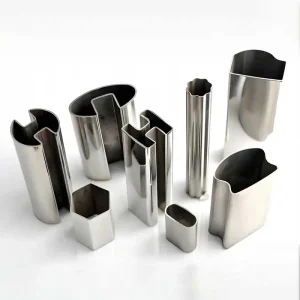
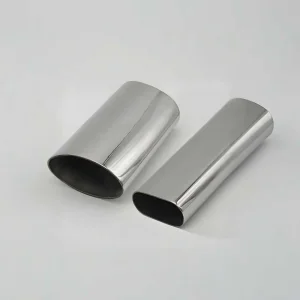
Custom profile fabrication (such as flat oval, elliptical, triangular, semi-round, and slotted channel tubes) historically carried high tooling development fees and long prototyping lead times. Foshan factories maintain vast roll-forming mould libraries exceeding 500 distinct geometric cross-sections, enabling global OEMs to launch custom structural profiles with zero tooling cost and 15-day turnaround schedules.
A common quality defect reported by overseas fabricators is tube splitting during 90-degree CNC rotary draw bending. Experienced Chinese engineers mitigate this by controlling weld seam position relative to the bending plane. Positioned precisely on the neutral axis (at 90 degrees to the bend radius direction), stress concentration on the heat-affected zone (HAZ) drops by up to 64%, effectively eliminating seam tearing on wall thicknesses down to 0.5 mm.
The global stainless steel tubing market is undergoing a structural transition driven by Industry 4.0 automation, stringent environmental regulation, and demanding mechanical surface requirements from downstream sectors. Direct Chinese manufacturers are at the forefront of implementing these high-tech production paradigms.
Quality assurance has evolved from periodic manual caliper measurements to real-time, 360-degree laser micrometer tracking. Modern mill lines integrate continuous eddy-current seam defect detection (ASTM E426 compliant) operating alongside automated infrared thermal imaging to flag pinholes, lack of penetration, or micro-cracks before tubes enter the cutting phase.
Beyond traditional mechanical 180# satin or 600# mirror polishing, high-value procurement now demands electro-polishing (EP) and Physical Vapor Deposition (PVD) titanium coating. By depositing 0.3–0.5 µm metallic layers (Rose Gold, Black Titanium, Champagne Gold) directly onto ultra-smooth AISI 304 substrates, manufacturers deliver vibrant, wear-resistant, anti-fingerprint finishes suitable for luxury interior and sanitary hardware.
With the implementation of the European Union's Carbon Border Adjustment Mechanism (CBAM) and global Scope 3 emissions reporting, leading Chinese tube mills are transitioning to electric arc furnace (EAF) steel sourcing, installing rooftop solar arrays, and publishing verified Environmental Product Declarations (EPDs). This provides international buyers with transparent, low-carbon supply chain documentation.
The operational demands placed on an AISI 304 tube vary significantly across end-use industries. Factory-level custom tooling, cold-drawing schedules, and annealing parameters must be matched strictly to downstream applications.
| Application Sector | Key Operational Challenge | Engineered 304 Solution | Critical Tolerances & Specs |
|---|---|---|---|
| Sanitary & Bathroom Hardware | Plating blistering, pitting in high-humidity/chlorine bath environments. | Passivated 304 substrate with inner weld bead planishing & Ra ≤ 0.4 µm surface smoothness. | OD ±0.05 mm, Wall Thickness ±5%, Zero weld bead height. |
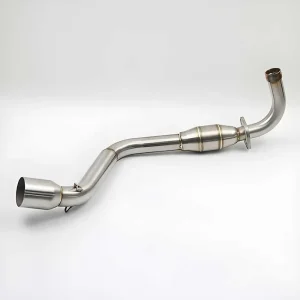
| Automotive Exhaust & Structural | Thermal fatigue, cyclic vibration, extreme mechanical flaring requirements. | Bright-annealed 304 tube featuring high-ductility elongation (> 45%) and micro-purged TIG weld. | ASTM A554 / A269, Expansion ratio > 30% without cracking. |
| Architectural Railing & Balustrades | Atmospheric corrosion, wind load stress, precision assembly alignment. | Sharp corner square/rectangular tubing (radii < 1.5x wall) with uniform 320# hairline finish. | Straightness ≤ 1.0 mm/m, Squareness ±0.5°, ASTM A554. |
| Industrial Racks & Cleanroom Workstations | Bacterial buildup, coating delamination in wash-down cleanrooms. | Solid 28 mm OD stainless structural tube replacing plastic-coated lean pipe. | Cleanroom Class 100 safe, static load capacity > 400 kg/m. |
| Medical Safety Grab Bars & Beds | Heavy point-loads, stringent hygienic sanitation, non-toxic bio-compatibility. | Heavy-wall (1.5–2.0 mm) 304 tubing subjected to 100% eddy-current defect screening. | CE & FDA compliant material certification, smooth deburred ends. |
Navigating international steel procurement requires rigid inspection protocols to protect against material non-compliance, dimension drift, and maritime transit damage. Professional B2B procurement managers follow a standardized multi-stage validation framework when collaborating with Chinese factories.
Every shipment must be accompanied by an EN 10204 3.1 Mill Test Certificate directly traceable to the raw coil heat number. Chemical analysis via optical emission spectroscopy (OES) and mechanical testing (tensile, yield, hardness, flattening, and flaring) must be cross-verified prior to factory release.
Standard quality protocols dictate checking outside diameter (OD), wall thickness (WT), ovality, straightness (max 1 mm per meter), and surface gloss (measured in GU units via glossmeter). For secondary fabrication, inner weld bead height must be measured with optical micrometers to ensure compatibility with mandrels.
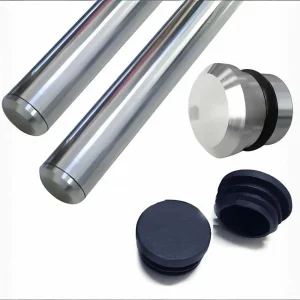
Maritime ocean freight exposes steel cargo to extreme humidity and salt vapor. Professional Foshan exporters utilize poly-sleeving for individual tubes, anti-corrosive VCI paper wrapping, heavy-duty plastic end caps, and reinforced iron-frame crates or seaworthy wooden boxes to guarantee defect-free arrival.
Expert answers addressing material selection, manufacturing tolerances, trade compliance, and mechanical performance.
Grade 201 is a manganese-substituted austenitic alloy with lower Nickel content (~1.0–1.5%), making it cost-effective for dry indoor furniture, but susceptible to pitting in damp environments. AISI 304 contains 8% Nickel and 18% Chromium, providing robust atmospheric and moisture corrosion resistance ideal for long-term architectural, appliance, and sanitary hardware. Grade 316L adds 2.0–3.0% Molybdenum, rendering it essential for marine, coastal, and chemical environments exposed to severe chloride attack.
According to ASTM A554 standard specifications: Outside Diameter (OD) tolerances range from ±0.10 mm to ±0.25 mm depending on size; Wall Thickness (WT) is controlled to within ±10%; Straightness is maintained at or below 1.0 mm per meter (1/1000); Squareness of corners for square and rectangular sections is held within ±0.5°. High-precision customized runs can achieve OD tolerances down to ±0.05 mm for specialized applications like conveyor rollers or plating sleeves.
Fully annealed AISI 304 is completely non-magnetic. However, during the continuous cold roll-forming and sizing operations at the mill, the mechanical deformation induces a microstructural partial phase transformation from austenite to deformation-induced martensite. This martensitic structure imparts a weak magnetic response, particularly around sharp corners of square tubing or heavy roll-formed zones. If zero magnetism is required, bright solution annealing at 1040°C–1080°C followed by rapid quenching restores a pure austenitic non-magnetic state.
Seam cracking typically results from three factors: (1) Incomplete weld fusion or argon gas contamination during mill welding; (2) Excessive work-hardening of the strip without proper anneal; (3) Orienting the weld seam directly along the outer tension radius during bending. To prevent cracking, engineers specify TIG/Plasma welded tube with internal nitrogen purge, verify elongation parameters exceeding 40%, and orient the seam on the neutral bending axis during CNC processing.
Standard commercial export documentation includes: Commercial Invoice, Packing List with Heat-Number bundle tagging, Bill of Lading (B/L), Certificate of Origin (CO / Form E / Form F depending on trade agreement), and crucially, the EN 10204 3.1 Mill Test Certificate detailing spectral chemical analysis, mechanical destruction testing, and non-destructive eddy-current inspection results.
For standard round, square, and rectangular profiles in 201 or 304 grades, typical factory MOQ is 500 kg per size and finish. For custom profiles requiring specialized roll-forming tooling or custom PVD color coating, MOQ is generally 1,000 kg to 2,000 kg. Standard factory lead time in Foshan is 10 to 15 working days following sample approval and deposit confirmation.
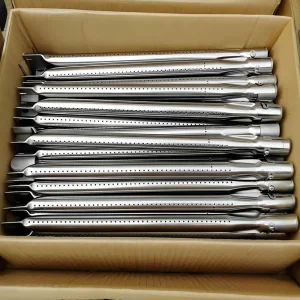
Discover specialized geometric profiles, medical-grade tubes, and OEM fabricated assemblies manufactured to custom specifications.