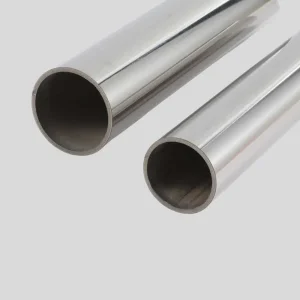
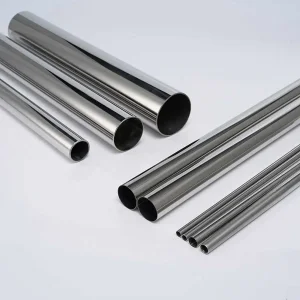
Precision-engineered hollow structural sections manufactured to ASTM A554 standards, featuring tight circular/oval runouts, laser-tested wall uniformity, and high deflection resistance.
An exhaustive engineering evaluation of the structural, metallurgical, and economic shifts reshaping the international wardrobe hardware market.
Across the international home storage, modular millwork, and commercial hospitality sectors, wardrobe hanging systems have historically relied upon electroplated mild steel or extruded aluminum tubes. However, global architectural hardware procurement data indicates an accelerated transition toward thin-wall, high-yield welded austenitic stainless steel tubing (predominantly ASTM A554 Grade 201 and Grade 304). Electroplated mild steel tubes (commonly treated with decorative bright chromium or nickel flashings) present inherent long-term failure points: continuous friction from metal hangers compromises micro-thin electroplating layers, causing galvanic oxidation, substrate corrosion, flaking, and visual degradation in humid wardrobe conditions.
By contrast, cold-formed and precision-welded stainless steel closet rod tubing utilizes the metal's naturally formed passive chromium(III) oxide (Cr2O3) film. Rather than failing under abrasion, the self-passivating surface continually regenerates in ambient atmosphere. When specified with proper wall thickness profiles (1.0 mm to 1.5 mm), stainless steel hollow sections achieve a structural modulus that resists longitudinal elastic sagging under concentrated garment deadweights (up to 45 kg per linear meter) without requiring auxiliary mid-span brackets over standard 1,200 mm cabinet spans.
Austenitic 304/201 series alloys offer tensile strengths surpassing 520 MPa. Coupled with cold-roll strain hardening, our tubular profiles deliver higher Section Modulus (Z) compared to aluminum alloys at equivalent wall thicknesses.
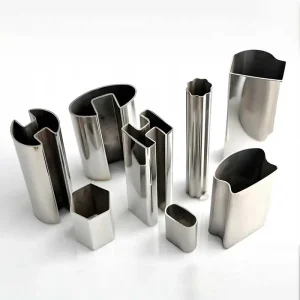
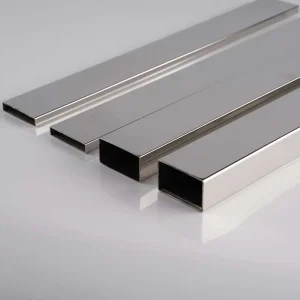
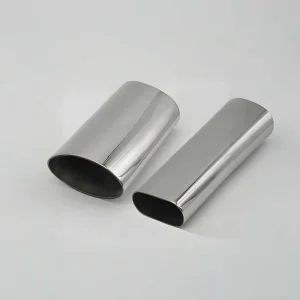
Extending far beyond basic round tubes: flat oval (15x30 mm), wide elliptical (20x40 mm), slotted profiles with silicone noise-dampening strips, and concealed LED-channel configurations for integrated millwork lighting.
Direct supply from China's primary raw-strip clusters bypasses trading markups. Zero corrosion warranty claims, eliminated re-plating costs, and 100% recyclable metallic scrap drastically reduce the total cost of ownership (TCO).
Capitalizing on Southern China's premier metallurgical cluster to drive lean delivery, mill-level chemical traceability, and high automated throughput.
Automated high-frequency TIG and Plasma welding run continuously at up to 35 meters per minute, featuring in-line seam annealing and internal planishing that eliminate internal bead height.
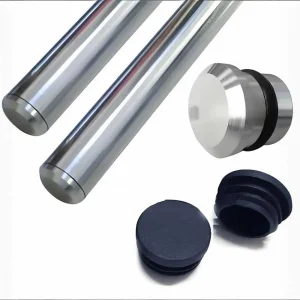
Dual-axis optical micrometer arrays maintain outside diameter tolerances within ±0.05 mm and wall gauge accuracy within ±0.03 mm, guaranteeing seamless press-fit assembly with die-cast rod flange ends.
We roll exclusively from virgin refined hot/cold coil master lots produced by TISCO, Baosteel, and POSCO. Every production heat is matched to an authentic 3.1 Mill Test Certificate guaranteeing chemical composition.
Over 500 sets of calibrated roll-forming dies exist in-house for round, flat-oval, elliptical, and track profiles. Custom cross-section profiles require only 10–14 days for complete EDM tool fabrication.
Selecting the exact alloy profile and structural geometry to satisfy specific load limits, corrosive atmospheres, and architectural aesthetic demands.
Wardrobe rod failure is characterized by elastic deflection under concentrated garment hanger loads rather than tensile rupture. A closet hanging rod behaves mechanically as a simply supported beam with uniformly distributed load (w) plus possible central point loads (P). The maximum mid-span deflection (δmax) is determined by the classic elastic formula:
δmax = (5 · w · L4) / (384 · E · I)
Where L is the unsupported clear span, E is the modulus of elasticity (200 GPa for AISI 304 vs. ~70 GPa for 6063 Aluminum), and I is the Second Moment of Area. Because steel's Young's Modulus is nearly three times that of aluminum, stainless steel closet rod tubing maintains straightness over wider spans without mid-brackets. By switching to an oval geometry (e.g., 15x30 mm) oriented with its major axis vertically, the moment of inertia along the load axis is increased by up to 48% over a round tube of equivalent perimeter, providing greater load capacity while minimizing raw metal weight.
| Alloy Grade | Key Chemistry | Yield / Tensile Strength | Corrosion Resistance | Ideal Storage Application |
|---|---|---|---|---|
| High-Cu 201 (Decorative Standard) |
1% Ni, 13–15% Cr, 1.2–1.8% Cu, 8–10% Mn | Yield: ≥260 MPa Tensile: ≥580 MPa |
Medium indoors; passed 48h neutral salt spray test. | Residential modular closets, retail display racks, budget flat-pack furnishings in climate-controlled indoor settings. |
| AISI 304 (Commercial Workhorse) |
8.0–10.5% Ni, 18.0–20.0% Cr, ≤2.0% Mn | Yield: ≥205 MPa Tensile: ≥520 MPa |
High resistance; passed 120–200h neutral salt spray test. | High-end residential millwork, hotel wardrobes, healthcare patient room closets, coastal residential developments. |
| AISI 316L (Marine / Medical Spec) |
10.0–14.0% Ni, 16.0–18.0% Cr, 2.0–3.0% Mo | Yield: ≥220 MPa Tensile: ≥520 MPa |
Ultra-high resistance; passed 500h+ neutral salt spray test. | Luxury superyacht wardrobes, oceanfront resort villas, hospital sterile storage units, humid spa locker systems. |
Wardrobe aesthetic requirements vary across residential, contract, and bespoke commercial installations. Our manufacturing plant operates four automated continuous finishing bays capable of executing:
Real-world applications across hotel suites, commercial display architecture, luxury wardrobes, and healthcare institutions.
Five-star hotel chains require silent-glide, PVD-tinted oval tubes that match door levers and lighting trim. Seam-free geometry eliminates snagging on silk or wool fabrics.
Apparel retail environments subject rods to heavy hanger loads and constant sliding wear. Hardened 304 profiles prevent groove wear and preserve shop visual standards under constant use.
Hospital changing suites and laboratory gowning rooms demand non-porous stainless hardware that withstands frequent wipe-downs with harsh quaternary ammonium and chlorine disinfectants.
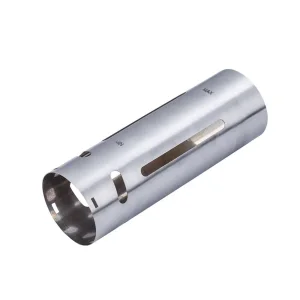
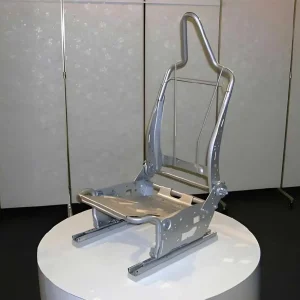
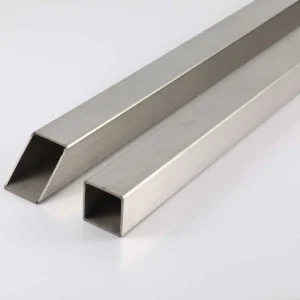
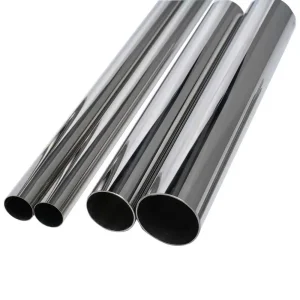
Specialty stainless hollow sections tailored for home storage, sanitary applications, medical furniture, and mechanical structures.
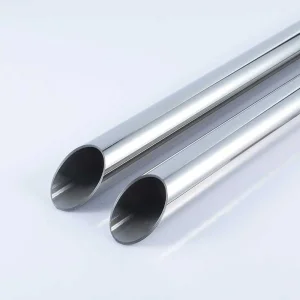
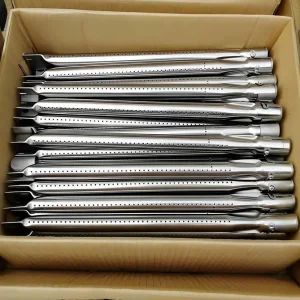
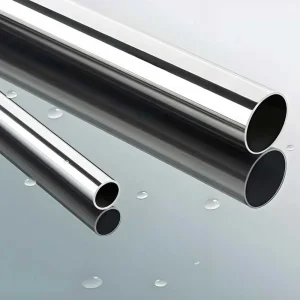
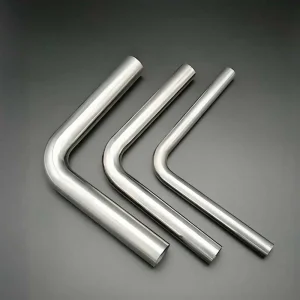
Authoritative metallurgical responses directly addressing the technical, logistical, and commercial inquiries of B2B procurement managers.
Chrome plating on carbon steel inevitably scratches under regular metal-hanger friction. Humidity and atmospheric oxygen then penetrate micro-fissures in the coating, causing rust and flaking. Extruded aluminum, while corrosion-resistant, possesses only one-third the modulus of elasticity of stainless steel (70 GPa vs 200 GPa), leading to visible mid-span sagging under standard wardrobe loads. Austenitic stainless steel delivers both permanent corrosion resistance and high flexural stiffness.
For an outside diameter of 25.4 mm with a 1.2 mm wall thickness in Grade 304, the unsupported span can extend to 1,000 mm while supporting up to 40 kg with less than 2.5 mm of elastic deflection. For spans between 1,200 mm and 1,500 mm, we recommend increasing the wall gauge to 1.5 mm, opting for a 32 mm OD profile, or switching to an oval 15x30 mm section to avoid center supports.
Yes. In addition to standard export shipping lengths (such as 3,000 mm or 5,800 mm for container loading), we offer automated high-speed cold-saw cut-to-length processing. We achieve length tolerances within ±0.3 mm with dual-end rotary deburring, allowing custom cabinet makers to directly install rods on modular assembly lines without additional cutting or clean-up.
Every single finished tube is protected along its entire length with an co-extruded peelable PE film or poly-mesh protective sleeve. Bundles are then vacuum-wrapped in moisture-proof woven composite bags and packed into rigid, export-compliant fumigated plywood cases or steel cradles to prevent impact damage and rubbing during ocean transit.
High-copper 201 alloys replace a portion of the nickel content with manganese and copper (typically 1.2% to 1.8% Cu). This preserves the austenitic microstructure and maintains high ductility for bending and stamping, while significantly reducing raw material costs. For indoor, dry residential closet applications, high-copper 201 delivers performance comparable to 304 at a lower cost per meter.
For common tooling dimensions (such as 25 mm, 32 mm round, and 15x30 mm oval) with brushed or mirror finishes, our MOQ is 500 kg per size, with production completed within 12 to 15 business days. Custom cross-sections, special PVD architectural colors, or custom laser punching require a 1,000 kg MOQ and 20 to 25 business days from drawing approval.