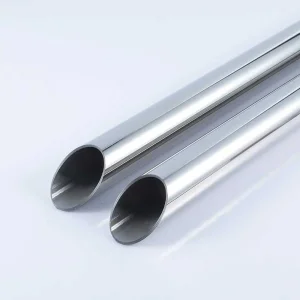
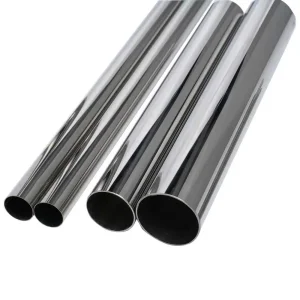
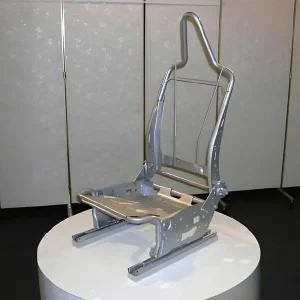
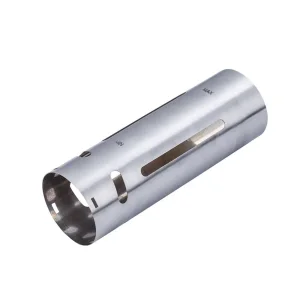
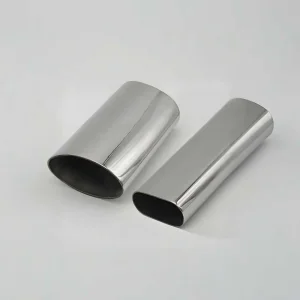
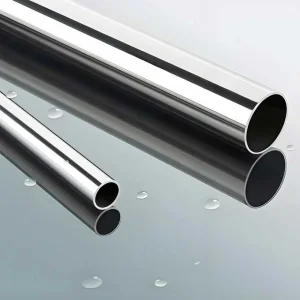
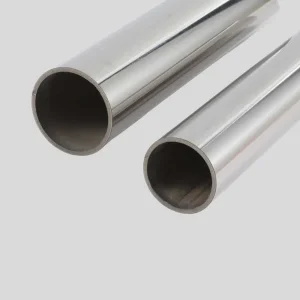
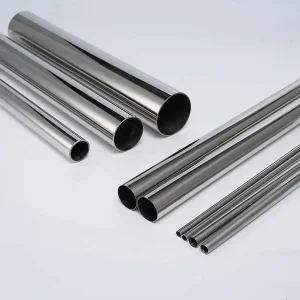
Engineered to ASTM A554, A249, and A269 standards with superior mirror (600#-800# Grit), satin, and specialized surface finishes.
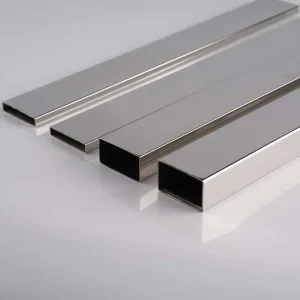
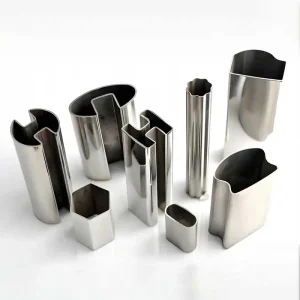
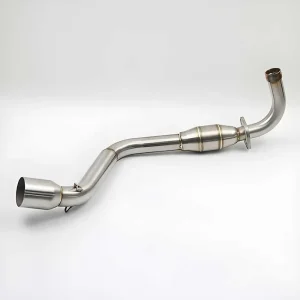
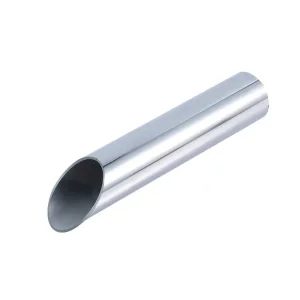
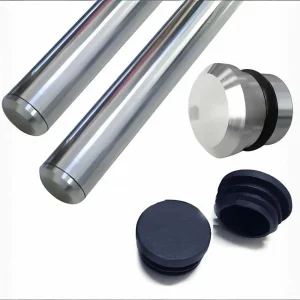
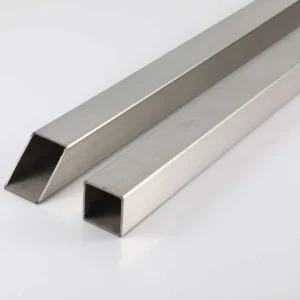
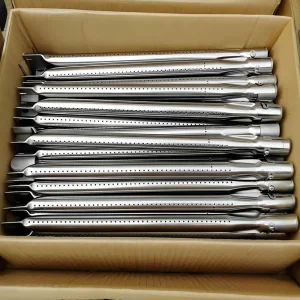
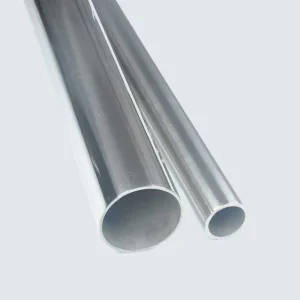
Understanding how modern metallurgical processing, continuous multi-pass automated grinding, and specialized alloy chemistry combine to create zero-defect reflective tubing for international industrial procurement.
High polish tubing is defined by micro-inch surface topology. Modern Chinese mills utilize real-time laser profilometry to guarantee surface roughness values as low as Ra ≤ 0.05 μm (2 μ-in), eliminating bacterial anchor points and microscopic micro-cracks.
Through state-of-the-art high-frequency TIG, Plasma, and Laser welding coupled with online internal bead flattening (planishing), seam integrity reaches 100% parent metal strength with smooth mechanical transitions that undergo mirror finish polishing without phantom lines.
Manufactured strictly according to ASTM A554, ASTM A249, ASTM A269, and EN 10217-7. Every batch undergoes destructive flattening, flaring, tensile testing, and eddy current defect detection prior to global shipment.
| Grade / Alloy | Chemical Composition Key Focus | Standard Surface Finish | Roughness Average (Ra) | Primary Global Application |
|---|---|---|---|---|
| AISI 304 / 304L | 18% Cr / 8% Ni (Low Carbon) | 600# - 800# Mirror / Satin 320# | Ra 0.08 - 0.15 μm | Architectural Balustrades, Sanitary Fixtures, Food Racks |
| AISI 316 / 316L | 16% Cr / 10% Ni / 2-3% Mo | Super Mirror 800# / PVD Coated | Ra ≤ 0.05 μm | Marine Hardware, Medical Equipment, Coastal Architecture |
| Ferritic 409L / 439 | 11-18% Cr / Titanium Stabilized | Bright Annealed / Polished No.4 | Ra 0.20 - 0.35 μm | Automotive Exhaust Systems, Heat Exchangers, Mufflers |
| Austenitic 201 (J4/J1) | High Copper / Manganese Substitution | Mirror 400# - 600# | Ra 0.10 - 0.20 μm | Indoor Furniture, Home Storage Racks, Decorative Trim |
Quantifiable operational efficiency and capacity provided by top-tier Foshan and Guangdong stainless steel production clusters.
The convergence of complete industrial clusters, raw material supply security, and state-of-the-art automated surface polishing technology creates unparalleled value for international buyers.
Located in the heart of China’s premier stainless steel hub, Chinese factories benefit from immediate access to premium mother coils from prime mills (TISCO, POSCO, Baosteel), reducing lead times and raw material freight overheads while maintaining strict metallurgical traceability.
Unlike traditional manual buffing which introduces human inconsistency, leading Chinese manufacturers deploy continuous 16-head to 32-head automated polishing lines utilizing hemp wheels, cotton wheels, and liquid abrasive compounds for uniform 800# mirror output.
To preserve structural durability and internal purity, specialized extrusion lines introduce high-purity nitrogen purge gas inside the tube during welding. This prevents internal oxidation, eliminating the dreaded "black weld line" and internal rust points.
From chemical passivation to PVD color deposition—how modern surface physics maximizes corrosion resistance and aesthetic longevity.
While mechanical high-polishing removes macro-surface flaws down to 600#-800# grit visual perfection, Electro-Polishing (EP) chemically dissolves microscopic peaks, raising the Chromium-to-Iron ratio on the outermost passive layer. This process is essential for ultra-clean medical, pharmaceutical, and high-salinity marine environments requiring zero particulate adhesion.
Physical Vapor Deposition (PVD) allows high-polish stainless steel tubing to assume durable, brilliant metallic tones such as Rose Gold, Black Titanium, Champagne Gold, and Sapphire Blue. Applied inside a vacuum chamber, the 0.3-0.5 μm ceramic titanium layer bonds at an atomic level, offering outstanding scratch resistance, UV stability, and anti-fingerprint properties.
Customized stainless steel tubing engineered to resolve specific operational challenges across high-stress industrial and commercial sectors.
Architectural installations require zero distortion along the tube axis. ASTM A554 304/316 mirror-polished round and square tubes provide structural strength while withstanding harsh outdoor weather conditions and urban pollution.
Serving as high-grade substrate for electroplating or direct mirror finish, precision-drawn sanitary tubing prevents pinhole corrosion in humid bathroom environments, guaranteeing micro-smooth surfaces for flawless liquid flow.
Utilizing high-temperature resistant ferritic 409L and 439 alloys alongside 304, these tubes undergo precise CNC mandrel bending without wall thinning or seam cracking, offering optimal performance for mufflers and tailpipes.
Medical environments demand strict antibacterial hygiene and effortless cleaning. High-polish medical grade 304/316L grab bars and IV pole tubes resist hospital disinfectants, chemical washes, and physical wear.
Low Total Indicator Runout (TIR) stainless tubing ensures whisper-quiet high-speed conveyor operation in automated sorting centers, preventing belt wear while offering full wash-down compliance for food processing lines.
Formulated with 2-3% Molybdenum, 316L high-polish tubing passes 500+ hours of continuous neutral salt spray (ASTM B117), offering robust defense against chloride pitting in marine, yachting, and oceanfront installations.
A structured step-by-step roadmap for procurement managers, technical engineers, and international distributors sourcing stainless steel tubing from China.
Before slitting coils, engineering teams audit critical parameters including Outside Diameter (OD), Wall Thickness (WT), seam location requirements, bending radius limits, and exact surface roughness (Ra) targets.
Raw steel strips undergo Spectrometric Analysis to verify Chromium, Nickel, Molybdenum, and Carbon ratios. Mechanical tests verify yield strength, tensile strength, and minimum 35% elongation for smooth bending.
Real-time Eddy Current testing identifies micro-voids or weld seam interruptions. Non-contact laser gauges log OD tolerance every millisecond, auto-rejecting tubing that strays beyond set thresholds.
High-polish surfaces are preserved using individual PE protective sleeves, woven plastic wraps, and heavy-duty wooden or steel-framed crates to ensure pristine delivery after ocean transit.
Direct answers from technical directors and metallurgical engineers to help resolve common procurement challenges.
The grit rating represents the abrasive fineness used during sequential polishing passes. 400# produces a clear reflective surface with faint directional buffing marks. 600# is standard high-polish mirror tubing, offering clear reflections suitable for architectural handrails and furniture. 800# is Super Mirror finish (Ra ≤ 0.05μm), creating an ultra-smooth, distortion-free reflective surface ideal for sanitary products, luxury trim, and cleanrooms.
Tea-staining occurs when airborne chlorides (such as sea salt or chemical cleaners) attack the passive chromium oxide layer of 304 stainless steel. In coastal areas or high-humidity environments, we recommend specifying Grade 316L, which contains 2-3% Molybdenum to prevent chloride pitting. Additionally, proper passivation after polishing removes free iron contaminants introduced during fabrication.
Yes. Achieving clean bends without surface cracking or orange-peeling requires soft-annealed strip with elongation levels exceeding 40%, controlled wall thickness consistency, and positioning the weld seam at 90 degrees to the bend plane (along the neutral axis). Using internal mandrels during CNC bending maintains circularity while protecting the high-polish finish.
Standard ASTM A554 outside diameter (OD) tolerance is ±0.10 mm. Precision cold-drawn or calibrated tubing lines achieve tighter tolerances down to ±0.05 mm, with wall thickness variations held within ±8%. Straightness is maintained to 1 mm/meter, while squareness of square and rectangular profiles is controlled to within ±0.5 degrees.
For standard round, square, and rectangular tubing in 201, 304, or 316L, MOQ typically starts at 500 kg per size. Custom special-shaped profiles (such as oval, D-shape, or slotted tubes) or specialized PVD colors usually require a 1-ton MOQ. Production lead time averages 15 to 20 days after drawing approval, with accelerated options available for catalog profiles.
Explore our specialized stainless steel tubing lines engineered for sanitary, automotive, medical, and structural applications.