Explore high-performance ASTM A554 304/316L mirror polished, embossed, sanitary, and structural tubes manufactured to tight tolerances.
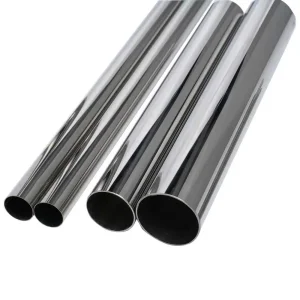
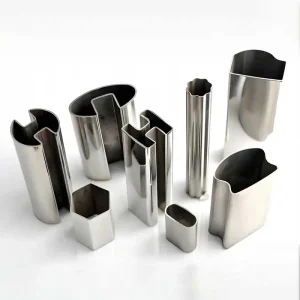
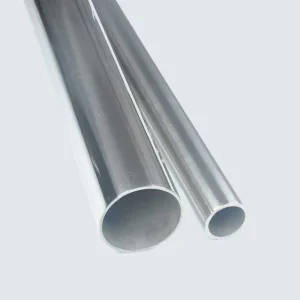
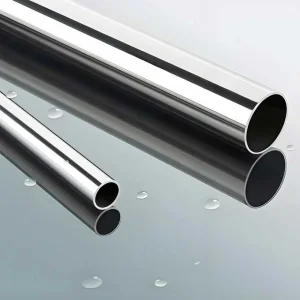
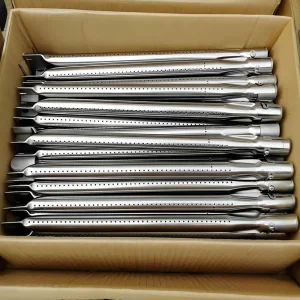
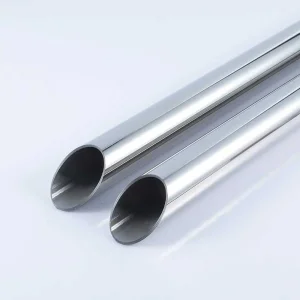
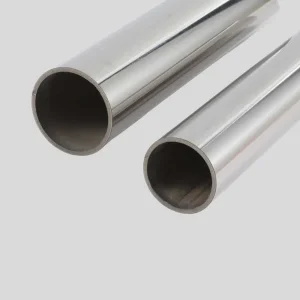
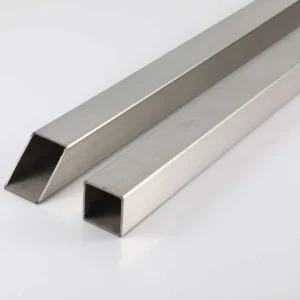
In the evolving domain of architectural metalwork, luxury interior design, sanitary fitting manufacturing, and high-spec structural engineering, mirror finish embossed stainless steel pipes have transitioned from niche decorative elements to mainstream high-value components. By fusing super-mirror optical clarity (8K / No.8 finish) with 3D tactile micro-embossing (leather grain, diamond weave, linen pattern, wood grain, or customized geometric relief), these specialized tubes solve a double challenge: providing high optical reflection while concealing fingerprint marks, surface scratches, and structural micro-abrasions.
As global procurement buyers in North America, Europe, the Middle East, and Southeast Asia seek competitive edges, China—specifically the Foshan stainless steel industrial cluster in Guangdong—has positioned itself as the global hub for precision-engineered mirror embossed welded tubing. Chinese manufacturers leverage vertically integrated cold-rolling mills, automated online high-frequency plasma/TIG welding lines, and automated multi-pass mechanical and electrolytic polishing technologies. This infrastructure enables output rates that lower unit costs by 25% to 40% compared to Western European counterparts while holding dimensional tolerances within tight limits of ±0.05 mm.
This whitepaper analyzes the metallurgical mechanics of mirror finish embossing, evaluates Chinese factory efficiency metrics, outlines application scenarios across diverse sectors, presents procurement decision frameworks under ASTM A554 guidelines, and responds to standard engineering queries.
Achieving a durable mirror finish embossed pipe requires controlled material selection and sequential multi-stage processing. Standard ornamental tube production often suffers from weld-seam shadow lines, surface orange-peeling, grain distortion during embossing, and localized stress corrosion cracking (SCC) if raw coil chemistry or mechanical work-hardening is improperly managed.
The manufacturing process starts with prime cold-rolled stainless steel strip sourced from mills such as TISCO, POSCO, or Baosteel. Grade selection dictates environmental longevity and mechanical formability:
To maintain optical purity without structural degradation, premier Chinese mills operate strict 10-stage quality-controlled pipelines:
Coils are slit using carbide rotary knives with zero-burr edge tolerances to ensure uniform joint fit-up during automated inline welding.
Welded under internal and external Argon/Nitrogen gas shields to eliminate seam oxidation, preventing internal black oxidation lines.
Multi-stage progressive grinding using 180#, 240#, 320#, 400#, and 600# sisal/cloth wheels with specialized green chromium oxide polishing paste.
Hardened tool-steel die rollers apply hydraulic pressure (up to 15 tons) to press 3D relief patterns into the mirror-polished tube surface.
Anodic electrochemical bath removes embedded tramp iron micro-particles, yielding a passive Chromium-Oxide ($Cr_2O_3$) protective layer.
100% online laser sensors track OD roundness and straightness before applying PE protective film to safeguard mirror surfaces during transport.
Global procurement directors often question why China maintains an enduring cost and speed advantage in specialized stainless steel tube fabrication. The answer lies in the concentrated industrial cluster ecosystem of Foshan, Guangdong.
Ecosystem Insight: Foshan houses over 3,000 raw material suppliers, precision slitting centers, roll-forming die makers, polishing machine manufacturers, and surface-treatment facilities within a 30-kilometer radius. This proximity reduces logistical lead times for custom tooling from weeks to days.
Key efficiency advantages include:
The table below outlines international engineering parameters for mirror finish embossed stainless steel pipes per ASTM A554 standards:
| Parameter | Standard Commercial Grade | VertexFlow Precision OEM Grade | Testing Standard |
|---|---|---|---|
| Outside Diameter (OD) | Φ 9.5 mm – Φ 219.1 mm (±0.15 mm) | Φ 6.0 mm – Φ 219.1 mm (±0.05 mm) | In-line Laser Micrometer |
| Wall Thickness (WT) | 0.4 mm – 3.0 mm (±10%) | 0.35 mm – 4.0 mm (±5%) | Ultrasonic Thickness Gauge |
| Surface Roughness (Ra) | Mirror 600# (Ra ≤ 0.1 μm) | Super Mirror 8K (Ra ≤ 0.02 μm) | Surface Profilometer |
| Embossing Pattern Depth | 0.10 mm – 0.35 mm (±0.05 mm) | 0.08 mm – 0.50 mm (±0.02 mm) | Optical 3D Laser Profiling |
| Straightness Tolerance | 2.0 mm / meter | ≤ 0.5 mm / meter | Dial Indicator Alignment |
| Salt Spray Performance | 201: 48 hrs | 304: 200 hrs | 304: 300 hrs | 316L: 500+ hrs | ASTM B117 Neutral Salt Spray |
| Weld Seam Quality | Standard Bead (Visible internal) | Planished & Nitrogen Cooled (Seamless look) | Eddy Current & Flattening Test |
The functional versatility of mirror embossed pipe makes it a multi-industry component:
In high-traffic commercial spaces—such as airport terminals, shopping malls, hotel lobbies, and civic buildings—handrails are exposed to continuous contact. Traditional 600# mirror polished tubes show oils and smudges immediately. Embossed mirror patterns diffuse light reflections, concealing smudges while providing improved tactile grip for user safety.
Bathroom OEMs utilize mirror embossed 304/316L tubes as substrate materials for premium PVD-coated shower arms, towel rails, and grab bars. Micro-embossing acts as a functional design detail while preventing water-spot accumulation in humid environments.
Standard smooth rollers used in food parcel sorting and cleanroom material handling can accumulate static electricity or slip when wet. Embossed stainless steel roller shells provide mechanical traction without requiring rubber coatings that crack, degrade, or harbor bacterial contamination.
Medical safety grab bars and hospital bed railings require non-slip surfaces that tolerate frequent disinfection with harsh quat or chlorine sanitizers. 316L mirror embossed tubing offers a non-porous hygienic surface with textured grip, supporting infection-control standards.
As sustainable manufacturing regulations tighten globally, stainless steel tube production is evolving. Procurement teams should anticipate three core trends shaping China's export market:
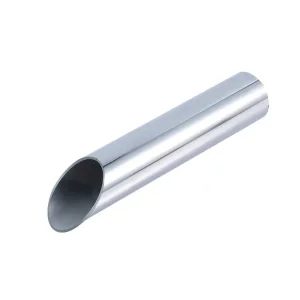
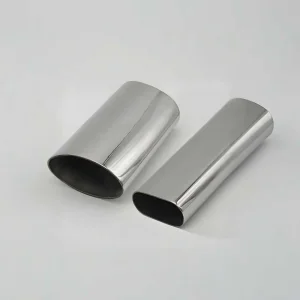
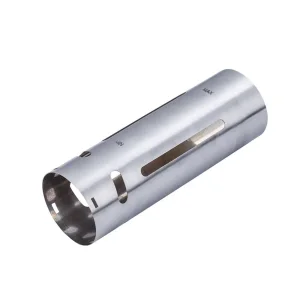
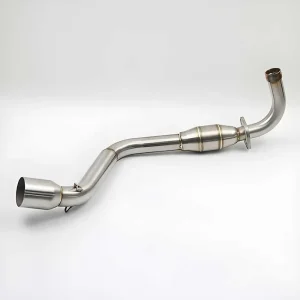
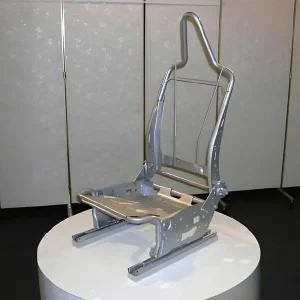
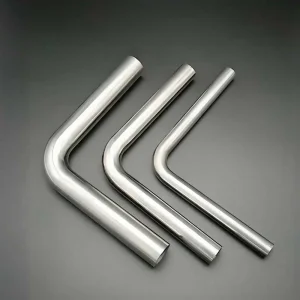
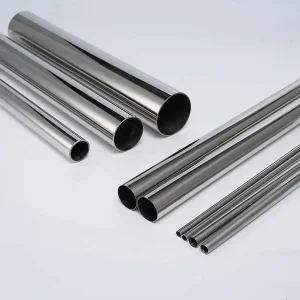
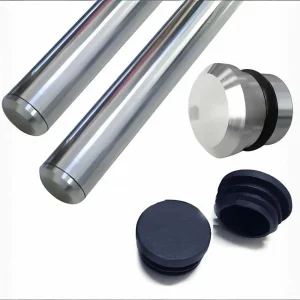
Discover specialised OEM components, CNC-machined tubes, automotive exhaust profiles, structural racks, and architectural hardware fittings.
Comprehensive engineering insights and purchasing guidelines compiled by VertexFlow metallurgical specialists.