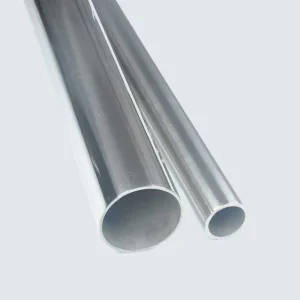
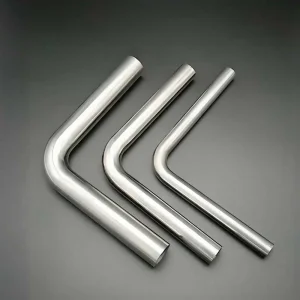
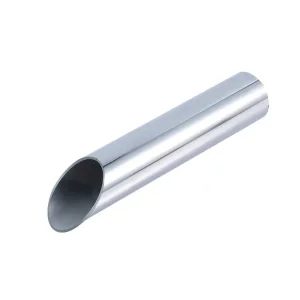
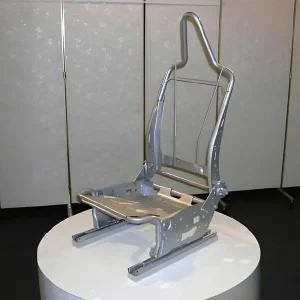
Direct factory inventory and engineered tubing products engineered to demanding mechanical, sanitary, and structural specs.
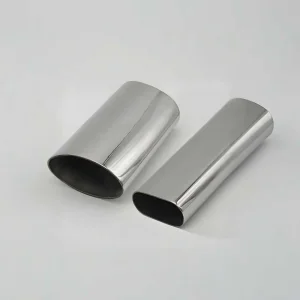
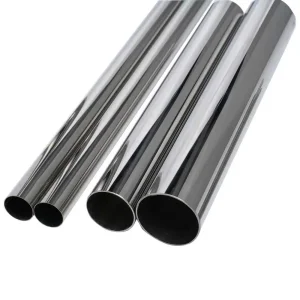
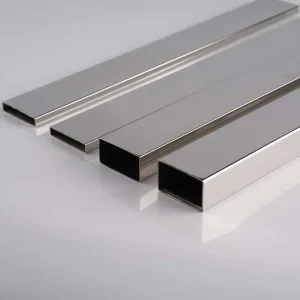
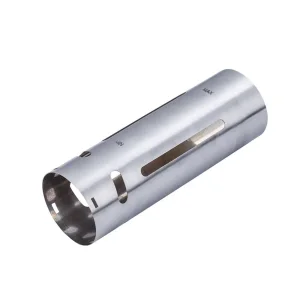
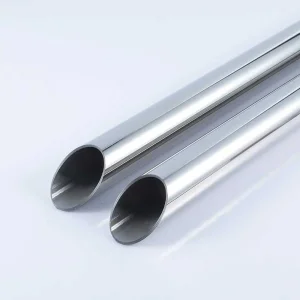
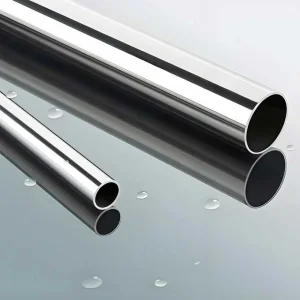
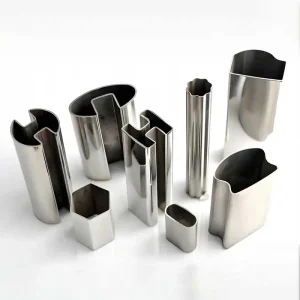
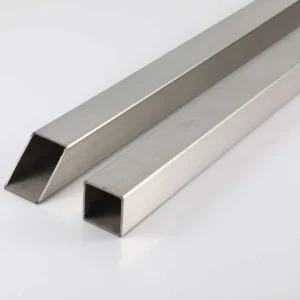
An authoritative analysis of global supply chain dynamics, metallurgical composition selections, and surface engineering performance for polished stainless steel piping in critical sectors.
The global demand for high-precision, polished stainless steel tubing has undergone a fundamental transformation. Driven by stringent hygiene regulations in biopharmaceuticals, elevated aesthetic standards in modern architecture, and high-fatigue requirements in automotive and industrial automation, enterprise procurement teams can no longer view stainless tubing as a commodity. Choosing the optimal China Polished Stainless Steel Pipe Manufacturer requires evaluating raw material sourcing, plasma and laser welding mechanics, in-line eddy current verification, and micron-level surface topography control.
As premier manufacturers located in Foshan, Guangdong—the core hub of Chinese stainless steel engineering—we leverage advanced metallurgy and vertical integration to provide comprehensive structural, sanitary, and decorative solutions tailored for OEMs and global Tier-1 buyers.
| Alloy Grade | Nominal Chemical Composition | Tensile Strength (MPa) | Yield Strength (MPa) | Pitting Resistance (PREN) | Primary Industrial Applications |
|---|---|---|---|---|---|
| AISI 201 (High Cu) | 15% Cr, 1.5% Ni, 9.5% Mn, 1% Cu | ≥ 650 | ≥ 275 | ~ 15.5 | Indoor furniture, home storage systems, decorative trim |
| AISI 304 / 304L | 18% Cr, 8% Ni, ≤ 0.03% C (304L) | ≥ 520 | ≥ 205 | ~ 19.0 | Food processing, sanitary fittings, architectural handrails |
| AISI 316 / 316L | 16.5% Cr, 10% Ni, 2.1% Mo | ≥ 530 | ≥ 220 | ≥ 23.5 | Marine grab bars, coastal balustrades, pharmaceutical lines |
| Ferritic 409L / 439 | 11% Cr, Ti Stabilized, ≤ 0.03% C | ≥ 380 | ≥ 175 | ~ 12.0 | Automotive exhaust manifolds, muffler assemblies, thermal shells |
Understanding the physics of mechanical polishing, electropolishing, and Physical Vapor Deposition (PVD) to eliminate micro-cavities and maximize life cycles.
Our progressive multi-pass abrasive belts gradually refine surface roughness. Starting from 180# coarse satin grit up to 600# optical mirror finish, mechanical polishing removes weld seam reinforcement and microscopic peaks, yielding specular reflectance with controlled Ra levels.
For sanitary and ultra-clean applications, mechanical polishing is augmented with electrochemical dissolution. Electropolishing preferentially removes iron ions from surface peaks, leaving a chromium-enriched passive layer ($\text{Cr}_2\text{O}_3/\text{FeO} > 2.5$) that resists chloride pitting and microbial adhesion.
Combining structural stainless steel strength with architectural luxury, our physical vapor deposition (PVD) vacuum chambers deposit titanium nitride (TiN) and titanium carbonitride (TiCN) films. This produces durable champagne gold, rose gold, gunmetal black, and brass hues with surface hardness exceeding 2000 HV.
A primary failure mode in welded stainless steel pipe is weld line decay caused by atmospheric contamination during high-temperature joining. Our plant employs continuous Inner Nitrogen Shielding (purity ≥ 99.999%) combined with high-frequency plasma welding. By excluding oxygen from the tube interior during solid-state cooling, we prevent chromium carbide precipitation ($\text{Cr}_{23}\text{C}_6$) along grain boundaries, eliminating heat-affected zone (HAZ) sensitization and ensuring complete corrosion resistance across the weld.
How integrated raw coil slitting, digital ERP quality tracking, and automated inline laser metrology drive unbeatable lead times and structural stability.
Our 12,000 m² production site is positioned in Shishan Town, Foshan—the epicenter of global stainless steel processing. Direct supply channels with primary steel mills (TISCO, POSCO, Baosteel) guarantee raw material chemistry compliance, certified melt histories, and low fluctuation in raw coil pricing.
Across our 43 continuous roll-forming mills, manual inspection is replaced with real-time digital quality control loops. Every millimeter of pipe undergoes continuous non-destructive inspection prior to final bundled packing.
Charting the next decade of advanced stainless steel pipe production: sustainability, zero-discharge manufacturing, and AI-driven predictive metallurgy.
Traditional polishing processes produce hazardous slurry and dust. Our roadmap incorporates closed-loop filtration systems and water-recycling polishing cells that eliminate particulate emissions while recovering 98% of abrasive media for sustainable manufacturing.
Moving beyond standard nitric acid pickling, next-generation passivation utilizes citric-organic formulations combined with ultrasonic agitation, forming ultra-dense nano-passive films that double salt-spray endurance without toxic effluent.
Integrating deep learning models directly into continuous roll-forming lines allows automatic adjustment of roll-pressure and weld power based on real-time strip thickness variation, ensuring flawless cross-sectional geometry.
How leading international engineering firms, furniture OEMs, and hardware distributors streamline Total Cost of Ownership (TCO) with our integrated fabrication capabilities.
Importing mill-length pipes often shifts heavy labor, scrap loss, and equipment costs onto overseas buyers. We resolve this by providing comprehensive in-house OEM secondary processing, transforming raw pipes into finished components:
Procurement leaders evaluate suppliers not merely on purchase price, but on lifetime landed costs. Our direct factory framework delivers quantifiable efficiency gains across your procurement chain:
Rigorous quality assurance, certified metallurgical testing, and multi-national regulatory compliance for seamless import approval.
Every shipment from our factory is backed by comprehensive quality documentation adhering to international standards including ASTM A554 (Ornamental & Structural Tubing), ASTM A249 / A269 (Sanitary & Heat Exchanger Tubing), EN 10217-7, and JIS G3446. We provide authentic EN 10204 3.1 Mill Test Certificates (MTC) with every heat lot.
Full spectrum chemistry breakdown (C, Si, Mn, P, S, Cr, Ni, Mo) coupled with tensile strength, yield strength, percentage elongation, and hardness (HRB/HV) validation.
Flattening tests, flaring tests, reverse bending tests, and weld seam micro-structure analysis to guarantee zero seam cracking during severe customer bending.
Full compliance with EU REACH regulations, RoHS heavy metal limits, FDA food-contact guidelines, and CE structural execution standards for global market access.
Expert insights directly from our quality engineering team addressing common manufacturing, metallurgical, and ordering inquiries.
Surface consistency begins with raw strip coil cold-rolling precision. We source exclusively from prime mills with minimal thickness variation. During polishing, our automatic multi-head polishing lines utilize constant-pressure pneumatic tensioners and monitored abrasive paste dosing. Every master bundle is verified using portable digital surface roughness meters (measuring Ra, Rz) and gloss meters across 5 distinct points per pipe length.
While 304 (18% Cr, 8% Ni) provides excellent corrosion resistance in urban and indoor environments, airborne chlorides near ocean coastal sites or in chlorinated swimming facilities attack its passive oxide layer, leading to pitting and brown "tea-staining". Grade 316L contains 2.0-2.5% Molybdenum, raising its Pitting Resistance Equivalent Number (PREN) from ~19 to >23.5. Combined with full weld passivation, 316L easily passes 500+ hours of neutral salt spray testing without surface rust.
Weld cracking stems from three main factors: high residual stress in un-annealed welds, excessive weld bead reinforcement, or improper seam placement during bending. We resolve this by supplying fully planished and inline-annealed tubing with controlled elongation (≥ 40%). Additionally, we advise fabricators to position the weld seam along the neutral axis (at 90° to the plane of bend) to minimize tensile elongation strain across the joint.
Yes. Our specialized high-copper 201 grade contains elevated copper (~1.0-1.5%), which lowers work-hardening rates and increases ductility for tight-radius bending. For dry indoor environments (such as living room table frames, clothes racks, and display stands), high-copper 201 offers a mirror polish equivalent to 304 at roughly 30-40% lower material cost. However, for humid kitchens, bathrooms, or outdoor exposure, 304 or 316L remains mandatory.
For standard ASTM A554 round tubing, outer diameter tolerance is held within ±0.10 mm. On precision customer runs (such as conveyor roller shells and plating substrates), we achieve ±0.05 mm on OD and Total Indicator Runout (TIR) ≤ 0.2 mm. For square and rectangular profiles, squareness of side faces is controlled to ±0.5°, and corner radius can be customized from sharp right-angles to standard rounded radii.
Our standard MOQ is 500 kg per outer diameter and wall thickness for catalog round and square tubing. For custom special-shaped profiles or custom PVD color runs, the MOQ is 1,000 kg. Because we maintain over 500 ready-to-use roll-forming tooling sets, standard manufacturing lead time is 15 business days following sample/drawing approval.
Automotive, appliance, mechanical roller, and architectural profile inventory ready for global export.