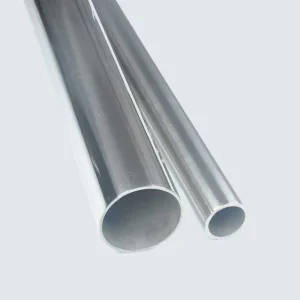
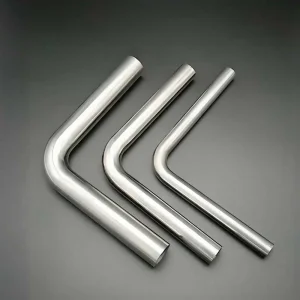
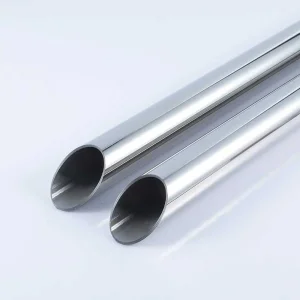
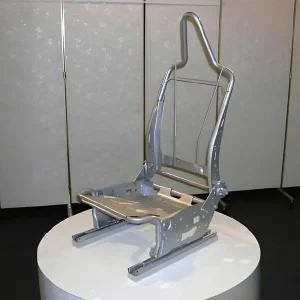
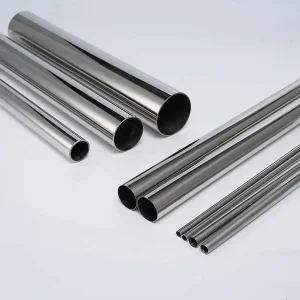
Explore our flagship precision welded tubing portfolio engineered for mechanical rollers, sanitary systems, automotive structures, and heavy-duty conveyor machinery.
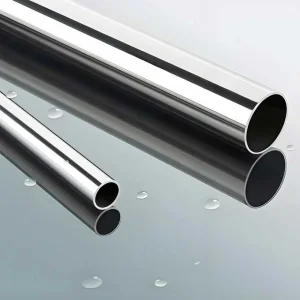
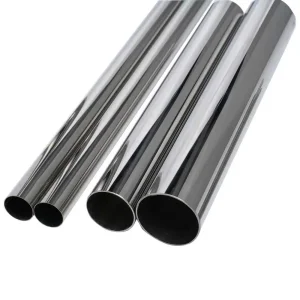
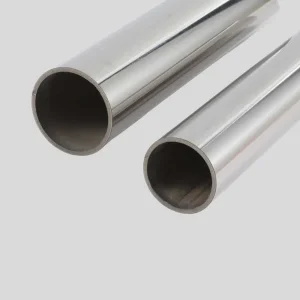
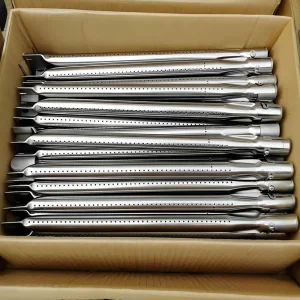
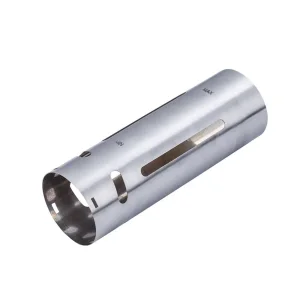
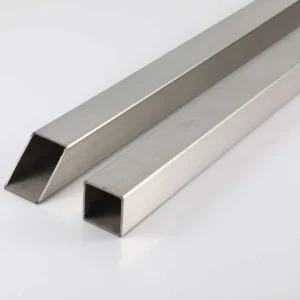
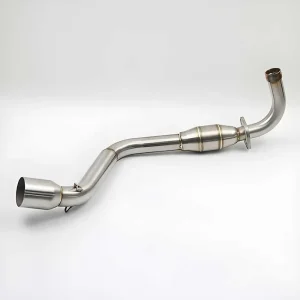
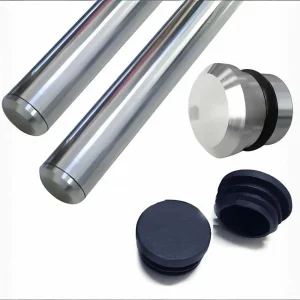
In modern high-speed material handling, bulk conveying, automated warehousing, and specialized mechanical processing, roller shell tubing represents a critical structural component where mechanical precision dictates operational longevity.
Conveyor rollers operating above 500 RPM suffer exponential bearing wear and structural vibration if the roller shell tubing exhibits non-uniform wall thickness or eccentric radial deviation. Standard structural tubing typically yields a TIR of >0.5 mm, whereas precision roller shell tubing manufactured in leading Foshan mills achieves TIR ≤ 0.05 mm through rigorous cold-drawing, seam planishing, and laser-guided sizing.
The transition from traditional seamless tubing to precision plasma/TIG welded stainless steel tubing has been accelerated by advanced inner-weld bead removal (planishing) and online infrared inspection. By conditioning the internal weld seam to an undetectable height (≤0.02 mm), bearing housings and end caps press-fit seamlessly without secondary machining.
| Performance Metric | Standard Commercial Tubing (ASTM A554) | Precision Roller Shell Tubing (VertexFlow Spec) | Impact on Conveyor Performance |
|---|---|---|---|
| Outer Diameter (OD) Tolerance | ±0.20 mm to ±0.40 mm | ±0.05 mm | Ensures precise fitment with bearing housings & reduced noise. |
| Total Indicated Runout (TIR) | 0.30 mm – 0.80 mm | ≤ 0.05 mm | Eliminates high-speed rotational vibration & extends bearing life by 300%. |
| Inner Weld Bead Height | 0.15 mm – 0.35 mm (unbeaded) | ≤ 0.02 mm (Planished/Flush) | Allows interference fit of shaft seals and end plates without reaming. |
| Straightness Deviation | 2.0 mm / meter | ≤ 0.5 mm / meter | Prevents belt mistracking and localized wear on high-speed belts. |
| Surface Roughness (Ra) | Ra 0.8 μm – 1.2 μm | Ra ≤ 0.2 μm (Mirror / Satin) | Reduces material adhesion, wear on conveyed goods, and hygienic risk. |
As logistics automation, mining efficiency, and sanitary processing elevate operational benchmarks, China's roller shell tubing manufacturers are executing critical technological shifts.
Traditional carbon steel roller shells require thick rubber lagging or galvanization to resist ambient corrosion. However, peeling zinc or degradation of rubber coatings causes frequent system downtime. Global procurement managers now favor 304, 304L, and 316L stainless steel tubing, eliminating maintenance cycles and avoiding product contamination in food, pharmaceutical, and chemical sorting lines.
E-commerce distribution centers operated by global logistics giants run conveyor lines continuously at speeds exceeding 2.5 meters per second. At these velocities, minor dimensional irregularities produce high acoustic decibels and harmonic fatigue. Modern China factories utilize in-line laser gauging and continuous eddy-current testing to guarantee high-concentricity tubing that meets strict acoustic guidelines (<65 dB).
Energy efficiency mandates require reducing the rotational mass of conveyor roller shells without sacrificing load capacity. Advanced roll-forming and work-hardening techniques allow 304 and 316L tubing with reduced wall thickness (e.g., 1.2 mm to 1.5 mm) to achieve yield strengths exceeding 310 MPa, lowering energy consumption across multi-kilometer belt systems.
International OEMs, EPC contractors, and system integrators enforce rigid qualification protocols when auditing China roller shell tubing manufacturers. Sourcing decisions hinge on verifiable technical data rather than nominal price per ton.
Procurement teams demand prime stainless steel strip sourced from accredited tier-1 steel mills such as POSCO, TISCO, and Baosteel. Re-rolled or sub-grade coil exhibits inconsistent grain structure, leading to seam splitting during press-fitting end disks. Every shipment must be accompanied by full chemical analysis (P, S, Ni, Cr content) and mechanical test certificates matching heat lot numbers.
Global buyers increasingly prefer turnkey components rather than raw 6-meter mill lengths. Premier factories in China provide value-added CNC machining directly on the tube mill line: precision length cutting (±0.3 mm), orbital end deburring, face chamfering for automated bearing insertion, internal grooving for circlips, and laser slotting for drive pins.
Whether for aesthetic architecture, sanitary food handling, or optical sensor clearance, surface finish batch consistency is crucial. Modern mills operate four-stage automated polishing heads with digital grit monitoring, ensuring Ra parameters (180# satin, 240# brushed, or 600# mirror) remain uniform across multi-container deliveries.
In coastal marine installations or chemical processing plants, microscopic surface iron contamination introduced during forming lead to rapid pitting. Premier manufacturing protocols integrate continuous online passivation or post-fabrication acid pickling to maintain a dense chromium oxide passive layer capable of clearing 500+ hours of Neutral Salt Spray (NSS) testing per ASTM B117.
Different industrial sectors require distinct material chemistries, wall profiles, and mechanical tolerances. Below is how targeted engineering solves real-world operating challenges.
Challenge: Noise pollution and premature bearing failure in high-speed package distribution hubs.
Solution: Cold-drawn 304 welded tubing with <0.05 mm TIR, precision cut-to-length, and dual-end inner chamfering. Decreases system noise levels by up to 12 dB and doubles motor drive efficiency.
Challenge: Bacterial harbor points and harsh washdown corrosion caused by aggressive cleaning chemicals.
Solution: Sanitary-grade 316L precision stainless steel tubing with internal seam planishing and Ra ≤ 0.2 μm electropolished surface. Completely eliminates crevice corrosion and micro-organism retention.
Challenge: Structural deformation under heavy impact loads and severe outdoor atmospheric corrosion.
Solution: Heavy-wall ASTM A554 304/316 structural round tubing (wall thickness up to 3.0 mm) featuring high tensile strength (>520 MPa) and nitrogen-shielded plasma weld seams for extreme fatigue endurance.
To establish frictionless trade with international buyers across North America, Europe, Australia, and Southeast Asia, top-tier Chinese manufacturers offer structured regulatory and logistical support.
Our manufacturing and quality control systems adhere to globally recognized frameworks including ISO 9001:2015 Quality Management Systems, CE compliance for European machinery integration, and FDA/REACH/RoHS chemical safety declarations. Every production batch undergoes non-destructive testing (NDT), hydrostatic testing, and pneumatic leak testing prior to container dispatch.
Industrial tubing is vulnerable to flexural bending and surface scratching during ocean freight. Standard export packaging includes individual polyethylene protective sleeving, heavy-duty honeycomb plastic wrapping, reinforced wooden boxes, or heavy-gauge iron frames engineered for forklift unloading at receiving warehouses.
The convergence of industrial IoT, smart manufacturing, and green metallurgy is redefining roller shell tubing production standards.
Next-generation conveyor systems will feature roller shell tubing embedded with thin-film piezoelectric sensors. These sensors monitor temperature, vibration, and real-time wear, broadcasting predictive maintenance data to cloud-based monitoring dashboards before structural failure occurs.
While standard stainless steel offers robust corrosion protection, severe environments (such as abrasive mining slurry or acidic chemical washdowns) benefit from physical vapor deposition (PVD) and DLC (Diamond-Like Carbon) internal/external nano-coatings, increasing surface hardness to >1800 HV.
To align with global Scope 3 emissions reporting and European Carbon Border Adjustment Mechanism (CBAM) regulations, advanced Foshan mills are transitioning toward electric arc furnace (EAF) stainless steel powered by renewable energy, reducing embodied carbon per meter of tubing by up to 45%.
Comprehensive engineering responses regarding alloy selection, tolerances, customization, and sourcing logistics.
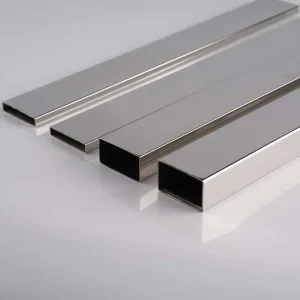
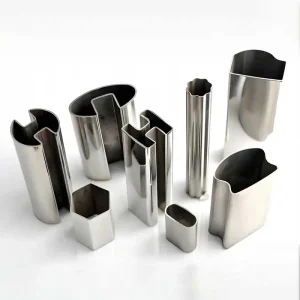
Browse our complete catalog of square, rectangular, oval, structural, and decorative stainless steel tubing manufactured under ASTM A554 and ISO quality standards.