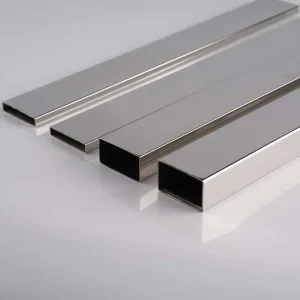
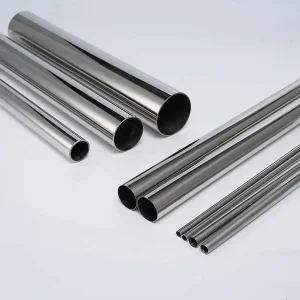
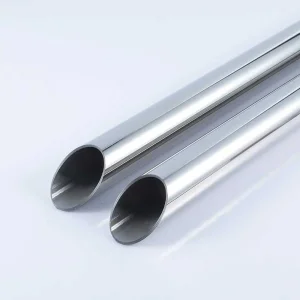
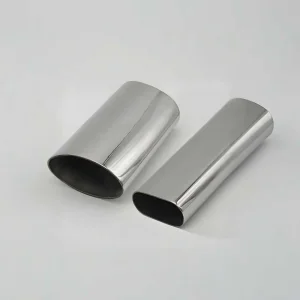
Engineered stainless tubing for medical equipment, sanitary hardware, industrial racks, and specialized OEM applications.
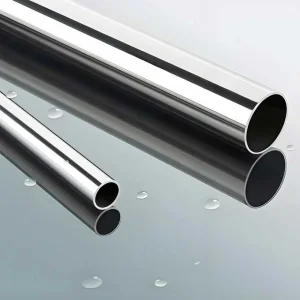
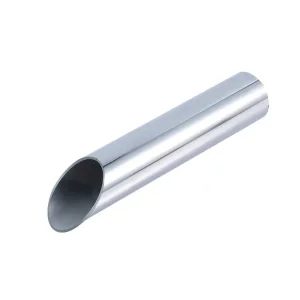
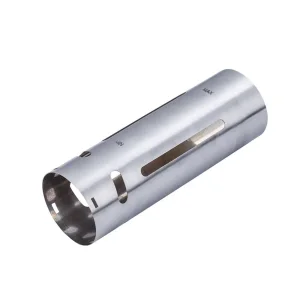
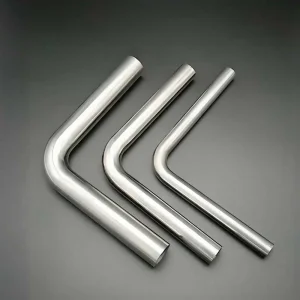
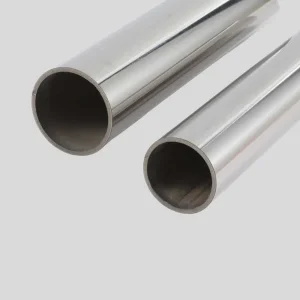
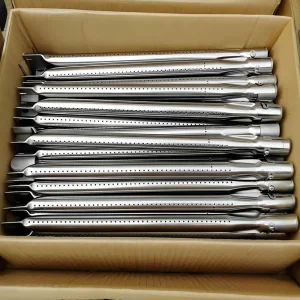
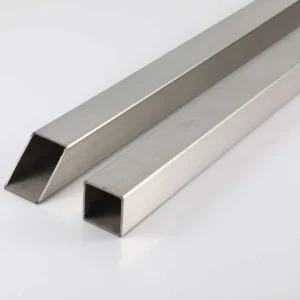
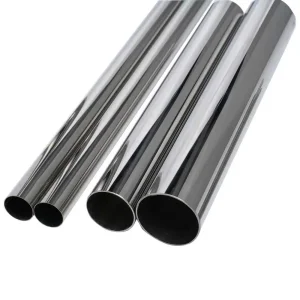
In modern industrial process engineering—spanning biopharmaceuticals, food and beverage processing, semiconductor ultra-pure fluid transport, and personal care manufacturing—the integrity of fluid-conveying pathways is paramount. Stainless steel sanitary pipes represent the gold standard for hygienic fluid systems due to their exceptional corrosion resistance, cleanability, mechanical strength, and structural integrity under rigorous thermal cycling.
Over the past two decades, China has transitioned from a high-volume commodity steel exporter to a global hub for high-precision, engineering-grade sanitary piping systems. Chinese manufacturers now operate modern cold-drawing, bright-annealing, orbital welding, and electropolishing facilities that strictly comply with international standards such as ASME BPE (Bio-Processing Equipment), ASTM A270 / A270M, DIN 11850, ISO 2037, and EN 10217-7.
Information Gain Key Takeaway: Modern Chinese sanitary pipe factories utilize advanced Argon-Hydrogen plasma welding and inline eddy-current testing coupled with full-length optical inner-bore profilometry. Sourcing managers can now achieve up to 35% total cost reduction while meeting stringent Ra ≤ 0.2 μm surface roughness specifications verified by EN 10204 3.1 certification.
This technical white paper serves as a comprehensive procurement framework for global engineering directors, quality control managers, and supply chain executives seeking to benchmark China stainless steel sanitary pipe suppliers. It covers metallurgical foundations, critical manufacturing processes, quality assurance frameworks, macro-industry solutions, and technical roadmaps shaping the industry through 2030.
The global demand for sanitary stainless steel piping is experiencing structural growth driven by several key factors:
While single-use plastic bags have gained traction in bench-scale bioprocessing, commercial-scale mAb (monoclonal antibody) production, vaccine manufacturing, and gene therapy facilities rely heavily on permanent, cleanable stainless steel distribution loops. Sanitary 316L tubing with controlled delta ferrite content (≤ 1% or 2-3% based on welding needs) is critical to prevent Rouge formation under continuous WFI (Water for Injection) recirculation at 80°C.
Modern fast-moving consumer goods (FMCG) manufacturing plants operate automated Clean-in-Place (CIP) and Sterilize-in-Place (SIP) routines. These processes impose severe thermal shocks (from ambient up to 135°C saturated steam) and chemical exposure (1-2% sodium hydroxide and nitric/citric acid rinses). Tubing must feature exceptionally smooth internal welds (no concavity or porosity) to prevent bio-film accumulation and cross-contamination.
The global surge in semiconductor fabrication plants (Fabs) has led to exponential demand for Ultra-High Purity (UHP) stainless steel piping. These applications require VOD (Vacuum Oxygen Decarburization) or VAR (Vacuum Arc Remelting) 316L melts, electropolished down to Ra 0.13 μm (5 μin), stripped of ionic contaminants, and packaged in Class 10 cleanroom conditions.
Selecting the optimal stainless steel alloy for sanitary applications requires a deep understanding of elemental chemistry, pitting resistance equivalent number (PREN), and mechanical behavior during orbital welding. The table below details the technical matrix for sanitary piping alloys supplied by top Chinese mills.
| Grade / Alloy | UNS / EN Standard | Chemical Composition Key (%) | PREN Rating | Primary Application Environment |
|---|---|---|---|---|
| 304 / 304L | S30400 / S30403 1.4301 / 1.4307 |
Cr: 18.0 - 20.0, Ni: 8.0 - 12.0 C: ≤ 0.030 (304L) |
∼ 18.5 - 20.0 | Standard Food & Beverage, Dairy, General Sanitary Hardware, Domestic Brewing. |
| 316 / 316L | S31600 / S31603 1.4401 / 1.4404 |
Cr: 16.0 - 18.0, Ni: 10.0 - 14.0 Mo: 2.0 - 3.0, C: ≤ 0.030 |
∼ 23.0 - 25.0 | Biopharma WFI systems, High-Chloride CIP Solutions, Active Pharmaceutical Ingredients (API). |
| 316L High-Nickel / Sulfur Controlled | ASME BPE Spec 316L VIM/VAR |
Cr: 16.0 - 18.0, Ni: 12.0 - 15.0 S: 0.005 - 0.017 (for Orbital Welding) |
∼ 24.5 - 26.5 | ASME BPE Pharmaceutical Lines, High-Purity Gases, Sterile Processing Loops. |
| Duplex 2205 | S31803 / S32205 1.4462 |
Cr: 22.0 - 23.0, Ni: 4.5 - 6.5 Mo: 3.0 - 3.5, N: 0.14 - 0.20 |
∼ 34.0 - 36.0 | High-saline foods, Tomato paste lines, Hot brine processing, Evaporators. |
Note on Sulfur Control: In high-purity orbital welding applications (such as biopharma tubing), controlling sulfur levels between 0.005% and 0.017% is essential. This narrow band ensures consistent heat input and weld-pool penetration during automated orbital TIG welding, preventing asymmetric bead profiles and oxidation defects.
Leading Chinese sanitary pipe suppliers leverage state-of-the-art production routes to guarantee zero-defect manufacturing. Below is the multi-stage quality protocol deployed by premium Foshan and Zhejiang mills:
Raw coil from top-tier primary mills (e.g., TISCO, POSCO, Baosteel) undergoes cold reduction to achieve uniform wall thickness tolerances within ±0.03 mm. Slitting edges are deburred and optical-gauged to prevent edge-overlap or micro-fissures during forming.
Forming rolls shape the strip into a continuous tube. Welding is performed using high-frequency TIG or Argon-Plasma arc welders. 99.999% pure Argon gas shields both the outer surface and the inner bore, preventing heat tint and micro-scale oxidation (sugar formation).
Tubes pass through continuous electric muffles heated to 1050°C - 1100°C in a pure Hydrogen atmosphere. This process re-dissolves chromium carbides back into the austenitic matrix, eliminates internal stresses from cold forming, and leaves a bright, scale-free surface without pickling acid residue.
Mechanical honing and multi-pass internal polishing achieve initial surface finishes of Ra 0.4 - 0.8 μm. For high-purity grades, advanced electropolishing (EP) dissolves surface asperities electrochemically, producing a mirror finish (Ra ≤ 0.2 μm / 10 μin) with an enriched Cr/Fe passive surface layer (> 1.5 ratio).
100% of sanitary pipes undergo continuous eddy-current testing according to ASTM A1016 / EN 10246 to detect sub-surface flaws. Hydrostatic pressure testing at up to 50 bar (or 100% pneumatic underwater testing) ensures zero pinholes or leak points.
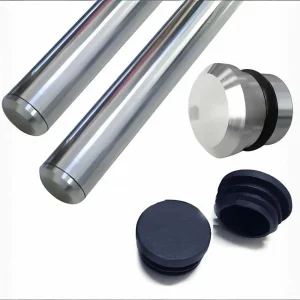
Finished sanitary pipes are washed with DI water, dried with warm filtered air, capped with yellow or blue PE protective end-caps, individually polyethylene sleeved, and boxed in ocean-worthy wooden crates to prevent transit damage.
When auditing China stainless steel sanitary pipe suppliers, international procurement teams should evaluate suppliers across four core pillars of operational capability:
Looking toward 2030, Chinese sanitary tube manufacturers are investing in next-generation manufacturing technology to meet stricter pure-process requirements:
Integration of real-time laser profile sensors on welding lines detects weld bead height variations down to 5 μm. Dynamic feedback systems automatically adjust laser power and travel speed in real time to guarantee a perfectly flush internal seam.
Environmental compliance is driving the development of eco-friendly, non-toxic electrolyte solutions for electropolishing. New non-acid, salt-based solutions achieve superior Ra values while reducing hazardous waste water generation by 90%.
Advanced pulsed electropolishing combined with ultrasonic citric passivation enhances the Passive Layer Ratio (Cr/Fe > 2.0 and CrO/CrOH > 1.2), extending resistance against aggressive organic acids and micro-pitting in ultra-pure environments.
Clear, authoritative technical answers to common questions about Chinese stainless steel sanitary pipe procurement.
The key differences lie in internal surface roughness, weld seam quality, and cleanability. Industrial pipes (ASTM A312/A554) allow for internal surface imperfections and prominent weld beads. Sanitary pipes (ASTM A270/ASME BPE) require strict internal surface roughness control (Ra ≤ 0.8 μm down to Ra ≤ 0.2 μm for electropolished grades), completely flush and defect-free internal weld beads, bright annealing heat treatment, and full compatibility with Clean-in-Place (CIP) and Sterilize-in-Place (SIP) systems.
316L contains 2.0% to 3.0% Molybdenum (Mo) and higher Nickel content than 304, significantly raising its Pitting Resistance Equivalent Number (PREN). This delivers superior resistance to chloride-induced pitting, organic acids, and aggressive CIP cleaning chemicals (e.g., sodium hydroxide and nitric acid solutions). Furthermore, the "L" denotes low carbon content (≤ 0.030%), which prevents chromium carbide precipitation during welding and eliminates intergranular corrosion.
Chinese sanitary tube factories supply four standard internal finish levels according to ASME BPE standards:
Top Chinese factories utilize continuous automated TIG or plasma arc welding with full internal inert gas purging (99.999% pure Argon or Argon-Hydrogen mix). In-line eddy-current inspection continuously scans 100% of the weld seam. Additionally, samples from each production heat undergo flattening, flaring, micro-structure metallography, and hydrostatic pressure testing to verify complete joint penetration and ductility.
Buyers should always require an EN 10204 3.1 Mill Test Certificate (MTC) containing: Chemical composition analysis, mechanical properties (yield, tensile strength, elongation), hardness values, bright annealing heat treatment curve data, eddy-current test reports, hydrostatic test certificates, internal Ra surface roughness measurement logs, and dimensional tolerance inspection data.
Standard sanitary tube sizes (e.g., OD 1/2" to 4" per ASTM A270) typically carry an MOQ of 500 kg to 1,000 kg per size for mill runs, with standard production lead times of 15 to 20 days. Manufacturers with standing master stock or custom tooling libraries can often accommodate smaller sample runs or fast-track shipments within 7 to 10 days.
Explore our full line of ASTM A554 structural, oval, automotive, and architectural tubing engineered for global markets.