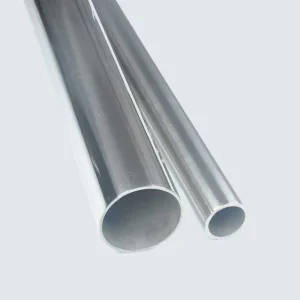
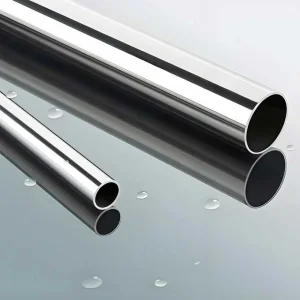
Explore high-spec structural, sanitary, and appliance-grade tubing solutions engineered by top China vacuum cleaner tube factories and specialized metal fabricators.
Analyzing global supply chain centralization, material shifts, and production benchmarks across Chinese manufacturing hubs.
Over 82% of the global supply of extendable wand tubing, metallic telescopic handles, and conductive vacuum tubes originates from clustered industrial centers in China—specifically Foshan (Guangdong), Ningbo/Suzhou (Zhejiang/Jiangsu), and Dongguan. These industrial ecosystems integrate precision coil slitting, cold drawing, CNC bending, and anodizing within tight 30-mile radii.
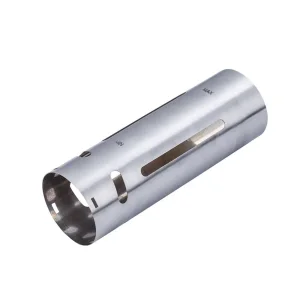
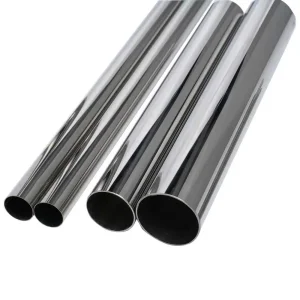
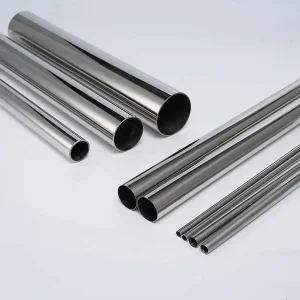
The global shift toward high-performance cordless stick vacuums (pioneered by Dyson, Shark, Tineco, and Dreame) has placed stringent weight constraints on tube wands. Modern China vacuum cleaner tube factories have transitioned from traditional heavy-wall carbon steel to ultra-light thin-wall Aluminum Alloy 6063-T5 and 304 Stainless Steel down to 0.4mm wall thickness without compromising collapse resistance.
Top-tier Chinese suppliers maintain over 1,200 standard profile tools and modular quick-release dies. This vast tooling archive allows tier-1 vacuum brands to cut new product introduction (NPI) lead times from 24 weeks down to under 18 days, giving global brands an unbeatable competitive edge in launching seasonal floorcare iterations.
Comparing performance metrics across material matrices to guide global OEM design choices.
| Material / Structural Route | Tensile Strength (MPa) | Wall Thickness Range | ESD / Conductive Integration | Primary Vacuum Segment Application |
|---|---|---|---|---|
| 6063-T5 Anodized Aluminum | ≥ 185 MPa | 0.5 mm – 1.0 mm | Co-extruded Internal Wiring Channel | Cordless Premium Handheld & Smart Stick Vacuums |
| ASTM A554 304 Stainless Steel | ≥ 520 MPa | 0.4 mm – 0.8 mm | Direct Metallic Grounding Path | High-End Architectural & Commercial Wet/Dry Wands |
| Carbon Fiber Composite (Roll-Wrapped) | ≥ 1200 MPa | 0.6 mm – 1.2 mm | Embedded Copper Mesh Wire | Ultra-Light Flagship Cordless (Sub-1.2kg total unit) |
| 201 Stainless Steel (High Cu) | ≥ 450 MPa | 0.5 mm – 1.2 mm | Surface Contact Springs | Cost-Driven Household Canister & Upright Units |
| Co-Extruded EVA / TPU Flexible Tube | Flex Life >100k cycles | 1.2 mm – 2.5 mm | Spiral Carbon Steel Wire Helix | Robotic Docking Station Hose & Shop Extractors |
How customized tube designs solve complex mechanical, electrical, and ergonomic challenges across diverse operating environments.
Modern cordless sticks demand sophisticated, dual-channel extension wands. China factories lead in integrating embedded electrical power traces directly inside aluminum tube walls. This enables 40W+ power delivery from the main battery unit down to motorized roller heads and UV anti-mite floor brushes without external wire harnesses.
In pharmaceutical processing, electronics assembly, and hazardous dust collection, static electricity buildup poses severe ignition hazards. Precision 304/316L stainless steel tubes from top-tier Chinese manufacturers incorporate positive ESD grounding paths that safely dissipate static charges up to 25kV, matching strict NFPA explosion-proof mandates.
Automotive detailing environments subject extension wands to severe physical impacts, fuel/solvent contact, and extreme temperatures. Heavily anodized or powder-coated aluminum wands with reinforced quick-release snap fittings prevent collapse when stepped on, providing long-term reliability for commercial auto detailing racks.
Medical vacuum suction equipment requires smooth, non-porous internal bores (Ra ≤ 0.2µm) that withstand continuous autoclaving and chemical disinfection. Electropolished 316L stainless steel tubing supplied by specialized Chinese mills prevents bacterial adhesion and bio-film formation across critical surgical suction pathways.
Addressing structural bottlenecks, yield rates, and international compliance standards for global brands.
One of the most frequent failure points in consumer vacuum cleaner wands is fracture at the latch joint during a 1.5m drop. Leading Chinese vacuum tube manufacturers utilize Finite Element Analysis (FEA) to simulate impact stress distribution. By re-engineering corner radii and applying localized internal reinforcement sleeves, structural yield rates are increased by over 34% without adding bulk weight.
With impending EU REACH and US EPA bans on PFAS chemicals ("forever chemicals"), traditional low-friction interior coatings are being rapidly phased out. Forward-thinking Chinese factories have introduced nanostructured ceramic and sol-gel interior linings. These eco-friendly coatings maintain a low coefficient of friction (µ < 0.12), ensuring zero dust adhesion and long-term airflow performance (CFM).
Vacuum efficiency drops significantly if micro-fissures or porous weld seams exist along the tube length. Quality-focused Chinese mills utilize automated differential pressure testing units directly integrated on the tube sizing lines. Every single tube wand undergoes automated seal verification, holding pressure loss below 0.02 kPa over 5 seconds at -35 kPa suction.
Global brands purchasing from Chinese vacuum tube suppliers benefit from full documentation packs. Direct mill traceability, Heat Number mapping, RoHS 3.0 compliance, REACH SVHC declarations, and FDA food-contact safety clearances (for kitchen/sanitary units) are standard deliverables provided with every production shipment.
Pioneering smart tubing technologies that will define the next decade of intelligent floorcare appliances.
Transitioning from physical copper contact pins—which suffer from wear, oxidation, and arcing—to high-frequency induction tracks embedded within the structural carbon fiber or aluminum wall. This design enables seamless 360-degree rotation of motor heads without mechanical contacts.
Future intelligent extension tubes feature integrated micro-RFID sensors and acoustic transducer arrays. The vacuum host automatically adjusts motor RPM and suction pressure based on the connected tool head and real-time acoustic feedback from debris moving through the tube channel.
Incorporating superelastic Nickel-Titanium (Nitinol) framing elements inside thin-wall extension wands. In the event of severe crush forces or accidental stepping, the metal structure returns to its original circular profile upon mild heat exposure, preventing permanent denting.
In-depth technical and commercial answers directly from our senior metallurgical and procurement engineering staff.
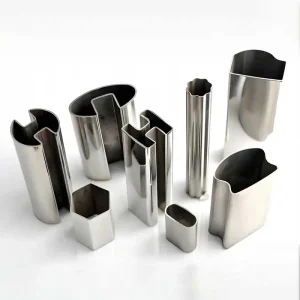
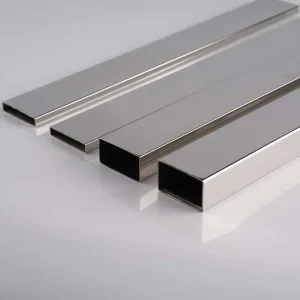
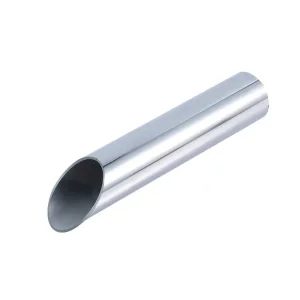
Explore specialized oval, square, decorative, and structural stainless tubing solutions for custom vacuum wand designs and high-spec industrial applications.