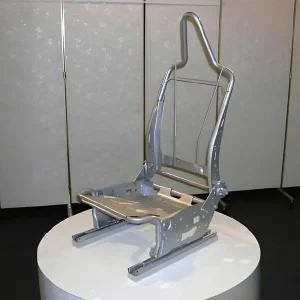
Engineered for wheelchairs, medical rehabilitation equipment, and high-stress structural frame assemblies.
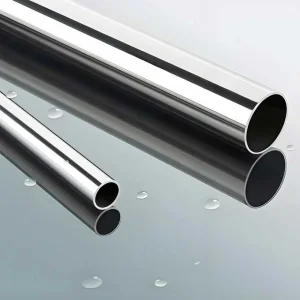
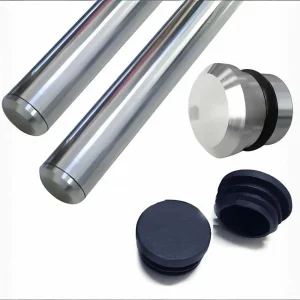
Understanding the shift toward high-strength, low-weight metallic structures in personal mobility devices.
The global personal mobility industry is undergoing a structural paradigm shift driven by demographic aging, active-lifestyle demand among manual wheelchair users, and the rapid expansion of heavy-duty motorized power chairs. At the heart of every high-performance wheelchair lies its tubular framework—a complex assembly of main side frames, cross-braces, footrest stems, push handles, and wheel-axle housings. The structural tubing selected directly governs critical user performance metrics: weight distribution, torsional rigidity, fatigue life under dynamic impact, sweat-induced corrosion resistance, and overall user safety.
China has emerged as the global epicenter for precision medical device and mobility tubing manufacturing, specifically centered within industrial metallurgical clusters like Foshan in Guangdong Province. Operating state-of-the-art multi-roll cold rolling mills, automated plasma/TIG welding lines, laser slotting centers, and multi-axis hydroforming presses, Chinese factories provide Tier-1 and Tier-2 mobility OEMs in North America, Europe, and Asia-Pacific with an unparalleled balance of dimensional precision, material traceability, and cost-efficiency.
Requires ultra-lightweight thin-wall double-butted aluminium (6061-T6/7005) or Titanium Grade 9 (Ti-3Al-2.5V) tubing to achieve dynamic agility, energy transfer efficiency, and fatigue endurance under daily propulsion impacts.
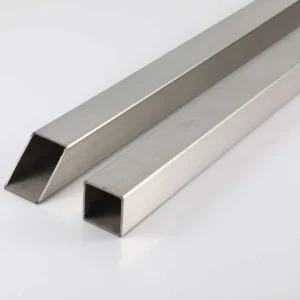
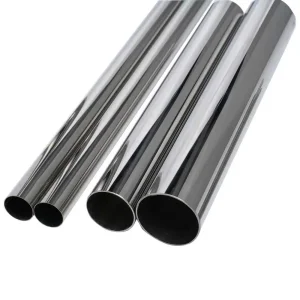
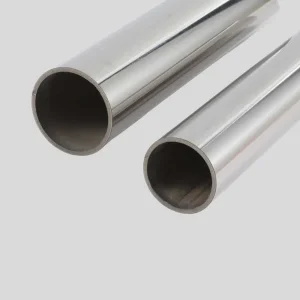
Demands heavy-wall structural steel tubing (ASTM A554 304/316L or high-yield structural 201) to support heavy lithium battery packs, mid-wheel drive motor gearboxes, and dynamic seating tilt-and-recline mechanisms.
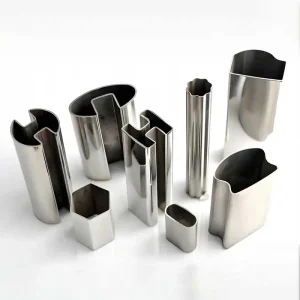
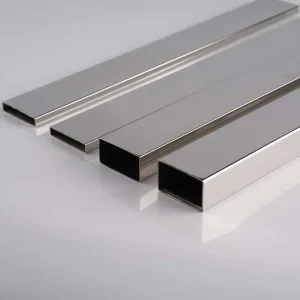
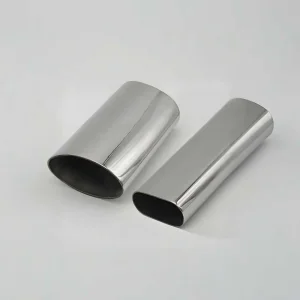
Demands customized cross-section profiles (hydroformed elliptical, D-shape, and octagonal profiles) that optimize moment of inertia ($I$) and section modulus ($Z$), preventing structural buckling under static loads exceeding 250 kg.
Evaluating yield strength, density, fatigue limit, and corrosion dynamics across stainless steel, aluminum, and titanium alloys.
Selecting the optimal tubing alloy involves balancing weight efficiency ($\text{Strength-to-Weight Ratio} = \sigma_y / \rho$), formability during CNC mandrel bending, weldability without thermal cracking, and long-term surface resistance against skin secretions and sanitizing agents. Below is the authoritative metallurgical comparison compiled by Foshan precision mill metallurgical engineers:
| Material Alloy & Grade | Density ($\text{g/cm}^3$) | Yield Strength ($\text{MPa}$) | Tensile Strength ($\text{MPa}$) | Fatigue Limit ($\text{MPa}$) | Corrosion / Sweat Rating | Target Frame Application |
|---|---|---|---|---|---|---|
| Aluminium 6061-T6 | 2.70 | 276 | 310 | 96 | Excellent (Anodized) | Standard Active Folding & Rigid Frames |
| Aluminium 7005-T6 | 2.78 | 290 | 350 | 105 | Good | High-Impact Sports & Racing Wheelchairs |
| Titanium Gr. 9 (Ti-3Al-2.5V) | 4.48 | 500 | 620 | 340 | Immune to Chloride | Ultra-Lightweight Custom Rigid Frames |
| Austenitic SS 304 (ASTM A554) | 7.93 | 215 | 505 | 240 | High (Passivated) | Hospital Standard & Reclining Chairs |
| Austenitic SS 316L (Medical Grade) | 8.00 | 290 | 580 | 260 | Maximum (Salt Spray >720h) | Commode & Wet-Environment Wheelchairs |
| High-Strength SS 201 (High Cu) | 7.86 | 275 | 625 | 220 | Moderate (Indoor) | Cost-Optimized Heavy Duty Power Frames |
In high-end manual wheelchairs, single-wall thickness tubing causes excessive weight because stress is non-uniformly distributed along the frame tubes. Peak bending moments occur at the welded joints (nodes), whereas the center sections experience lower bending stress. Chinese specialized tube manufacturers utilize rotary cold draw swaging to produce double-butted and triple-butted tubing. A double-butted tube features thicker wall sections at both ends (e.g., 1.6 mm for robust TIG welding penetration) and a thin wall in the center span (e.g., 0.9 mm), shedding up to 35% of frame weight while maintaining joint yield strength.
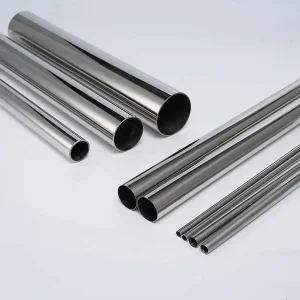
For stainless steel tubing manufactured under ASTM A554 standards, controlling weld-bead geometry and heat-affected zone (HAZ) grain size is critical. Premium Foshan mills deploy plasma welding combined with online internal bead planishing and high-frequency induction annealing. This process eliminates internal seam ridges, preventing stress concentrations during subsequent multi-axis CNC bending operations.
Precision CNC bending, laser profiling, and internal high-pressure fluid forming.
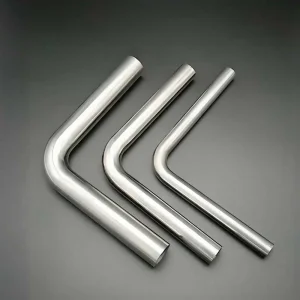
Utilizing left- and right-hand servo electric CNC bending machinery fitted with internal wiper mandrels. Holds tight centerline radius ($CLR = 1.0 \times OD$) without flattening, wall-thinning (<8%), or cross-sectional ovality.
Water pressurization up to 2,000 bar inside a closed die cavity. Expands circular tubes into complex, ergonomic structural shapes (tear-drop side-guards, integrated footrest receivers) with continuous grain flow and zero mechanical seam stress.
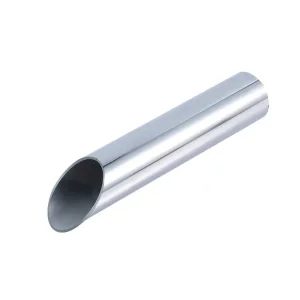
High-speed 5-axis fiber laser cutting delivers zero-clearance saddle joints (fish-mouth jointing) for wheelchair cross-frame intersections. Enables 100% gapless fit for automated robotic TIG welding cells.
Ensuring absolute patient safety, fatigue durability, and international regulatory readiness.
Wheelchairs are classified as Class I Medical Devices across major regulatory regimes (US FDA 510(k) exempt / Class I, EU MDR 2017/745, China NMPA Class I). Consequently, structural tubing supplied by OEM manufacturers must pass rigorous physical testing before frame welding approval.
Mandates that main frame tubes withstand downward load tests, armrest impact loads, and footrest vertical forces without permanent plastic deformation exceeding 1% of total span length.
Framework tubing undergoes two-drum fatigue testing (200,000 impacts at 1.0 m/s with nominal payload) and free-fall curb drop tests (6,600 drop impacts). Weld seam micro-cracking results in immediate component failure.
Tubing surface coats (anodizing, PVD, powder coat, or passivated stainless steel) are submerged in synthetic alkaline and acidic perspiration solutions for 48 hours to guarantee no discoloration, pitting, or nickel leaching.
Leading Chinese wheelchair tubing mills implement strict EN 10204 3.1 Mill Test Certification protocols. Every tubing batch shipped is fully traceable back to the raw material master coil heat number, complete with chemical ladle analysis (Carbon, Chromium, Nickel, Molybdenum, Titanium percentages) and mechanical test records (Yield, Ultimate Tensile, Elongation %, Flattening test, Flaring test, and Eddy Current non-destructive inspection).
A step-by-step engineering roadmap from initial CAD drawing to containerized delivery.
Engineering exchange of 3D STEP/IGES CAD files. China factory engineers evaluate bend centerline radii, wall-thickness stretch factors, hydroforming expansion limits, and notch fitment tolerances to prevent production defects.
For custom non-standard profiles (oval, D-shape, custom channels), specialized carbide roll-forming tooling or hydroforming dies are CNC machined within 10 to 15 working days. Existing die libraries (>500 profiles) offer zero-tooling cost options.
Sample tubing runs undergo full CMM dimensional scanning, destructive weld seam tensile tests, bend flattening checks, and salt-spray chamber testing. Full FAI documentation pack is delivered to client QC team for formal sign-off.
High-speed production featuring online infrared weld seam monitoring, continuous laser OD measurement, automated cut-to-length deburring, and individual protective sleeving to eliminate scratch damage during transport.
Heavy-duty export packaging including bubble-wrapped bundles, fumigated wooden crates, or modular iron frames suited for FCL/LCL ocean freight, ensuring tubes arrive perfectly straight with pristine surface finishes.
Next-generation materials, smart integration, and green metallurgical processing.
Combining the extreme tensile performance of outer carbon fiber wraps with the ductile internal joining advantages of thin-walled 7005 aluminum core tubing, creating hybrid structures 25% lighter than standard aluminum.
Internal extruded wire raceways and strain-gauge mounting flats designed directly into the tubing profile, facilitating embedded IoT health monitoring sensors and battery telemetry cabling in modern smart wheelchairs.
Implementation of 100% recycled aluminum scrap re-smelting powered by hydropower, lowering the embodied carbon footprint ($kg CO_2/kg$) by over 70% to meet EU Scope 3 corporate decarbonization mandates.
Expert answers regarding tubing specifications, bending tolerances, lead times, and quality guarantees.
Explore specialized profiles, automotive structural tubes, and medical-grade materials.