Explore our premium-grade structural, sanitary, decorative, and specialty stainless tubing engineered to rigorous global standards.
A comprehensive analysis of dimensional tolerances, wall thickness schedules, alloy performance, and fabrication yields for procurement officers and structural engineers.
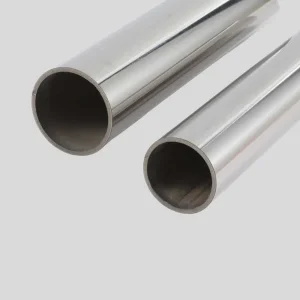
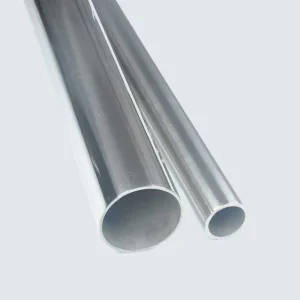
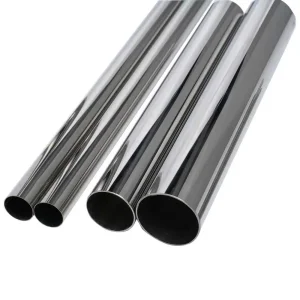
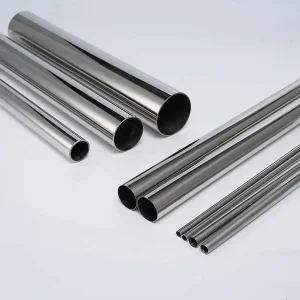
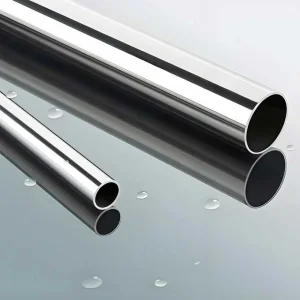
In modern industrial manufacturing, architectural design, and high-precision fluid dynamics, 1.5 inch stainless steel tubing (Outer Diameter: 38.1 mm) represents one of the most versatile and structurally balanced dimensional profiles available. Engineered to withstand harsh chemical environments, extreme thermal gradients, and heavy mechanical stresses, 1.5 inch tubing serves as a core component in everything from marine handrails and cleanroom conveyor systems to high-performance automotive exhaust manifolds and sanitary food processing lines.
Achieving superior structural integrity and visual surface excellence requires strict adherence to international metallurgical standards such as ASTM A554 (for ornamental and structural applications), ASTM A249 / A269 (for boiler, superheater, and general corrosion-resisting tubing), and EN 10217-7 / DIN 17457 equivalents. The structural performance of 1.5" stainless tubing is predominantly governed by its wall thickness schedules, cold-working deformation history, and post-weld heat treatment processes.
| Wall Thickness Schedule / Gauge | Wall Thickness (mm / in) | Inside Diameter (ID mm) | Nominal Weight (kg/m - 304) | Yield Strength (MPa Min) | Tensile Strength (MPa Min) |
|---|---|---|---|---|---|
| Gauge 20 (Light Structural) | 0.91 mm / 0.035" | 36.28 mm | 0.846 kg/m | 205 MPa | 515 MPa |
| Gauge 16 (Standard Ornamental) | 1.50 mm / 0.065" | 35.10 mm | 1.375 kg/m | 230 MPa | 540 MPa |
| Gauge 14 (Heavy Duty Framing) | 2.00 mm / 0.083" | 34.10 mm | 1.808 kg/m | 240 MPa | 560 MPa |
| Schedule 10S (Pressure / Piping) | 2.77 mm / 0.109" | 32.56 mm | 2.451 kg/m | 250 MPa | 580 MPa |
| Schedule 40S (High Pressure Mechanical) | 3.68 mm / 0.145" | 30.74 mm | 3.170 kg/m | 275 MPa | 600 MPa |
Selecting the optimal stainless steel alloy is a critical decision that balances corrosion resistance, mechanical strength, formability, and total cost of ownership (TCO). Below is an authority-level breakdown of the four primary alloy families used in 1.5 inch tubing production:
Understanding the vertical integration, raw material access, and technological advancements driving China's premier stainless tubing manufacturing ecosystem.
Our Foshan manufacturing base operates directly alongside tier-1 primary steel manufacturers including TISCO, POSCO, and Baosteel. By purchasing prime hot-rolled and cold-rolled stainless steel master coils in massive tonnage, we eliminate intermediary markups and guarantee strict chemical composition control from the raw furnace heat down to the final 1.5 inch tube roll.
Equipped with 43 high-speed continuous roll-forming production lines utilizing High-Frequency Induction Welding (HFIW) and automated TIG/Plasma arc welding systems. Integrated inner-weld bead planishing and nitrogen atmosphere shielding prevent seam oxidation, delivering internal bore smoothness and weld integrity that rivals seamless alternatives at a fraction of the cost.
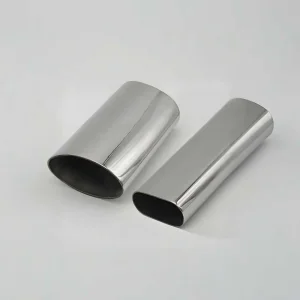
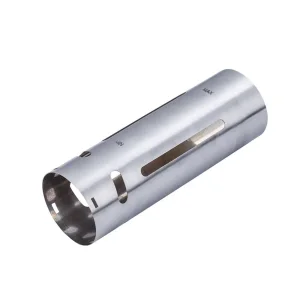
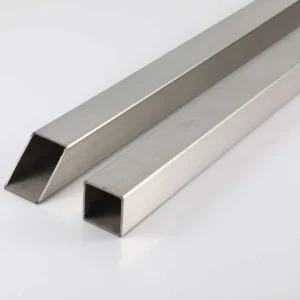
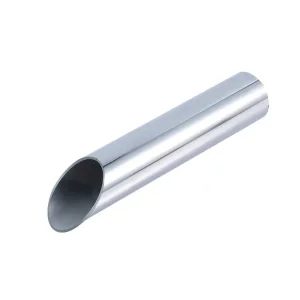
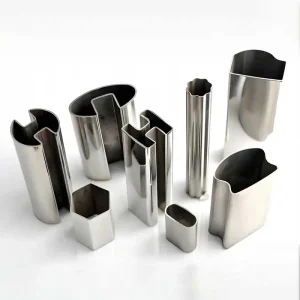
With an extensive internal die library housing over 500 existing roll-forming tooling profiles, global procurement buyers avoid costly tooling setup fees for custom shapes (such as 1.5" flat oval, D-shape, slotted, or square profiles). Our engineering team turns around custom tooling in under 10 days with standard production lead times of just 15 days.
How our rigorous 10-stage quality inspection system guarantees structural compliance and flawless surface aesthetics for international B2B buyers.
For international enterprise buyers purchasing multi-container shipments of 1.5 inch stainless steel tubing, supplier credibility hinges on verifiable quality assurance, batch consistency, and transparent certification. Micro-defects such as pinhole weld leaks, subtle wall-thickness drift, or micro-abrasions can cause disastrous fabrication line shutdowns or premature field failures in finished products.
Our production facilities operate under strict ISO 9001:2015 quality management systems. Every single meter of 1.5" stainless tubing undergoes a multi-gate verification process:
Every shipment is accompanied by a fully traceable EN 10204 3.1 Mill Test Certificate detailing heat numbers, chemical composition analysis, yield strength, tensile strength, elongation percentage, hardness test values, and hydrostatic test verification. Additional third-party inspection certifications from SGS, TÜV, Bureau Veritas, or Intertek are readily coordinated upon request.
Staying ahead of global shifts in green manufacturing, advanced decorative coatings, and automated downstream processing.
Traditional chemical electroplating is rapidly being superseded by Physical Vapor Deposition (PVD) titanium coating technology. PVD imparts brilliant decorative finishes—such as Rose Gold, Champagne, Black Titanium, and Gunmetal—with zero toxic liquid waste generation. The resulting ceramic-nitride layer increases surface hardness to over 2000 HV and extends scratch resistance by 300% in high-end architecture and luxury furniture hardware.
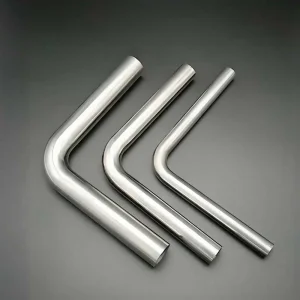
Global OEMs increasingly demand ready-to-assemble structural components rather than plain mill-length tubes. Modern factory ecosystems integrate multi-axis 3D fiber laser cutting, precision CNC mandrel bending, automatic end-swaging, and robotic TIG welding directly into the tube manufacturing workflow. This turnkey approach reduces freight bulk, cuts customer labor costs, and eliminates scrap risk.
Driven by decarbonization mandates in automotive transport and logistics equipment, engineers are shifting toward high-yield-strength 300-series stainless alloys with optimized thin-wall geometry (1.0 mm to 1.2 mm). Advanced stretch-forming and work-hardening techniques maintain column strength and torsional rigidity while reducing total structural assembly weight by up to 25%.
How tailor-made metallurgical formulations solve real-world engineering challenges across specialized global industries.
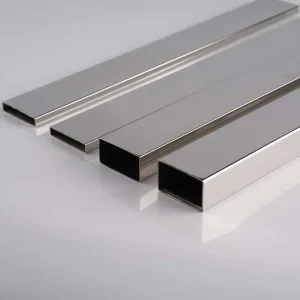
In modern architectural construction, 1.5 inch (38.1 mm) round and square stainless steel tubing represents the golden ergonomic standard for handrails, balustrades, and glass pool fencing posts. Standard human grip dynamics favor a 38.1 mm diameter for maximum tactile comfort and load safety compliance (meeting international OSHA and IBC handrail load requirements). Utilizing 316L grade with a 600# mirror or 320# satin finish ensures that exterior coastal installations remain free from unsightly brown tea-staining and atmospheric pitting for decades.
Healthcare facilities and assisted living developments mandate strict hygienic compliance. 1.5" stainless safety grab bars and hospital bed frames must endure rigorous daily sanitization with harsh chemical disinfectants without pitting or flaking. By maintaining surface roughness levels as low as Ra ≤ 0.4 µm and employing passivated 304/316L alloys, our sanitary tubing eliminates microscopic surface crevices where bacteria and pathogens accumulate.
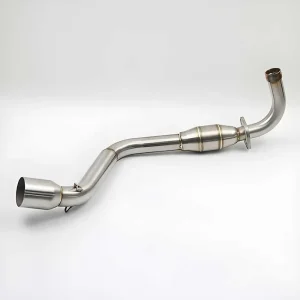
In high-performance automotive and heavy commercial transport engineering, 1.5 inch tubing in Grade 409L or 304 is widely utilized for exhaust branch manifolds, EGR cooling circuits, and intercooler piping. The tubing must accommodate severe thermal expansion, aggressive exhaust condensate acids, and intense engine vibration. Our specialized bright annealing and controlled seam welding ensure that bent exhaust tubes maintain wall uniform thickness without wrinkling or cracking during tight-radius mandrel bending.
Modern automated fulfillment centers and electronics assembly lines rely heavily on modular 1.5 inch stainless tube structures. Compared to traditional painted carbon steel or plastic-coated lean pipe, solid 304 stainless steel tubing delivers superior static load bearing capacity, ESD anti-static safety, and zero paint flaking in cleanroom environments. When used as roller shells in conveyer lines, low Total Indicator Runout (TIR ≤ 0.3 mm) prevents high-speed belt vibration and extends bearing operational life.
Direct answers from our metallurgical quality engineers addressing common procurement, technical, and shipping inquiries.
Browse our specialized OEM solutions engineered for home appliances, logistics automation, medical equipment, and structural framing.