Explore our core export lines for high-performance automotive exhaust systems, heavy industrial tubing, structural components, and sanitary piping manufactured under strict ASTM standards.
Analyzing the macro-shift toward lightweighting, anti-corrosive longevity, and optimized volumetric flow in modern internal combustion and hybrid powertrains.
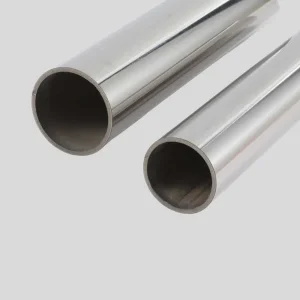
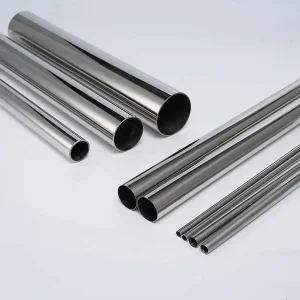
The global automotive performance exhaust market is projecting a CAGR of 6.8% through 2030. Driven by enthusiast demand for forced-induction upgrades (turbocharged and supercharged platforms), 3 inch (76.2mm outer diameter) tubing has become the universal sweet spot, providing minimal backpressure while sustaining exhaust gas velocity to optimize turbo spooling and engine volumetric efficiency.
Global Tier-1 suppliers and aftermarket brands are rapidly phasing out low-cost aluminized carbon steel. Environmental humidity, road salt de-icing (Calcium Chloride), and acidic exhaust condensation trigger catastrophic rust-through on aluminized steel within 24–36 months. High-yield 304 and 409L stainless steel tubing are now mandatory specs for warranties exceeding 5 to 10 years.
Modern emissions systems incorporate Selective Catalytic Reduction (SCR) and Diesel Particulate Filters (DPF) that operate at sustained exhaust gas temperatures (EGTs) between 550°C and 800°C. 3-inch stainless steel tubing provides the thermal fatigue resistance required to prevent micro-cracking and gas leakage along the downstream piping network under thermal cycling.
Selecting the optimal stainless alloy balances high-temperature oxidation resistance, salt spray corrosion endurance, ductility during CNC mandrel bending, and unit cost.
| Metallurgical Grade | Chromium (Cr) % | Nickel (Ni) % | Molybdenum (Mo) % | Max Service Temp (°C) | ASTM B117 Salt Spray Resistance | Primary Industrial Application |
|---|---|---|---|---|---|---|
| AISI 409L (Ferritic) | 10.5% – 11.7% | 0.50% Max | — | 675°C | 150 – 250 Hours | OEM Catalyst Pipes, Muffler Shells, Budget Exhausts |
| AISI 304 (Austenitic) | 18.0% – 20.0% | 8.0% – 10.5% | — | 870°C | 720 – 1000+ Hours | Performance Aftermarket Exhausts, Downpipes, Cat-backs |
| AISI 316L (Marine Grade) | 16.0% – 18.0% | 10.0% – 14.0% | 2.0% – 3.0% | 920°C | 1500+ Hours | Marine Downpipes, Salt-Exposed Commercial Fleets, Turbo Riser |
| 304L (Low Carbon) | 18.0% – 20.0% | 8.0% – 12.0% | — | 850°C | 800+ Hours | High-Stress TIG Welded Exhaust Headers & Manifolds |
Grade 409L is a titanium-stabilized ferritic stainless steel offering a low coefficient of thermal expansion, making it highly resistance to thermal fatigue. While surface oxidation (brown patina) will form on 409L over time when exposed to humidity and road salt, structural integrity remains intact. Conversely, Grade 304 contains ~8% Nickel, maintaining a stable austenitic crystal structure that yields superior cosmetic shine, zero surface rusting in standard environments, and higher tensile strength at elevated temperatures.
When high-frequency welding or TIG welding 3-inch exhaust tubing, standard high-carbon grades can undergo chromium carbide precipitation along grain boundaries between 450°C and 850°C (the sensitization zone). This leaves adjacent areas depleted of Chromium and vulnerable to rapid intergranular attack. VertexFlow utilizes low-carbon strip variants (304L/316L) combined with inline bright annealing to ensure absolute grain structure stability post-welding.
What B2B buyers, OEM procurement directors, and tier-1 distributors mandate when sourcing 3 inch stainless steel exhaust tubing internationally.
Automated exhaust robotic cell bending demands strict outer diameter (OD) tolerances of ±0.05 mm and wall thickness variations kept strictly within ±5%. Out-of-round tubing causes slippage during mandrel insertion and unpredictable springback, leading to excessive scrap rates on CNC rotary draw benders.
Unshielded internal weld seams create "sugar coat" oxidation—porous, crystalline iron-oxide beads on the inner tube wall. Under high-velocity exhaust gas flow, these rough beads create turbulence and serve as focal points for stress corrosion cracking. Advanced internal purging with 99.999% pure Nitrogen ensures a glass-smooth inner seam.
Every mill lot undergoes destructive testing: sample sections are flattened to 1/3 of their original diameter and flared outward by 20% over a tapered mandrel per ASTM A554 / A249 standards. Zero micro-fracturing or seam separation is tolerated, assuring total reliability during exhaust expansion, swaging, and bead-rolling operations.
How VertexFlow leverages vertical integration, automated smart mills, and geographical proximity to top raw material refineries to deliver global cost-performance leadership.
Situated in Shishan Town, Nanhai District, Foshan—the epicenter of China's stainless steel manufacturing base—VertexFlow operates within a zero-kilometer supply radius for premium raw coils from TISCO, POSCO, and Baosteel. This localized ecosystem eliminates raw material transport delays, guarantees continuous coil inventory across 201, 304, 316L, and 409L, and provides instant scalability for mega-tonnage OEM procurement contracts.
Our 12,000 m² facility features automated slitting, plasma welding, automated laser OD measurement, and real-time online ultrasonic defect detection. Every coil heat number is digitized and linked directly to final tube bundles via barcode tracking. Mill Test Certificates (MTC) compliant with EN 10204 3.1 accompany every shipping container, detailing exact heat chemistry, yield strength, tensile properties, and elongation values.
Engineered to meet specific mechanical and environmental challenges across distinct geographical regions and heavy industrial domains.
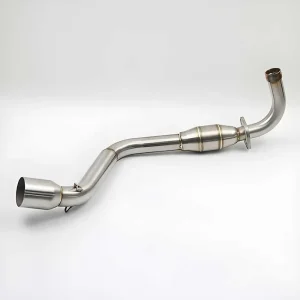
Dominating US/Canadian markets for 3" Mandrel-bent downpipes, cat-back systems, and turbo-back upgrades for Ford Powerstroke, GM Duramax, and Dodge Cummins diesel trucks demanding high heat resistance and zero backpressure restriction.
Utilized in long-haul European trucks and buses where 409L and 304 3-inch piping withstands millions of kilometers of continuous thermal stress, vibration, and chemical exposure from DEF/AdBlue injection systems.
Australian off-road 4WD touring vehicles and marine diesel exhaust risers require grade 316L 3-inch tubing to defeat aggressive salt spray, beach river crossings, and intense tropical corrosion.
Used globally in stationary standby diesel generators, industrial boiler flue venting, cleanroom thermal exhaust extraction, and heat-recovery exchangers operating under steady operational pressure.
Transforming mill lengths into ready-to-assemble exhaust components through advanced in-house CNC machining and end-forming technologies.
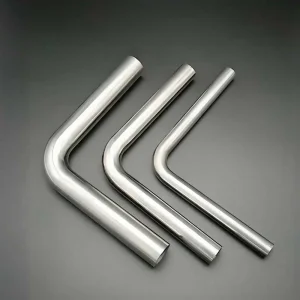
Unlike crush bending which collapses the cross-sectional area of a 3-inch tube by up to 20%, our CNC mandrel benders utilize internal flex-mandrels and wiper dies. This guarantees a true round profile through tight centerline radii (CLR = 1.0D to 1.5D) without wrinkling on the inside bend or excessive wall thinning on the outer neck.
We supply custom expanded slip-fit joints (3.00" ID to slide seamlessly over 3.00" OD), flared ends, ball-and-socket joints, and rolled beads for silicone coupler retention. Wall thickness around expanded joints is mathematically controlled to eliminate fracture during clamp torque application.
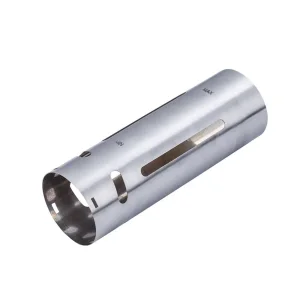
Equipped with 3D multi-axis fiber laser cutting heads, VertexFlow executes clean slots, alignment notches, oxygen sensor bung port holes, and automated TIG welding of 304 stainless steel V-band flanges and mounting brackets according to client CAD models.
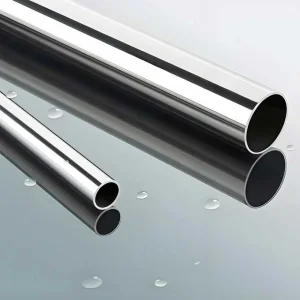
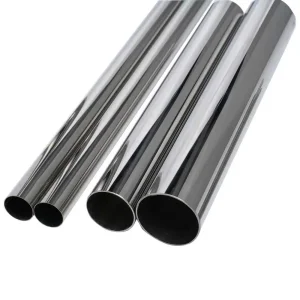
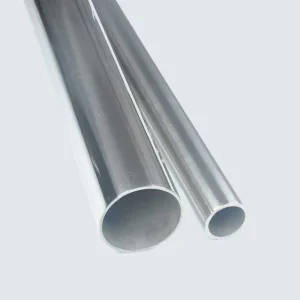
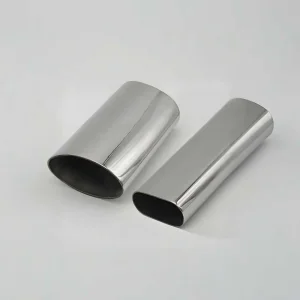
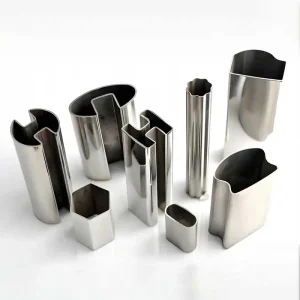
Explore additional specialized stainless steel tubing categories including medical grab bar tubing, marine 316L, ornamental shapes, and industrial workstation frameworks.
Answers to crucial engineering questions regarding 3 inch stainless steel exhaust tubing sourcing, metallurgy, tolerances, and custom fabrication.