VertexFlow Tubes stainless steel tube manufacturer logo VertexFlow TubesPrecision SS Tubing
Industrial Engineering & Global Procurement Whitepaper

High-Quality 316 Stainless Steel Tubing Polished Manufacturers & Manufacturer

A Comprehensive Technical Benchmark on Austenitic Metallurgy, Precision Surface Roughness (Ra/Rz), Passivation Mechanics, and China's Advanced Stainless Steel Manufacturing Ecosystem.

Product Catalog Part I

Precision Structural & Ornamental Tubing Series

Explore our high-performance stainless steel tubing range engineered for structural integrity, corrosion resistance, and mirror-finish aesthetics.
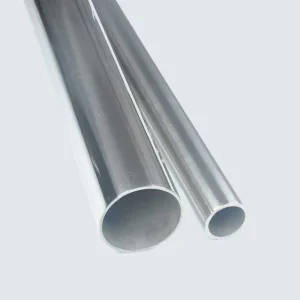
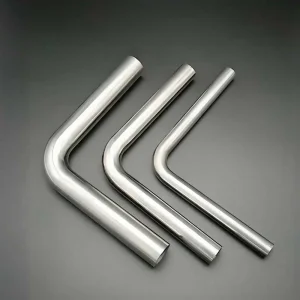
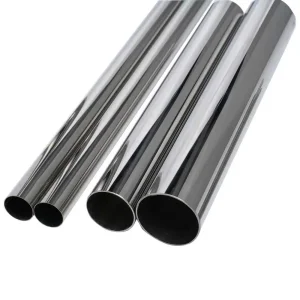
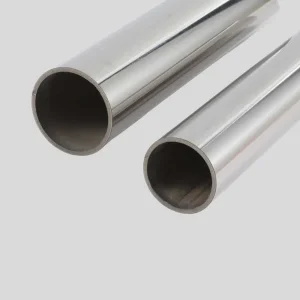
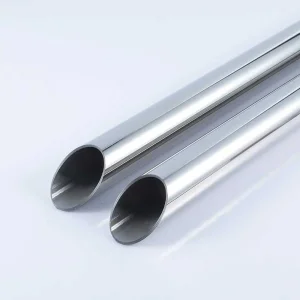
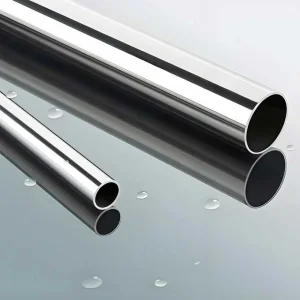
High-Quality ASTM A554 Stainless Steel Round Tubing
High-Quality ASTM A554 Stainless Steel Round Tubing (Ornamental & Structural) Manufacturer, Suppliers
View Specifications
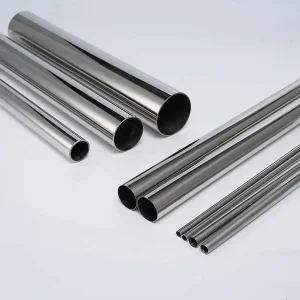
China Decorative Stainless Steel Tubing for Furniture
China Decorative Stainless Steel Tubing for Furniture (201 & 304) Manufacturer, Supplier
View Specifications
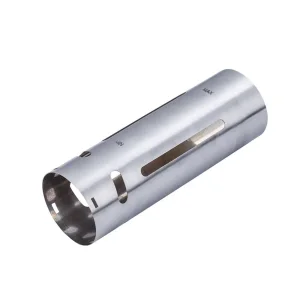
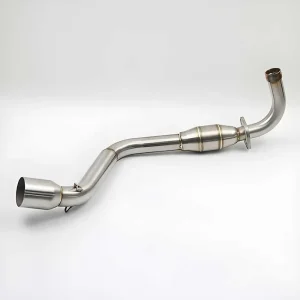
China OEM Stainless Steel Tube Fabrication CNC Machining
China OEM Stainless Steel Tube Fabrication & CNC Machining Manufacturers, Suppliers
View Specifications
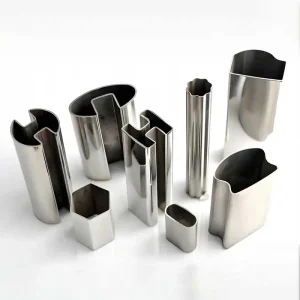
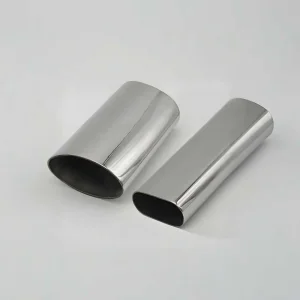
OEM ASTM A554 Stainless Steel Oval Special Shaped Tubing
OEM ASTM A554 Stainless Steel Oval & Special Shaped Tubing Manufacturers, Supplier
View Specifications
ODM Marine Grade 316L Stainless Steel Tubing
ODM Marine Grade 316L Stainless Steel Tubing Manufacturer, Suppliers
View Specifications
OEM Stainless Steel Tubing for Conveyor Rollers
OEM Stainless Steel Tubing for Conveyor Rollers Manufacturers, Suppliers
View Specifications
China Sanitary Grade Precision Stainless Steel Tubing
China Sanitary Grade Precision Stainless Steel Tubing Manufacturers, Manufacturer
View Specifications
High-Quality Stainless Steel Handrail Balustrade Tubing
High-Quality Stainless Steel Handrail & Balustrade Tubing (ASTM A554) Manufacturers, Factory
View Specifications
Metallurgical Excellence

Executive Summary: The Technical Architecture of 316 Stainless Steel Polished Tubing

In modern industrial fluid systems, high-end architectural infrastructure, and ultra-sanitary biopharmaceutical processing, structural reliability cannot be detached from surface chemistry. High-Quality 316 Stainless Steel Tubing Polished Manufacturers play a critical role in bridging metallurgical integrity with chemical passivity. Grade 316 austenitic stainless steel (UNS S31600 / EN 1.4401) and its low-carbon derivative 316L (UNS S31603 / EN 1.4404) represent the benchmark material choice for aggressive corrosive environments containing chlorides, halides, and severe atmospheric moisture.

Unlike standard 304-grade austenitic stainless steel, grade 316 incorporates between 2.0% and 3.0% Molybdenum (Mo). This elemental addition drastically shifts the thermodynamic resistance of the metal matrix against localized pitting corrosion, crevice attack, and chloride-induced stress corrosion cracking (SCC). When executed through advanced mechanical polishing and electropolishing (EP) techniques, the surface micro-topography of polished 316 tubing transitions into an impenetrable passive layer of Chromium Oxide ($\text{Cr}_2\text{O}_3$), achieving a surface roughness profile as fine as $\text{Ra} \le 0.15\,\mu\text{m}$ ($6\,\mu\text{in}$).

Information Gain: Pitting Resistance Equivalent Number (PREN) Metrics

The performance advantage of 316/316L over 304 steel is mathematically quantified through the Pitting Resistance Equivalent Number (PREN):
$\text{PREN} = \%\text{Cr} + 3.3(\%\text{Mo}) + 16(\%\text{N})$
Standard 304 yields a PREN of approximately 18.0–19.0, whereas polished 316 tubing yields a PREN ranging from 23.0 to 25.0. This delta represents over a 300% increase in resistance to localized pitting initiation in saline and coastal washdown testing protocols.

Austenitic Alloy Grade Chromium (% Cr) Nickel (% Ni) Molybdenum (% Mo) Carbon (% C) PREN Value Range Primary Application Environment
316L (UNS S31603) 16.0 – 18.0 10.0 – 14.0 2.00 – 3.00 ≤ 0.030 23.0 – 25.5 Sanitary, Marine, Pharma, Welded Assemblies
316 (UNS S31600) 16.0 – 18.0 10.0 – 14.0 2.00 – 3.00 ≤ 0.080 23.0 – 25.0 High-Temp Chemical Lines, Structural Tubes
304 (UNS S30400) 18.0 – 20.0 8.0 – 10.5 ≤ 0.080 18.0 – 19.5 General Architectural, Indoor Furniture
201 (UNS S20100) 16.0 – 18.0 3.5 – 5.5 ≤ 0.150 16.0 – 17.5 Cost-Sensitive Dry Architectural Trim
Manufacturing Metrics

Engineered Precision & Capacity Highlights

Key indicators establishing global competitiveness in precision polished 316 tubing production.

±0.05mm
Outer Diameter Tolerance
Ra ≤0.2μm
Ultra-Smooth Bore Roughness
500+ hrs
ASTM B117 Salt Spray Endurance
43 Lines
High-Speed Precision Tube Mills
Surface Science

Advanced Surface Polishing Engineering: Mechanical vs. Electropolishing (EP)

When global OEMs source 316 stainless steel tubing, the term "polished" encompasses a spectrum of microscopic surface profiles tailored to operational needs. Surface roughness ($\text{Ra}$, measured in micrometers or micro-inches) dictates not only aesthetic reflectance but also fluid friction factors, bacterial adhesion rates, and resistance to biofilm buildup.

1. Mechanical Polishing Classifications

Mechanical polishing utilizes abrasive belts, Sisal wheels, and cotton buffs infused with aluminum oxide or diamond compounds. Premier Chinese manufacturers utilize multi-head inline continuous polishing machines to yield predictable finishes:

  • 180# / 240# Satin Finish (Grit Finish): Achieves $\text{Ra} \approx 0.4 - 0.8\,\mu\text{m}$. Provides a directional, brushed linear texture ideal for architectural handrails, balustrades, and structural columns where fingerprint suppression is paramount.
  • 320# / 400# Bright Satin (Sanitary Standard): Achieves $\text{Ra} \le 0.4\,\mu\text{m}$. Preferred for dairy, beverage, and light chemical processing pipelines to prevent micro-particulate entrapment.
  • 600# / 800# Mirror Polish (No.8 Polish): Achieves $\text{Ra} \le 0.05 - 0.1\,\mu\text{m}$. Produced through 4-stage automated buffing passes, delivering optical mirror reflectivity necessary for luxury yacht fittings, decorative architecture, and medical equipment.

2. Electropolishing (EP) and Chemical Passivation

For ultra-demanding applications in semiconductor cleanrooms and parenteral pharmaceutical transfer, mechanical polishing alone is insufficient because it deforms the crystalline micro-structure and may embed abrasive particles into the surface matrix. Electropolishing acts as an reverse electroplating process, selectively dissolving high-surface asperities under an electrochemical bath of phosphoric and sulfuric acids.

The result is a micro-smoothed, featureless profile with an elevated Chromium-to-Iron ratio ($\text{Cr}/\text{Fe} \ge 1.5$) at the outermost $30\,\text{\AA}$ layer. Following polishing, pickling and passivation treatment in accordance with ASTM A967 (using citric or nitric acid media) removes free iron traces from seam-welding operations, forming a self-healing $\text{Cr}_2\text{O}_3$ passive skin.

Application Ecosystems

Global Commercial & Industrial Demand Scenarios

Polished 316 stainless steel tubing is deployed worldwide across diverse operational environments where mechanical failure or surface breakdown leads to catastrophic downtime.

Marine & Offshore Infrastructure
In coastal regions and offshore marine installations, airborne salt spray causes rapid pitting on standard 304 tube. Marine-grade polished 316L tubing is used for boat handrails, bimini top frames, outdoor marine showers, and desalination heat exchangers. The 600# mirror polish reduces salt crystal entrapment, extending maintenance cycles by up to 5x.
Sanitary, Pharma & Biotech Processing
Strict hygienic standards (ASME BPE, 3-A) dictate that fluid contact surfaces must be smooth and pit-free to enable complete Clean-In-Place (CIP) and Sterilize-In-Place (SIP) cycles. Polished 316L precision tubes prevent microbial harborage and withstand harsh caustic sodium hydroxide and acid sanitization flushes.
Architectural Hardware & Luxury Furniture
High-end hospitality and commercial real estate demand pristine metallic accents. Polished 316 stainless tubing (round, square, oval) forms structural glass handrails, entrance canopy supports, and PVD titanium-coated designer furniture frames that resist tarnish in humid tropical climates.
Medical Safety & Rehabilitation Hardware
Safety grab bars, hospital bed frames, and surgical equipment trolleys require biocompatible, non-porous surfaces. Polished 316 tubing tolerates aggressive hospital disinfectant sprays (isopropyl alcohol, chlorine bleach solutions) without clouding or surface rusting over years of continuous use.
Manufacturing Powerhouse

Why China & Foshan Lead Global Stainless Steel Tube Production Efficiency

China produces more than 55% of the world's crude stainless steel, with Foshan City, Guangdong Province serving as the undisputed global capital for decorative, structural, and precision stainless steel tube fabrication. Understanding the supply chain mechanics of Foshan offers global procurement officers a significant cost-to-performance advantage.

1. Vertical Integration from Raw Strip to Finished Container

Foshan-based manufacturers operate in immediate proximity to primary steel mills such as TISCO, POSCO, and Baosteel. Slitting, roll-forming, automatic plasma/TIG welding, bright annealing, multi-stage polishing, and custom laser fabrication occur within tightly integrated industrial clusters. This reduces material transit times between processing steps from weeks to hours.

2. In-Line Weld Seam Quality & Automated Inspection

Modern Foshan mills utilize high-frequency TIG welding combined with inner nitrogen shielding gas. Nitrogen purging prevents weld seam oxidation (eliminating internal sugaring and black scale). Mills feature continuous online Eddy Current Testing (ET) and laser micrometers that monitor outer diameter, wall thickness uniformity, and weld bead planishing in real time.

3. Scale Economics & Tooling Mould Libraries

Established Foshan factories maintain over 500+ existing roll-forming dies for round, square, rectangular, flat oval, elliptical, and D-shaped profiles. Global buyers benefit from zero tooling fees on custom special shapes, fast 15-day production cycles, and flexible MOQ options starting from 500 kg per size.

Procurement Strategy

B2B Procurement Guidelines: Quality Assurance & Risk Mitigation

Sourcing 316 polished stainless steel tubing globally requires rigorous quality controls to ensure incoming materials strictly match engineering drawings and chemical standards.

1. Standardizing Technical International Specifications

Procurement contracts should explicitly mandate international standard compliance based on the final application:

  • ASTM A554: Standard specification for welded stainless steel mechanical tubing (ornamental, structural, furniture). Focuses on dimensional tolerances and surface quality.
  • ASTM A269 / A249: Standard for seamless and welded austenitic stainless steel tubing for general service, heat exchangers, and sanitary applications. Requires hydrostatic or non-destructive electric testing.
  • EN 10217-7 / JIS G3446: European and Japanese structural and pressure tubing standards governing mechanical strength and flare/flattening test ductility.

2. Mill Test Report (MTR) Verification Under EN 10204 3.1

Every shipment must be accompanied by an authentic Mill Test Certificate (MTC) matching the heat number stamped on the tubing bundle. The MTR must detail chemical heat analysis (verifying $\text{Mo} \ge 2.00\%$), mechanical yield/tensile strength, elongation metrics, and flattening test results.

3. Export Protective Packaging Protocols

High-polish finishes (600# mirror, PVD colored) are prone to abrasion damage during maritime transit. Premium packaging protocols require:

  • Individual polyethylene (PE) or PVC film sleeving per tube.
  • Heavy-duty woven polypropylene outer wrapping or plastic honeycomb caps.
  • Fumigated wooden cases or reinforced iron frame crates for LCL (Less than Container Load) shipping to prevent flex distortion.
Future Outlook

Industry Trends: Automation, PVD Innovations & Decarbonization

The global stainless steel tubing manufacturing landscape is undergoing transformational shifts driven by digital quality control, advanced surface coating, and environmental regulations.

1. Physical Vapor Deposition (PVD) Color Coated Stainless

While mechanical mirror polishing provides timeless aesthetic brilliance, modern architectural design increasingly demands custom metallic tones. Advanced PVD technology deposits a $0.3 - 0.5\,\mu\text{m}$ thick ceramic layer (Titanium Nitride or Zirconium Nitride) over polished 316 tubing. This generates vibrant colors—such as Rose Gold, Champagne Brass, Black Titanium, and Gunmetal—with surface hardness exceeding $2000\,\text{HV}$, significantly enhancing scratch resistance and UV stability.

2. AI Vision Inspection & Real-time Roughness Mapping

Leading manufacturing plants are adopting AI-assisted optical camera arrays mounted directly on automated polishing lines. These vision systems detect surface micro-defects, drag lines, and pitting pinholes at line speeds of up to 40 meters per minute, automatically marking out-of-spec sections before packaging.

3. Eco-Friendly Acid-Free Passivation & Closed-Loop Recycling

With strict ESG (Environmental, Social, and Governance) targets worldwide, factories are transitioning from conventional nitric acid pickling baths to bio-degradable citric acid passivation systems and closed-loop water filtration units. Scrap stainless steel offcuts generated during slitting and cut-to-length processes are 100% recycled back into electric arc furnaces (EAF).

Product Catalog Part II

Specialized Industrial, Medical & Automotive Tubing

Explore specialized tubing profiles engineered for heavy industrial machinery, sanitary hardware, automotive structures, and medical equipment.
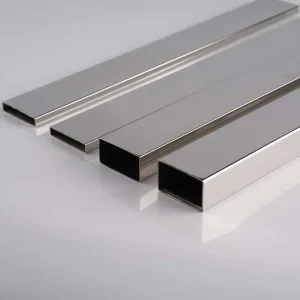
ODM ASTM A554 Stainless Steel Square Rectangular Tubing
ODM ASTM A554 Stainless Steel Square & Rectangular Tubing Supplier, Factory
View Specifications
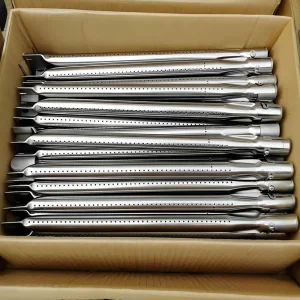
OEM Stainless Steel Gas Grill Burner Tubes
OEM Stainless Steel Gas Grill Burner Tubes (OEM & Aftermarket) Supplier, Factory
View Specifications
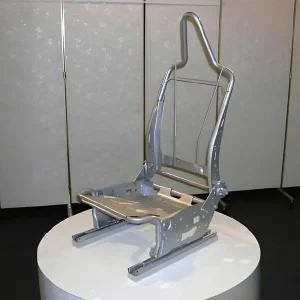
Wholesale Automotive Structural Tubing for Seats Chassis
Wholesale Automotive Structural Tubing for Seats & Chassis Manufacturers, Manufacturer
View Specifications
OEM Stainless Steel Tubing for Home Appliances Electric Tools
OEM Stainless Steel Tubing for Home Appliances & Electric Tools Factories, Factory
View Specifications
High-Quality Stainless Steel Tubing for Medical Safety Grab Bars
High-Quality Stainless Steel Tubing for Medical Safety Grab Bars Manufacturer, Supplier
View Specifications
High-Quality Automotive Exhaust Muffler Tubing 409L 304
High-Quality Automotive Exhaust & Muffler Tubing (409L / 304) Suppliers, Factories
View Specifications
High-Quality Stainless Steel Tubing for Home Storage Organization
High-Quality Stainless Steel Tubing for Home Storage & Organization Manufacturers, Supplier
View Specifications
OEM Stainless Steel Tubing for Industrial Racks Workstations
OEM Stainless Steel Tubing for Industrial Racks & Workstations Manufacturer, Factories
View Specifications
Technical Knowledge Base

Frequently Asked Engineering Questions

Detailed technical answers provided by our quality assurance engineering team regarding material selection, surface finishes, and tolerance compliance.

What is the key difference between 316 and 316L for polished tube applications?
The fundamental distinction lies in Carbon content. Standard 316 contains up to 0.08% Carbon, whereas 316L limits Carbon to a maximum of 0.03%. In welded tube fabrication, higher carbon leads to chromium carbide precipitation at the grain boundaries during welding (sensitization), which severely weakens corrosion resistance along the seam. 316L prevents sensitization, making it the preferred choice for welded tubing assemblies subjected to corrosive environments.
Why does 304 tubing suffer from "tea-staining" in coastal outdoor environments?
"Tea-staining" is a localized surface corrosion phenomenon caused by airborne chloride ions breaking down the passive Chromium Oxide film on 304 stainless steel. Because 304 lacks Molybdenum, chloride ions pit the surface and form iron oxide rust stains. Upgrading to polished 316/316L tubing (with 2.0-3.0% Molybdenum) paired with a 600# smooth mirror surface prevents chloride entrapment and halts tea-staining.
What dimensional tolerances can be maintained on precision welded tubing?
Standard ASTM A554 welded tubing typically maintains an outside diameter (OD) tolerance of ±0.10 mm. However, for specialized precision applications such as conveyor roller shells or sanitary plating substrates, our advanced Foshan mills achieve tight tolerances of ±0.05 mm on OD, wall thickness variance within ±8%, straightness of 1 mm/m, and squareness of corners within ±0.5°.
How does internal weld bead planishing affect secondary bending operations?
When tubing is subjected to tight-radius mandrel bending (e.g., 90° or 180° bends), a prominent internal weld seam bead acts as a stress riser, leading to cracking or ovality distortion. In-line weld bead planishing (cold rolling the weld seam flat against the inner mandrel) smooths the internal seam flush with the tube wall, maintaining uniform ductility during bending and flaring.
What is the standard Minimum Order Quantity (MOQ) and production lead time?
For standard round, square, and rectangular tube sizes in 304 or 316L with 180# satin or 600# mirror polish, the typical MOQ is 500 kg per size. For custom special-shaped profiles or specialized PVD color coatings, the MOQ is 1,000 kg. Typical factory lead time is 15 days following sample approval and deposit confirmation.
Can your factory perform secondary fabrication before export shipment?
Yes. Beyond mill-length tube manufacturing (standard 6-meter lengths), our Foshan facility offers comprehensive secondary CNC fabrication services. This includes precision laser cut-to-length (zero burr), CNC mandrel bending, end necking/flaring, punching, slotting, drilling, and pre-assembled hardware welding. Global buyers receive assembly-ready components directly at their factory floor.