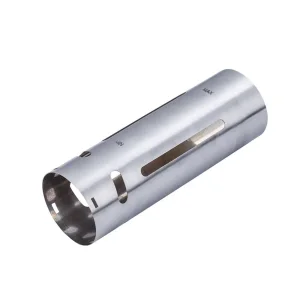
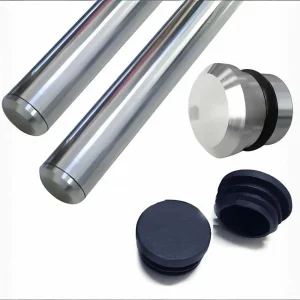
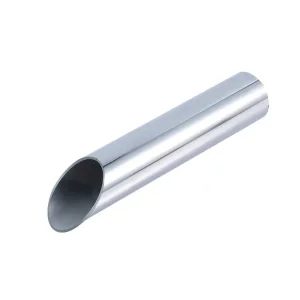
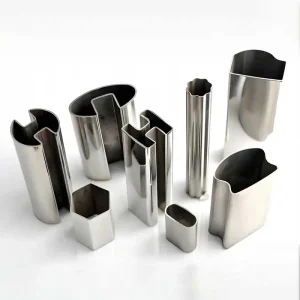
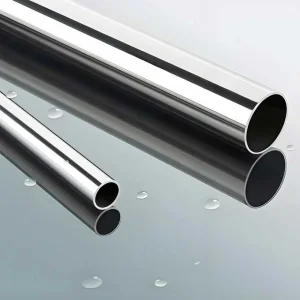
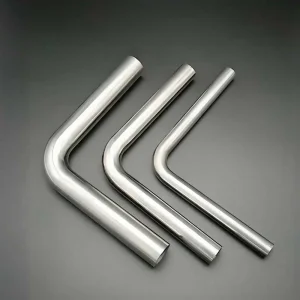
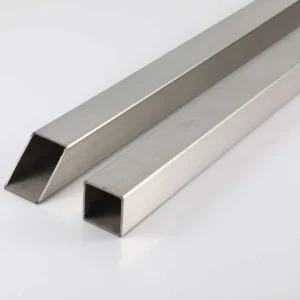
Explore our factory-direct inventory of ASTM A554, ASTM A312, and sanitary grade stainless steel tubes manufactured under rigorous mill quality standards.
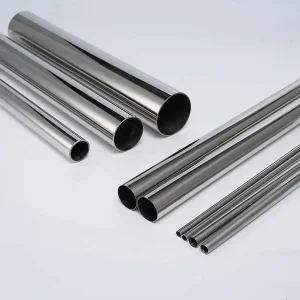
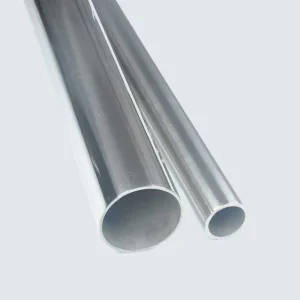
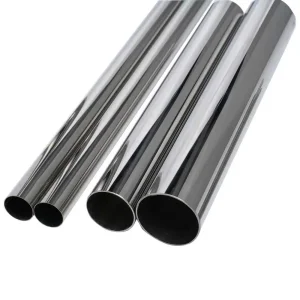
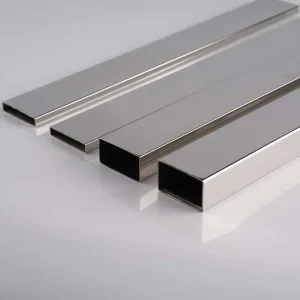
An authoritative engineering breakdown of low-carbon molybdenum-bearing austenitic alloys for industrial procurement officers, piping design engineers, and quality assurance auditors.
In aggressive industrial environments involving halide solutions, marine splash zones, and hot acidic processing, standard austenitic grades such as AISI 304 often suffer catastrophic micro-structural degradation due to chloride-induced pitting and crevice corrosion. As an industry-leading 316L stainless steel pipe supplier & factory network, our manufacturing infrastructure is engineered around the precise control of chemical composition and thermal history, optimizing the passive chromium-oxide (Cr₂O₃) protective film.
The defining metallurgical difference of Grade 316L (UNS S31603 / EN 1.4404) lies in its targeted chemistry: a additions of 2.0% to 3.0% Molybdenum (Mo) paired with a strictly controlled carbon cap of C ≤ 0.030%. Molybdenum significantly stabilizes the passive film against localized chloride breakdown, while the ultra-low carbon content eliminates chromium carbide precipitation (Cr₂₃C₆) along grain boundaries during welding or high-temperature exposure (450°C–850°C sensitization range). Consequently, 316L pipes maintain superior immunity to intergranular corrosion (IGC) without requiring post-weld solution annealing in structural installations.
The resistance of an alloy to localized pitting corrosion is mathematically evaluated using PREN:
PREN = %Cr + (3.3 × %Mo) + (16 × %N)
While standard 304 stainless steel yields a PREN value of ~19.0, our high-purity 316L pipes achieve a certified PREN between 23.5 and 25.0, providing over 30% higher resistance against pitting degradation in saline and chemical processing environments.
| Grade Specification | Carbon (C) | Chromium (Cr) | Nickel (Ni) | Molybdenum (Mo) | Nitrogen (N) | Silicon (Si) | Phosphorus (P) | Sulfur (S) |
|---|---|---|---|---|---|---|---|---|
| ASTM A312 TP316L | ≤ 0.035 | 16.0 – 18.0 | 10.0 – 14.0 | 2.00 – 3.00 | ≤ 0.10 | ≤ 0.75 | ≤ 0.045 | ≤ 0.030 |
| EN 1.4404 (X2CrNiMo17-12-2) | ≤ 0.030 | 16.5 – 18.5 | 10.0 – 13.0 | 2.00 – 2.50 | ≤ 0.11 | ≤ 1.00 | ≤ 0.045 | ≤ 0.015 |
| ASTM A312 TP304L (For Reference) | ≤ 0.035 | 18.0 – 20.0 | 8.0 – 12.0 | — | ≤ 0.10 | ≤ 0.75 | ≤ 0.045 | ≤ 0.030 |
| UNS S31254 (6% Mo Super Austenitic) | ≤ 0.020 | 19.5 – 20.5 | 17.5 – 18.5 | 6.00 – 6.50 | 0.18 – 0.25 | ≤ 0.80 | ≤ 0.030 | ≤ 0.010 |
| Alloy Grade | Tensile Strength, min. (MPa / ksi) | Yield Strength (0.2% Offset), min. (MPa / ksi) | Elongation in 2 in. (50mm), min. (%) | Hardness, max. (Rockwell B / Brinell) |
|---|---|---|---|---|
| 316L Welded Pipe (ASTM A312) | 485 MPa / 70 ksi | 170 MPa / 25 ksi | 35% | HRB 90 / HBW 192 |
| 316L Seamless Pipe (ASTM A312) | 485 MPa / 70 ksi | 170 MPa / 25 ksi | 35% | HRB 90 / HBW 192 |
| 316L Sanitary Tubing (ASTM A270) | 485 MPa / 70 ksi | 205 MPa / 30 ksi | 35% | HRB 90 / HBW 192 |
Tailored 316L stainless steel piping matrices formulated for demanding operating envelope parameters across mission-critical global industries.
Designed for subsea umbilical flowlines, hydrocarbon processing manifolds, and marine topside platform systems. Our 316L pipes undergo NACE MR0175 / ISO 15156 compliance testing to guarantee resistance against H₂S-induced sulfide stress cracking (SSC) in sour gas service environments.
Ideal for handling hot organic acids, acetic acid synthesis, continuous nitration equipment, and storage tanks. 316L's elevated molybdenum level prevents aggressive pitting caused by diluted sulfuric, phosphoric, and formic acids at elevated process temperatures.
Offering mechanically polished (MP) and electro-polished (EP) internal surface finishes down to Ra ≤ 0.25 µm (10 µin). Complies with ASME BPE standards to eliminate biofilm adhesion, supporting continuous Clean-In-Place (CIP) and Steam-In-Place (SIP) sterilization cycles.
Precision 316L seamless and welded instrumentation tubing formulated for cryogenic LNG transportation and high-pressure gaseous hydrogen (H₂) storage. Austenitic crystal lattice maintains microstructural ductility down to -196°C without brittle transition.
Custom 316L high-pressure feed pipe lines for seawater reverse osmosis plants. Resists crevice attack under elastomeric couplings and victaulic jointing systems exposed to concentrated brine flow and high fluid velocities.
Ultra-High Purity (UHP) seamless 316L tubing cleaned, purged, and sealed in Class 10 cleanroom conditions. Prevents outgassing and particle shedding in microchip fabrication, photolithography, and solar cell manufacturing lines.
Strategic supply chain insights, decarbonization directives, alloy surcharge dynamics, and international standard mapping for global procurement executives.
Procuring industrial-grade 316L stainless steel pipes requires navigating raw material market dynamics, primarily driven by the London Metal Exchange (LME) nickel index and global Molybdenum oxide market benchmarks. Because 316L contains 2.0–3.0% Molybdenum, its alloy surcharge fluctuates independently of standard 304 series material. Operating as a direct factory manufacturer in Foshan's stainless steel industrial hub, we leverage vertical integration—from raw material coil slitting to precision tube forming—to buffer global EPC buyers against extreme market price swings through hedging and long-term mill agreements with TISCO, POSCO, and Baosteel.
With international supply chains adapting to strict environmental sustainability metrics, industrial buyers in Europe and North America must verify the carbon intensity of imported stainless steel products. Our production lines utilize Electric Arc Furnace (EAF) steel substrate with high recycled scrap content, drastically lowering Scope 1 and Scope 2 carbon footprints compared to blast-furnace routes. We issue third-party verified Environmental Product Declarations (EPD) and full carbon accounting dossiers compliant with the EU CBAM transitional tracking phase, protecting global importers from unexpected tariff penalties.
| American Standard (ASTM/ASME) | European Standard (EN/DIN) | Japanese Standard (JIS) | Application Category | Dimensional & Test Standard |
|---|---|---|---|---|
| ASTM A312 / ASME SA312 | EN 10217-7 / EN 10216-5 | JIS G3459 | Industrial Process Piping | ANSI B36.19M / B36.10M |
| ASTM A249 / ASME SA249 | EN 10217-7 Class 1 | JIS G3463 | Boiler & Heat Exchanger Tubes | ASTM A1016 Specification |
| ASTM A269 / ASME SA269 | EN 10217-7 / EN 10216-5 | JIS G3459 | General Commercial & Instrument Tubing | Fractional & Metric OD Sizes |
| ASTM A554 | EN 10296-2 | JIS G3446 | Structural & Ornamental Tubing | Round, Square, Rectangular Profiles |
| ASTM A270 / ASME BPE | DIN 11850 / EN 10357 | JIS G3447 | Sanitary Biopharmaceutical Tubing | Tri-Clamp & Weld Tube Specifications |
From high-frequency plasma/laser welding to multi-stage NDT inspection, discover how our 43 tube mills achieve zero-defect operational outcomes.
Producing premium-grade 316L welded and seamless pipes requires rigorous process parameters to ensure high pressure capability, true roundness, tight wall thickness tolerances (±8%), and defect-free internal weld beads. Below is our standard 6-stage Quality Assurance framework deployed on every production run:
During automatic TIG or Laser welding, high-purity inert shield gas (Argon/Nitrogen mix) continuously purges the interior bore. This prevents root oxidation, eliminating the dark oxide scale (titanium/iron tinting) that compromises internal corrosion resistance.
Pipes undergo continuous bright solution annealing at 1040°C to 1150°C followed by rapid water/gas quenching. This process redissolves any precipitated carbides back into the austenitic matrix, restoring full mechanical strength and corrosion resistance.
Every linear meter of welded pipe passes through in-line Eddy Current testing coils per ASTM A1016 / EN 10246-2. Discontinuities, pinholes, and micro-cracks trigger automated rejection gates prior to cutting.
100% of pressure-rated 316L process pipes undergo hydrostatic testing at pressures calculated via Barlow's Formula: P = 2St/D, holding test pressure for a minimum of 5 seconds without drop or leakage.
In-line non-contact laser micrometers measure outer diameter (OD), wall thickness, ovality, and straightness in real-time, enforcing precision tolerance limits down to ±0.05 mm for specialized instrumentation tubing.
Immersed in hydrofluoric and nitric acid solution per ASTM A967 practice to eliminate free iron contaminants embedded during forming, regenerating a uniform, ultra-clean passive oxide layer.
Simplifying international procurement with complete metallurgical traceability, regional regulatory certifications, and flexible freight solutions.
Navigating cross-border industrial equipment procurement requires absolute confidence in material traceability and regional compliance. As a dedicated OEM/ODM 316L stainless steel pipe manufacturer, we provide an integrated compliance package for every shipment:
Pioneering advancements in green stainless steel metallurgy, high-speed laser welding technology, and ultra-high purity pipe surfaces.
As industrial processing environments push toward higher pressures, more aggressive corrosive reagents, and stringent clean energy standards, our engineering R&D committee is driving innovation along four strategic vectors:
Optimizing 316L internal crystal structures via specialized vacuum cold-drawing techniques to minimize hydrogen embrittlement pathways under 70 MPa (10,000 psi) high-pressure gas refueling protocols.
Integrating infrared thermal imaging sensors and high-speed acoustic cameras directly into laser weld heads. AI micro-adjusts energy density and travel velocity in real-time, achieving zero weld bead variance across 100,000 meter continuous runs.
Advancing automated chemical polishing baths for semiconductor sub-nanometer nodes, establishing particle-free gas transport piping that prevents micro-contamination in 2nm microchip fabrication facilities.
Partnering with premier raw material suppliers to transition 100% of 316L coil supply to hydrogen-reduced direct iron ore (DRI) and green electricity powered electric arc furnaces by 2030, cutting embedded carbon by 75%.
Get definitive technical answers regarding 316L pipe specifications, corrosion resistance, schedule sizing, and international delivery protocols.
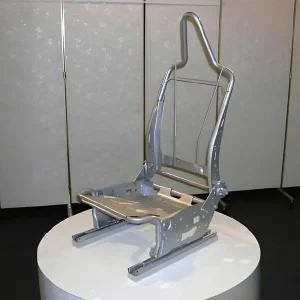
Explore our extended product offerings including CNC machined assemblies, appliance tubing, structural profiles, and specialized medical grab bar components.