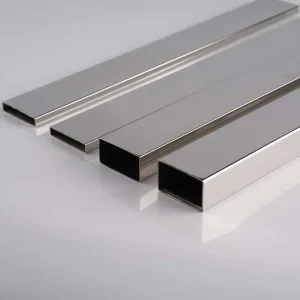
Explore our comprehensive range of high-performance welded tubing engineered for automotive, industrial, structural, and sanitary applications.
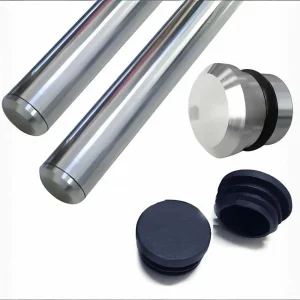
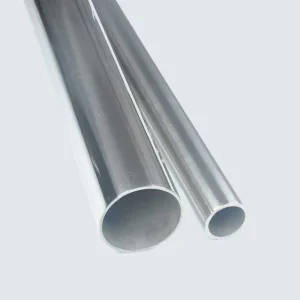
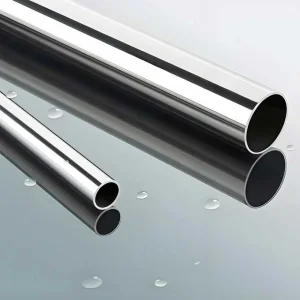
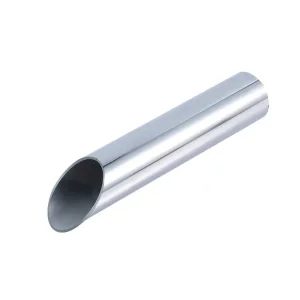
In the demanding realm of internal combustion engines, hybrid powertrains, and industrial thermal management, 409L stainless steel tubing (UNS S40900 / EN 1.4512) stands as the ultimate economic and metallurgical equilibrium. Designed specifically to withstand aggressive thermal cycling, corrosive exhaust gas condensate, and atmospheric oxidation, 409L is a titanium-stabilized ferritic alloy that outperforms traditional aluminized carbon steel while eliminating the thermal expansion penalties of austenitic grades like 304.
The "L" designation in 409L signifies ultra-low carbon content combined with titanium addition. Titanium preferentially reacts with carbon and nitrogen to form titanium carbides (TiC), preventing chromium carbide precipitation at grain boundaries during welding. This complete elimination of intergranular corrosion hazards ensures structural integrity under thermal fatigue.
Unlike 304 austenitic steel, which exhibits high thermal expansion leading to fatigue cracks around manifold flanges and weld joints, 409L features a body-centered cubic (BCC) ferrite structure. Its thermal expansion coefficient matches carbon steel ($10.4 \times 10^{-6}/\text{K}$), reducing thermal stress during rapid heating and cooling cycles up to 675°C continuous (750°C intermittent).
Exhaust tailpipes and mufflers routinely accumulate acidic dew points containing sulfurous and nitrous acids during cold starts. With 10.5% to 11.75% chromium content, 409L forms a self-healing passive chromium oxide film that resists internal condensate attack and exterior road-salt corrosion far superior to coated carbon steel options.
Procurement managers and automotive design engineers must balance material longevity against BOM costs. Below is an authoritative empirical breakdown of 409L performance compared to standard alternatives.
| Material Parameter / Grade | 409L Ferritic SS | 439 / 441 Ferritic SS | 304 Austenitic SS | Aluminized Carbon Steel |
|---|---|---|---|---|
| Chromium Content (%) | 10.50 - 11.75% | 17.00 - 18.00% | 18.00 - 20.00% | 0.00% (Coated only) |
| Carbon Content (Max %) | 0.030% (Ultra-Low) | 0.030% | 0.080% | 0.150% |
| Stabilizing Element | Titanium (Ti 6xC to 0.75%) | Ti + Nb Dual Stabilized | None (Standard 304) | None |
| Max Continuous Temp (°C) | 675 °C | 850 °C | 870 °C | 500 °C (Coating breaks down) |
| Thermal Expansion (10⁻⁶/K) | 10.4 (Low stress) | 10.8 | 17.3 (High thermal strain) | 12.0 |
| Thermal Conductivity (W/m·K) | 25.0 (Efficient heat dissipation) | 23.0 | 16.2 (Heat buildup) | 45.0 |
| Weldability & Formability | Excellent (High Ductility) | Good | Excellent | Moderate (Coating flakes off) |
| Relative Cost Index | Benchmark (Optimal Value) | +35% higher | +85% higher | -25% lower (Short lifespan) |
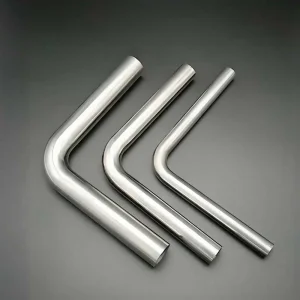
Our 409L tubing undergoes inline bright annealing to achieve an elongation rating exceeding 25%. This ductility enables sharp radius CNC rotary draw bending down to 1.0D without wall thinning exceeding 12% or seam ruptures.
We utilize solid-state High-Frequency Induction Welding coupled with continuous inner/outer weld seam scarfing. This ensures the weld seam thickness matches the base tube within ±0.03mm, eliminating gas flow turbulence.
100% of our 409L exhaust tubing lines are integrated with continuous NDT (Non-Destructive Testing) eddy current systems according to ASTM A268/A1016 standards, guaranteeing zero pinholes or micro-fissures.
The global market for automotive and industrial exhaust tubing is undergoing a major structural shift. Tightening global emission standards—including Euro 6d/Euro 7, US EPA Tier 4 Final, and China VI—are forcing original equipment manufacturers (OEMs) and aftermarket suppliers to upgrade from short-lived aluminized steel to durable ferritic stainless steel solutions.
Hybrid Electric Vehicles (HEVs) run colder exhaust profiles due to frequent internal combustion engine start-stop cycles. This results in heavy internal acidic condensate accumulation. 409L is now the worldwide baseline material for hybrid exhaust downpipes, catalytic converter shells, and muffler systems to guarantee 10-year / 150,000-mile anti-corrosion warranties.
Class 7 and Class 8 commercial trucks require rigid, thick-walled 409L tubing for Selective Catalytic Reduction (SCR) units and Diesel Particulate Filters (DPF). The high resistance of 409L against thermal fatigue ensures that heavy-duty fleets maintain zero exhaust downtime under continuous 24/7 highway transit conditions.
Global exhaust modification brands require high-yield, consistent OD/WT tubing that can be easily flared, expanded, mandreled, and TIG welded by custom fabricators. 409L delivers a aggressive tone, structural longevity, and an attractive price point compared to high-copper 201 or expensive 304 options.
Located in Foshan, China—the epicenter of global stainless steel metallurgical processing—our operations leverage vertical integration from raw coil slitting to automated high-frequency tube rolling and multi-axis CNC fabrication.
We source raw 409L mother coils directly from Tier-1 state-owned steel conglomerates including TISCO, Baosteel, and POSCO China. Every coil batch is accompanied by certified EN 10204 3.1 Mill Test Certificates verifying precise chemical heats and zero impurity inclusion.
Operating 43 high-speed automated HFIW tube mills equipped with online optical laser callipers, we process over 900 metric tons of 409L exhaust tubing monthly. Our automated mill speed exceeds 45 meters per minute while maintaining dimensional accuracy.
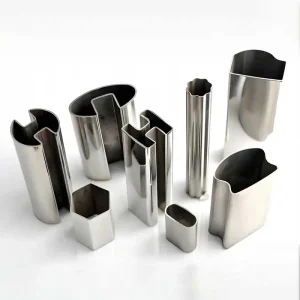
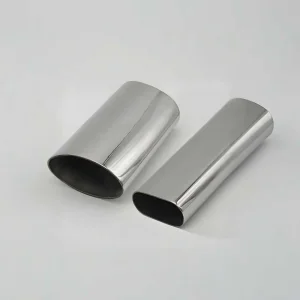
With an active library of over 500 roll-forming dies, oval shapes, D-profiles, and custom mandrel sizes, we eliminate initial die-setup fees for standard and semi-custom automotive tube dimensions, dramatically cutting prototyping lead times.
From extreme vibration automotive headers to continuous duty industrial incinerators, 409L provides high performance across a wide spectrum of thermal and structural applications.
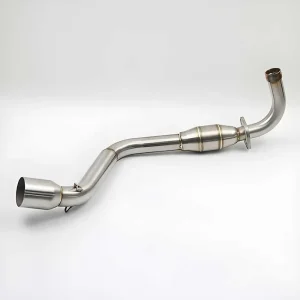
Installed directly downstream of the engine cylinder head where temperature spikes hit 650°C. 409L tubing handles continuous high-frequency pulse vibration and thermal shocks without fatigue fracturing around mounting flanges.
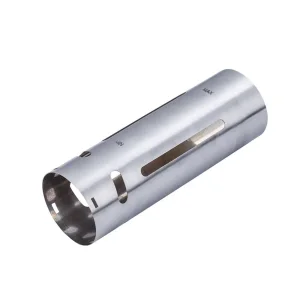
Our CNC punching and laser-slotting equipment processes 409L tube into sound-dampening perforated cores. Resists hot exhaust gas erosion and acoustic wave pressure while preventing internal rust buildup.
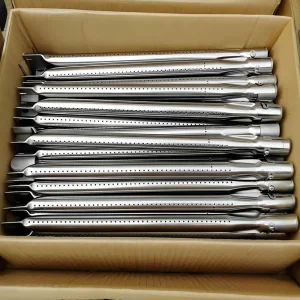
Utilized in commercial space heaters, agricultural grain dryers, and industrial oven burners. 409L provides excellent scaling resistance at elevated temperatures compared to structural carbon steel tubing.
Tractors, harvesters, and forestry machinery operate in muddy, humid environments. 409L vertical exhaust stacks resist external weather rusting and branch impacts far better than painted or aluminized pipe.
Emergency diesel and gas generators require robust exhaust piping to route toxic flue gases out of buildings. 409L provides fire-proof, gas-tight containment that meets municipal building safety codes.
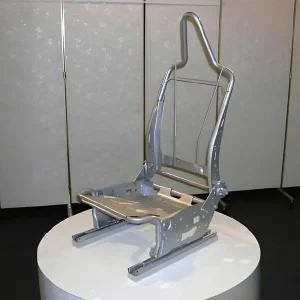
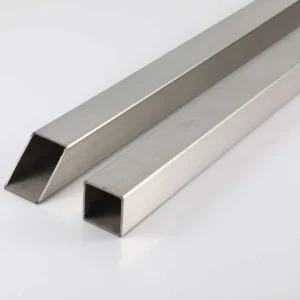
Beyond exhaust gas routing, 409L square and rectangular hollow sections are used in transit bus chassis and roof framework where lightweighting and corrosion resistance are mandatory.
To guarantee zero assembly line disruptions, international automotive Tier-1 buyers require stringent quality control verification. We strictly comply with global standards to deliver full traceable quality packs.
All 409L tubing is manufactured and tested according to ASTM A268 (Standard Specification for Seamless and Welded Ferritic Stainless Steel Tubing) and ASTM A554 for mechanical applications.
Every lot undergoes 60° cone flaring tests without seam cracking and 100% flattening tests (flown until walls meet) to ensure superior ductility for downstream hydroforming and expanding.
Outer Diameter (OD) is held within ±0.05mm to ±0.10mm; Wall Thickness (WT) within ±8%; Straightness within 1.0mm per meter. Ovality is tightly controlled for seamless robotic welding.
Tubes are individually plastic-sleeved, end-capped, bundled with steel straps, and wrapped in heavy-duty moisture-proof woven fabric or custom wooden crates for safe sea freight.
As the transportation sector accelerates lightweighting initiatives to cut carbon emissions, 409L exhaust tubing technology is evolving along three key technical axes:
Traditional exhaust systems used 1.5mm to 2.0mm wall thickness. Advanced hydroforming techniques allow complex 3D exhaust geometries using 0.8mm-1.0mm ultra-thin-wall 409L, reducing system weight by up to 30% while retaining structural stiffness.
Integration of ceramic and micro-porous thermal barrier coatings on 409L outer surfaces preserves internal exhaust enthalpy. This accelerates catalyst light-off times during engine cold-starts, meeting ultra-low Euro 7 emission targets.
409L ferritic stainless steel is 100% recyclable. By utilizing Electric Arc Furnace (EAF) steelmaking powered by renewable energy, our raw coils deliver a 60% lower embedded carbon footprint compared to blast furnace routes.
Answers compiled by our senior metallurgical engineers to address common design, fabrication, and procurement queries.
Browse our secondary collection of high-precision stainless steel tubing tailored for automotive structural components, marine environments, and industrial machinery.