VertexFlow Tubes stainless steel tube manufacturer logo VertexFlow TubesPrecision SS Tubing
Industry Whitepaper & Technical Engineering Guide

High-Quality AISI 316L Stainless Steel Tube Manufacturers & Factory

Precision-engineered austenitic stainless steel tubing engineered for severe chemical processing, biopharmaceutical cleanrooms, high-purity fluid systems, and demanding marine infrastructure.

Primary Product Portfolio

Featured Precision Stainless Steel Tubing Solutions

Explore our flagship OEM and ODM welded and seamless stainless steel tube series, manufactured to rigorous ASTM, DIN, EN, and JIS standards.
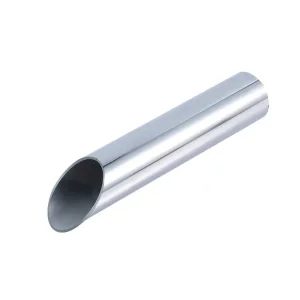
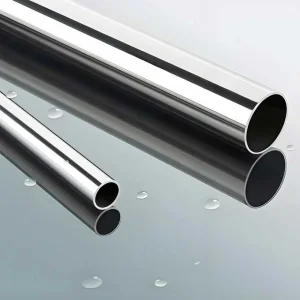
OEM Stainless Steel Tubing for Industrial Racks & Workstations
OEM Stainless Steel Tubing for Industrial Racks & Workstations Manufacturer, Factories
View Product Specs
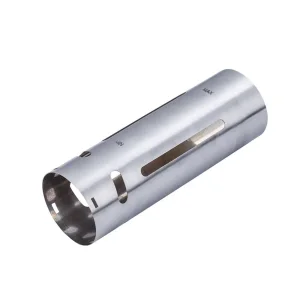
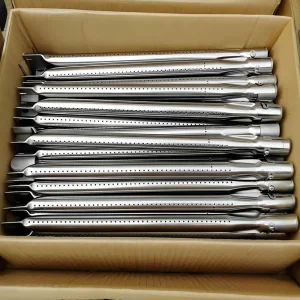
OEM Stainless Steel Gas Grill Burner Tubes
OEM Stainless Steel Gas Grill Burner Tubes (OEM & Aftermarket) Supplier, Factory
View Product Specs
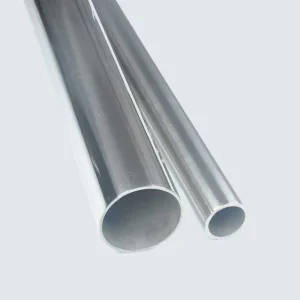
OEM Stainless Steel Tubing for Conveyor Rollers
OEM Stainless Steel Tubing for Conveyor Rollers Manufacturers, Suppliers
View Product Specs
China Decorative Stainless Steel Tubing for Furniture
China Decorative Stainless Steel Tubing for Furniture (201 & 304) Manufacturer, Supplier
View Product Specs
OEM Stainless Steel Tubing for Home Appliances
OEM Stainless Steel Tubing for Home Appliances & Electric Tools Factories, Factory
View Product Specs
High-Quality Medical Grade Stainless Steel Tubing
High-Quality Medical Grade Stainless Steel Tubing for Hospital Furniture Factories, Factory
View Product Specs
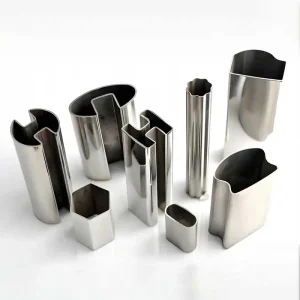
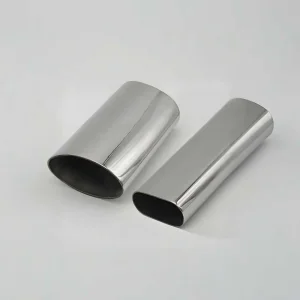
OEM ASTM A554 Oval & Special Shaped Tubing
OEM ASTM A554 Stainless Steel Oval & Special Shaped Tubing Manufacturers, Supplier
View Product Specs
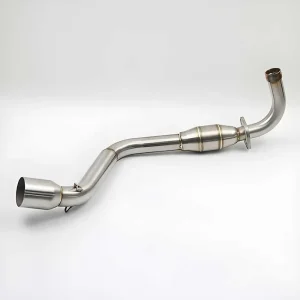
Automotive Exhaust & Muffler Tubing
High-Quality Automotive Exhaust & Muffler Tubing (409L / 304) Suppliers, Factories
View Product Specs
Material Science & Engineering

Metallurgical & Chemical Foundations of AISI 316L Stainless Steel

Understanding why AISI 316L (UNS S31603 / EN 1.4404) outperforms standard austenitic alloys in localized pitting, crevice corrosion, and intergranular decay.

The Role of Molybdenum (2.0–3.0%) & Extra-Low Carbon

AISI 316L is a molybdenum-bearing austenitic stainless steel. The addition of 2.0% to 3.0% Molybdenum ($Mo$) fundamentally alters the thermodynamic stability of the passive oxide film ($Cr_2O_3$). This addition drastically reduces the dissolution rate of iron ions in acidic and chloride-rich media.

The "L" designation signifies an extra-low carbon content ($\le 0.03\%$). By limiting carbon levels, AISI 316L prevents chromium carbide precipitation ($Cr_{23}C_6$) along grain boundaries during welding in the heat-affected zone (HAZ) within the sensitisation temperature range ($450^\circ\text{C}$ to $850^\circ\text{C}$). This eliminates intergranular corrosion risk without requiring post-weld solution annealing.

Pitting Resistance Equivalent Number (PREN) Metrics

Pitting corrosion is evaluated quantitatively via the Pitting Resistance Equivalent Number (PREN). The mathematical formula applied for austenitic alloys is:

PREN Calculation Formula

PREN = %Cr + (3.3 × %Mo) + (16 × %N)

Standard AISI 304 yields a PREN rating of ~18.0 - 19.0. In contrast, certified AISI 316L tubing achieves a PREN value between 23.0 and 25.5. This performance margin makes 316L mandatory for fluid handling systems operating in marine environments, saline solutions, and organic acids.

Alloy Designation UNS / EN Standard Chromium (Cr) Nickel (Ni) Molybdenum (Mo) Carbon (C) max PREN Range
AISI 304 UNS S30400 / 1.4301 17.5 - 19.5% 8.0 - 10.5% - 0.07% 18.0 - 19.0
AISI 304L UNS S30403 / 1.4307 17.5 - 19.5% 8.0 - 12.0% - 0.03% 18.0 - 19.5
AISI 316 UNS S31600 / 1.4401 16.0 - 18.0% 10.0 - 14.0% 2.0 - 3.0% 0.08% 22.6 - 24.5
AISI 316L (High-Grade) UNS S31603 / 1.4404 16.5 - 18.5% 10.0 - 13.0% 2.0 - 2.5% 0.03% 23.1 - 25.5
AISI 317L UNS S31703 / 1.4438 18.0 - 20.0% 11.0 - 15.0% 3.0 - 4.0% 0.03% 28.0 - 31.0
Global Commercial & Industrial Context

Macro-Industry Solutions & Global Commercial Deployment

Across modern industrial supply chains, AISI 316L tubing serves as a core material for high-reliability infrastructure where structural integrity and contamination prevention are paramount.

Chemical Process & Petrochemical Refineries

Process equipment handling acetic acid, phosphoric acid, and sulfuric solutions requires structural tubing that resists pitting and stress corrosion cracking (SCC). AISI 316L welded and seamless tubing provides high yield strength and thermal stability under cyclic pressure differentials, minimizing downtime in chemical refineries worldwide.

Biopharmaceutical & Ultra-High Purity (UHP) Fluids

In bio-processing, cell culture facilities, and active pharmaceutical ingredient (API) synthesis, surface smoothness determines cleanability. Our mechanically polished and electropolished 316L ASME BPE compliant tubing achieves surface roughness ratings down to Ra ≤ 0.25 µm (10 µin), preventing biofilm formation and particle entrapment.

Marine Infrastructure & Seawater Desalination

Desalination facilities operating reverse osmosis (RO) high-pressure racks and marine hardware encounter continuous exposure to chloride concentrations exceeding 19,000 mg/L. AISI 316L tubing prevents crevice corrosion under gaskets and fittings, outperforming standard 304 alloys and extending service life by over 300%.

500+
Neutral Salt Spray Hours Certified
±0.03mm
Precision Dimensional Tolerance
Ra 0.15µm
Electropolished Internal Surface
100%
Eddy Current & Hydrotested
Manufacturing Precision & Verification

Advanced Manufacturing Roadmap & E-E-A-T Quality Assurance

From prime strip slitting to automated orbital laser welding and multi-stage non-destructive testing, our integrated manufacturing lines eliminate flaws before shipment.

1. Automated Inert-Gas Shielded Welding

Our tube mill operations utilize automated TIG (Tungsten Inert Gas) and Plasma arc welding lines configured with dual internal and external argon/nitrogen shielding. By maintaining an oxygen-free envelope (< 10 ppm $O_2$) during seam fusion, we eliminate internal weld bead oxidation (heat tinting) and preserve the alloy's inherent corrosion resistance.

The weld bead is subsequently planished in-line, aligning the joint profile seamlessly with the tube wall thickness to guarantee uniform structural properties under cold bending, flaring, and expansion operations.

2. Bright Annealing & Surface Passivation

To relieve residual stresses induced during cold roll-forming and sizing, tubes undergo inline continuous bright annealing at temperatures exceeding $1,050^\circ\text{C}$ in a pure hydrogen atmosphere. This process restores maximum ductility and austenitic phase uniformity without scaling or oxidation.

Subsequent immersion in controlled nitric-hydrofluoric acid bath chemistry (or automated citric acid passivation per ASTM A967) removes any microscopic tramp iron contaminants, ensuring instantaneous passive layer regeneration.

Comprehensive Nondestructive Testing (NDT) Protocol

Every single length of AISI 316L tube leaving our factory passes a stringent, multi-tiered NDT verification matrix:

  • Inline Eddy Current Inspection (ASTM E426): 100% full-circumference electronic scanning for pinholes, longitudinal weld discontinuities, and wall thinning.
  • Hydrostatic Pressure Testing (ASTM A1016): Proof pressure testing up to 300 bar (4,350 psi) ensuring absolute hydrostatic integrity.
  • Pneumatic Air-Under-Water Testing: Low-viscosity gaseous bubble leak verification at 10 bar pressure for UHP and gas distribution tubing lines.
  • Dimensional & Profilometer Verification: Laser micrometer tracking of Outside Diameter (OD), Wall Thickness (WT), ovality, straightness (< 0.5 mm/m), and surface roughness ($Ra$).
Targeted Regional Deployment

Localized Application Scenarios & Global Industry Alignment

How global engineering teams adapt AISI 316L stainless steel tubing specs to regional standards and distinct environmental challenges.

North American Industrial & Biotech Sector

Standards: ASTM A249 / A269 / ASME SA249, ASME BPE

Configured specifically for North American pharmaceutical corridors and chemical plants. Requires dual dual-certification (316/316L), imperial sizing from 1/4" OD up to 4" OD, strict hardness limits ($\le 90\text{ HRB}$), and high-frequency orbital weld compatibility.

European Process & Food/Beverage Systems

Standards: EN 10217-7, DIN 11850 / EN 10357 (Class A/B)

Built for European food, dairy, and beverage processing OEMs. Features metric outer dimensions (e.g., 18mm, 22mm, 28mm, 38mm, 51mm) with stringent weld seam reduction and certified non-toxic surface passivation in compliance with EU Directive 1935/2004.

Asia-Pacific Coastal Infrastructure & Energy

Standards: JIS G3459, JIS G3447, GB/T 12771

Tailored for high-humidity, marine-adjacent industrial zones in Southeast Asia and East Asia. Focuses on resisting tropical salt fog and atmospheric sulfur emissions, providing extended fatigue life in power plant heat exchangers and coastal cooling towers.

Global Regulatory & Technical Support

Regulatory Compliance & Full Traceability Framework

Our mill operations enforce rigid quality management systems, granting engineering buyers absolute peace of mind through complete documentation and regulatory adherence.

Mill Test Certificate (MTC) per EN 10204 3.1 / 3.2

Every shipment of AISI 316L stainless steel tubing is supplied with fully traceable EN 10204 Type 3.1 Material Test Reports (or independent 3.2 inspection MTCs upon request). Documentation encompasses:

  • Exact heat number and raw material coil heat origin (TISCO, POSCO, Baosteel).
  • Direct reading optical emission spectrometry (OES) chemical analysis.
  • Mechanical testing results: Yield Strength ($R_{p0.2}$), Tensile Strength ($R_m$), Elongation ($A\%$), and Rockwell/Vickers Hardness.
  • Flattening, flaring, reverse bend, and hydrostatic press results.

International Certification Matrix

Our manufacturing plant operates under rigorous environmental, safety, and operational management protocols compliant with global industry standards:

  • ISO 9001:2015: Quality Management Systems.
  • ISO 14001:2015: Environmental Management Standards.
  • PED 2014/68/EU: European Pressure Equipment Directive compliance for pressure-retaining tubes.
  • NACE MR0175 / ISO 15156: Compliance for petroleum and natural gas industries involving sour gas ($H_2S$) environments.
  • REACH & RoHS 3 Directives: Heavy metal-free, non-hazardous manufacturing guarantee.
Innovation & Sustainability

Technology Roadmap & Future Industry Outlook

Pioneering smart manufacturing technologies, green metallurgy, and next-generation surface engineering to meet evolving global demands.

AI-Driven Real-Time Weld Monitoring

Integrating high-speed infrared thermal imaging and machine vision neural networks directly into the tube forming head. This system monitors melt pool geometry and thermal distribution 1,000 times per second, dynamically adjusting laser power and line speed to guarantee 100% seam penetration and zero weld defects.

Decarbonized Green Steel Feedstock

In response to global carbon offset initiatives (such as the EU Carbon Border Adjustment Mechanism - CBAM), our roadmap incorporates raw strip produced via Electric Arc Furnaces (EAF) powered by renewable energy and direct reduced iron (DRI) technology, slashing the embodied carbon footprint by up to 60% per metric ton.

Hydrogen Infrastructure & UHP Expansion

As green hydrogen fuel cells and semiconductor fabrication plants scale globally, we are expanding dedicated ISO Class 5 cleanroom finishing lines. These facilities deliver ultra-high purity (UHP) AISI 316L tubing with inner diameter surface roughness down to Ra ≤ 0.13 µm for high-pressure gas distribution.

Comprehensive Catalog

Specialized Applications & Custom Tube Fabrication

Browse additional specialized stainless steel tubing categories engineered for structural, automotive, marine, and medical equipment OEMs.
Stainless Steel Tubing for Home Storage
High-Quality Stainless Steel Tubing for Home Storage & Organization Manufacturers, Supplier
View Product Specs
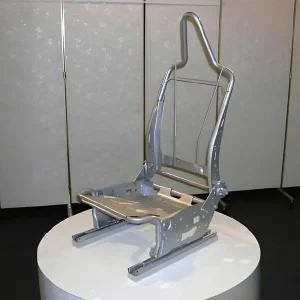
Automotive Structural Tubing for Seats & Chassis
Wholesale Automotive Structural Tubing for Seats & Chassis Manufacturers, Manufacturer
View Product Specs
ODM Marine Grade 316L Stainless Steel Tubing
ODM Marine Grade 316L Stainless Steel Tubing Manufacturer, Suppliers
View Product Specs
Stainless Steel Handrail & Balustrade Tubing
High-Quality Stainless Steel Handrail & Balustrade Tubing (ASTM A554) Manufacturers, Factory
View Product Specs
Tubing for Medical Safety Grab Bars
High-Quality Stainless Steel Tubing for Medical Safety Grab Bars Manufacturer, Supplier
View Product Specs
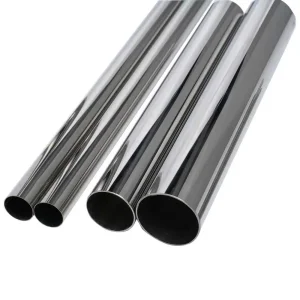
ASTM A554 Stainless Steel Round Tubing
High-Quality ASTM A554 Stainless Steel Round Tubing (Ornamental & Structural) Manufacturer, Suppliers
View Product Specs
China OEM Stainless Steel Tube Fabrication
China OEM Stainless Steel Tube Fabrication & CNC Machining Manufacturers, Suppliers
View Product Specs
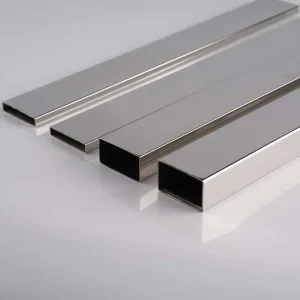
ASTM A554 Square & Rectangular Tubing
ODM ASTM A554 Stainless Steel Square & Rectangular Tubing Supplier, Factory
View Product Specs
Knowledge Repository & FAQ

Frequently Asked Technical Questions (FAQ)

In-depth technical answers addressing material selection, weld integrity, surface treatment, and global procurement criteria for AISI 316L stainless steel tubing.

What is the metallurgical difference between AISI 316 and AISI 316L stainless steel tubing?
The fundamental distinction lies in carbon concentration. Standard AISI 316 permits up to 0.08% maximum carbon, whereas AISI 316L restricts carbon content to a maximum of 0.03%. In heavy-wall welding application, higher carbon levels promote chromium carbide precipitation ($Cr_{23}C_6$) at grain boundaries within the $450^\circ\text{C}-850^\circ\text{C}$ heat-affected zone, depleting local chromium protection and inviting intergranular corrosion. The low carbon content in 316L prevents carbide precipitation, rendering the welded joint immune to intergranular attack without requiring post-weld solution heat treatment.
Why is AISI 316L preferred over AISI 304L in marine and high-chloride applications?
AISI 316L contains 2.0% to 3.0% Molybdenum ($Mo$), an element absent in AISI 304L. Molybdenum significantly stabilizes the passive chromium oxide layer against breakdown caused by aggressive chloride ions ($Cl^-$) found in seawater, de-icing salts, and chemical washdowns. This elevates the Pitting Resistance Equivalent Number (PREN) from ~18.5 (for 304L) up to ~25.0 (for 316L), providing vastly superior protection against pitting corrosion and crevice attack.
What standards govern precision welded vs. seamless AISI 316L tubing?
Welded structural and ornamental tubing typically conforms to ASTM A554. For general corrosion-resisting and biopharmaceutical fluid service, welded and seamless tubing is produced under ASTM A269 or ASTM A249 (boiler/heat exchanger tubes). In sanitary and pharmaceutical applications, ASME BPE standards dictate strict dimensional tolerances and surface roughness ($Ra$) thresholds. In Europe, EN 10217-7 governs welded pressure tubes, while EN 10216-5 applies to seamless variants.
How does Electropolishing (EP) enhance the surface performance of 316L tube internal diameters?
Electropolishing is an electrochemical process that selectively dissolves surface microscopic peaks faster than valleys on the inner tube wall. This reduces surface roughness down to $Ra \le 0.15\,\mu\text{m}$ ($6\,\mu\text{in}$), creating a mirror-like finish. Crucially, electropolishing removes iron from the outer alloy surface, enriching the chromium-to-iron ratio ($Cr/Fe \ge 1.5$) in the passive layer, which dramatically reduces microscopic bacterial adhesion, biofilm growth, and particle contamination in ultra-pure fluid loops.
What filler metals and shielding gases should be specified when welding AISI 316L tubing?
When GTAW (TIG) or orbital welding AISI 316L, matching low-carbon filler metal such as AWS ER316L or ER316LSi must be specified to maintain corrosion resistance across the weld zone. The primary shielding gas should be 100% pure Argon (or Argon with 2-5% Hydrogen for austenitic stainless). Internal purge gas (backing gas) must consist of high-purity Argon or Nitrogen-Argon mixtures with residual oxygen levels kept below 10 ppm to prevent oxidation ("sugar coat") inside the tube bore.
What testing procedures ensure the absence of pinholes and seam defects in welded 316L tubing?
Quality assurance utilizes non-destructive testing (NDT) according to ASTM E426 standards. Continuous inline Eddy Current testing scans 100% of the longitudinal weld seam for micro-cracks or wall discontinuities. Furthermore, sample lots undergo destructive hydrostatic pressure testing (per ASTM A1016), pneumatic leak testing under water, flattening tests, and 180° reverse-bend tests to verify seam strength equals or exceeds parent metal tenacity.
Can AISI 316L stainless steel tubing suffer from Chloride Stress Corrosion Cracking (CSCC)?
Yes. Like most standard 300-series austenitic alloys, AISI 316L can succumb to Chloride Stress Corrosion Cracking when simultaneously subjected to tensile stress, elevated temperatures (typically above $60^\circ\text{C}$ / $140^\circ\text{F}$), and aqueous chloride environments. For severe applications exceeding these limits, engineers should consider upgrading to 2205 Duplex Stainless Steel (UNS S31803 / S32205) or Super Austenitic alloys (such as 6% Mo 254 SMO).