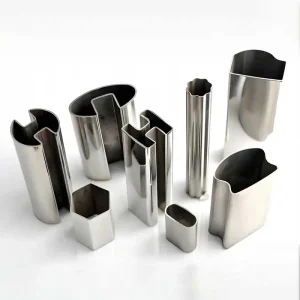
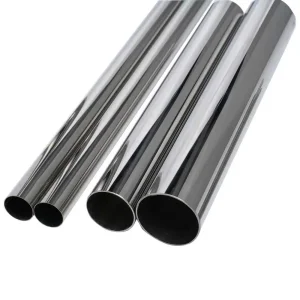
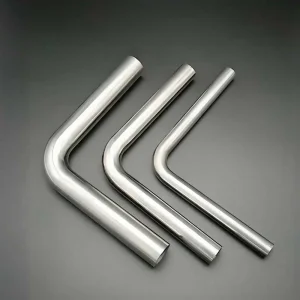
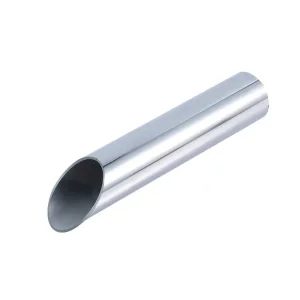
Explore our specialized OEM/ODM stainless steel tubing series designed for extreme vibration, thermal expansion, structural load, and anti-corrosion demands.
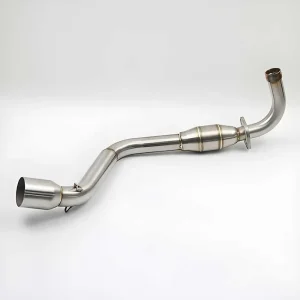
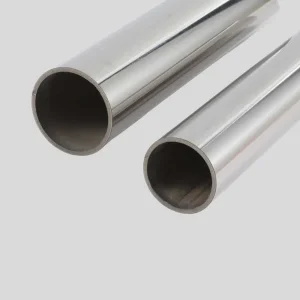
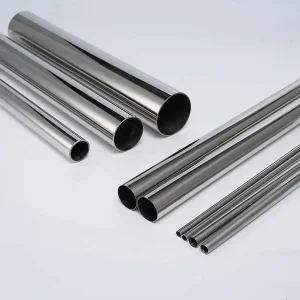
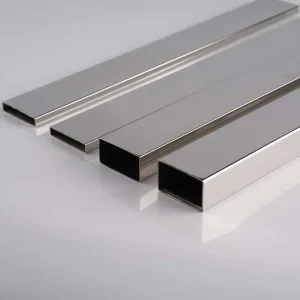
Understanding the thermodynamics, mechanical stresses, and fluid dynamic requirements of modern automotive and industrial exhaust decoupling.
Exhaust gas temperatures (EGT) routinely reach 650°C to 950°C in modern turbocharged gasoline engines and heavy-duty diesel powertrains. As exhaust manifolds and downpipes expand axially and laterally, hydroformed multi-ply bellows absorb linear thermal growth up to 15mm, preventing catastrophic stress cracks on turbocharger housings and exhaust flanges.
Engine roll torque during rapid acceleration and low-frequency idling vibrations transmit severe resonance into the vehicle chassis. Engineered flexible joints act as dynamic decouplers, isolating high-frequency harmonic vibrations and reducing cabin Noise, Vibration, and Harshness (NVH) while protecting downstream catalytic converters and DPF units.
Subjected to millions of reverse-bending cycles and severe road pitch variations, precision auto flex pipes must exhibit exceptional high-cycle fatigue resistance. By utilizing cold-worked SS304 or SS316L strip with uniform wall thickness and automated TIG seam welding, manufacturers guarantee extended service life exceeding 150,000 kilometers.
Max Operating Temp
Fatigue Test Cycles
Hydroforming Precision
16949 Certified
Selecting the optimal internal liner geometry is critical for balancing gas flow turbulence, noise attenuation, flexural rigidity, and heat dissipation.
| Internal Configuration | Primary Mechanical Features | Gas Flow Turbulence | Temperature Rating | Target OEM Applications |
|---|---|---|---|---|
| Inner Braid Flex Joint | Stainless steel wire braided lining; flexible, low dynamic stiffness, lightweight design. | Moderate (slight boundary layer friction) | Up to 700°C | Naturally aspirated gasoline engines, aftermarket replacement, light passenger cars. |
| Interlock Liner Flex Pipe | Helically wound interlocking metallic ribbon; smooth internal bore, high radial strength. | Very Low (laminar flow, minimal backpressure) | Up to 900°C | High-output turbo gasoline engines, heavy commercial vehicles, high-velocity downpipes. |
| Smooth Bellows (Unlined) | Multi-ply hydroformed corrugated tube only; maximum axial displacement flexibility. | High (gas pooling in corrugation valleys) | Up to 650°C | Low-velocity exhaust bypass lines, EGR pipes, stationary power generator systems. |
| Reinforced Outer Braid + Interlock | Dual-layer protection: inner interlock tube + multi-strand outer wire mesh sleeve. | Ultra Low (optimized exhaust velocity) | Up to 950°C | Performance motorsports, Tier-1 OEM Euro 6d / China VI heavy truck exhaust systems. |
Evaluating raw material dynamics, regional emissions mandates, and supplier capability requirements across North American, European, and Asian automotive manufacturing hubs.
Global decarbonization initiatives—such as US EPA Tier 3, European Union Euro 6d/Euro 7, and China VI emissions frameworks—have forced automotive OEMs to redesign exhaust gas treatment assemblies. The rapid proliferation of Hybrid Electric Vehicles (HEVs) introduces unique mechanical challenges: frequent engine start-stop cycles trigger intense thermal shocks and rapid temperature fluctuations (from ambient to 800°C in seconds).
Consequently, exhaust flex pipe manufacturers must utilize advanced high-nickel alloys (such as SS316L and Inconel 625) and multi-ply hydroforming techniques to prevent thermal low-cycle fatigue (LCF) cracking during repeated cold-start transitions.
Global Tier-1 automotive exhaust system integrators (including Faurecia, Tenneco, Eberspächer, and Boysen) demand absolute dimensional repeatability, strict PPM defect rates, and robust Vendor Managed Inventory (VMI) frameworks from China's leading flex pipe factories. Sourcing decisions are no longer purely based on unit price; technical auditors scrutinize continuous line automation, 100% helium leak testing capability, and raw strip chemistry verification.
Factories operating in manufacturing clusters like Foshan and Zhejiang have integrated vertical processes—from cold-rolling and precision slitting to automated TIG welding and hydroforming—ensuring competitive lead times and full batch traceability.
Inside the factory: How raw stainless steel coils are transformed into precision flexible exhaust couplings capable of enduring extreme automotive operating conditions.
Prime grade SS304 / SS409L / SS316L stainless steel strips from TISCO or Posco undergo high-precision burr-free slitting. Continuous tube forming is combined with high-frequency TIG or Laser welding, fully protected by internal pure argon back-shielding to eliminate seam oxidation and weld zone embrittlement.
Unlike mechanical expansion which creates uneven wall thinning and localized stress concentrators, hydraulic forming utilizes controlled internal water pressure to expand multi-ply thin-walled tubing into smooth, uniform corrugations. Wall thickness deviation is strictly limited within ±0.03mm.
High-speed 24-carrier or 36-carrier automated braiding machines weave high-tensile SS304 wire over the hydroformed bellows. Outer steel collars (caps) are precision crimped or projection-welded using CNC press stations to ensure locked mechanical retention under high axial pullout forces.
Deploying specialized flex joint configurations across light vehicle, heavy commercial, off-highway, and stationary industrial sectors.
Positioned directly after the catalytic converter or turbocharger downpipe, passenger car flex joints are engineered for low dynamic spring rates. With compact installation envelopes, these components utilize 2-ply SS304 hydroformed bellows paired with an inner braid or interlock liner to prevent high-rpm exhaust resonance and cabin rumble.
Heavy commercial diesel engines (Class 7-8 trucks, agricultural tractors, mining equipment) generate severe low-frequency engine displacement and high exhaust gas volume. Flex pipes for SCR (Selective Catalytic Reduction) and DPF inlet pipes utilize heavy-gauge SS316L or SS409L interlock liners, capable of resisting high thermal mass and corrosive Urea / DEF condensation.
High-boost turbo systems experience rapid thermal spikes exceeding 900°C and severe exhaust backpressure spikes. Performance flex pipes feature double-layer interlock structures with full TIG hand-welded end rings, ensuring zero inner lining unraveling or flow restriction under extreme track conditions.
Stationary power generators and marine inboard engines require heavy-duty flanged flexible expansion joints. Utilizing 316L multi-ply bellows with ANSI/DIN standard flanges, these units withstand aggressive salt-spray environments while absorbing continuous engine vibration.
Ensuring complete batch traceability, structural durability, and leak-tight performance under simulated severe road environments.
Every flexible exhaust pipe destined for OEM assembly lines undergoes automated mass spectrometer helium leak verification. Permissible leak rates are capped below 1×10⁻⁵ mbar·l/s, completely preventing toxic exhaust gas seepage into vehicle cabin systems.
Pneumatic fatigue test rigs simulate real-world powertrain movements by subjecting sample batches to combined axial displacement, lateral offset, and torsional twist at elevated temperatures (650°C), verifying endurance past 1,000,000 continuous cycles.
Finished stainless steel flex pipes undergo accelerated corrosion testing in accordance with ASTM B117 / ISO 9227 standards. SS304/SS316L assemblies exceed 240 to 500 hours of continuous salt fog exposure without displaying red rust initiation.
Anticipating the technological evolution of exhaust decoupling systems in hydrogen internal combustion engines, zero-emission synthetic fuels, and ultra-lightweight structural architectures.
As the automotive industry explores Hydrogen Internal Combustion Engines (H2-ICE) and e-fuels to achieve carbon neutrality, exhaust gas chemistry is evolving. Hydrogen combustion produces significantly higher water vapor concentrations, requiring advanced moisture corrosion resistance. Next-generation flex pipe development focuses on specialized nickel-rich austenitic alloys and hydro-repellent interior coatings to prevent wet-corrosion degradation during cold-weather operation.
Modern vehicle diagnostic architectures demand integrated thermal and pressure monitoring. Advanced flex pipe manufacturing standardizes laser-welded sensor boss ports directly onto the flex end collars. Furthermore, lightweighting initiatives drive the development of bi-metallic flex joints—joining ultralight SS304 hydroformed bellows to low-cost ferritic SS409L end extensions via friction welding.
Expert answers to common engineering, procurement, and specification queries encountered by automotive procurement managers and exhaust fabricators.
The primary difference lies in exhaust gas flow dynamics, temperature capability, and structural rigidity. An Inner Braid consists of woven stainless steel wire mesh. It provides excellent vibration dampening and flexibility at lower cost, but creates minor gas turbulence at high exhaust velocities. An Interlock Liner is constructed from helically wrapped, interlocking stainless steel metal strip. It creates a smooth internal wall that minimizes backpressure, prevents gas turbulence, and resists extreme temperatures (up to 900°C). Interlock linings are strongly recommended for high-output turbocharged engines and heavy-duty diesel applications where exhaust velocity and backpressure reduction are critical.
Grade 409L is a ferritic stainless steel containing 10.5% to 11.75% Chromium. While it offers excellent resistance to high-temperature oxidation and thermal fatigue at an economical price point, its lower chromium content allows light atmospheric surface discoloration (cosmetic brown rust) to form when exposed to moisture and road salt. However, this surface oxide layer does not compromise structural integrity. If cosmetic appearance, high salt-spray corrosion resistance (coastal regions), or extreme acid condensate resistance (such as in EGR or SCR systems) is required, Grade 304 (18% Cr, 8% Ni) or Grade 316L (with added Molybdenum) must be specified.
Hydroforming uses controlled fluid pressure to shape the corrugated bellows. In a multi-ply configuration (e.g., two thin layers of 0.20mm steel instead of one single 0.40mm layer), the individual layers can slide against each other during bending. This dramatically reduces bending stress and spring rate while maintaining the same pressure containment capacity. As a result, multi-ply hydroformed bellows exhibit up to 400% higher flex fatigue life under severe axial and angular powertrain vibrations compared to rigid single-ply mechanically formed bellows.
Premature failures are typically caused by four factors: (1) Incorrect Installation Alignment — forcing a flex pipe into an angular offset during welding puts permanent pre-stress on the bellows; (2) Excessive Engine Movement — worn engine mounts transfer excessive torque displacement beyond the flex joint's design threshold; (3) Substandard Inner Linings — low-quality inner braid unraveling and collapsing into the exhaust stream, causing severe backpressure and overheating; and (4) Poor Weld Quality — lack of internal shielding gas during installation welding, leading to weld seam burn-through and localized rusting.
For OEM and Tier-1 automotive procurement, you should request: (1) IATF 16949 Quality Management System certification; (2) Material Test Certificates (MTC) according to EN 10204 3.1 detailing chemical heat analysis and mechanical tensile testing; (3) Helium Leak Test Reports; (4) Thermal & Dynamic Fatigue Cycle Test Reports; and (5) Salt Spray Corrosion Test Documentation (ASTM B117). Verified factories will readily supply these documents along with PPAP Level 3 submission packages for new production samples.
Yes. Professional factories operate custom tooling and CNC tube end-forming machinery. Buyers can specify custom inner/outer diameters (ranging from 1.5 inches to 4.0 inches / 38mm to 102mm), overall lengths, custom-length solid extension pipes for easy clamping or slip-fit welding, integrated V-band flanges, or custom bolt-on three-bolt exhaust flanges based on engineering CAD drawings (STEP/DWG formats).
Explore our broader range of industrial, structural, sanitary, and specialized automotive tubing manufactured to global ASTM, EN, and JIS standards.