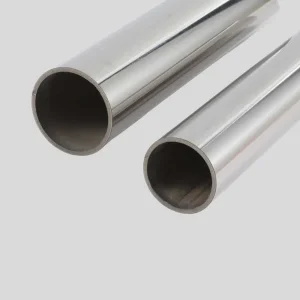
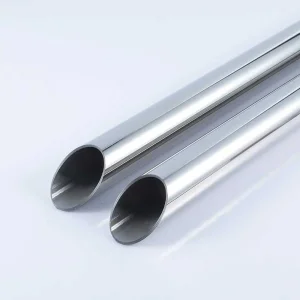
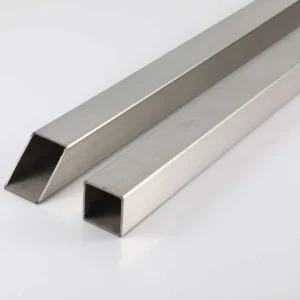
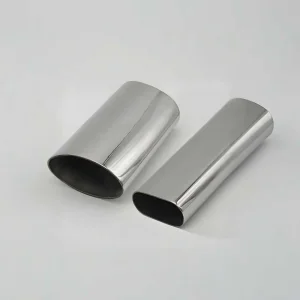
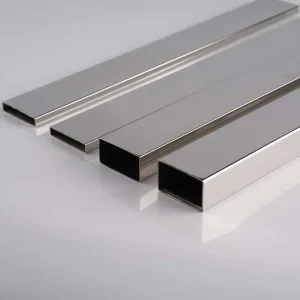
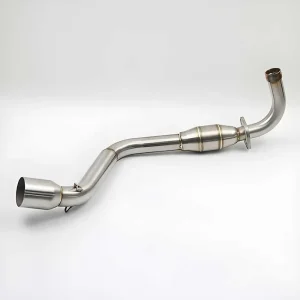
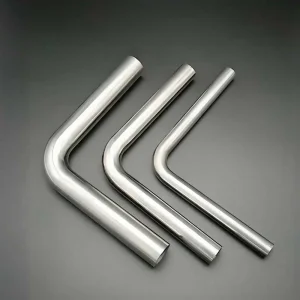
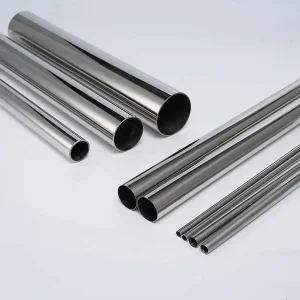
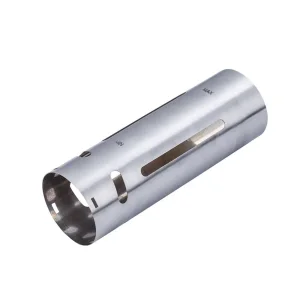
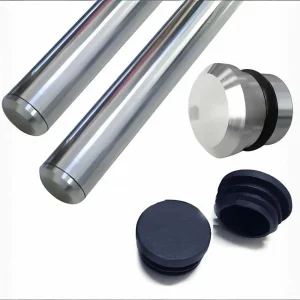
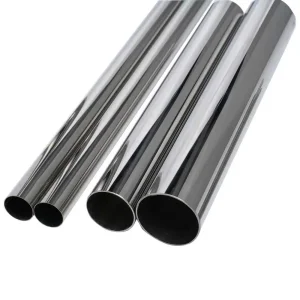
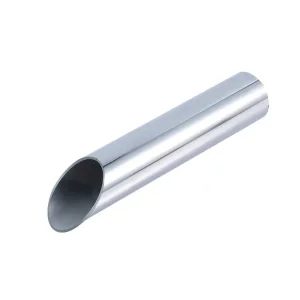
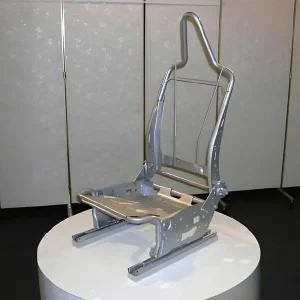
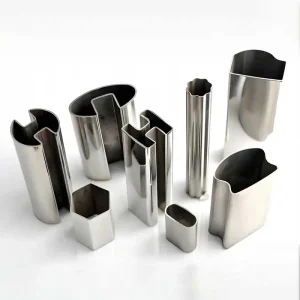
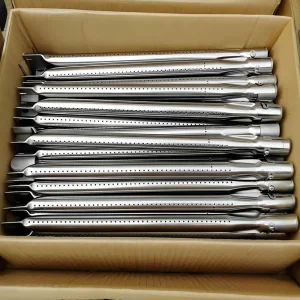
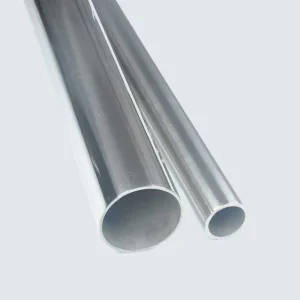
Explore our foundational range of precision stainless steel, perforated, and slotted tubing products manufactured under ISO 9001:2015 quality frameworks.
A comprehensive analysis of civil infrastructure resilience, groundwater mitigation, and the evolution of subsurface drainage technologies.
Modern transportation networks, high-speed rail corridors, and airport aprons require immediate sub-grade water dissipation to prevent hydrostatic uplift, frost heaving, and soil liquefaction under dynamic loading.
In geotechnical engineering, unmanaged groundwater buildup leads to slope instability and retaining wall failure. Continuous-slot drainage conduits serve as primary pressure-relief pathways across civil works.
Mining tailings ponds and municipal solid waste landfills depend on chemical-resistant slotted collection pipes to divert corrosive leachates safely without clogging or structural crushing.
Over the past decade, civil engineering projects have experienced a fundamental transition from standard perforated round-hole pipes to advanced geometric slotted pipes. Traditional circular perforations suffer from rapid localized particle blinding, reduced structural hoop strength, and inefficient intake hydraulics. Conversely, continuous slotted and precision-milled longitudinal slotted pipes optimize water entrance velocities while maintaining high compressive stiffness.
Whether constructed from high-density polyethylene (HDPE), unplasticized polyvinyl chloride (uPVC), or high-nickel austenitic stainless steel (AISI 304/316L), modern drainage slotted pipes are engineered with high open-area ratios (OAR). This technical configuration minimizes hydrodynamic head loss, preventing soil piping—a catastrophic phenomenon where fine sub-grade particles are washed into the drainage conduit, triggering subsurface void formation and roadbed collapse.
Detailed performance parameters, slot opening mechanics, open-area calculations, and structural ring stiffness classifications (SN4 to SN16).
| Pipe Material Standard | Slot Design Geometry | Slot Width Range (mm) | Open Area Ratio (%) | Ring Stiffness Rating | Primary Industrial Sector |
|---|---|---|---|---|---|
| ASTM F758 HDPE Slotted | Transverse / Longitudinal Cut | 0.75 mm – 3.0 mm | 8.5% – 14.2% | SN8 (≥ 8 kN/m²) | Highway & Airport Sub-drainage |
| DIN 4262-1 uPVC Type R2 | Multi-row Staggered Slot | 1.0 mm – 2.5 mm | 10.0% – 16.5% | SN4 / SN8 | Railway Bed Water Interception |
| ASTM A554 Stainless 304/316L | Laser Cut V-Wire Continuous | 0.25 mm – 1.5 mm | 15.0% – 28.0% | SN16+ (Structural Steel) | Mining Dewatering & High-Load Sumps |
| AASHTO M252 Corrugated PE | Valled Circumferential Slot | 1.2 mm – 3.2 mm | 6.0% – 11.0% | Class I / Class II | Agricultural Salinity Control |
To adhere to standard geotechnical principles, the water inflow velocity through the slots must be regulated below 0.03 m/s. Exceeding this critical threshold induces turbulent transport of fine sands and silts, causing premature clogging of surround geotextiles.
Precision slotting with keystone-shaped inward widening (V-wire profile) creates an advantageous hydraulic gradient. Particles smaller than the slot width pass through unobstructed without wedging or creating internal bridging.
Engineers face a crucial trade-off: maximizing open slot area enhances water intake but weakens structural ring stiffness. Our computer-modeled staggered slot pitch ensures maximum load distribution under deep burial.
Data-driven manufacturing standards validated through non-destructive testing and third-party laboratory accreditations.
How specialized drainage slotted pipes solve challenging geotechnical and environmental problems across global project environments.
Ballastless tracks demand zero sub-grade differential settlement. Staggered uPVC/HDPE slotted pipes laid beneath track beds swiftly capture groundwater infiltration, suppressing pore pressure spike during dynamic train passings.
Under heavy wheel loadings from wide-body commercial aircraft (e.g., Boeing 777, Airbus A350), slotted pipes encased in open-graded friction course (OGFC) gravel ensure immediate pavement surface water evacuation.
Structural urban podiums utilize shallow-depth slotted pipes integrated into drainage boards. The systems manage heavy storm surges while serving as detention reservoirs to prevent urban flash flooding.
Arid land irrigation leads to upper-soil salt accumulation. Continuous-slot subsoil drainage lines placed at depths of 1.2m to 1.8m collect saline leach water, restoring soil fertility and crop yields.
Rigorous quality control frameworks ensuring direct compliance with international civil engineering codes.
Every production batch is fully traceable back to raw resin/alloy heat numbers. Third-party testing certifications (SGS, TUV) accompany all international shipments.
Pipes undergo 3-edge bearing crush testing to verify short-term and long-term ring deflection limits, guaranteeing zero collapse under deep burial static soil loads.
Drop-hammer impact tests at 0°C and inner hydrostatic pressure testing confirm that slotted cuts introduce no micro-fractures or stress concentration crack propagation points.
All manufactured drainage slotted pipes conform strictly to ASTM F758, AASHTO M252, DIN 4262-1, BS EN 1401, and relevant stainless structural tubing standards (ASTM A554 / EN 10217-7). Complete Material Test Reports (MTRs) per EN 10204 3.1 are supplied standard.
Pioneering future-ready technologies in smart drainage sensing, anti-clogging surface functionalization, and sustainable resin matrices.
Embedding Distributed Acoustic Sensing (DAS) optical fiber strands inside slotted pipe walls allows real-time monitoring of sub-grade erosion, fluid velocity, and internal sediment accumulation across hundreds of kilometers of rail network.
Next-generation anti-fouling surface treatments inhibit iron-manganese bacterial biofilm attachment. By preventing biological encrustation, the effective open area ratio remains uncompromised over 50+ year service lives.
Transitioning toward bio-polyethylene matrices derived from renewable sugarcane feedstocks, combined with circular recycled polymers to dramatically reduce embodied carbon emissions in civil infrastructure projects.
Direct technical answers addressing slot selection, structural integrity, geotextile wrapping, and installation methodologies.
Explore our complete catalog of precision CNC machined, marine grade, and specialized mechanical tubing manufactured to international tolerances.
Submit your technical drawings or project specifications today. Our engineering team provides hydrodynamic calculations, CAD mould verification, and formal commercial proposals within 24 business hours.