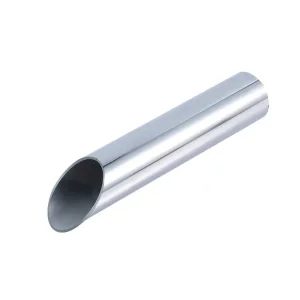
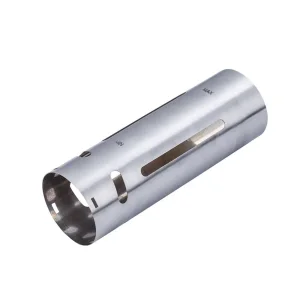
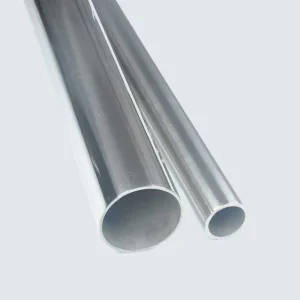
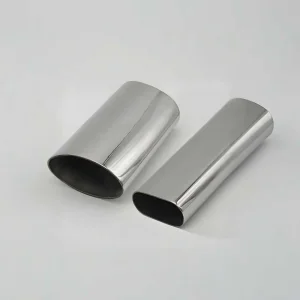
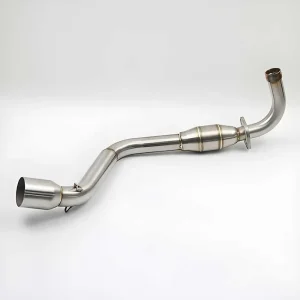
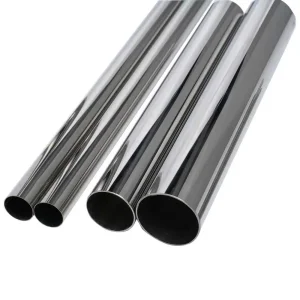
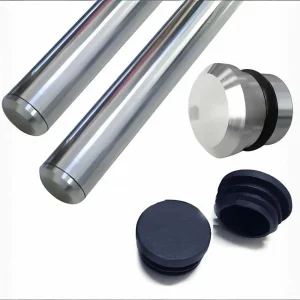
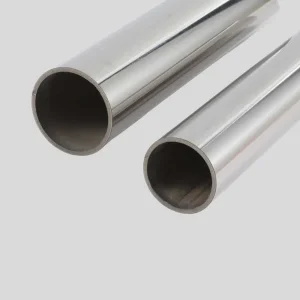
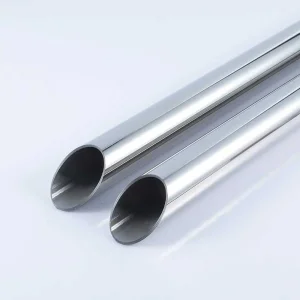
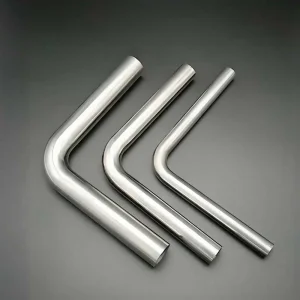
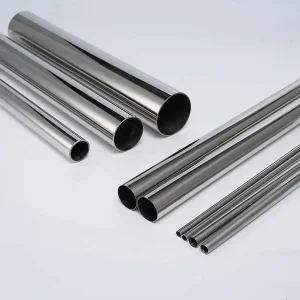
Explore our core OEM and ODM stainless steel tubing solutions engineered to international standards including ASTM A554, ASTM A249, and ISO/TS 16949 automotive specifications.
A Technical Evaluation of Thermal Expansion Relief, Vibration Decoupling, and NVH Mitigation in Modern Powertrains
In modern automotive and heavy industrial engineering, the flexible automotive exhaust pipe—frequently designated as an engine decoupler, exhaust flex joint, or hydroformed flexible bellows—serves as an indispensible mechanical interface. Positioned strategically between the exhaust manifold (or turbocharger downpipe) and the catalytic converter/muffler assembly, this component solves a fundamental physics challenge: isolating engine vibration, absorbing thermal expansion, and preventing premature structural cracking across the exhaust piping network.
As internal combustion engines (ICE) and hybrid electric vehicle (HEV) powertrains undergo relentless optimization for lighter weight, higher turbocharger boost pressures, and stringent emissions compliance (Euro 6d / Euro 7 and EPA Tier 4 standards), the operating environment for exhaust components has reached unprecedented severity. Modern engines exhibit violent torsional movements during rapid acceleration and start-stop cycles, alongside exhaust gas temperatures exceeding 800°C to 900°C. Without a high-purity, fatigue-resistant flexible exhaust pipe, these kinetic and thermal stresses propagate straight into fragile downstream components—resulting in manifold shear, catalytic substrate fracturing, and elevated cabin Noise, Vibration, and Harshness (NVH).
In Hybrid Electric Vehicles (HEVs) and Plug-in Hybrids (PHEVs), the internal combustion engine cycles on and off rapidly under load. This creates extreme thermal shock cycles—jumping from ambient temperatures to peak exhaust heat within seconds. Our inner-interlock SS304/SS321 flexible pipes are specially engineered with multi-ply corrugated bellows to absorb these rapid thermo-mechanical expansion spikes without work-hardening or gas leakage.
Understanding Structural Differences: Outer Braid, Corrugated Bellows, Inner Braid, and Interlock Liners
Not all exhaust flex joints are designed identically. Tier-1 automotive procurement teams and aftermarket distributors must select the appropriate internal liner and outer reinforcement architecture depending on exhaust backpressure, temperature profile, fluid flow velocity, and mechanical movement requirements. Below is the technical breakdown of the three primary structural configurations produced at our state-of-the-art Foshan manufacturing facility:
| Flex Pipe Architecture | Internal Liner Type | NVH & Vibration Absorption | Max Temp / Backpressure | Primary Application |
|---|---|---|---|---|
| Inner Braid Flex Pipe | High-Density SS304 Braid Wire | High High-Frequency NVH Reduction | Moderate (< 650°C, Standard ICE) | Passenger Cars, Aftermarket Repair, Light Commercial Vehicles |
| Interlock Flex Pipe | Helical Interlock Stainless Strip | Maximum Torsional & Axial Strength | High (< 850°C, Turbocharged ICE/HEV) | Performance Tuning, Heavy-Duty Diesel Trucks, High-Boost Engines |
| Inner Smooth Bellows (Double Ply) | Multi-Ply Hydroformed Bellows Only | Superior Thermal Expansion Relief | Extreme (< 900°C, Direct Manifold) | EGR Flex Tubes, Turbo Downpipes, Industrial Power Generators |
How Modern Foshan Tube Mills Deliver Unmatched Cost-Performance and Uncompromising Quality
The global automotive supply chain demands an rigorous balance of micro-inch precision, metallurgical consistency, and aggressive cost control. Located in Foshan, Guangdong—China’s premier stainless steel industrial manufacturing cluster—our facility integrates raw steel slitting, precision seam welding, hydroforming, automated wire braiding, and custom tooling under a single 12,000 square-meter roof.
We source prime stainless steel coil stock exclusively from tier-1 steel mills (such as TISCO, POSCO, and Baosteel). Every batch undergoes spectrometer chemical analysis to guarantee exact Chromium, Nickel, Molybdenum, and Titanium grain structures required for fatigue endurance.
Our 43 parallel tube mills feature fully automated hydroforming presses equipped with laser wall-thickness sensors. Hydroforming exerts uniform liquid pressure from within the tube, creating smooth, strain-free corrugated convolutions that eliminate localized material thinning.
With an active library of over 500 roll-forming dies and braiding heads, we manufacture standard and custom flexible pipes (ranging from 1.5-inch to 4.0-inch inner diameter) with zero new tooling costs and a streamlined 15-day export lead time.
Tailored Flexible Tubing Solutions across Diverse Commercial & Industrial Domains
Specially engineered SS304/SS409L flex joints with interlock liners placed in downpipes. Protects fragile ceramic substrates inside catalytic converters from high-frequency engine pitching during gear shifts and start-stop cycles.
Large-bore flex coupling assemblies (3.5" to 5.0" OD) utilizing double-ply hydroformed bellows and outer braided wire. Built to survive extreme axial displacement and high thermal loads present in Class 8 commercial vehicles and long-haul transport.
High-flow interlock flexible pipes designed for high-boost turbochargers. The smooth internal stainless steel interlock wall prevents whistle noise, eliminates turbulence, and handles continuous operating exhaust heat up to 850°C.
Heavy-duty marine-grade SS316L bellows built to resist chloride corrosion in saltwater environments. Installed on stationary diesel generator sets to decouple engine room structural vibrations from exhaust stack piping.
Heavy-impact flexible piping sections for tractors, excavators, and mining equipment. Designed to withstand severe shock-loads, chassis flexing, and dusty high-vibration operating conditions without cracking.
Micro-diameter flexible stainless steel tubing designed for EGR systems. Extremely flexible corrugated bellows that route exhaust gases back into the intake manifold to lower NOx emissions under strict environmental mandates.
Mitigating Purchasing Risks Through Standardized Quality Control Protocols
Sourcing automotive components globally requires rigorous supplier evaluation. A low-cost flex pipe manufactured from substandard reclaimed steel strip or unevenly seam-welded bellows can cause massive recall liabilities, exhaust leak noise complaints, and catastrophic emission system failures. When evaluating an OEM/ODM flexible automotive exhaust pipe manufacturer, demand compliance with the following quality testing benchmarks:
Next-Generation Exhaust Engineering: Weight Reduction, Advanced Alloys, and Euro 7 Readiness
As the automotive sector undergoes rapid transformation toward sustainable mobility, flexible exhaust engineering is evolving along three critical technology vectors:
To reduce vehicle kerb weight and enhance fuel economy, automotive OEMs are replacing thick single-wall flex pipes with ultra-thin double-ply or triple-ply hydroformed bellows. By utilizing two sheets of 0.20 mm SS304/SS321 wall thickness rather than a single 0.40 mm wall, the flex joint achieves double the fatigue life while reducing component mass by up to 25%.
Modern downsized direct-injection turbocharged engines run significantly hotter than legacy naturally aspirated powertrains. Furthermore, experimental Hydrogen Internal Combustion Engines (H2-ICE) release high-water-content exhaust at elevated temperatures. In response, our R&D team is deploying Inconel 625 nickel-based alloys and Titanium-stabilized SS321 stainless steel to resist stress-corrosion cracking and thermal oxidation up to 950°C.
EREVs feature onboard combustion engine generators that kick in abruptly when battery power drops. These engines run at fixed high-load RPMs, creating intense transient vibration harmonics. Specialized decouplers with tuned inner interlock spring rates are essential to isolate these vibrations and prevent cabin resonance in high-end electric vehicles.
Direct Answers to Sourcing, Engineering, and Manufacturing Queries
Explore our full range of marine, medical, sanitary, and structural stainless steel products.