Discover our high-precision tubing solutions manufactured under strict quality assurance frameworks for structural, mechanical, and sanitary applications.
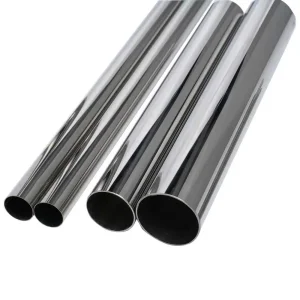
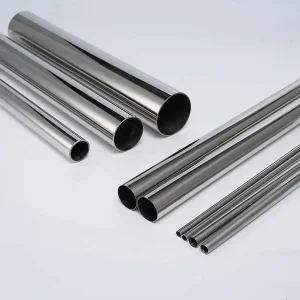
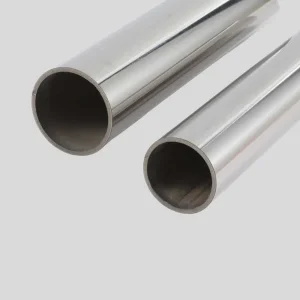
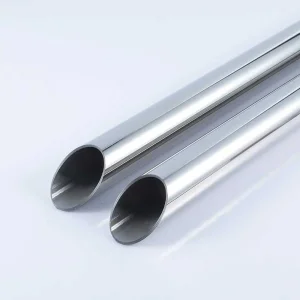
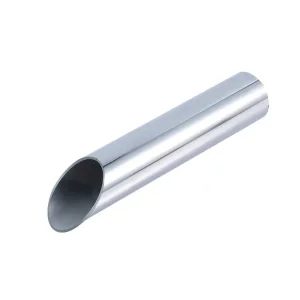

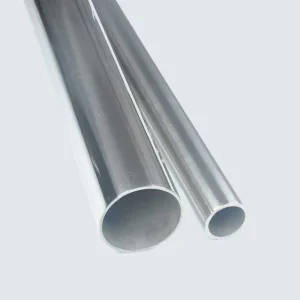
In modern processing industries, sanitary stainless steel tubing serves as the essential vascular system for critical fluid dynamics. Unlike standard commercial or mechanical tubing, high-quality sanitary tubing requires rigorous metallurgical control, ultra-smooth internal surface roughness ($R_a$), and complete freedom from microscopic voids where bacterial colonies or particulate contaminants can take root.
Internal mechanical polishing to $R_a \le 0.4\,\mu\text{m}$ ($16\,\mu\text{in}$) and electropolishing down to $R_a \le 0.25\,\mu\text{m}$ ($10\,\mu\text{in}$) prevents bio-film accumulation and simplifies CIP/SIP cycles.
Low-carbon UNS S31603 (316L) with controlled sulfur content ($0.005\% \text{ to } 0.017\%$) ensures optimal orbital weldability, arc stability, and joint integrity without heat-affected zone cracking.
Full alignment with ASME BPE, ASTM A270 (S2), DIN 11850, ISO 2037, and 3-A Sanitary Standards. Fully documented with EN 10204 3.1 material test certificates.
Sanitary tubing must withstand highly aggressive Cleaning-In-Place (CIP) chemicals—including hot nitric acid, phosphoric acid, and caustic soda ($NaOH$)—as well as high-pressure Steam-In-Place (SIP) sterilization cycles up to $135^\circ\text{C}$. Below is the technical roadmap defining our manufacturing controls.
| Specification Parameter | Mechanical Polish (MP) Grade | Electropolished (EP) High-Purity Grade | Standard Commercial Grade |
|---|---|---|---|
| Primary Standards | ASTM A270 / ASME BPE SF1 | ASME BPE SF4 / DIN 11866 HE4 | ASTM A554 / ASTM A269 |
| Internal Surface Roughness ($R_a$) | $\le 0.51\,\mu\text{m}\ (20\,\mu\text{in})$ | $\le 0.25\,\mu\text{m}\ (10\,\mu\text{in})$ | $\le 1.0 - 1.5\,\mu\text{m}\ (40 - 60\,\mu\text{in})$ |
| Material Alloys | AISI 304 / 304L / 316L | AISI 316L (UNS S31603) Low Carbon | AISI 201 / 304 / 409L |
| Heat Treatment | Bright Annealed ($1050^\circ\text{C}$ Hydrogen) | Bright Annealed + Vacuum Vacuum Passivated | As-Welded / Mill Annealed |
| Passivation Layer Chemistry | Citric/Nitric ASTM A967 ($Cr/Fe \ge 1.3$) | Anodic Electropolishing ($Cr/Fe \ge 1.8, CrO/FeO \ge 2.0$) | Natural Air Passivation ($Cr/Fe \sim 1.0$) |
| Non-Destructive Testing | 100% Eddy Current + Hydrostatic | 100% Eddy Current + Helium Leak Test | Visual / Random Sample Pressurization |
| Typical Applications | Dairy, Beverage, Personal Care, Food Processing | Biopharm WFI Loops, Semiconductor Clean Gases | Structural Racks, Balustrades, Automotive |
Electropolishing is an electrochemical process that selectively dissolves microscopic peaks on the interior tube surface. By establishing a controlled galvanic cell with a phosphoric/sulfuric acid electrolyte, the process removes peaks faster than valleys, yielding a mirror-like finish.
Crucially, EP removes iron ions ($Fe$) preferentially over chromium ($Cr$), dramatically enriching the passive oxide surface layer ($Cr_2O_3$). This yields exceptional resistance against pitting corrosion caused by chloride ions in pharmaceutical purified water systems.
Automated orbital TIG welding is the standard for joining sanitary tubing in the field. Weld seam defects, such as concavity, sagging, or heat-tint oxidation, severely degrade system cleanability.
VertexFlow enforces tight melt-chemistry controls: sulfur content is strictly regulated to $0.005\% - 0.017\%$. This narrow range prevents Marangoni convection fluid flow reversals in the weld pool, guaranteeing consistent penetration, uniform bead geometry, and elimination of weld sink.
Sanitary tubing must meet distinct operational challenges across global regions and specialized sectors. Below are localized engineering applications where precision tubing directly protects end-product safety.
Region Focus: North America (FDA GMP), Western Europe (EMA), & Asia-Pacific Bio-Hubs.
In Water-for-Injection (WFI) loop systems, continuous fluid motion at $80^\circ\text{C}$ requires continuous resistance to rouging (iron oxide precipitation). Our ASME BPE SF4 electropolished 316L tubing minimizes rouge formation and eliminates bacterial endotoxin adhesion points in cell-culture fermenters.
Region Focus: New Zealand, EU Agricultural Belt, South America, & North America.
UHT processing subjects tubing to thermal shock during flash heating ($138^\circ\text{C}-145^\circ\text{C}$). Smooth internal welds treated with inner nitrogen purging prevent milk stone ($Ca_3(PO_4)_2$) buildup, ensuring cleanability during automated CIP cycles using alkaline detergent solutions.
Region Focus: Taiwan, Japan, South Korea, USA, & Germany.
Transporting silane, ammonia, and specialty etching gases requires zero outgassing and extremely low moisture desorption. Our vacuum-annealed electropolished tubing features an ultra-clean oxide layer that suppresses moisture entrapment down to sub-parts-per-billion (ppb) levels.
Region Focus: France, South Korea, Japan, & USA.
Cosmetic emulsions containing surfactants and active organic compounds can degrade under high shear or trap product in micro-scratches. Precision-bore 304/316L tubing guarantees consistent viscosity preservation during filling operations.
Situated in Shishan Town, Nanhai District, Foshan City—the epicenter of global stainless steel manufacturing—VertexFlow Tubes combines raw material access, advanced metallurgical processing, and fast export logistics under one roof.
Direct partnerships with Tier-1 steel mills—including TISCO, POSCO, and Baosteel—guarantee strictly controlled strip chemistry, zero slag inclusions, and optimal cold-work formability from the outset.
In-line plasma and high-frequency TIG welding with high-purity argon shielding and internal nitrogen back-purging ($99.999\%$) prevents internal oxidation tinting during seam fusion.
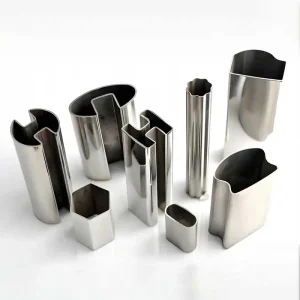
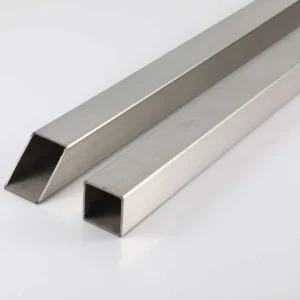
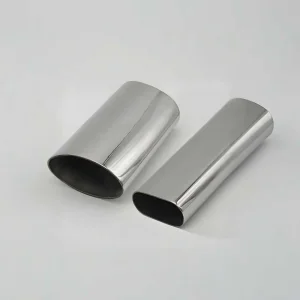
With over 500 existing roll-forming die sets for round, square, rectangular, oval, and custom profiles, customers bypass expensive custom tooling fees and reduce ramp-up cycles.
From raw slit coil to export-ready container packaging, every batch passes through ten mandatory quality gates logged in real time for complete lot traceability.
100% XRF optical emission spectrometry verifies chemical heat chemistry (Cr, Ni, Mo, C, S) before coil slitting.
Precision slitting holds strip width tolerance within $\pm 0.05\,\text{mm}$ and removes edge burrs to prevent weld bead defects.
Automated seam welding monitored under constant closed-loop current, travel speed, and gas flow rates.
In-line high-frequency eddy current testing per ASTM A1016 automatically marks and rejects any micro-fissure or pinhole.
Dual-axis laser sensor measures outside diameter, wall thickness, ovality, and straightness in real time.
Heat treatment at $1050^\circ\text{C}-1100^\circ\text{C}$ in pure hydrogen restores full ductility and corrosion resistance without scaling.
Four-stage internal honing and external buffing achieves target surface profiles up to 600# Mirror finish.
100% water pressurization test up to $300\,\text{PSI}$ guarantees seam structural integrity for dynamic pressure lines.
Deep immersion bath per ASTM A967 strips free iron and rebuilds a rich, protective chromium oxide passive film.
Procuring sanitary and high-purity tubing across international borders requires absolute clarity in material traceability, compliance documentation, and export logistics. VertexFlow operates a dedicated export division servicing over 40 countries across the Americas, Europe, Middle East, and Asia-Pacific.
Have a complex system drawing, custom dimension requirement, or severe fluid application? Our engineering team responds within 24 business hours with material recommendations, radius calculations, and mould verification.
Comprehensive answers compiled by our metallurgical and quality engineering teams to address common procurement and field compliance questions.
Explore our full suite of engineered tubing across structural, decorative, automotive, and medical sector specifications.