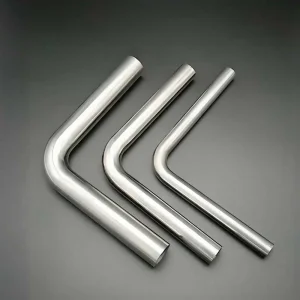
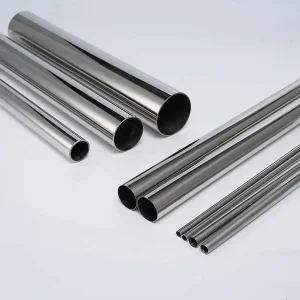
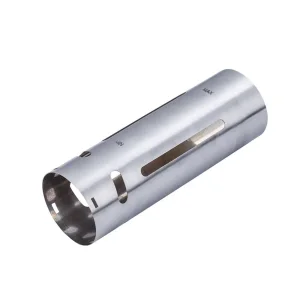
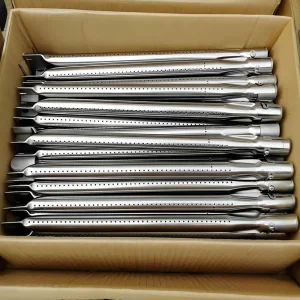
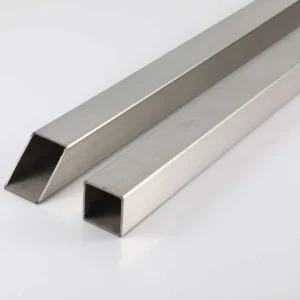
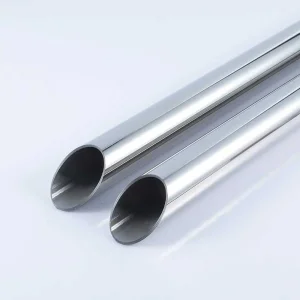
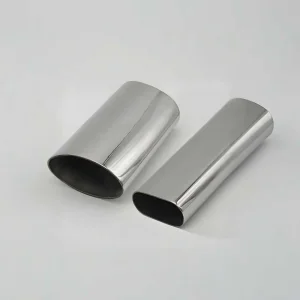
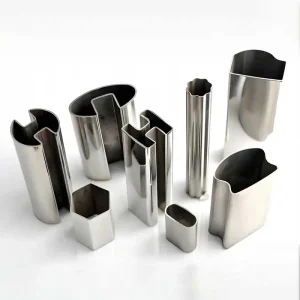
Explore our core export-grade tubing configurations engineered for extreme structural loads, chemical exposure, and strict mechanical tolerances.
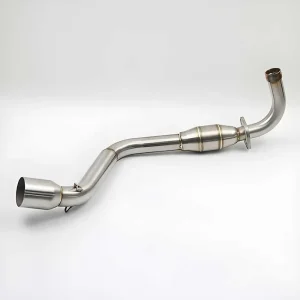
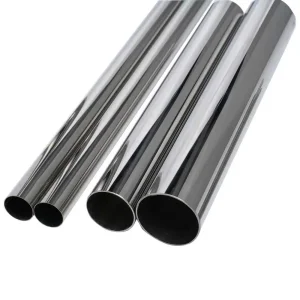
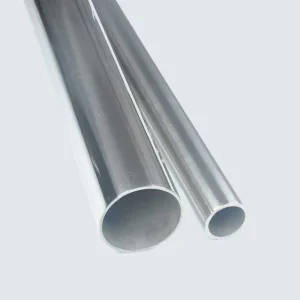
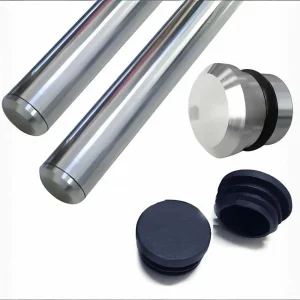
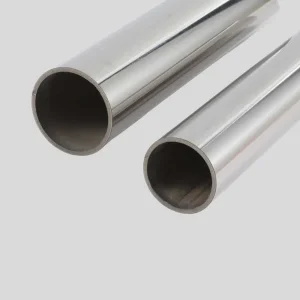
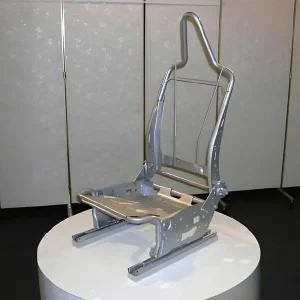
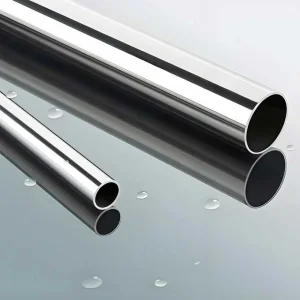
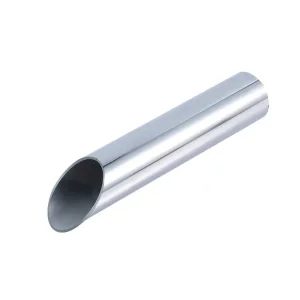
Subsurface water management is experiencing a paradigm shift. Globally, industrial expansion, agricultural intensification, and civil infrastructure projects demand unprecedented hydrologic control. Slotted underground pipes—engineered with longitudinal or transverse micro-perforations—form the primary operational backbone of modern subsurface drainage systems. From managing saturated water tables beneath high-speed rail ballasts to capturing hazardous leachate in municipal landfills, these specialized pipes maintain structural integrity while optimizing hydraulic intake velocity.
According to recent civil engineering market intelligence, the global demand for advanced subterranean drainage systems is expanding at a CAGR of 6.8%. Key drivers include sovereign infrastructure investments, climate-resilient stormwater management mandates, and large-scale agricultural sub-irrigation projects across North America, Europe, the Middle East, and Southeast Asia.
Subsurface pore pressure poses a constant threat to railway ballast stability and highway subgrades. Slotted underground pipes continuously relieve pore water pressure, mitigating soil liquefaction, frost heaving, and structural subsidence.
In precision agriculture, slotted pipes prevent root zone waterlogging and soil salinization. By regulating water table depth, regional farm operators boost oxygen diffusion in root zones, significantly elevating crop yields.
In heap leaching operations and environmental waste containment, heavy-duty stainless steel or corrugated slotted pipes collect mineral-rich pregnant solution or toxic leachate without structural collapsing under extreme overburden stress.
The hydraulic efficiency of a slotted subterranean pipe depends directly on Darcy's Law ($Q = k \cdot i \cdot A$). Unlike standard unperforated conduit, slotted pipe engineering requires balancing the Open Area Percentage (OAP) against circumferential hoop stress resistance. Excessive slot opening causes structural buckling; insufficient slotting increases entrance velocity, precipitating fine sediment siltation and premature clogging. Premier manufacturers utilize computerized hydraulic profiling to determine optimal slot spacing based on localized soil permeability coefficients ($k$).
Producing industrial-grade slotted underground pipes demands high-precision metalworking and polymer processing. Traditional mechanical punching methods often introduce micro-fractures, burrs, and structural deformation around slot edges, creating localized stress concentration points that fail prematurely under deep soil overburden or seismic shifts.
Leading Chinese manufacturing hubs have adopted continuous CNC multi-axis laser slotting and cold-roll perforated formation technologies. By leveraging automated fiber lasers with real-time nitrogen gas shielding, slot tolerances are maintained within ±0.05 mm. This produces razor-sharp slot geometries with smooth, burr-free internal walls that drastically minimize hydraulic friction and bio-film adherence.
| Performance Metric | Laser-Slotted Stainless Steel (304/316L) | Mechanical Punched HDPE / PVC Pipe | Traditional Porous Concrete Pipe |
|---|---|---|---|
| Ring Stiffness Rating | SN16+ (Extreme Load Capability) | SN4 - SN8 (Moderate Civil Duty) | Low Tensile Strength (Brittle) |
| Slot Width Range (Precision) | 0.25 mm – 3.0 mm (±0.05 mm) | 1.5 mm – 5.0 mm (±0.30 mm) | Non-uniform pore distribution |
| Hydraulic Flow Open Area | 12.5% – 22.0% (Engineered) | 5.0% – 10.0% (Limited) | Variable / Uncontrolled |
| Chemical & Leachate Immunity | Superior (pH 1.5 – 14.0) | High (Susceptible to Hydrocarbons) | Poor (Acidic degradation) |
| Operational Lifespan | 100+ Years Subterranean | 30 - 50 Years Subterranean | 15 - 25 Years Subterranean |
China's dominance in structural pipe fabrication—particularly centered in specialized manufacturing zones like Foshan, Guangdong—is built upon vertical integration. Unlike regional facilities that outsource raw material slitting, tube forming, slot punching, and surface finishing to secondary vendors, modern Chinese factories house the complete production lifecycle within single, ISO-certified 12,000+ m² plants.
Strategic partnerships with primary steel mills (TISCO, POSCO, Baosteel) guarantee mill test certified stainless steel strip with consistent chemical purity and grain alignment, eliminating material fatigue during cold-forming.
Operating 43+ automated extrusion and plasma welding lines simultaneously allows Chinese factories to achieve unmatched economies of scale, slashing lead times to under 15 days for standard 40-foot container orders.
In-house CNC laser cut-to-length, end flaring, necking, socketing, and geotextile sock wrapping eliminate the multi-tier markups common in Western supply chains.
100% online infrared weld seam scanning, laser dimensional tracking, hydrostatic testing, and destructive ring stiffness testing ensure zero-defect consignments at port of loading.
Slotted underground pipes are deployed across diverse geotechnical and environmental conditions. Specifying the exact slot pitch, width, layout, and material composition requires a granular understanding of the local installation environment.
Airfield pavements experience heavy impact loading. Slotted high-stiffness pipes installed in gravel trenches rapidly draw down sub-surface water levels, preventing subgrade softening and asphalt pavement cracking.
Subterranean water retention damages premium athletic turf grass. Micro-slotted drainage lines collect excess surface water within minutes of heavy rain without dislodging sandy root-zone media.
Urban storm runoff management utilizes wrapped slotted pipes surrounded by washed crushed stone aggregate to capture saturated groundwater and redirect flow to municipal retention basins.
International procurement teams, EPC contractors, and municipal engineers require verified technical documentation prior to vendor onboarding. When evaluating manufacturers for slotted underground pipe tenders, purchasing authorities evaluate four critical quality pillars:
The subsurface drainage sector is integrating advanced materials science and smart diagnostic technology. key developments reshaping the industry include:
Thermally bonded non-woven geotextile sleeves wrapped around slotted pipes filter out fine silt particles down to 50 microns while maintaining high flow velocity.
Embedding low-power IoT flow sensors and pressure transducers directly within key underground drainage hubs enables real-time groundwater monitoring and clogging alerts.
Ultra-fine laser micro-slotting (under 0.3mm) eliminates the need for external gravel packing in specialized sub-surface mining and oil-water separation wells.
Expert answers to critical procurement, installation, and design questions compiled by our senior metallurgical and hydraulic engineering team.
Slot width selection depends on the Particle Size Distribution (PSD) of the surrounding backfill soil or aggregate filter envelope. As an engineering rule of thumb based on Terzaghi’s filtration criteria, the slot width should equal the $D_{50}$ or $D_{60}$ size of the surrounding gravel pack. For fine sand environments without filter socks, select micro-slots (0.25mm – 0.5mm). For coarse gravel envelopes or heavy municipal French drains, 1.5mm to 3.0mm slots offer maximum flow velocity with minimal entrance friction.
Longitudinal slots run parallel to the length of the pipe, offering lower flow turbulence along the internal invert. Transverse slots cut across the pipe circumference, providing higher slot density per linear meter and superior resistance against longitudinal bending forces in shifting soils. Our factory supports both slotting orientations via customizable multi-axis laser software.
While corrugated plastic (HDPE/PVC) is economical for shallow agricultural use, stainless steel (304/316L) slotted pipe is mandatory for critical infrastructure, deep burial depths (over 6 meters), airport runways, and corrosive industrial or mining environments. Stainless steel delivers extreme structural ring stiffness (SN16+), zero UV degradation during jobsite storage, resistance to high temperature fluids, and a 100+ year service life under aggressive pH conditions.
Our standard MOQ for specialized slotted underground tubing is 500 kg per size and finish. Because our facility maintains over 500 active tooling profiles and automated CNC laser software, custom slot patterns require no upfront tooling charges. Typical production lead time is 15 business days from order confirmation to sea freight container sealing.
Laser slotting under an inert Nitrogen shielding atmosphere prevents localized edge oxidation. Following laser cutting, all stainless steel pipes undergo full chemical immersion pickling and passivation according to ASTM A380. This restores the protective passive Chromium Oxide ($Cr_2O_3$) film across all internal slot cut faces, guaranteeing salt spray corrosion resistance exceeding 500 hours.
Comprehensive selection of structural, decorative, and industrial stainless steel products manufactured to international standards.