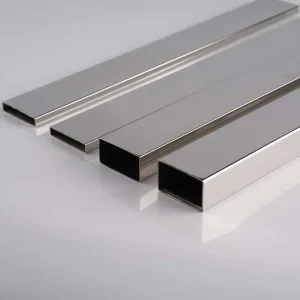
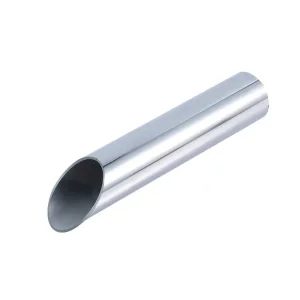
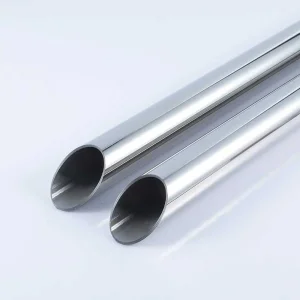
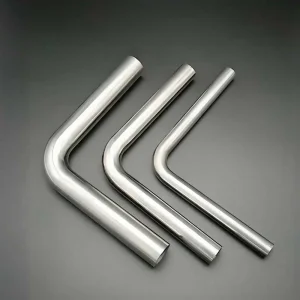
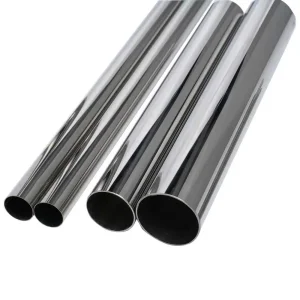
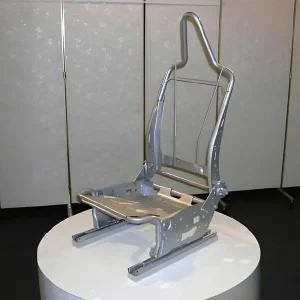
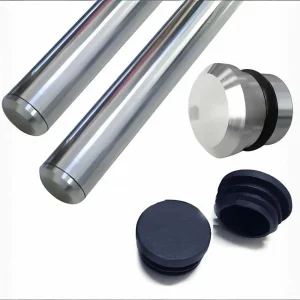
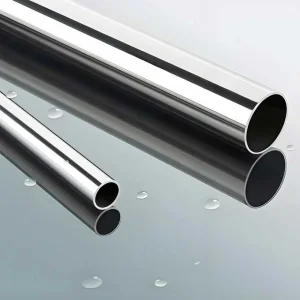
Explore our top-tier industrial welded tubing lineup manufactured under ASTM A554 and EN 10217-7 standards across 43 automated production mills.
Analyzing fluid discharge coefficients, laser-milled slot geometry, structural integrity under hydro-static heads, and chemical resistance parameters.
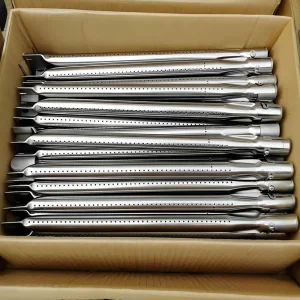
In modern industrial, civil, and commercial drainage engineering, the selection of waste piping dictates long-term infrastructure operational lifespan and hydraulic efficiency. Slotted waste pipes—specifically engineered hollow structural tubing integrated with CNC laser-milled or mechanical longitudinal/transverse drainage slots—represent the gold standard for controlled fluid intake, sediment filtration, and high-volume wastewater evacuation.
Unlike standard solid-wall drainage pipes, a high-quality slotted waste pipe must balance two conflicting engineering objectives: maximizing open area ratio (OAR) for unimpeded fluid filtration while retaining cross-sectional hoop strength and flexural rigidity to withstand static surcharge loads, dynamic soil movement, and thermal expansion stress. Modern infrastructure demands transition away from fragile PVC or corrosion-prone carbon steel towards precision-welded, highly passivated stainless steel alloys including austenitic AISI 304, AISI 316L, and ferritic AISI 409L.
Direct comparative breakdown of stainless steel alloy grades utilized in global slotted waste pipe manufacturing.
| Alloy Grade | PREN Value | Tensile Strength (MPa) | Yield Strength (MPa) | Primary Industrial Waste Application | Corrosion Resistance Threshold |
|---|---|---|---|---|---|
| AISI 304 (1.4301) | 18.0 - 20.0 | ≥ 515 | ≥ 205 | Commercial sanitary waste, architectural trench drainage, urban graywater systems. | Excellent in municipal water; moderate in low-chloride runoff. |
| AISI 316L (1.4404) | 23.0 - 25.0 | ≥ 485 | ≥ 170 | Chemical process waste, marine/coastal drainage, pharma effluent, high-salinity discharge. | Superior against pitting corrosion & pitting caused by chloride ions ($Cl^-$). |
| AISI 409L (1.4512) | 10.5 - 11.5 | ≥ 380 | ≥ 175 | Automotive condensation waste, high-temperature exhaust drain channels, dry industrial ducts. | Moderate atmospheric corrosion protection; optimized for high thermal cycling. |
| Duplex 2205 (1.4462) | 32.0 - 35.0 | ≥ 655 | ≥ 450 | Heavy industrial leachate, mining runoff, deep subterranean acidic waste channels. | Extreme resistance to stress corrosion cracking (SCC) & erosion-corrosion. |
The hydraulic discharge coefficient ($C_d$) of a slotted waste pipe governs how rapidly surface liquid or sub-surface runoff transitions into the core evacuation channel. The Open Area Ratio (OAR) is calculated using the established formula:
OAR (%) = [ (Slot Width W_s × Slot Length L_s × Total Slots per Meter N) / (π × Outside Diameter D_o × 1000) ] × 100
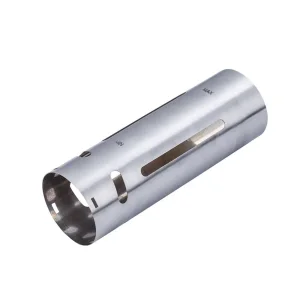
Our engineering mill leverages fiber-laser slotting centers capable of delivering staggered, continuous, or keyhole slot configurations. By maintaining a precision bevel on internal slot edges, our slotted waste pipes reduce vortex-induced turbulence, minimizing solid particle accumulation and preventing biofilm bio-fouling in critical industrial waste pipelines.
Tailored slotted waste pipe solutions meeting strict environmental, chemical, and structural standards worldwide.
Used extensively in municipal transportation hubs, airport runways, and highway perimeter channels. Slotted stainless steel pipes act as structural grating and internal fluid conduit simultaneously, withstanding Class D400 to F900 wheel loading when embedded in concrete channels.
For high-end architectural shower systems, commercial kitchens, and hospital wash-down corridors, our mirror-polished and satin 304/316L slotted waste tubing guarantees zero stagnant water accumulation, preventing bacterial culture proliferation and odor backflow.
In pharmaceutical plants and chemical processing facilities, aggressive acid/alkaline washdown fluids rapidly degrade traditional piping. Marine-grade 316L and Duplex slotted waste channels deliver immunity against organic solvents and aggressive cleaning detergents (CIP cycles).
Understanding global supply chains, regional regulatory demands, and the shift toward sustainable industrial infrastructure.
The global demand for high-integrity slotted waste pipe systems is experiencing unprecedented growth, driven by stringent municipal environmental protection regulations, modern industrial facility retrofits, and the expansion of smart urban infrastructure across Europe, North America, and the Asia-Pacific region.
In North America, compliance with ASME A112.18.2 / CSA B125.2 and UPC (Uniform Plumbing Code) dictates that waste pipes installed in commercial and public structures possess certified mechanical corrosion resistance and verifiable hydraulic flow metrics. Engineering firms are increasingly phasing out cast iron waste lines due to graphitic corrosion and weight constraints, substituting them with high-strength, thin-walled ASTM A554/A269 stainless steel slotted tubing.
In the European Union, under standards EN 1253 and EN 10217-7, industrial end-users prioritize circular economy mandates and life-cycle costing (LCC). Stainless steel slotted waste pipes deliver a 50+ year operational lifespan with 100% material recyclability, aligning with EU Green Deal construction frameworks. Furthermore, rapid industrialization in Southeast Asia and Middle Eastern coastal mega-projects has heightened demand for 316L slotted waste tubing capable of resisting coastal salt spray and high subterranean water tables.
End-to-end verification, certified chemical compositions, and tailored regional engineering support.
Every slotted waste pipe batch undergoes rigorous dimensional logging, wall thickness tolerance verification (±0.05mm), and structural yield testing.
Plasma welding with inner nitrogen shielding ensures zero internal oxidation, completely removing the black weld seam line where localized pitting usually initiates.
With over 500 roll-forming moulds and multi-axis CNC laser cutters, custom slot patterns, end flaring, necking, and bending are executed without new tooling delays.
In-house slitting and tube rolling allow immediate raw material commitment from top mills (TISCO, POSCO, Baosteel), guaranteeing global delivery schedules.
How precision slotted waste tubing overcomes demanding environmental and structural challenges.
Challenge: Standard 304 stainless steel waste pipes exhibited severe tea-staining and pinhole pitting within 8 months due to elevated ambient chloride concentrations and thermal steam exposure.
Solution: Implementation of VertexFlow 316L slotted waste pipes with electro-polished internal/external surfaces (Ra ≤ 0.2µm) and automated passivated weld seams. Salt spray endurance expanded beyond 500 hours with zero localized oxidation.
Challenge: Organic solid buildup caused regular clogging in conventional drilled drain pipes, forcing weekly high-pressure downtime for maintenance.
Solution: Custom laser-slotted 304 tubing featuring 15° angled self-cleaning internal slot bevels. Increased hydraulic flow rate by 34% while preventing solid particulate entrapment during daily CIP washdowns.
Challenge: Micro-vibrations and thermal flux caused rigid PVC waste lines to crack at joints, spilling corrosive acidic etching runoff.
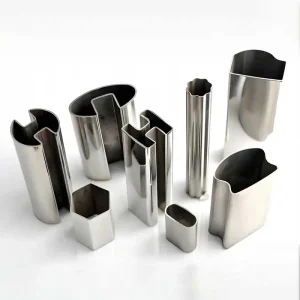
Solution: High-yield precision welded ASTM A554 square and slotted rectangular stainless steel channels. Held tight straightness tolerances (1mm/m) and absorbed structural vibration without joint degradation.
Pioneering advancements in smart drainage, nanoscale coatings, and automated laser slotted manufacturing.
The evolution of slotted waste pipe engineering is entering a new phase driven by industrial automation, material science breakthroughs, and digital twin monitoring integration:
Discover our specialized structural, sanitary, and custom-profile stainless steel tubing manufactured for global OEM clients.
Direct answers from our metallurgical and hydraulic engineering team regarding slotted waste pipe procurement, customization, and performance.